
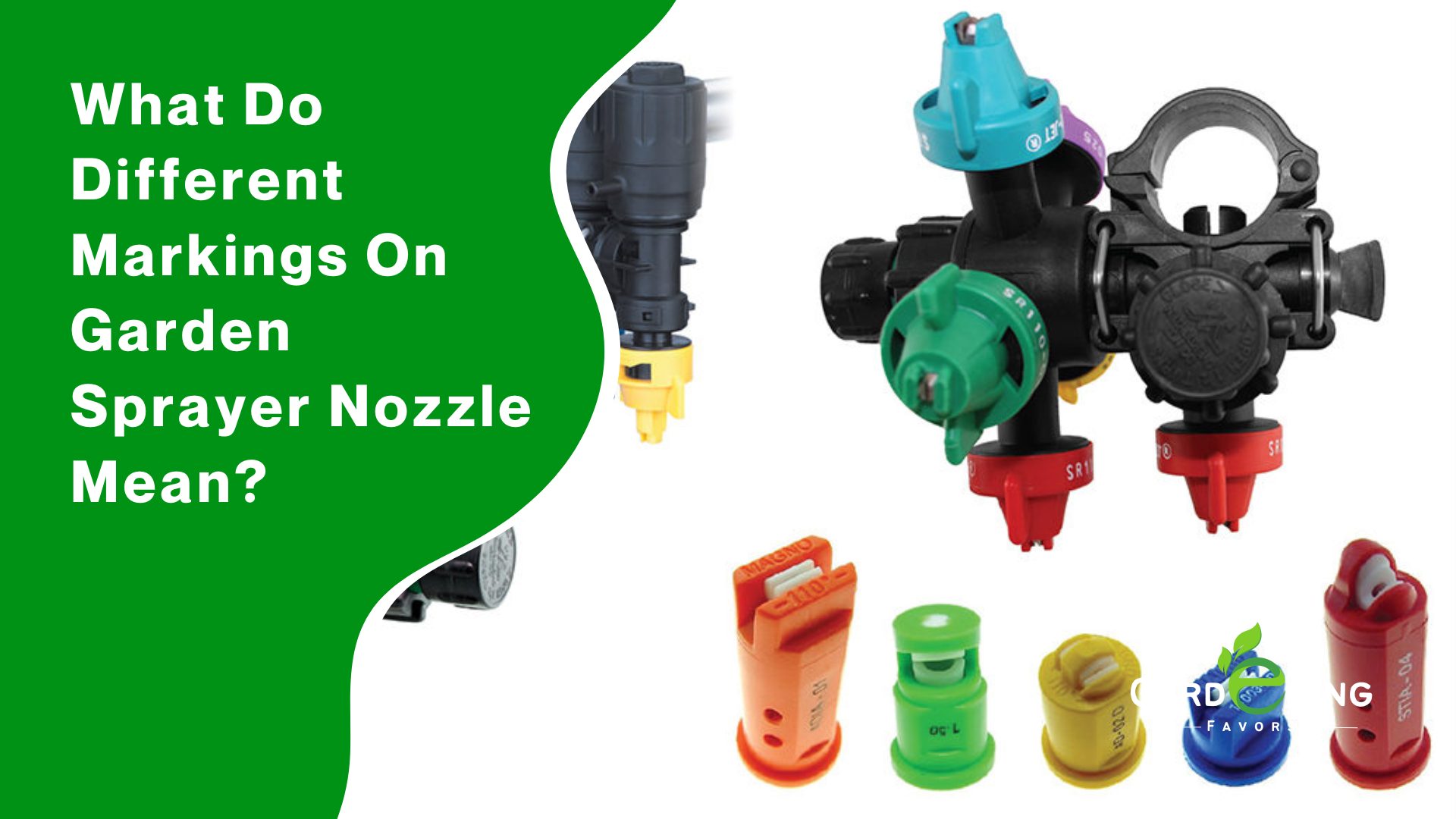
Garden sprayer nozzles play a pivotal role in the maintenance and care of gardens and agricultural landscapes. These tools, often overlooked, are critical for the precise application of water, pesticides, herbicides, and fertilizers. The markings on these nozzles are not arbitrary; they serve as a guide to the nozzle’s functionality, spray pattern, flow rate, and size, ensuring that users can select the most suitable nozzle for their specific needs.
Understanding Nozzle Markings
The markings on garden sprayer nozzles are akin to a language that, when understood, can significantly enhance the efficiency and effectiveness of garden care. These markings typically include alphabetic and numeric codes that convey essential information about the nozzle’s characteristics.
- Spray Pattern: The spray pattern is indicated by an alphabetic code (e.g., “F” for flat fan, “C” for cone, or “E” for even). This pattern determines the distribution shape of the liquid being sprayed, which can be pivotal for different applications, such as wide coverage for herbicides or targeted spraying for pesticides.
- Flow Rate: This is usually denoted by a numeric code following the spray pattern code (e.g., “110” in “F110-03”). It represents the flow rate of the nozzle in terms of gallons per minute (GPM) or liters per minute (LPM), crucial for determining the volume of liquid applied over a specific area.
- Size and Pressure: The last segment of the marking (e.g., “-03” in “F110-03”) often indicates the orifice size and the pressure rating (in PSI) at which the nozzle operates optimally. This information helps in calibrating sprayers to achieve the desired application rate without causing drift or harm to the plants.
Significance in Garden Care
The correct interpretation and application of nozzle markings can lead to more effective watering, fertilization, and pest control, thereby promoting healthier plant growth and yield. For instance, using a nozzle with a flat fan spray pattern ensures even coverage for herbicide application, reducing the risk of missed areas or over-application.
Similarly, selecting a nozzle with an appropriate flow rate can prevent the wastage of water and chemicals, contributing to more sustainable gardening practices.
Global Standards and Consistency
The standardization of nozzle markings, as overseen by organizations like the International Organization for Standardization (ISO), plays a crucial role in maintaining consistency and reliability across different manufacturers and regions.
This standardization ensures that a nozzle purchased in one country will perform similarly to one purchased elsewhere, provided the markings match. It also simplifies the process of replacing nozzles or finding compatible parts, which is essential for maintaining the efficiency of garden care equipment.
Types of Nozzles and Their Roles
1. Flat Fan Nozzles
Flat fan nozzles are marked with an “F” to denote their spray pattern. These nozzles produce a flat, fan-shaped spray, which is ideal for the even distribution of liquids over a broad, flat area. This makes them perfect for the application of herbicides, where uniform coverage is essential to ensure the effective treatment of weeds without harming nearby plants.
2. Cone Nozzles
Cone nozzles, often marked with a “C,” produce a circular spray pattern that is conical in shape. This design allows for thorough coverage of plants, making cone nozzles particularly suitable for applying insecticides and fungicides. The ability to reach the undersides of leaves, where pests and diseases often reside, is a key advantage of cone nozzles.
3. Adjustable Nozzles
Adjustable nozzles are versatile tools marked with an “A” or another symbol indicating their adjustability. These nozzles allow users to alter the spray pattern and pressure according to the task at hand, ranging from a fine mist for delicate plants to a more robust stream for cleaning or targeted watering.
4. Fogging Nozzles
Fogging nozzles, which may be marked with an “Fg” or similar code, are designed to produce a very fine mist. This mist is ideal for the application of foliar fertilizers, ensuring that delicate plants receive nutrients without the risk of damage from heavier water droplets. Fogging nozzles are also used in greenhouses and indoor gardens where high humidity levels need to be maintained.
Conclusion
In conclusion, the markings on garden sprayer nozzles are a key element in achieving precision and efficiency in garden care and agricultural practices. By understanding these markings, users can make informed decisions that lead to better plant health, higher yields, and more sustainable practices. As the global market for garden sprayers continues to evolve, driven by technological advancements and a growing emphasis on sustainability, the importance of nozzle markings is set to increase, making it an essential area of knowledge for anyone involved in garden care and agriculture.
