Best Riding Lawn Mower In 2026: Types and Uses
- The global ride-on mower market was valued at USD 6.4 billion in 2024 and is projected to reach USD 10.3 billion by 2034, growing at a CAGR of 4.9% (Global Market Insights, 2025), a clear signal that homeowners and landscaping professionals are moving decisively toward powered, seated mowing solutions.
- A riding lawn mower is no longer a luxury reserved for estate owners; it has become the practical standard for anyone maintaining a lawn larger than half an acre.
- Whether you manage a residential lawn, a commercial property, or a large agricultural parcel, understanding what separates a quality riding mower from an underperforming one will protect your investment and keep your turf in top condition for years ahead.


Homeowners with lawns larger than 0.5 acres consistently choose best riding lawn mower because of the time savings involved. A standard 42-inch cutting deck on a riding lawn mower covers roughly 2.0 acres per hour, compared to about 0.5 acres per hour for a 21-inch push mower. That fourfold efficiency gain is the primary driver of purchase decisions, backed by added comfort, reduced physical strain, and the ability to tow attachments such as lawn carts and spreaders.
An Overview Of 5 Best Riding Lawn Mover
| Product | Title | Features | Explore |
|---|---|---|---|
 | Husqvarna Z254F Riding Mower |
| Check Price |
 | EGO Power+ Electric Riding Lawn Mower |
| Check Price |
 | Greenworks 60V 30” Riding Lawn Mower |
| Check Price |
 | Craftsman 46″ Gas Riding Garden Mower |
| Check Price |
 | Greenworks 80V 42′ Riding Lawn Mower |
| Check Price |
Introduction to Riding Lawn Mowers
A riding lawn mower is a motorized cutting machine that the operator sits on and drives across a lawn, rather than pushing or walking behind. The rider controls speed and direction from a seated position while the cutting deck a housing beneath the frame that contains spinning blades trims grass to a set height.
According to Grand View Research (2024), the overall lawn mower market was valued at USD 33.66 billion in 2024 and is growing at a CAGR of 6.6%, with the riding lawn mower category capturing roughly 36.78% of total market revenue. These numbers confirm that the riding mower sits at the center of modern lawn care.
A push mower requires the operator to walk behind and physically guide the machine forward; a walk-behind self-propelled mower powers its wheels but still demands foot travel over the full cutting area. A riding lawn mower removes both of those requirements entirely. The operator steers, accelerates, and engages the blades from a seat, reducing physical exertion to near zero on flat ground and dramatically cutting mowing time on large properties.

History and Evolution
The first practical lawn mowing machine appeared in 1830 when Edwin Budding, a British engineer, designed a cylinder-bladed reel mower for cutting grass on sports grounds. Those early machines were entirely manual and required two operators. Horse-drawn gang mowers followed in the late 19th century, making large-scale turf maintenance possible on racecourses and estates.
The motorized riding mower took shape in the early 20th century when internal combustion engines became compact enough to mount on wheeled garden vehicles. By the 1950s and 1960s, manufacturers including Simplicity and Wheel Horse produced consumer-grade riding tractors with gasoline engines and belt-driven cutting decks, making them accessible to suburban homeowners in North America.
Modern riding mowers have evolved significantly on three fronts: engine power has increased while engine size has decreased; battery-electric powertrains now offer runtime exceeding 2.5 hours on a single charge; and digital features including GPS tracking, smartphone connectivity, and automated blade engagement are entering mass-market models. The result is a category of equipment that performs with professional-grade precision at residential price points.
5 Best Riding Garden Mover in 2026
If you are planning to buy a riding mower this year, the 5 Best Riding Lawn Mowers in 2026 guide is designed to help you choose the right machine for your yard size, terrain, and comfort needs. Modern riding lawn mowers now come with powerful gas engines and advanced battery-electric systems, offering better cutting performance, smoother control, and improved fuel or energy efficiency.
Whether you have a small residential lawn or a large property up to 2 acres or more, today’s top models focus on speed, durability, comfort, and easy handling, making lawn care faster and less tiring. There are five standout riding mowers that combine strong performance, smart features, and user-friendly design to make mowing simple and efficient in 2026.
Husqvarna Z254F Zero Hydrostatic Turn Riding Mower
The 23 HP Kawasaki engine and 54-inch ClearCut deck deliver strong power, faster mowing, and excellent cutting performance consistently. Hydrostatic transmission, zero-turn steering, and ergonomic controls provide smooth handling, comfortable operation, and easier maneuverability around obstacles efficiently. During my experience, the mower handled thick overgrown grass smoothly, reduced mowing time greatly, and felt comfortable throughout operation.
expert start
What Is It And Its Product Features?
The Husqvarna Z254F 54 in. 23 HP Kawasaki Zero Hydrostatic Turn Riding Mower is a gas-powered zero-turn riding mower built for medium to large lawns. It comes with a strong 23 HP Kawasaki engine that starts quickly and delivers steady performance during long mowing sessions. The mower features a 54-inch ClearCut deck that provides a wide cutting path and better airflow for cleaner cutting and improved grass collection.
It also supports side discharge, mulching, and bagging options, giving flexibility depending on lawn conditions. The hydrostatic transmission requires very little maintenance and offers smooth speed control up to 6.5 MPH. I also liked the comfortable seat, anti-slip foot area, and ergonomic control panel, which made mowing easier and less tiring during longer jobs.
Why It Matters
The Husqvarna Z254F 54 in. 23 HP Kawasaki Zero Hydrostatic Turn Riding Mower matters because it saves both time and effort compared to traditional riding mowers. The wide 54-inch deck cuts more grass in a single pass, reducing mowing time significantly. The zero-turn steering system makes it easy to move around flower beds, fences, and trees without making wide turns.
During my experience, the powerful Kawasaki engine handled thick and tall grass without struggling, which is important for people who regularly maintain large lawns or overgrown areas. The mower also feels stable and smooth even when operating at higher speeds. For anyone who wants professional-looking lawn results with less physical effort, this mower is a very practical choice.
My Set-Up And My Experience
Setting up the Husqvarna Z254F 54 in. 23 HP Kawasaki Zero Hydrostatic Turn Riding Mower was surprisingly simple. The mower arrived mostly assembled, and I only needed to install the seat, connect the battery, and adjust the control arms. The process took very little time and did not require advanced mechanical knowledge. I also noticed the mower arrived in excellent condition without any shipping damage.
Once everything was ready, I tested it on an overgrown lawn area that had not been maintained properly for some time. The mower handled the thick grass very well and flattened uneven growth after a few passes. I especially appreciated how comfortable the seat felt and how smoothly the steering controls responded. Compared to older riding mowers I have used, this machine felt faster, more precise, and much easier to maneuver around tight spaces.
Performance
The performance of the Husqvarna Z254F 54 in. 23 HP Kawasaki Zero Hydrostatic Turn Riding Mower was excellent during my testing. The Kawasaki engine delivered strong and consistent power, even when mowing dense or tall grass. The blades maintained good cutting strength without slowing down, and the hydrostatic transmission allowed smooth acceleration and control. One thing I noticed immediately was how quickly the mower could finish large lawn sections compared to a standard rider mower.
The zero-turn handling made turning around obstacles very easy, reducing missed spots and improving overall cutting efficiency. The mower also operated smoothly across uneven ground, and the anti-slip foot area provided extra safety while driving. Even after long mowing sessions, the machine remained comfortable to use and did not feel difficult to control. For both residential lawns and light commercial lawn care work, this mower performs very well.
Practical Tips
- Keep the mower blades sharp for cleaner grass cutting and healthier lawn appearance.
- Clean the mower deck regularly to prevent grass buildup underneath.
- Check engine oil before long mowing sessions for better engine life.
- Use slower speeds when cutting very tall or wet grass.
- Practice zero-turn steering in open space before mowing near obstacles.
- Store the mower in a dry garage or covered area to protect metal parts.
- Inspect tire pressure regularly for smoother operation and even cutting results.
- Use hearing protection during long mowing jobs for extra comfort.
expert end
pro start
| Pros | Cons |
|---|---|
| ✔️ Powerful 23 HP Kawasaki engine | ❌ Mulching kit sold separately |
| ✔️ Wide 54-inch cutting deck saves time | ❌ Large size needs storage space |
| ✔️ Smooth hydrostatic transmission | ❌ Fuel consumption is higher than smaller mowers |
| ✔️ Comfortable seating and controls | ❌ Heavy machine can be difficult to transport |
| ✔️ Excellent maneuverability around obstacles | ❌ Premium price may not fit every budget |
pro end
EGO Power+ Electric Riding Lawn Mower
EGO Power+ 42 inch riding mower delivers gas like 21 horsepower performance using six 56V lithium batteries and brushless motors. 42 inch steel deck offers 12 height settings, cruise control, digital display, and speeds up to six miles per hour. I found setup easy, mowing quiet and smooth, battery life varies but performance remains strong across half acre lawns consistently.
expert start
What Is It And Its Product Features?
The EGO Power+ Electric Riding Lawn Mower, 42″ Deck Cordless Tractor TR4204 is a cordless electric riding lawn tractor designed for medium to large properties. It uses six included 56V ARC Lithium batteries to provide strong cutting performance equal to around 21 horsepower.
The mower can reach speeds up to 6 MPH and cut around 1.5 acres on a single charge depending on grass conditions and terrain. One feature I really liked was the dual brushless cutting motors because they remove the need for belts, which means less maintenance over time.
The digital LCD display allows you to control blade speed, drive speed, and cruise control settings easily. It also includes 12 deck height settings ranging from 1.5 to 4.5 inches, LED lights, Bluetooth support, USB charging, anti-scalp wheels, and a rear tow hitch. The overall build feels durable and modern compared to many traditional gas tractors.
Why It Matters
The EGO Power+ Electric Riding Lawn Mower, 42″ Deck Cordless Tractor TR4204 matters because many homeowners are now looking for quieter and lower-maintenance alternatives to gas-powered lawn tractors. In my experience, this mower removes many common frustrations of gas equipment like oil changes, fuel storage, engine vibration, and difficult starting problems.
The mower starts instantly with the push of a button and operates much quieter than traditional riding mowers, which makes mowing more comfortable and less stressful. I also liked that the batteries work with other EGO lawn tools, which helps save money if you already own EGO products.
The easy charging system and simple controls make this mower beginner-friendly while still powerful enough for serious lawn care work. For families, the safety features like automatic blade shutoff when leaving the seat add extra peace of mind.
My Set-Up And My Experience
Setting up the EGO Power+ Electric Riding Lawn Mower, 42″ Deck Cordless Tractor TR4204 was easier than I expected, although removing the steel shipping crate took some time. The mower arrived well-packaged and mostly assembled, so only minimal setup was required. Installing the seat and checking the batteries was straightforward, but reading the manual first definitely helps avoid scratches during assembly.
During my first few mowing sessions, I noticed how quiet and smooth the ride felt compared to gas tractors I have used before. I tested it on thick grass, leaves, and slightly uneven ground, and it handled everything well. The turning ability is decent even though it is not a zero-turn mower.
I also appreciated the deck cleaning attachment because it made cleanup fast and simple after mowing. One thing I noticed is that battery life depends heavily on lawn conditions. On thicker or wet grass, the batteries drain faster than expected, especially on slopes. Still, the charging system is convenient because you can charge the batteries directly while installed in the tractor.
Performance
The performance of the EGO Power+ Electric Riding Lawn Mower, 42″ Deck Cordless Tractor TR4204 impressed me during regular lawn care use. The cutting quality is clean and even, and the mower has enough power to handle tall grass and leaf mulching without struggling. The brushless motors provide smooth operation and strong blade speed, while the adjustable deck height allows better control for different grass conditions.
I found the cruise control useful for larger open areas because it reduced fatigue during long mowing sessions. The mower feels stable and comfortable to drive, even on slightly uneven terrain. While the battery runtime may not fully match the advertised 1.5 acres for every user, especially on slopes or thick grass, the overall performance still feels strong and reliable.
The quiet operation also makes a big difference because I could mow early in the morning without disturbing neighbors. Overall, this mower combines convenience, strong cutting ability, and modern features into one well-designed machine.
Practical Tips
- Keep batteries stored indoors away from moisture and extreme cold temperatures.
- Read the seat installation instructions carefully before setup.
- Use lower drive speeds on thick or wet grass to improve battery life.
- Clean the mower deck after each use using the quick-connect hose attachment.
- Charge batteries fully before large mowing sessions for maximum runtime.
- Practice turning patterns because it handles differently than a zero-turn mower.
- Adjust blade height based on grass thickness for better cutting results.
expert end
pro start
| Pros | Cons |
|---|---|
| ✔️ Very quiet compared to gas riding mowers | ❌ Expensive compared to traditional gas tractors |
| ✔️ Powerful cutting performance with smooth operation | ❌ Battery runtime depends heavily on grass conditions |
| ✔️ Minimal maintenance because of brushless motors | ❌ Heavy steel delivery crate is difficult to remove |
| ✔️ Easy battery charging system and digital controls | ❌ Carrying multiple batteries can feel inconvenient |
| ✔️ Compatible with other EGO lawn tools | ❌ Not as maneuverable as a zero-turn mower |
pro end
Greenworks 60V 30” Riding Garden Mower
Greenworks 60V 30” mower offers 16 HP equivalent power, 30-inch steel deck, SmartCut tech, and 7-position height adjustment system. It includes four 8,0Ah batteries, fast turbo charging, 6 MPH speed, slope handling, and 200 lbs towing capability features. My experience shows easy operation after setup, strong battery life, but traction issues on uneven ground required adjustment.
expert start
What is it and its features
The Greenworks 60V 30” Riding Lawn Mower is a battery-operated lawn tractor built for efficiency and convenience. It uses a brushless motor system that delivers performance similar to a 16 HP gas engine. The mower includes a 30-inch stamped steel cutting deck with a 4-in-1 cutting system, allowing side discharge, mulching, and other cutting options.
It also features 7-position height adjustment from 1.5” to 4.5”, which helps in achieving a clean and even cut across different grass conditions. The SmartCut technology automatically adjusts power based on grass thickness, improving efficiency and battery usage.
Why It Matters
This mower also includes USB charging ports, cup holders, and a rear hitch that can tow up to 200 lbs. These features make it more than just a mower—it becomes a utility machine for yard work. It matters because it replaces gas-powered machines with a cleaner and quieter option while still delivering strong cutting power. For homeowners who want low maintenance and eco-friendly operation, this mower provides a modern solution without sacrificing performance.
My Setup and Experience
When the Greenworks 60V 30” Riding Lawn Mower arrived, it came in a heavy metal crate secured on pallets. The packaging was very strong, but removing the mower from the crate was the hardest part. It definitely required extra hands and careful effort to safely get it on the ground. Once assembled, the setup was fairly simple, but I noticed some missing screws and unclear assembly instructions, which forced me to buy a few small parts from a hardware store.
After setup, the first ride took some adjustment. Learning how to control the mower smoothly required practice, especially getting comfortable with steering and speed control. However, once I got used to it, the mower felt stable and responsive. My daughter also tried it and quickly became comfortable using it, which shows that it is user-friendly once you understand the basics. The battery installation was simple, and the charging system worked without issues.
Performance
In terms of performance, the Greenworks 60V 30” Riding Lawn Mower delivers strong and consistent cutting power. On flat ground, it cuts grass evenly and smoothly without leaving patches. The 30-inch deck is efficient for medium-sized yards, and the SmartCut system helps adjust power automatically depending on grass thickness. Battery life is impressive. Even after mowing a decent portion of land, the mower still had good charge remaining, which shows efficient energy use.
However, performance depends heavily on terrain. On uneven ground, I noticed traction issues where one rear tire could lose grip, especially in soft or sloped areas. This sometimes affected movement and control. The side discharge chute also caused minor problems when mowing near uneven edges, as it could hit the ground or get knocked off. On the positive side, the mower is quiet, smooth, and easy to maneuver in tight spaces like gates and narrow paths.
Practical Tips
- Always fully charge all four batteries before starting large mowing sessions.
- Check and tighten all assembly screws before first use.
- Avoid very uneven or muddy areas to improve traction performance.
- Keep the side discharge chute properly attached before mowing edges.
- Use lower cutting height for thick grass and higher for dry lawns.
- Clean the deck regularly to maintain smooth airflow and cutting efficiency.
- Practice slow turns in the beginning to get comfortable with steering control.
expert end
pro start
| Pros | Cons |
| ✔️ Quiet operation compared to gas mowers | ❌ Struggles with uneven or sloped terrain traction |
| ✔️ Strong battery life with four 8.0Ah batteries | ❌ Side discharge chute can be unstable on rough edges |
| ✔️ Cuts grass evenly on flat lawns | ❌ Assembly may require extra hardware not included |
| ✔️ Easy to charge with fast turbo charger | ❌ Heavy crate makes initial setup difficult |
| ✔️ Comfortable ride with simple controls | ❌ Learning curve needed for smooth operation |
pro end
Craftsman 46″ Gas Zero-Turn Riding Lawn Mower
Craftsman 46″ Zero-Turn mower features 22 HP Kohler engine, 46-inch steel deck, dual hydrostatic transmission for powerful efficient cutting. It offers smooth zero-turn steering, strong traction tires, adjustable seat comfort, and reliable performance in wet and dry grass conditions. My experience shows it saves mowing time significantly, handles large lawns easily, and feels comfortable and stable during use.
expert start
What is it and its features?
The Craftsman 46″ Gas Zero-Turn Riding Lawn Mower with 22.0 HP Kohler 7000 Series Engine, Gas Lawn Tractor with Dual Hydrostatic Transmission, Red/Black* is a heavy-duty riding mower made for efficient lawn cutting with comfort and control. It comes with a 22 HP Kohler 7000 Series twin-cylinder engine, which gives strong and steady power even in thick or wet grass.
The 46-inch stamped steel cutting deck allows you to cover a large area quickly, which is perfect for bigger lawns. The dual hydrostatic transmission helps in smooth speed control and easy turning, especially in zero-turn mode.
Why it matters
What makes the Craftsman 46″ Gas Zero-Turn Riding Lawn Mower with 22.0 HP Kohler 7000 Series Engine* important is that it saves both time and physical effort. Instead of spending hours pushing a mower, you can sit comfortably and finish large yards in much less time.
The strong steel frame, Turf Master tires for better grip, and adjustable lap bars make it both durable and user-friendly. It is designed to handle regular use in different weather conditions, making it a reliable choice for homeowners with big outdoor spaces.
My Setup and Experience
Setting up the Craftsman 46″ Gas Zero-Turn Riding Lawn Mower with 22.0 HP Kohler 7000 Series Engine, Gas Lawn Tractor with Dual Hydrostatic Transmission, Red/Black* was a bit challenging at first mainly because it comes in a very large and heavy crate. It takes time and effort to carefully remove and assemble it. Once everything was set up, I checked the engine, fuel, and controls before starting it.
My personal experience has been very positive. I have used the Craftsman 46″ Gas Zero-Turn Riding Lawn Mower with 22.0 HP Kohler 7000 Series Engine* on a fairly large lawn, and it handled the job easily. The seat is comfortable, and the lap bar steering took a little time to get used to, but after a short while, it became very natural. I also noticed that even during longer mowing sessions, I did not feel tired because of the smooth ride and easy control system. Overall, it feels solid, stable, and well-built.
Performance
The performance of the Craftsman 46″ Gas Zero-Turn Riding Lawn Mower with 22.0 HP Kohler 7000 Series Engine, Gas Lawn Tractor with Dual Hydrostatic Transmission, Red/Black* is strong and reliable. The 22 HP Kohler engine starts quickly and runs smoothly even in slightly tough conditions like thick or slightly wet grass. The zero-turn feature is one of the best parts, as it allows tight turns and reduces the need for multiple passes.
When using the Craftsman 46″ Gas Zero-Turn Riding Lawn Mower with 22.0 HP Kohler 7000 Series Engine*, I noticed it can easily handle large areas without losing power. The cutting is clean and even, and the 46-inch deck covers a wide path, making mowing faster. The hydrostatic transmission gives smooth speed changes, which helps maintain control on slopes and uneven ground. Overall, the performance is efficient and time-saving, especially for people with big yards.
Practical Tips
- Always check oil and fuel levels before starting the Craftsman 46″ Gas Zero-Turn Riding Lawn
- Mower with 22.0 HP Kohler 7000 Series Engine*
- Take time to learn lap bar steering for better control and smoother turns
- Clean the cutting deck after every use to maintain performance
- Avoid mowing wet grass for best cutting results and less clogging
- Store the mower in a dry place to increase engine and body life
expert end
pro start
| Pros | Cons |
|---|---|
| ✔️ Powerful 23 HP Kawasaki engine delivers strong and stable performance | ❌ Mulching kit and bagger attachment sold separately |
| ✔️ 54-inch cutting deck saves time on large lawns | ❌ Heavy machine makes transport and handling difficult |
| ✔️ Zero-turn control improves movement and cutting precision | ❌ Requires practice to master lap bar steering control |
| ✔️ Comfortable seat reduces fatigue during long mowing sessions | ❌ Higher fuel consumption compared to smaller mowers |
| ✔️ Durable steel frame ensures long-lasting build quality | ❌ Large size may require bigger storage space |
pro end
Greenworks 80V 42′ Riding Lawn Mower
Greenworks 80V riding mower features brushless motor, 42-inch steel deck, dual battery system, delivering powerful, quiet, efficient lawn cutting performance. Advanced Cyclone Cut Technology maintains blade speed, supports up to two acres coverage, rear-wheel drive, towing capability, LED headlights included. Easy setup, quiet operation, comfortable seat, smooth riding experience, strong performance impressed me while mowing large yard with extra battery
expert start
What is it and its features
The Greenworks 80V 42″ Riding Lawn Mower is an electric lawn tractor powered by high-capacity lithium-ion batteries instead of gasoline. It uses a TRUBRUSHLESS motor that delivers strong torque and consistent blade speed, even in thick or wet grass. The 42-inch reinforced steel deck allows wide cutting coverage, which reduces mowing time significantly. It can handle up to 2 acres on a full charge depending on grass conditions, which is quite impressive for a battery machine. It also includes multiple 80V batteries and a turbo wall charger for faster charging cycles.
Another important feature is its Cyclone Cut Technology, which ensures the blades do not slow down under load, helping maintain a clean and even cut. The mower also has rear-wheel drive for better traction, especially on slopes. Comfort features include a padded adjustable seat with armrests, cup holders, and even a phone holder. LED headlights help when mowing early morning or late evening. It also has towing capability up to 200 lbs and compatibility with attachments, making it useful for yard work beyond mowing.
Why it matters
The Greenworks 80V 42″ Riding Lawn Mower matters because it represents a shift from gas-powered lawn equipment to cleaner, quieter, and easier electric alternatives. Many people struggle with gas mowers due to maintenance like oil changes, fuel mixing, spark plugs, and engine repairs. This mower removes all that hassle. There is no fuel smell, no engine noise stress, and no complicated starting process.
For homeowners with larger yards, especially up to 2 acres, it provides a practical solution that saves both time and effort. The environmental benefit is also important because it produces zero direct emissions during use. From a daily use perspective, it reduces fatigue because it is quieter, smoother, and easier to operate. This makes lawn care less of a chore and more of a simple routine task.
My Setup and Experience
Setting up the Greenworks 80V 42″ Riding Lawn Mower was fairly straightforward, although the machine is heavy due to its steel frame and battery system. The delivery packaging was very secure, with a metal cage and protective materials, which ensured everything arrived safely. The assembly mainly involved attaching the seat, steering wheel, and preparing the batteries for first use. The instructions were clear and easy to follow.
My first experience using it was impressive. The controls felt familiar, similar to a traditional riding mower, so there was no learning curve. Sitting on the padded seat felt comfortable even during longer mowing sessions. The mower started instantly with a push of a button, which already felt like a big upgrade from gas mowers. The quiet operation was the most noticeable difference—I could actually hear birds and surroundings while mowing. Even my neighbors noticed how quiet it was compared to standard gas tractors. Overall, the setup and first use felt smooth and user-friendly.
Performance
The Greenworks 80V 42″ Riding Lawn Mower performs very well in real-world mowing conditions. On flat and slightly uneven lawns, it cuts grass evenly and cleanly in a single pass. The 42-inch deck covers a large area quickly, which reduces overall mowing time significantly. The motor maintains strong blade speed even when the grass is thick or slightly wet, which shows the advantage of its brushless motor and Cyclone Cut Technology.
Battery performance is solid for medium to large yards. On a full charge, it comfortably handles around 1.5 to 2 acres depending on grass density and speed settings. The ride is smooth, and steering is responsive, making it easy to navigate around trees and garden edges. The towing feature also adds value because it can pull small trailers for yard work. Overall, performance feels balanced between power, efficiency, and comfort, making it suitable for regular home use without the stress of maintenance.
Practical Tips
- Fully charge all batteries before first use for maximum runtime.
- Cut grass regularly instead of letting it grow too long for best performance.
- Use slower speed on thick grass areas to maintain clean cutting.
- Clean the deck after each use to prevent grass buildup.
- Store batteries in a cool, dry place to extend battery life.
expert end
pro start
| Pros | Cons |
|---|---|
| ✔️ Very quiet operation compared to gas mowers | ❌ Heavy machine makes setup slightly difficult |
| ✔️ Powerful cutting even in thick grass | ❌ Battery runtime depends on grass condition |
| ✔️ No fuel, oil, or engine maintenance needed | ❌ Charging time can feel long for large properties |
| ✔️ Comfortable seat with smooth riding experience | ❌ Higher upfront cost compared to gas mowers |
| ✔️ Large cutting deck saves mowing time | ❌ Limited use if batteries are not fully charged |
pro end
Types of Riding Garden Mowers
There are several types of riding lawn mowers available, and each one is designed for different yard sizes, terrain, and mowing needs. Choosing the right type helps improve mowing speed, comfort, and overall lawn care results. Here are the most common types of riding lawn mowers homeowners use today.
1. Lawn Tractors
A lawn tractor is the most common type of riding mower sold to residential users. The engine sits at the front of the frame, the cutting deck hangs beneath the mid-section, and the operator sits behind the engine. Most lawn tractors feature cutting widths between 42 and 54 inches and use single-cylinder or twin-cylinder gasoline engines ranging from 17 to 24 horsepower.
- Best suited for flat to moderately sloped lawns between 0.5 and 2 acres where straight-line mowing patterns are practical.
- Key features include adjustable cutting height (typically 1 to 4 inches), side-discharge or bagging options, and rear PTO (power take-off) ports for attaching spreaders or carts.
- Their primary limitation is turning radius: most lawn tractors require a full steering-wheel turn to reverse and reposition, which slows work around trees and garden beds compared to zero-turn models.
2. Rear Engine Riding Mowers
Rear engine riding mowers place the engine behind the operator’s seat, creating a lower center of gravity and a very compact overall footprint. These machines typically use 10 to 14 horsepower single-cylinder engines and offer cutting widths of 30 to 33 inches.
They suit lawns between 0.25 and 0.75 acres where narrow gates, tight pathways, or landscaping obstacles make a full-sized lawn tractor difficult to maneuver. The reduced weight also makes them easier to transport and store in small sheds. Their limitation is raw cutting speed: the narrower deck means more passes per acre than a standard lawn tractor.
3. Zero-Turn Riding Mowers
A zero-turn mower uses independently controlled hydraulic drive motors on each rear wheel, allowing the machine to spin on its own axis with a turning radius of essentially zero inches. The operator controls speed and direction using two hand-operated lap bars rather than a conventional steering wheel. This design allows the mower to cut tight circles around obstacles without reversing or repositioning.
i. Residential zero-turn models offer cutting widths from 42 to 54 inches and engine outputs of 20 to 25 horsepower; commercial models extend to 72-inch decks with 30+ horsepower engines.
ii. Cutting speed on a zero-turn mower typically reaches 7 to 10 mph ground speed, compared to 4 to 6 mph on a standard lawn tractor, producing significantly faster area coverage per hour.
iii. Their steeper price point (typically USD 3,000 to USD 15,000) and reduced stability on steep slopes are the main trade-offs versus a standard tractor.

4. Garden Tractors
A garden tractor is a heavy-duty riding mower built with a reinforced frame, a larger engine (typically 20 to 30 horsepower), and a full rear PTO system that can power ground-engaging attachments such as tillers, snow blowers, rear blades, and aerators. Where a lawn tractor is optimized for grass cutting, a garden tractor is designed as a multi-season utility platform.
Ideal applications include large properties of 2 to 5 acres, estates with diverse seasonal tasks, hobby farms, and properties in snow-prone regions that benefit from winter attachment capability. The reinforced transmission and cast-iron front axle allow garden tractors to handle terrain and load conditions that would damage a standard lawn tractor in a single season.
5. Electric Riding Lawn Mowers
Battery-electric riding mowers use lithium-ion battery packs (typically 48 to 82 volts) to power brushless electric motors that drive both the wheels and the cutting deck. Current premium models offer runtime between 1.5 and 2.5 hours per charge and recharge to full capacity in 1 to 4 hours depending on charger output. Leading examples include the EGO Z6 zero-turn and the Husqvarna PACE series, both introduced in the 2023 to 2025 product cycle.
a. Operating noise levels on electric riding mowers run approximately 75 to 82 decibels, compared to 90 to 100 decibels for gasoline equivalents, making them appropriate for early-morning or noise-sensitive environments.
b. Zero direct emissions during operation remove the need for fuel storage and reduce long-term maintenance costs by eliminating spark plug changes, carburetor cleaning, and oil changes on the mowing deck motor.
c. Current battery constraints limit electric riding mowers to lawns under 1.5 acres per charge cycle, though rapid-charge accessories are narrowing this gap with each product generation.
Main Components of Riding Lawn Mower
Understanding what each component does allows operators to make better purchase decisions, identify maintenance needs early, and diagnose mechanical problems before they cause serious damage.
a. Engine or Motor
The engine provides rotational power that is split between the drive wheels and the cutting deck. Gasoline engines in the 17 to 25 horsepower range dominate the residential market; electric motors rated in kilowatts are replacing them in premium models. Engine displacement, measured in cubic centimeters (cc), determines torque output: a 724cc twin-cylinder engine produces significantly more low-speed torque than a 344cc single-cylinder unit.
b. Cutting Deck
The cutting deck is a stamped steel or reinforced fabricated steel housing that encloses the spinning blades and channels cut grass toward a discharge chute or collection bag. Deck width (measured in inches) determines the strip of grass cut in each pass. Fabricated steel decks, typically 7 to 10 gauge thickness, offer better durability than stamped decks on properties with rocks or roots.
c. Transmission System
The transmission transfers engine power to the drive wheels. Three types exist: manual (gear-shift) transmissions, which require clutching between speeds; hydrostatic transmissions, which use hydraulic fluid pressure to vary speed continuously without gear changes; and CVT (continuously variable transmission) systems found in mid-range residential models. Hydrostatic transmission is the most common choice in riding mowers priced above USD 1,500 because it allows smooth speed changes without stopping.
d. Blades, Steering, Tires, and Fuel or Battery
Cutting blades are typically high-lift or mulching designs made from heat-treated carbon steel. High-lift blades generate strong airflow to stand grass upright before cutting, improving cut quality at higher ground speeds. The steering mechanism in a standard lawn tractor uses a rack-and-pinion system; zero-turn models replace this with independent hydraulic wheel motors.
Rear tires on riding mowers are wider and deeper-treaded than front tires to maximize traction on slopes. The fuel tank or battery pack determines uninterrupted runtime: a 2.5-gallon tank in a 22-horsepower tractor delivers roughly 2.5 to 3 hours of mowing.
How Best Riding Lawn Mowers Work
When the operator turns the ignition key and engages the blade control lever (also called the PTO switch), the engine or motor begins turning a horizontal crankshaft. A series of belts transmits this rotation to a pulley mounted on the cutting deck spindle, which spins the blades at approximately 3,000 to 3,600 rpm. At that rotation speed, the blade tip travels at 200 mph or faster, shearing grass cleanly rather than tearing it.
Simultaneously, the engine drives the transmission, which redirects power to the rear axle and wheels. In a hydrostatic transmission, the operator pushes a foot pedal or hand lever forward to increase hydraulic pressure to the wheel motor, accelerating the machine. Releasing pressure allows a return spring to slow the wheels. Steering works by turning the front wheels through a mechanical linkage connected to the steering wheel, changing the machine’s heading without altering rear-wheel speed.
Cut grass exits through one of three pathways: side discharge (blown out through a chute on the deck’s right side), rear bagging (channeled into a cloth or plastic collection bag), or mulching (re-cut by a dedicated mulching blade and deposited back onto the lawn as fine clippings that decompose into fertilizer). Mulching returns nitrogen and organic matter to the soil surface, a process agronomists describe as grasscycling, which can reduce supplemental nitrogen fertilizer needs by up to 25% annually.
Key Features to Look
Choosing between models requires comparing specific technical specifications rather than relying on brand names or visual appearance alone. The features below have the most direct impact on performance and long-term satisfaction.
- Cutting Width: Wider decks (48 to 54 inches) reduce the number of passes needed per acre but require wider storage space and perform poorly in narrow passages. A 42-inch deck balances versatility and speed for most residential lawns under 1.5 acres.
- Engine Power: Match engine horsepower to deck width and terrain. A 42-inch deck on flat ground works adequately with a 17-horsepower engine; a 54-inch deck or consistent slope work requires 22 horsepower or above to prevent belt slippage and overheating.
- Deck Construction: Fabricated steel decks resist damage from rocks and roots better than stamped decks. Look for 10-gauge or thicker fabricated decks on properties with hidden debris.
- Transmission Type: Hydrostatic transmission is strongly preferred over manual gear systems for residential users because it allows speed adjustment without stopping and causes less operator fatigue over multi-hour sessions.
- Adjustable Cutting Height: A cutting height range of 1 to 4.5 inches with at least 6 discrete positions gives the operator control over lawn health across seasons. Cutting below 2.5 inches stresses cool-season grasses during summer heat.
- Mulching and Bagging Options: Models that support all three discharge methods (side, bag, mulch) through a simple attachment change offer the most flexibility for different lawn conditions and seasons.
Beyond these core specs, cruise control reduces leg fatigue on long straight runs; LED headlights extend usable mowing hours into low-light conditions; and Bluetooth-connected displays on smart models show real-time engine hours, blade engagement status, and maintenance alerts on a paired smartphone app.
Benefits of Using Riding Lawn Mower
The clearest benefit is time savings. On a 2-acre lawn, a riding mower with a 50-inch deck and 6 mph average ground speed completes the full cut in under 90 minutes. The same lawn would require 5 to 6 hours with a 21-inch push mower. For property owners, farm managers, or landscaping professionals mowing multiple sites per day, this efficiency difference determines whether a workload is practical at all.
- Physical effort drops to a small fraction of what push mowing requires, making regular lawn maintenance accessible to older adults or individuals with mobility limitations who would otherwise need to hire outside help.
- Towing capacity in the 300 to 600 pound range (depending on model) allows riders to pull utility carts loaded with mulch, gravel, or garden tools, converting the mower into a multi-purpose grounds vehicle.
- Comfort features including ergonomic seating, armrests, and suspension seats reduce vibration fatigue during sessions exceeding one hour, a meaningful benefit when maintaining properties of 3 acres or more.
Drawbacks and Limitations
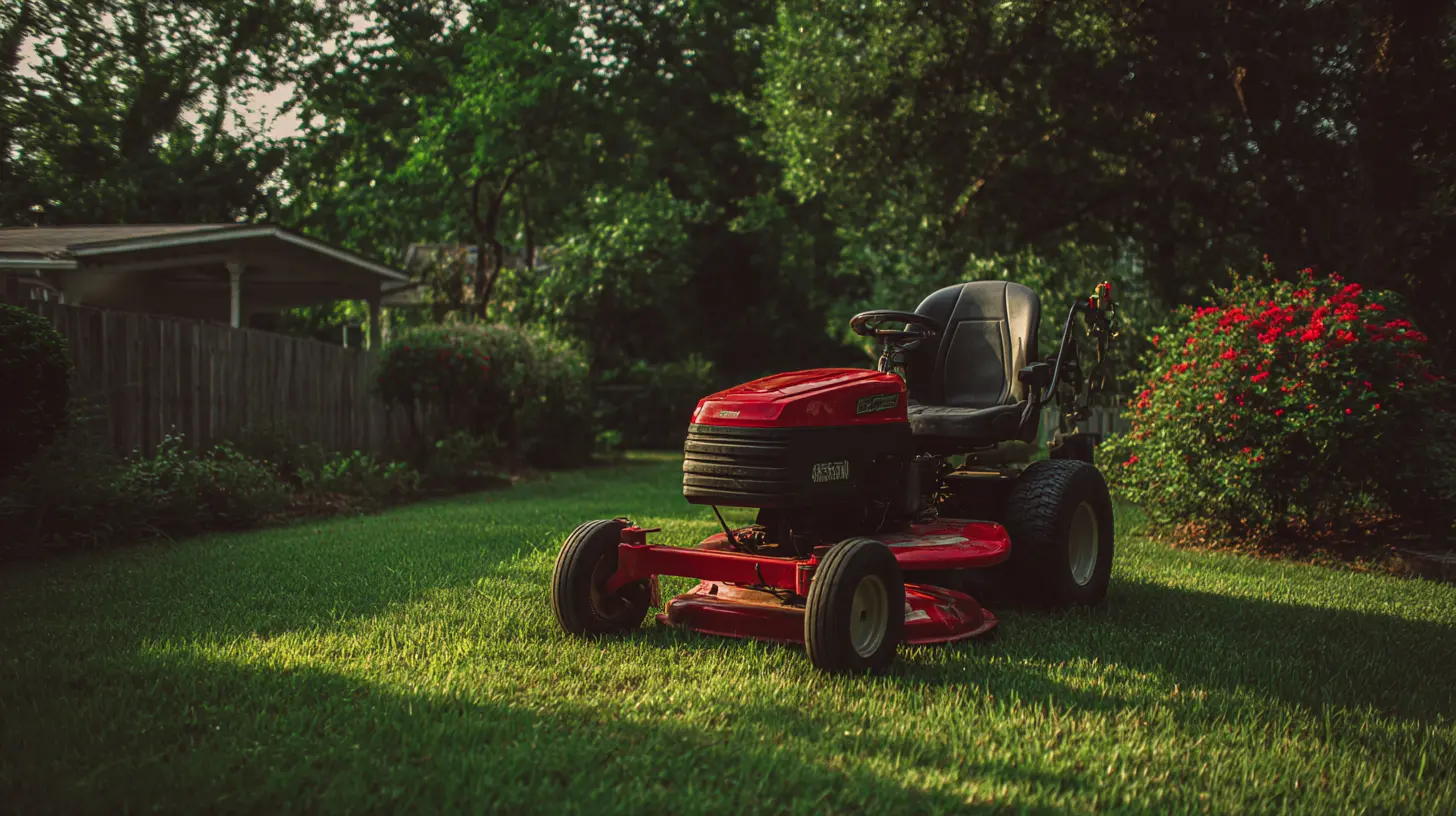
The purchase cost of a quality riding lawn mower ranges from USD 1,500 for an entry-level lawn tractor to over USD 12,000 for a commercial zero-turn model. This upfront investment is the single largest barrier for homeowners coming from push mower ownership. Annual maintenance costs including oil, filters, belts, and blade replacement add USD 150 to USD 400 per year depending on usage intensity.
- Storage space requirements are substantial: most riding mowers measure 70 to 90 inches in length and 40 to 55 inches in width, requiring a dedicated garage bay or outdoor shed with a waterproof cover.
- In very tight spaces — narrow gates under 36 inches, terraced garden sections, or steep embankments over 15 degrees — a riding mower either cannot operate safely or delivers a worse result than a push mower would.
- Fuel costs for a gasoline riding mower running 50 hours per season (typical for a 1 to 2 acre residential property) amount to approximately USD 80 to USD 120 per year at current fuel prices, a cost that compounds over a 10-year ownership period.
Riding Lawn Mower vs Push Mower
Push mowers remain the better choice for lawns under 0.5 acres with significant slope or complex landscaping that requires the operator to stop, back up, and reposition frequently. A self-propelled 21-inch push mower costs USD 300 to USD 600, stores in minimal space, and handles steep hills with better safety margins than a riding mower. Maintenance is also simpler: a single-cylinder push mower engine has far fewer components to service than a riding mower drivetrain.
Riding mowers dominate on flat to moderately sloped properties above 0.5 acres. The performance gap widens sharply above 1 acre, where push mowing becomes a full-day physically exhausting task while a riding mower completes the same area in under an hour. Operating cost differences are modest at low mowing frequencies but compound significantly for users mowing more than once per week.
Riding Garden Mower vs Zero-Turn Mower
Both machine types are riding mowers, but they differ in steering system, speed, and precision. A conventional riding tractor uses front-wheel steering controlled by a steering wheel, giving familiar car-like handling but requiring a 3-point turn to reverse direction at the end of a row. A zero-turn mower uses dual hydraulic lap bars to control each rear wheel independently, allowing the machine to pivot in place and begin the next row immediately without reversing.
The practical result is that a zero-turn mower cuts a 2-acre lawn 25 to 35% faster than an equivalent-deck riding tractor because it eliminates the time wasted on turning maneuvers at row ends. Zero-turn models also produce cleaner stripes and tighter obstacle cuts. The trade-off is that lap-bar steering has a steeper learning curve for new operators, and zero-turn machines perform poorly on slopes steeper than 15 degrees because differential wheel speeds on a slope can cause lateral sliding.
Choosing the Right Riding Lawn Mower
Selection comes down to five overlapping factors: lawn size, terrain type, budget, engine preference, and attachment compatibility. Mapping your property against these criteria before visiting a dealership eliminates the common mistake of buying a machine sized for the showroom rather than for the actual workload.
- Lawn Size: Under 0.5 acres: push mower sufficient. 0.5 to 1 acre: rear engine riding mower or entry lawn tractor. 1 to 3 acres: mid-range lawn tractor or residential zero-turn. Over 3 acres: commercial zero-turn or garden tractor.
- Terrain Type: Flat, open lawns favor zero-turn for speed. Rolling terrain with slopes above 10 degrees favors a four-wheel-drive lawn tractor or garden tractor with better downhill stability.
- Budget: USD 1,500 to USD 2,500 covers reliable entry-level lawn tractors from major brands. USD 3,000 to USD 6,000 accesses mid-range zero-turn and hydrostatic tractors. Above USD 6,000 enters commercial-grade territory with fabricated decks and commercial-warranty engines.
- Engine Type: Gas engines offer longer uninterrupted runtime and are better for large acreage. Electric models are better for noise-sensitive areas, properties with available charging infrastructure, and users seeking lower long-term fuel costs.
- Attachment Compatibility: Buyers who need seasonal utility (snow blowing, tilling, aerating) should prioritize garden tractors with rear PTO over lawn tractors with mowing-only designs.
Best Uses for Riding Lawn Mowers
Residential lawn care on properties between 0.5 and 3 acres is the core use case for riding mowers, and where the majority of units sold are deployed. Beyond the private backyard, estate maintenance on historical properties, resort grounds, and large private landholdings depends on fleets of riding mowers to keep visual standards consistent without excessive labor costs.
Commercial landscaping companies use riding mowers alongside zero-turn units to service multiple residential accounts per day; a crew deploying a 54-inch zero-turn can complete a typical residential lawn in 12 to 18 minutes, making hourly account volume financially viable.
Seasonal property upkeep on vacation homes, rental properties, and agricultural land with buffer strips or roadside grass also relies heavily on riding mowers to cover ground quickly before overgrowth becomes a weed seed dispersal problem.
Attachments and Accessories
One of the most valuable but underutilized features of riding lawn mowers is the attachment system that transforms a seasonal mower into a year-round grounds maintenance platform.
- Grass Catchers and Bagger Kits: Rear or side bag systems collect clippings cleanly, which is necessary when mowing overgrown lawns where clipping volume would smother regrowth.
- Mulching Kits: Replace or supplement standard blades with mulching-profile blades that re-cut clippings into fine fragments, returning organic nitrogen to the soil without bagging.
- Snow Blades and Blowers: Front-mounted snow blades allow garden tractors to clear driveways and access roads in winter, extending machine utility to 12 months per year.
- Lawn Rollers: Towed behind the mower to flatten mole hills, frost heave, or soil disturbance after spring thaw, particularly on golf-quality turf.
- Spreaders and Sprayers: Tow-behind rotary spreaders and liquid tank sprayers cover fertilizer, herbicide, or overseeding operations at mowing speed, combining two maintenance tasks in one pass.
A riding lawn mower equipped with the right seasonal attachments is not just a grass cutter — it is the operational core of a full-year grounds maintenance program.
Maintenance Guide
Consistent preventive maintenance determines whether a riding mower lasts 8 years or 20 years. Most manufacturer-recommended service intervals are measured in engine hours rather than calendar time, because mowing frequency varies considerably between users.
- Clean the Deck After Every Use: Wet grass clippings adhering to the underside of the deck trap moisture, accelerate rust, and reduce airflow quality in the next session. A pressure washer or brush applied to the underside immediately after mowing extends deck life by years.
- Sharpen Blades Every 20 to 25 Hours: Dull blades tear grass rather than cutting it cleanly, leaving ragged white tips that signal stress and invite fungal infection. A standard grinder or rotary file restores the blade edge in 10 minutes per blade.
- Change Engine Oil Every 50 Hours or Annually: Riding mower engines are air-cooled single or twin-cylinder designs that run at high continuous temperatures. Oil degrades faster than in water-cooled automotive engines; SAE 30 or 10W-30 at the manufacturer-specified volume is the correct fill for most models.
- Inspect and Replace Drive Belts Every 100 to 200 Hours: The drive belts connecting the engine to the deck spindles and transmission crack, stretch, and fray with use. Early replacement prevents belt failure mid-session and protects the more expensive pulleys.
- Check Tire Pressure Monthly: Uneven tire inflation causes an uneven cutting plane across the deck, producing scalping on one side of the mow path. Most riding mower tires operate at 10 to 14 PSI; check with a standard gauge before each session.
- Winter Storage Preparation: Before storage, run the fuel tank down or add a fuel stabilizer to prevent carburetor varnishing over a 4 to 6 month idle period. Disconnect the battery and store it on a trickle charger. Clean, lubricate, and cover the machine in a dry environment.
Common Riding Mower Problems
Most riding mower failures trace back to deferred maintenance rather than mechanical defects. Recognizing the early signs of common problems prevents minor repairs from becoming expensive component replacements.
- Engine Starting Problems: Usually caused by a stale fuel mixture, a fouled spark plug, or a depleted battery in electric start systems. Fresh fuel and a spark plug check resolve the majority of no-start complaints without any specialized tools.
- Uneven Cutting: Results from a bent blade, uneven tire pressure, a loose or damaged deck spindle bearing, or an out-of-level deck. Diagnose by inspecting the blade and checking tire pressure first, as these are the most common causes.
- Excessive Vibration: A cracked or unbalanced blade after striking a hidden rock or root is the primary cause. Never continue mowing after a blade impact without inspecting the blade for damage, as an imbalanced blade destroys spindle bearings rapidly.
- Transmission Problems: Hydrostatic transmissions that lose responsiveness or produce grinding noises typically need fluid replacement or a damaged drive belt replacement, not full transmission rebuilds.
- Blade Engagement Failure: The electric PTO clutch that activates the deck on most modern mowers can burn out if blades are engaged while the deck is overloaded with wet, heavy grass. Disengaging and clearing the deck before re-engagement extends clutch life.
Safety Tips for Operating
Riding mowers generate blade tip speeds exceeding 200 mph and can discharge debris at high velocity. Safe operation requires consistent habits, not occasional caution.
- Wear closed-toe shoes or boots and long pants on every mowing session. Eye protection is strongly recommended when mowing near gravel paths or mulch beds where small projectile risk is high.
- Mow slopes at an angle across the slope rather than directly up or down when using a riding tractor; never exceed a 15-degree slope on most riding tractors or a 10-degree slope on zero-turn models without checking the manufacturer’s rated maximum incline.
- Clear all children and pets from the mowing area before starting. Keep a clear line of sight ahead of the machine at all times; small children can move faster than the mower operator can stop.
- Disengage the blades before backing up, crossing gravel, or approaching any person. Most modern mowers include a reverse blade disengagement interlock, but operators should not rely on this as the primary safety measure.
- Never refuel a hot engine or store gasoline in the same enclosed space as the running mower. Electric models eliminate fuel handling risk but require care to keep charging cables clear of water exposure.
Fuel-Powered vs Electric Riding Lawn Mowers
Gasoline riding mowers produce between 90 and 100 decibels of operating noise and emit carbon monoxide, unburned hydrocarbons, and nitrogen oxides during operation. The U.S. Environmental Protection Agency (EPA) estimates that operating a gasoline lawn mower for one hour generates equivalent hydrocarbon emissions to driving a modern passenger car approximately 45 miles.
Electric models produce zero direct emissions and operate at 75 to 82 decibels, a noise reduction of roughly 8 to 18 decibels, which corresponds to a perceived 2 to 4 times quieter operational sound level. Long-term operating costs favor electric models for high-frequency users. Electricity to charge an 82-volt, 10-kilowatt-hour battery pack costs approximately USD 1.20 to USD 1.50 per full charge at U.S. average electricity rates.
A comparable gasoline session consuming 1 gallon of fuel costs USD 3.20 to USD 3.80 at 2025 pricing. Over 100 operating hours per season, this produces an annual fuel cost difference of USD 170 to USD 230 per year in favor of electric operation. The higher upfront cost of electric models (typically USD 1,000 to USD 2,000 more than equivalent gasoline models) amortizes over 5 to 7 seasons at high mowing frequency.
Smart Technology in Modern Mowers
The integration of digital systems into riding mowers accelerated sharply between 2023 and 2025, driven by consumer familiarity with smartphone-connected devices and manufacturer competition in the premium residential segment. Husqvarna, John Deere, and Cub Cadet all introduced Bluetooth and Wi-Fi-enabled riding mowers in this period that connect to companion mobile applications for monitoring and control.
- GPS Tracking: Enables geo-fencing on commercial fleets and theft recovery on premium residential units. Operators receive alerts when a mower leaves a defined boundary.
- Smartphone Connectivity: Apps display real-time engine hours, fuel or battery level, blade engagement status, and maintenance reminders calibrated to the machine’s actual usage rather than a fixed calendar schedule.
- Automated Mowing Features: Semi-autonomous riding mowers using pre-programmed path maps are entering the market in 2025, designed for large flat properties where the operator activates a route and supervises rather than steering continuously.
- Digital Maintenance Alerts: Sensors monitoring oil pressure, drive belt tension, and blade spindle temperature can flag developing problems before failure, reducing costly emergency repairs.
Environmental Impact of Riding Lawn Mowers
Gasoline-powered riding mowers are a meaningful source of outdoor air pollution. The EPA and California Air Resources Board (CARB) classify small off-road engines (SORE), including lawn mowers, as a significant contributor to ground-level ozone formation in suburban areas. California’s CARB phased out the sale of new gasoline-powered small engines for lawn equipment beginning in 2024, accelerating the market shift toward electric alternatives that was already underway nationally.
Battery disposal at end-of-life is the primary environmental concern for electric models. Lithium-ion battery packs require specialized recycling to recover cobalt, lithium, and manganese. Most major manufacturers including EGO, Husqvarna, and Greenworks provide take-back programs for spent battery packs, but consumer awareness and participation rates remain low.
Sustainable mowing practices applicable to all machine types include mulching instead of bagging (reducing landfill clipping volume), mowing at optimal height (reducing mowing frequency by maintaining healthier turf), and scheduling mowing during cooler morning hours to reduce fuel or battery consumption from engine thermal stress.
Cost of Owning
Total cost of ownership over a 10-year period includes the purchase price, annual fuel or electricity costs, routine maintenance supplies, and occasional parts replacement. A mid-range gasoline lawn tractor purchased at USD 2,500 will accumulate approximately USD 3,500 in operating costs over 10 years at typical residential use, bringing the 10-year total to roughly USD 6,000.
A comparable electric model at USD 4,000 purchase price accumulates approximately USD 1,800 in electricity and maintenance costs over the same period, producing a 10-year total near USD 5,800 — slightly lower than the gasoline equivalent and increasingly competitive as battery prices decline.
Replacement parts that most commonly drive unexpected costs include drive belts (USD 20 to USD 60 each, replaced every 3 to 4 years), cutting blades (USD 15 to USD 40 per blade), and front wheel bearings (USD 30 to USD 80 per pair). Users who perform their own routine maintenance and sharpen rather than replace blades regularly reduce parts costs by 40 to 60% compared to dealership service pricing.
Tips for Extending Riding Lawn Mower Lifespan
Proper storage, consistent servicing, and correct operating habits extend the service life of a riding mower from the average 8 to 10 years to 15 to 20 years on well-maintained machines. The following practices make the greatest difference.
- Store the mower in a dry, covered environment year-round. UV exposure degrades deck paint and seat materials; moisture accelerates corrosion on the deck underside and frame welds.
- Follow the manufacturer’s service schedule by engine hours, not by calendar. A machine used 80 hours per season needs its first oil change twice as fast as one used 40 hours per season.
- Mow at the correct cutting height for your grass type and season. Scalping the lawn stresses the turf, increases debris contact with blades, and reduces the visual quality of the cut.
- Use fresh, ethanol-free fuel in gasoline models when possible. Ethanol-blended gasoline absorbs water and degrades faster in the fuel system, contributing to carburetor varnishing in machines stored more than 30 days without treatment.
- Inspect and lubricate grease fittings on the front axle, steering linkage, and deck spindle housings at the interval specified in the owner’s manual, typically every 25 to 50 hours.
Conclusion
A riding lawn mower represents one of the most consequential outdoor equipment investments a property owner or grounds manager makes. The right machine — matched to your lawn’s size, terrain, and seasonal task requirements — will deliver consistent, high-quality results for 10 to 20 years with minimal downtime. The wrong choice results in a machine that either underperforms on your specific conditions or overshoots your actual needs, leaving value unused and maintenance costs elevated.
Frequently Asked Questions (FAQs)
How long do riding lawn mowers last?
A well-maintained gasoline riding mower from a major brand lasts 10 to 15 years or 500 to 1,000 engine hours under typical residential use. Commercial-grade zero-turn mowers are engineered for 2,000 to 3,000 hours. Electric riding mowers have fewer wear-prone mechanical components; the main lifespan constraint is battery pack degradation, which typically requires replacement after 3 to 5 years at frequent use intensity.
What size mower do I need?
Match deck width to lawn area: a 30 to 38-inch deck for lawns under 1 acre, a 42 to 46-inch deck for 1 to 2 acres, and a 50 to 54-inch deck for 2 to 4 acres. Above 4 acres, commercial zero-turn models with 60 to 72-inch decks become cost-effective through reduced time per acre.
Can riding mowers handle hills?
Standard lawn tractors are rated for slopes up to 15 degrees. Zero-turn mowers should not exceed 10 to 15 degrees depending on the model. On slopes steeper than these ratings, all-wheel-drive lawn tractors or walk-behind mowers with operator traction control provide safer results.
Are electric riding mowers worth it?
For lawns under 1.5 acres in areas with reliable electricity access, electric riding mowers deliver total cost parity or advantage over gasoline models within 5 to 7 years of ownership. The primary constraint remains runtime per charge; users with larger properties or multiple cutting areas in a single session should verify that available runtime covers their specific workload before purchasing.
How often should blades be sharpened?
Industry consensus is every 20 to 25 operating hours, or at the start of each mowing season if annual usage is below that threshold. A simple test: if mown grass tips appear white and torn rather than clean and green 24 hours after cutting, the blades need sharpening regardless of hours logged.
References:
1. Myers, M. L. (2009). Ride-On Lawnmowers The Hazards of Overturning. Professional Safety, 54(05).
2. Deng, Y., Shirley, J., Rose, T., Geary, L., Feltner, D., Chen, K., … & Kaber, D. B. (2019). A usability assessment of riding lawn-mowing equipment with varying levels of design standards compliance. Applied Ergonomics, 78, 76-85.
3. Heasly, C. C., Perse, R. M., Malone, T. B., & Fleger, S. A. (1989, October). Riding mower control placement guideline development. In Proceedings of the Human Factors Society Annual Meeting (Vol. 33, No. 6, pp. 474-478). Sage CA: Los Angeles, CA: SAGE Publications.
4. Uzoeghelu, U. (2014). Don’t Get Mowed Down: How to Avoid Lawn Mower Injuries.
5. Kocsis, M., Baumbach, T., Olbrich, H., Uhler, R., & Zöllner, R. (2015, July). Hybridization of agriculture vehicles using a ride-on lawn mower. In 2015 10th International Workshop on Robot Motion and Control (RoMoCo) (pp. 170-175). IEEE.
6. Fiorentin, T. A., Beletatti, L., & Pfleger, M. H. (2022, February). Analysis of Vibrations and Acoustics on Riding Lawn Mower. In SAE BRASIL 2021 Web Forum. SAE Technical Paper.
7. Faust, J. L. (1990). GARDENING; Choosing a Lawn Mower: Push or Ride?. The New York Times.
8. Reed, E. S. (2007). Forensic Engineering Analysis of Riding Lawnmower Child Backover Blade Contact Accidents. Journal of the National Academy of Forensic Engineers, 24(1).
9. Sevart, K. B. (2016, November). Ride-On Mower Rollover Accidents: Study and Design Solutions. In ASME International Mechanical Engineering Congress and Exposition (Vol. 50688, p. V014T14A028). American Society of Mechanical Engineers.
10. Hendrickson, R. J., Janik, J. P., Janik, J. S., Goldberg, J., Georgopoulos, G., & Bensard, D. D. (2004). Ride-on lawnmower accidents causing significant torso and extremity injuries in childhood: case report and review. Journal of Trauma and Acute Care Surgery, 56(6), 1345-1347.