Hawaii’s Tropical Gardens Keep The Island Green
- Hawaii loses an estimated one native species every year to extinction, making it the endangered species capital of the United States, yet the islands’ tropical gardens remain one of the most powerful and practical tools available to reverse that trend.
- Hawaii’s tropical gardens keep the island green not only through their aesthetic value but through active ecological functions: they stabilize watersheds, harbor seed banks for critically rare plants, produce food without stripping topsoil, and train the next generation of conservation-minded growers.
- As climate pressure intensifies and development encroaches on natural corridors, these living green systems are becoming indispensable infrastructure for both ecological survival and agricultural resilience across the Pacific.


Hawaii is often described in the language of tourism: beaches, sunsets, and luau. But beneath that postcard surface lies one of the most ecologically complex archipelagos on Earth. The Hawaiian Islands host more than 10,000 native species, approximately 90% of which exist nowhere else on the planet, according to the Bishop Museum’s 2024 biodiversity assessment.
That extraordinary endemism (the condition of species being native and restricted to one specific geographic region) makes Hawaii uniquely vulnerable to any disruption of its plant communities.
Why Hawaii’s Green Canopy Is Beautiful Scenery
Hawaii’s tropical gardens, both public botanical institutions and private cultivated landscapes, serve as critical buffers between the natural ecosystems that remain and the pressures that threaten them. These gardens are not passive ornaments. They function as seed repositories, pollinator corridors, erosion barriers, carbon sinks, and educational platforms. When we say Hawaii’s tropical gardens keep the island green, we mean it in a biological and hydrological sense just as much as a visual one.
This article guides how tropical gardening practices, native plant cultivation, sustainable horticulture, and community-based conservation are working together across the Hawaiian Islands to protect biodiversity, support food systems, and build ecological resilience for the decades ahead.

Ecology Behind Hawaii’s Tropical Gardens
Hawaii’s tropical gardens are shaped by a unique ecological balance of volcanic soil, warm temperatures, high humidity, and abundant rainfall. These conditions support a rich diversity of native and tropical plant species that thrive in the islands’ year-round growing environment.
Understanding the ecology behind Hawaii’s gardens helps gardeners and landscapers choose suitable plants, manage water efficiently, and maintain healthy ecosystems while preserving the islands’ natural biodiversity.
How Tropical Plant Regulate Water, Soil, and Climate
A tropical garden in Hawaii is not simply a collection of plants arranged for aesthetics. It is a functioning ecological system where each layer of vegetation contributes to larger cycles of water, nutrients, and energy. The canopy layer intercepts rainfall and slows its descent to the soil surface, reducing runoff velocity.
Leaf litter decomposes into organic matter that feeds soil microbiota (microscopic fungi, bacteria, and invertebrates that break down organic material and release nutrients). Root networks bind the soil, preventing the erosion that strips agricultural land of its productive capacity.
Hawaii’s volcanic soil is rich in minerals but highly susceptible to leaching (the process by which water washes soluble nutrients downward, out of reach of plant roots) when it is left bare. Dense tropical ground cover and mulch layers maintain what soil scientists call the litter horizon, the uppermost layer of partially decomposed organic material that acts as a sponge, absorbing moisture and releasing it slowly into deeper soil profiles.
Maintaining this layer is one of the most practical outcomes of well-managed tropical gardening. The hydrological role of tropical gardens becomes especially critical in Hawaii’s ahupuaa (the traditional Hawaiian land division system that runs from mountain ridge to the ocean). Upland forests and gardens recharge the freshwater lens beneath each island.
Deforestation and removal of native vegetation in upland zones has been directly correlated with groundwater decline in coastal communities, according to a 2023 study published in Water Resources Research.
Role of Endemic Plants in Sustaining Island Biodiversity
Endemic plant species are the architectural foundation of Hawaii’s native ecosystems. Plants like the ohia lehua (Metrosideros polymorpha), the most widespread native tree in Hawaii, provide nesting habitat for endangered honeycreepers, nectar for native bees, and structural canopy that supports dozens of dependent plant species beneath it.
When ohia forests collapse, as they are doing at alarming rates due to Rapid Ohia Death (a fungal disease caused by Ceratocystis species first identified in 2014), the cascading loss of biodiversity is severe and fast. Tropical gardens that cultivate endemic species play a direct role in preserving genetic diversity.

Botanical institutions like the Harold L. Lyon Arboretum and the National Tropical Botanical Garden (NTBG) maintain living collections of plants whose wild populations have dropped to fewer than 50 individual specimens. These garden collections are not simply exhibits. They are active gene banks from which seeds are harvested, propagated, and returned to restoration sites.
- The NTBG’s Limahuli Garden on Kauai maintains living collections of over 500 native Hawaiian plant species, including more than 70 species classified as critically endangered by the IUCN Red List.
- Lyon Arboretum’s seed conservation program has banked over 230 Hawaiian endemic species, with germination protocols developed for species that had never been cultivated before.
- The Waimea Valley Botanical Garden on Oahu serves as a primary site for the propagation of plants used in large-scale government-led restoration planting programs.
Hawaii’s Botanical Gardens as Conservation Anchors
Hawaii’s botanical gardens serve as important conservation anchors by protecting rare native plants, preserving genetic diversity, and supporting ecological research. Many of these gardens cultivate endangered Hawaiian species that are threatened by habitat loss, invasive plants, and changing environmental conditions.
Beyond conservation, they also educate visitors about sustainable gardening, island ecosystems, and the importance of protecting Hawaii’s unique tropical biodiversity for future generations.
The National Tropical Botanical Garden Network
The National Tropical Botanical Garden, chartered by the United States Congress in 1964, operates five gardens across Hawaii and one in Florida. Its Hawaiian campuses include Allerton Garden, McBryde Garden, Limahuli Garden, and Kahanu Garden, each representing a distinct ecological zone and conservation mission. These are not passive parks. Each garden runs active research, propagation, and field restoration programs that connect garden horticulture to landscape-scale conservation outcomes.
McBryde Garden on Kauai houses the Center for Plant Conservation’s largest Pacific plant seed bank, where seeds are stored at controlled temperatures and moisture levels to extend their viability for decades. Seed banking (the practice of storing seeds under controlled conditions to preserve genetic material for future use) is one of the most cost-effective strategies for protecting species from extinction when their wild habitat cannot yet be secured.
The NTBG’s Plant Extinction Prevention Program, operating since 2003, focuses specifically on species with fewer than 50 wild individuals remaining. As of 2025, the program has brought more than 50 Hawaiian plant species back from the edge of extinction through a combination of seed banking, garden cultivation, and strategic outplanting into protected natural areas.
Community Botanical Gardens and Grassroots Movement
Beyond the major institutions, Hawaii hosts a growing network of community-run tropical gardens that perform conservation functions at the neighborhood scale. Programs like the Malama Learning Center on Oahu and the Kohala Center on the Big Island engage local residents, schoolchildren, and farmers in native plant cultivation, traditional Hawaiian agroforestry, and food forest design.
These community gardens are important for reasons that go beyond plant conservation. They serve as transfer points for traditional ecological knowledge (TEK), the accumulated understanding of how plants, soils, water, and animals interact that indigenous Hawaiian communities developed over more than 1,500 years of careful observation and land management. TEK is increasingly recognized by conservation scientists as a reliable and complementary source of data alongside laboratory research.
Hawaii’s tropical gardens keep the island green not by freezing the landscape in amber but by regenerating it continuously, plant by plant, seed by seed, grower by grower.
Traditional Hawaiian Agroforestry
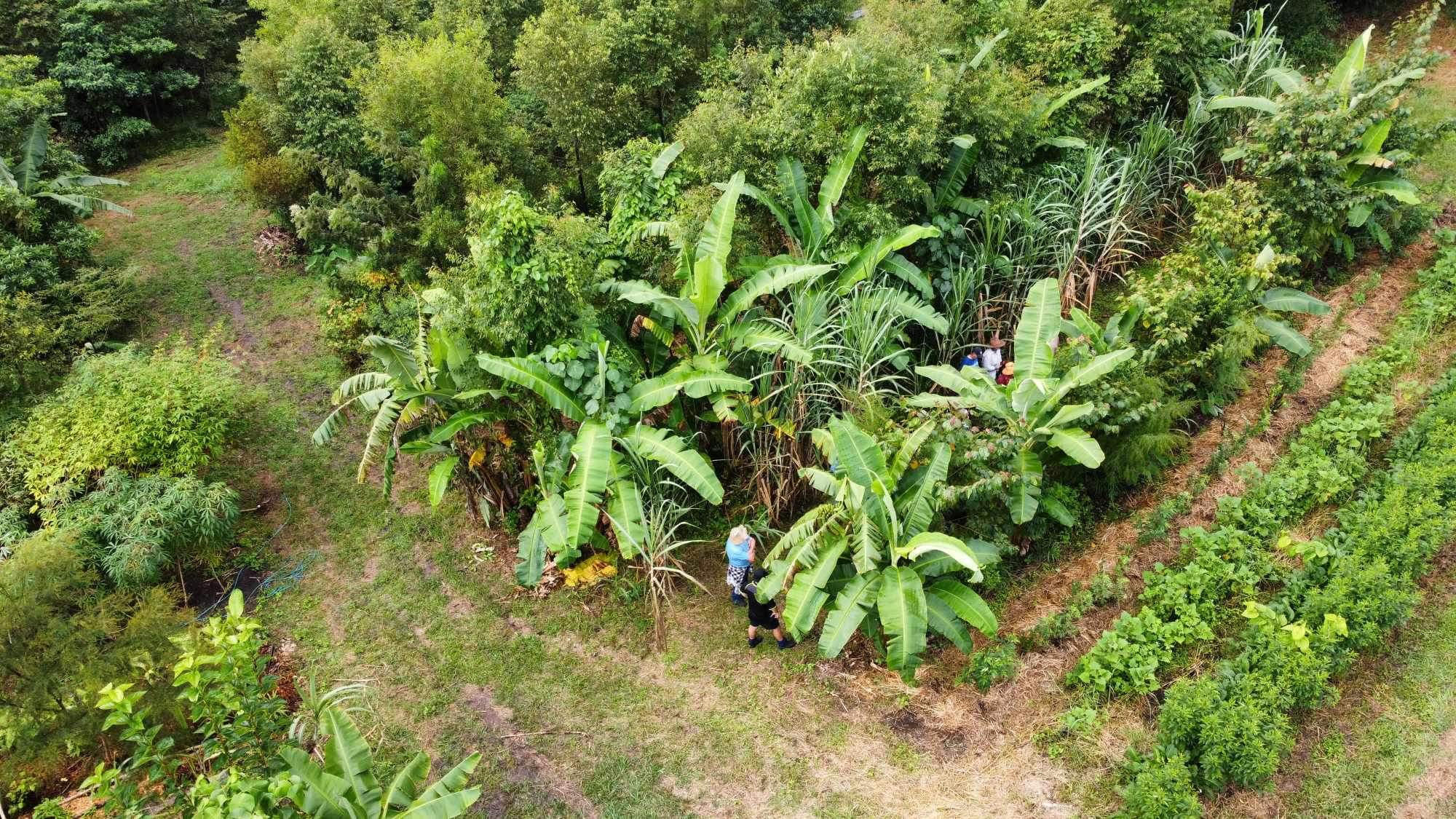
Traditional Hawaiian agroforestry is a sustainable land management system that combines trees, crops, and native plants to create productive and balanced ecosystems. Ancient Hawaiians carefully cultivated plants such as taro, breadfruit, coconut, banana, and sweet potato in layered growing systems that conserved soil, retained moisture, and supported long-term food production.
This approach not only provided reliable resources for communities but also protected watersheds, encouraged biodiversity, and maintained harmony with Hawaii’s natural environment.
The Ahupuaa System and Its Relevance to Modern Horticulture
Long before Western botanical science arrived in Hawaii, Native Hawaiians had developed one of the most sophisticated land management systems in the world. The ahupuaa divided each island into wedge-shaped land sections running from the mountain summit to the reef, ensuring that each community had access to every ecological zone and the resources it produced. Within each ahupuaa, the mauka (upland) zones were managed for native timber, medicinal plants, and water catchment, while the coastal lowlands supported fishponds, taro fields, and breadfruit groves.
The Hawaiian food forest, known as the multi-story garden system combining tall canopy trees like breadfruit (Artocarpus altilis) and coconut (Cocos nucifera) with mid-layer fruiting plants, understory crops like taro (Colocasia esculenta), and ground-level herbs, is a direct ancestor of what modern agroforestry researchers now call a multi-strata agroforestry system. This system produces food while maintaining the ecological functions of a natural forest, including water regulation, soil carbon storage, and habitat provision.
Culturally Anchored Crops Driving Green Landscapes
Taro cultivation in Hawaii is inseparable from the concept of green gardening. Wetland taro paddies, known as lo’i kalo, are among the most ecologically productive agricultural systems in the Pacific. A functioning lo’i kalo purifies water as it flows through the paddy, supports aquatic invertebrates, and serves as a habitat corridor for native waterbirds like the alae ula (Hawaiian moorhen).
Breadfruit, or ‘ulu, is experiencing a significant agricultural revival across Hawaii. The Breadfruit Institute at the NTBG maintains the world’s largest breadfruit germplasm collection, with over 120 cultivated varieties from across the Pacific. Research published in 2024 in the Journal of Ethnobiology and Ethnomedicine confirmed that breadfruit trees sequester an average of 11.4 kg of carbon per tree per year in tropical agroforestry systems, making ‘ulu cultivation a practical climate mitigation strategy alongside its food production value.
Invasive Species Management
Invasive species management is an essential part of protecting native ecosystems, agricultural land, and garden biodiversity. Invasive plants, insects, and animals can spread aggressively, compete with native species, damage crops, and disrupt natural habitats if left uncontrolled.
Effective management strategies such as early detection, manual removal, biological control, and responsible planting practices help reduce environmental damage and support healthier, more balanced ecosystems.
Why Invasive Plants Threaten Hawaiian Gardens
Hawaii is simultaneously one of the most biodiverse and most invasion-threatened places on Earth. The same geographic isolation that allowed unique species to evolve over millions of years also left those species with no defenses against introduced competitors. Invasive plants, species introduced from other regions that establish and spread aggressively, now cover an estimated 47% of Hawaii’s total land area, according to the Hawaii Invasive Species Council’s 2025 biennial report.
Strawberry guava (Psidium cattleianum), miconia (Miconia calvescens), and Kahili ginger (Hedychium gardnerianum) are among the most damaging invasive plants in Hawaii’s upland zones. They form dense monocultures that shade out native seedlings, alter soil chemistry, and disrupt the water cycle by drawing more water from the soil than native species do, a process called transpiration enhancement that reduces groundwater recharge.
Managing invasives is not optional for any serious tropical garden in Hawaii. Every well-managed garden acts as a buffer, a zone where native plants are grown densely enough to resist invasion and where practitioners learn to identify and remove invasive species before they establish.
Practical Invasive Control Strategies
Effective invasive species management in a Hawaiian tropical garden follows a clear hierarchy of interventions:
a. Early detection and identification: Practitioners learn to identify invasive seedlings at the cotyledon (seed leaf) stage, before they establish root systems deep enough to resist removal.
b. Manual removal: Hand-pulling or cutting at the root crown is the first response for most herbaceous invasives and small woody seedlings.
c. Cut-stump herbicide treatment: For established woody invasives like strawberry guava, a precise application of systemic herbicide (a chemical that travels through the plant’s vascular system to kill the root) to a freshly cut stump is more effective than broad spraying and reduces off-target chemical exposure.
d. Native replanting: Removing an invasive without immediately planting a competitive native species creates an open niche that a second wave of invasives will colonize. Rapid replanting with native ground cover closes that window.
e. Biocontrol (biological control): For landscape-scale invasive species like strawberry guava, biocontrol agents, in this case a host-specific rust fungus (Puccinia psidii), are used in coordination with state agencies to suppress population growth without chemical intervention.
Sustainable Horticulture Practices
Sustainable horticulture practices focus on growing plants in ways that protect natural resources, improve soil health, and reduce environmental impact over time. Techniques such as
- Composting
- Water conservation
- Organic fertilization
- Mulching
- Crop rotation
- Integrated pest management
help create healthier gardens while minimizing chemical use and waste. By adopting sustainable methods, gardeners and growers can maintain productive landscapes that support biodiversity, conserve ecosystems, and promote long-term environmental resilience.
Water-Wise Gardening in a Variable Rainfall Landscape
Hawaii’s rainfall is extraordinarily variable. The Big Island’s Hilo side receives over 200 inches of rain per year, while Kona on the same island receives fewer than 25 inches. This means that water-wise gardening practices are not uniform across the state but must be calibrated to each specific microclimate. Soil moisture sensors, rain gauges, and direct observation of plant stress signals are all tools that experienced Hawaiian growers use to avoid both overwatering and drought stress.
Mulching is one of the most broadly applicable water conservation tools in Hawaiian tropical gardens. A 3 to 4-inch layer of wood chip mulch reduces soil moisture evaporation by up to 70% in open tropical conditions, according to data from the University of Hawaii Cooperative Extension. Mulch also moderates soil temperature, suppresses weed germination, and feeds soil biology as it decomposes, building soil organic matter over time.
Drip irrigation systems that deliver water directly to the root zone reduce water use by 30 to 50% compared to overhead sprinkler systems in tropical garden settings. Greywater recycling systems, where legal under Hawaii state code, allow household water from sinks and showers to irrigate non-edible garden zones, reducing freshwater demand.
Swales (shallow, level trenches dug along the contour of a slope to capture and slow rainwater) are used in upland Hawaiian gardens to maximize infiltration and reduce runoff from heavy rainfall events.
Composting and Soil Building in Volcanic Terrain
Hawaii’s volcanic soils range from extremely young and mineral-rich to deeply weathered and nutrient-depleted, depending on the age of the lava flow and rainfall. On young lava, soil building starts from scratch, and composting is one of the primary tools available to growers. Hot composting, where organic materials are built into piles that reach temperatures of 130 to 160 degrees Fahrenheit through microbial activity, kills weed seeds and pathogens while generating a nutrient-dense soil amendment in four to eight weeks.
Many Hawaiian growers use a combination of food scraps, green plant material (high in nitrogen), and carbon-rich materials like wood chips or sugarcane bagasse (the fibrous byproduct of sugarcane processing) to build compost piles. The resulting compost improves both soil structure and biological activity, which is especially critical in heavily leached tropical soils where nutrient retention is a persistent challenge.
Tropical Gardens as Food Systems
Tropical gardens can function as highly productive food systems by combining fruit trees, vegetables, herbs, root crops, and medicinal plants within a diverse growing environment. Warm temperatures, abundant rainfall, and year-round growing conditions allow tropical gardens to provide continuous harvests while supporting pollinators, soil health, and local biodiversity.
When designed thoughtfully, these gardens become sustainable ecosystems that supply fresh food, conserve natural resources, and strengthen household or community food security.
Local Food Security Crisis & Garden Response
Hawaii imports approximately 85 to 90% of its food, a dependency that leaves the islands extraordinarily vulnerable to supply chain disruptions, as the COVID-19 pandemic demonstrated in 2020 when grocery store shelves emptied within days of shipping slowdowns. The push to grow more food locally is not new in Hawaii, but it has gained significant political and financial momentum since 2022, with the state legislature allocating over $27 million in new funding for local food production programs between 2022 and 2025.
Tropical gardens play a direct role in food security because the Hawaiian climate allows year-round cultivation of high-calorie, high-nutrition crops that would be impossible in temperate zones. Breadfruit, taro, sweet potato (Ipomoea batatas), cassava (Manihot esculenta), and moringa (Moringa oleifera) all produce reliable yields in Hawaii’s warm, humid conditions with relatively low inputs.
Landscape Design Principles for Hawaiian Conditions
Designing a productive edible tropical garden in Hawaii requires thinking in vertical layers, not just horizontal rows. Each layer of the garden performs a distinct function and produces distinct outputs:
- Tall canopy trees (breadfruit, avocado, mango) provide shade, windbreak, and high-calorie fruit crops while creating a microclimate that protects lower layers from heat stress and moisture loss.
- Sub-canopy trees and large shrubs (papaya, banana, citrus) produce fruit continuously and add structural diversity to the garden system.
- Shrub layer plants (Hawaiian chili pepper, Okinawan sweet potato vine, cranberry hibiscus) fill horizontal space and provide vegetables, herbs, and medicinal plants.
- Herbaceous ground layer (taro, sweet potato, green onion, edible ginger) provides root crops and leafy greens that thrive in the dappled light beneath taller layers.
- Soil layer crops and ground covers (nitrogen-fixing leguminous covers like peanut or desmodium) build soil fertility passively while reducing weeding labor.
This multi-layer approach, adapted from traditional Hawaiian food forest design and modern permaculture principles, produces more food per square foot than monoculture row cropping while maintaining the ecological benefits of a diversified plant community.
Climate Resilience and Future of Hawaii’s Gardens
Climate resilience is becoming increasingly important for the future of Hawaii’s gardens as rising temperatures, changing rainfall patterns, invasive species, and extreme weather events continue to affect tropical ecosystems.
Gardeners, conservationists, and researchers are adopting sustainable practices such as drought-tolerant planting, water conservation, native species restoration, and soil regeneration to help landscapes adapt to environmental change. By combining traditional ecological knowledge with modern horticultural strategies, Hawaii’s gardens can remain productive, diverse, and environmentally resilient for future generations.
How Tropical Gardens Adapt to a Changing Climate
Hawaii’s average annual temperatures have increased by approximately 0.3 degrees Fahrenheit per decade since 1950, according to NOAA’s 2024 State Climate Summary for Hawaii. Rainfall patterns are shifting, with leeward (dry side) areas becoming drier and some windward areas experiencing more intense but less frequent rainfall events. These changes affect what plants grow well where, and they require growers and horticulturalists to adapt their plant selections and management strategies accordingly.
Climate-adaptive gardening in Hawaii means selecting plant varieties with documented drought tolerance, heat resilience, or resistance to the fungal diseases that thrive in increasingly humid conditions. It also means diversifying plant portfolios so that no single weather event can collapse an entire garden’s productivity. The practice of saving seeds from plants that performed well in an unusually dry or wet season, known as adaptive selection, builds garden resilience over generations of cultivation.
- The University of Hawaii College of Tropical Agriculture and Human Resources (CTAHR) has published updated plant variety guides for 2024 to 2025 that include climate-adaptive cultivar recommendations for major Hawaiian food crops.
- Agroforestry systems that combine native and productive introduced species (carefully chosen non-invasive food trees) demonstrate greater stability under variable rainfall than single-species plantings in long-term trials conducted at the Waiakea Agricultural Research Station.
- Watershed restoration gardens in upland zones are being designed to include pioneer species that establish quickly after drought or storm events, maintaining canopy cover even when individual trees are lost.
Role of Agricultural Education in Sustaining Green Gardens
Technical knowledge about tropical horticulture must be transmitted actively or it erodes between generations. Hawaii faces a significant grower age gap, with the average age of the state’s principal farm operator at 59.8 years, according to the USDA 2022 Census of Agriculture. Without intentional education and knowledge transfer, both the practical skills of tropical gardening and the traditional ecological knowledge embedded in native Hawaiian planting systems risk being lost within a single generation.
Programs like the University of Hawaii’s Young Farmers Program, the Kokua Kalihi Valley community farm, and the Hawaii Farm Bureau’s Future Farmers initiatives are actively training the next generation of tropical gardeners, farmers, and conservationists. These programs integrate both scientific horticulture and traditional Hawaiian land management practices, ensuring that graduates understand both the biology of their plants and the cultural context in which those plants have always been grown.
Hawaii’s Tropical Gardens Keep The Island Green
Hawaii’s tropical gardens keep the island green through a network of interconnected functions that no single policy or technology can replicate on its own. They bank the genetic material of species facing extinction. They recharge aquifers that supply drinking water and irrigation to farming communities.
They produce food in a state that imports nearly everything it eats. They train practitioners who will carry both scientific and traditional knowledge forward. And they demonstrate, at every scale from a backyard lo’i kalo to a multi-acre botanical institution, that human cultivation and ecological conservation are not opposing forces but complementary ones.

The challenges are real. Invasive species continue to advance. Climate change is altering rainfall, temperature, and disease pressure in ways that require constant adaptation. The grower population is aging. And the economic pressures that drive landowners toward development over cultivation remain intense.
But the trajectory of investment, research, and community engagement across the Hawaiian Islands shows that the commitment to keeping these islands green is deepening, not declining. For agricultural practitioners, agronomists, and gardening enthusiasts, Hawaii offers not just inspiration but transferable models.
The integration of native plant ecology, traditional agroforestry, modern sustainable horticulture, and community-based conservation that defines the best Hawaiian tropical gardens is a framework that applies anywhere people are trying to grow food, protect biodiversity, and build landscapes that function over the long term. Hawaii’s tropical gardens prove, year after year, that keeping the land green is both a moral commitment and a practical strategy.
1. Kaufman, A. J., Adams, R., & Cox, L. J. (2006, August). A tropical paradise: native Hawaiians and visitors to Hawaii landscape perception of aesthetic qualities of the urban forest and natural landscapes of Hawaii. In XXVII International Horticultural Congress-IHC2006: International Symposium on Horticultural Practices and Therapy for Human 775 (pp. 131-137). 2. Santiago, R. P. (2023). A Collaborative Approach for the Future of A Community Urban Green Space in Kāneʻohe, Hawaiʻi. 3. Bornhorst, H. L., & Rauch, F. D. (2003). Native Hawaiian plants for landscaping, conservation, and reforestation. 4. Fahs, B. (2006). Super Simple Guide to Creating Hawaiian Gardens: For KamaAina and Malihini. AuthorHouse. 5. Kessler, L. (2012). No “Perfect Garden”: American Constructions of Hawaiian Landscapes and the Making of a Climatic Borderland. Southern California Quarterly, 94(3), 277-303. 6. Clay, H. F., & Hubbard, J. C. (2021). The Hawai’i garden: tropical shrubs. University of Hawaii Press. 7. Anderson-Fung, P. O., & Maly, K. (2002). Hawaiian Ecosystems and Culture; Why Growing Plants for Lei Helps to Preserve Hawaii’s Natural and Cultural Heritage. 8. Swan, L. (2012). A Landscaped Architecture for Hawaii: Strategies for Designing with Natural Systems. 9. Galioto, T. R. (2004). Form and composition of a present day Hawaiian garden. University of Hawai’i at Manoa. 10. Bornhorst, H. L. (2005). Growing native Hawaiian plants: a how-to guide for the gardener. Bess Press.References: