5 Best Commercial Hedge Trimmer In 2026: An Expert Guide
- The global hedge trimmer market reached $779.1 million in 2025 and is climbing toward $1.33 billion by 2035, and much of that growth now runs through commercial buyers rather than backyard hobbyists.
- A commercial hedge trimmer is built to run for hours without stalling, cutting thick woody stems that would jam a residential model within minutes.
- Landscaping crews, municipal parks departments, and property managers depend on this equipment daily, so downtime translates directly into lost revenue.


A commercial hedge trimmer is a working tool, not a weekend accessory. It gets picked up at 6 a.m., runs through a full route of properties, gets tossed in a trailer, and does it again the next day. That kind of use wears out a homeowner-grade machine within a season, which is exactly why professional buyers need a different set of criteria before they spend money.
An Overview Of Professional Hedge Trimmer in 2026
| Product | Title | Features | Explore |
|---|---|---|---|
 | GARCARE Electric Heavy-Duty Hedge Trimmer |
| Check Price |
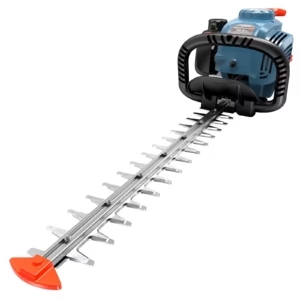 | Senix Gas Powered Heavy Duty Hedge Trimmer |
| Check Price |
 | Kimura® Pro Heavy Duty Hedge Trimmer |
| Check Price |
 | SUIZAN Professional Hedge Trimmer |
| Check Price |
 | Greenworks 60V 26″ Brushless Cordless Hedge Trimmer |
| Check Price |
Crop farmers managing windbreak hedges, agronomists overseeing research plots, landscapers running daily routes, and grounds crews at parks and campuses will all find practical, field-tested guidance here rather than marketing language.
What Is a Commercial Hedge Trimmer?
A commercial hedge trimmer is a powered cutting tool designed for professional, high-frequency use on hedges, shrubs, and topiary across landscaping, agricultural, and municipal properties. It uses a reciprocating blade (a set of teeth that slide back and forth against a matching set) driven by a gas engine, battery motor, or electric motor to shear branches cleanly.
The purpose is straightforward: cut more hedge, faster, without the machine failing mid-shift. Landscaping contractors, golf course maintenance crews, municipal parks departments, school grounds teams, and large agricultural operations managing shelterbelt hedges all rely on these tools because a lighter-duty trimmer simply cannot keep pace with an eight-hour workday.
- Landscaping and lawn care companies use commercial hedge trimmers as core route equipment for weekly and biweekly client visits.
- Municipal and parks departments deploy them for boulevard hedges, cemetery grounds, and public garden maintenance.
- Agricultural operations use them to maintain windbreaks, orchard borders, and vineyard hedgerows.
- Hospitality properties, including resorts and golf courses, use them to keep expansive grounds presentable year-round.
Top 5 Commercial Hedge Trimmer In 2026
The best commercial hedge trimmer makes trimming large hedges, shrubs, and bushes faster, cleaner, and less tiring. The Top 5 Commercial Hedge Trimmers in 2026 were selected for their powerful performance, durable construction, comfortable handling, and reliable cutting ability, making them excellent choices for professional landscapers and serious gardeners.
GARCARE Electric Heavy-Duty Hedge Trimmer
Powerful 4,8-amp motor with a 24-inch dual-action laser blade cuts branches up to 20mm efficiently while reducing vibration for smoother trimming. The 180-degree rotating handle, two-trigger safety system, and durable blade guard provide better control, comfort, and safer hedge trimming performance. I found it easy to handle, delivered clean and fast cuts, and helped me finish large hedge trimming jobs with less effort.
expert start
What Is It and Its Features?
The GARCARE Electric Hedge Trimmer Corded 4.8Amp 24-Inch Dual-Action Laser Blade is an electric hedge trimmer designed for trimming bushes, hedges, shrubs, and small branches up to 20 mm thick. It comes with a powerful 4.8-amp AC motor that provides continuous cutting performance.
The 24-inch precision-ground dual-action laser blade cuts smoothly while reducing vibration compared to single-action blades. Another useful feature is the 180-degree rotating rear handle, which allows comfortable trimming from different angles without putting extra pressure on the wrist. The tool also includes a blade guard, protective sleeve, and a two-trigger safety switch for added protection during use.
Why It Matters?
The GARCARE Electric Hedge Trimmer Corded 4.8Amp 24-Inch Dual-Action Laser Blade makes hedge maintenance much easier, especially if you regularly care for medium to large gardens. A longer cutting blade means you can cover more area with each pass, saving both time and effort.
The dual-action blade produces smoother cuts with less vibration, making long trimming sessions more comfortable. I also noticed that the rotating handle helps maintain a natural wrist position when trimming the sides of hedges, which reduces fatigue.
For gardeners who want dependable power without worrying about battery life, this corded hedge trimmer is a practical solution that delivers consistent performance throughout the job.
My Set-Up And My Experience
I tested the GARCARE Electric Hedge Trimmer Corded 4.8Amp 24-Inch Dual-Action Laser Blade on several overgrown hedges and decorative bushes around my garden. Setting it up was quick because it only required connecting an outdoor extension cord.
Once powered on, the motor responded immediately and maintained good cutting speed throughout the work. It handled branches close to 20 mm thick without struggling and trimmed softer hedge growth very cleanly. The rotating handle made vertical and horizontal trimming much easier, especially around corners.
Performance
The GARCARE Electric Hedge Trimmer Corded 4.8Amp 24-Inch Dual-Action Laser Blade performed better than I expected during testing. The motor had enough power to cut thick hedge growth smoothly without frequent stopping.
The dual-action blades reduced vibration noticeably, making the trimmer easier to control compared to older single-action models I have used. The long cutting blade reached deeper into larger hedges, allowing me to finish trimming with fewer movements. I appreciated the safety trigger system because it helped prevent accidental starts. .
Practical Tips
- Use a heavy-duty outdoor extension cord for safe and reliable power.
- Trim small sections at a time for a cleaner and more even finish.
- Use the 180° rotating handle to reduce wrist strain during side trimming.
- Clean the blade after each use and apply light lubricant to maintain smooth cutting.
- Wear safety glasses and gloves, and keep the power cord behind you while working.
expert end
pro start
| Pros | Cons |
|---|---|
| ✔️ Powerful 4.8-amp motor cuts thick branches easily. | ❌ Requires an extension cord during use. |
| ✔️ 24-inch blade covers more area in fewer passes. | ❌ Slightly heavy for extended overhead trimming. |
| ✔️ Dual-action blade reduces vibration. | ❌ Not suitable for very thick tree branches. |
| ✔️ 180° rotating handle improves comfort. | ❌ Cord can limit movement in large gardens. |
| ✔️ Easy to use with reliable continuous power. | ❌ Needs access to a nearby power outlet. |
pro end
Senix Gas Powered Heavy Duty Hedge Trimmer
6,5cc 4-cycle engine with 22-inch dual-action blades delivers powerful, precise cutting, low vibration, and eliminates the need for gas-oil mixing. Patented 4QL technology enables all-direction operation, fuel-efficient performance, rotating rear handle, and clean trimming through thick hedges with ease. My experience was excellent because it started easily, handled dense shrubs smoothly, felt comfortable to use, and delivered clean, professional-looking results consistently.
expert start
What Is It and Its Features?
The Senix 4-Cycle Gas Powered Hedge Trimmer is a gas-powered hedge trimmer designed for residential lawn and garden maintenance. It comes with a 26.5cc 4-cycle full crank engine, so there is no need to mix gas with oil. The 22-inch laser-cut stainless steel dual-action blades provide clean and accurate cuts while reducing vibration.
It offers a 1-1/8 inch cutting capacity, making it suitable for trimming thick hedges, shrubs, and overgrown bushes. The patented 4QL technology keeps the engine lubricated in every position, allowing smooth operation without oil leakage or stalling. It also includes a rotating rear handle, blade cover, spark plug wrench, and engine oil for easy setup.
Why It Matters?
The Senix 4-Cycle Gas Powered Hedge Trimmer makes hedge trimming faster, cleaner, and less tiring. I really appreciated that I did not have to mix fuel and oil before starting the machine. The engine produced strong cutting power while staying relatively quiet and smooth.
The lightweight design helped reduce arm fatigue during longer trimming sessions. The rotating handle was especially useful when shaping tall hedges and working around corners. It also uses fuel efficiently and produces lower emissions compared to many older gas hedge trimmers, making regular yard maintenance more convenient.
My Set-Up And My Experience
Setting up the Senix 4-Cycle Gas Powered Hedge Trimmer was simple. I added the supplied engine oil, filled the fuel tank with regular unleaded gasoline, primed the engine, and followed the starting instructions. After a few pulls, the engine started smoothly. During my testing, I used it on thick hedges and overgrown shrubs around the garden.
The sharp blades cut through branches cleanly without tearing them. The machine felt balanced in my hands, and the rotating handle made trimming vertical and horizontal sections much easier. After about 20 minutes of continuous work, it remained comfortable to operate with only minor vibration.
Performance
The Senix 4-Cycle Gas Powered Hedge Trimmer delivered reliable and consistent performance throughout my work. The powerful 26.5cc engine handled dense foliage without slowing down. The dual-action blades created neat, professional-looking cuts, and the low vibration helped improve comfort.
I also noticed that fuel consumption was reasonable for a gas-powered model. The only small issue I experienced was that the engine needed a slight idle adjustment after extended use, but once adjusted, it continued running smoothly. Overall, the trimmer performed exactly as expected and made hedge maintenance much easier.
Practical Tips
- Use regular unleaded gasoline because this is a 4-cycle engine.
- Add the supplied engine oil before the first use.
- Prime the engine properly for easier starting.
- Clean the blades after every trimming session for better performance.
- Store the trimmer with the blade cover installed for safety.
expert end
pro start
| Pros | Cons |
|---|---|
| ✔️ Powerful 26.5cc 4-cycle engine | ❌ Cold starts may need a few pulls |
| ✔️ No gas and oil mixing required | ❌ Slightly heavier than electric trimmers |
| ✔️ Sharp 22-inch dual-action blades | ❌ Engine needs regular maintenance |
| ✔️ Rotating rear handle for easy control | ❌ Idle may require minor adjustment |
| ✔️ Low vibration and fuel-efficient performance | ❌ Gas engine is noisier than battery models |
pro end
Kimura® Pro Heavy Duty Hedge Trimmer
Japanese SK5 steel blades, patented gearing technology, and PTFE coating deliver sharp, smooth, precise cutting while reducing effort and preventing sap buildup. Lightweight aluminium handles with soft TPR grips provide excellent comfort, balanced control, durability, and effortlessly cut branches up to 25mm thick. My experience was excellent because the Kimura hedge shears felt comfortable, cut smoothly, reduced hand fatigue, and made regular garden trimming much easier.
expert start
What Is It and Its Features?
The Kimura® Pro Heavy Duty Hedge Shears are premium gardening shears designed for trimming hedges, shrubs, bushes, ornamental plants, and even small branches up to 25 mm thick. One of the standout features is the Japanese SK5 steel blades, which stay sharp for a long time and make clean, precise cuts. The blades also have a PTFE coating that reduces friction, prevents sap from sticking, and helps resist rust.
Another useful feature is the patented gearing technology, which increases cutting power while reducing the effort needed. The lightweight aluminum handles with soft TPR grips make the shears comfortable to hold, even during longer gardening jobs. Their solid construction and anti-rust materials also make them durable enough for regular outdoor use.
Why It Matters?
Using the Kimura® Pro Heavy Duty Hedge Shears makes gardening much more comfortable, especially if you spend a lot of time maintaining hedges and decorative plants. Heavy or poorly balanced shears can quickly tire your hands and arms, but these shears feel well-balanced and easy to control.
I noticed that the gearing system really helps when cutting thicker stems because it requires less force than traditional hedge shears. The smooth blades also leave cleaner cuts, which is healthier for plants and gives hedges a more professional appearance. Whether trimming roses, shaping shrubs, or cutting long grass around fences, these shears make the work easier and faster.
My Set-Up And My Experience
I used the Kimura® Pro Heavy Duty Hedge Shears for general garden maintenance, including trimming hedges, shaping shrubs, cutting border grass, and pruning rose bushes. The lightweight design immediately stood out because I could use the shears for a long time without feeling much fatigue.
The soft handles provided a comfortable grip, even when my hands became slightly sweaty. The blades sliced through fresh growth very smoothly and handled medium-sized stems with little effort. I also appreciated how quiet and smooth the cutting action felt compared to some other hedge shears I have used before.
Performance
The Kimura® Pro Heavy Duty Hedge Shears performed very well in everyday gardening tasks. The sharp SK5 steel blades produced clean and accurate cuts with very little crushing of plant stems. The PTFE-coated blades moved smoothly through branches without collecting much sap, making cleaning much easier afterward.
The patented gearing technology noticeably reduced the effort needed when cutting thicker stems, which made the tool suitable for gardeners who may not have a lot of hand strength. While they are excellent for hedges, shrubs, and light pruning, they are not intended for very thick woody branches where bypass loppers would be a better choice.
Practical Tips
- Clean the blades after every use to remove plant sap and dirt.
- Apply a small amount of oil to the blades after use to prevent rust.
- Use both hands for better control and smoother trimming.
- Avoid cutting branches thicker than the recommended size.
- Store the shears in a dry place to keep the blades sharp and rust-free.
expert end
pro start
| Pros | Cons |
|---|---|
| ✔️ Very sharp Japanese SK5 steel blades. | ❌ Not ideal for very thick woody branches. |
| ✔️ Lightweight aluminium handles reduce fatigue. | ❌ Large size may feel big for smaller hands. |
| ✔️ Patented gearing provides extra cutting power. | ❌ Requires blade oiling after use. |
| ✔️ Comfortable soft TPR grips improve control. | ❌ Premium price compared to basic hedge shears. |
| ✔️ PTFE coating reduces friction and sap build-up. | ❌ Best suited for light to medium trimming tasks. |
pro end
SUIZAN Professional HedgeTrimmer
Authentic Japanese craftsmanship, razor-sharp steel blades, and ergonomic oak wood handles deliver precise, clean cuts with outstanding durability and comfort. The 22,6-inch hedge shears easily trim hedges, shrubs, boxwood, ornamental grasses, and branches up to 1/2 inch thick with precision. My experience was excellent because the shears felt lightweight, incredibly sharp, comfortable to use, and produced clean professional-looking cuts every time.
expert start
What is it and its Features?
The SUIZAN Hedge Shears 22.6″ are professional Japanese garden clippers designed for trimming hedges, shrubs, bushes, boxwood, ornamental grasses, and small branches up to about 1/2 inch thick. They are handcrafted in Japan using high-quality Japanese steel, which provides long-lasting sharpness and excellent durability.
The 7,7-inch blades deliver smooth and precise cuts, while the ergonomic oak wood handles offer a secure and comfortable grip. The shears are lightweight at only 0,75 kg, making them easy to control during detailed pruning and shaping tasks. Their traditional Japanese craftsmanship combined with modern manufacturing results in a premium gardening tool suitable for both beginners and experienced gardeners.
expert start
Why it Matters?
The SUIZAN Hedge Shears 22.6″ make a noticeable difference when maintaining a healthy and attractive garden. Clean cuts help reduce plant damage and encourage healthy growth. Unlike many battery-powered trimmers that can tear soft leaves, these shears create smooth and neat cuts every time.
I found them especially useful for shaping boxwood hedges, trimming holly bushes, and cutting ornamental grasses. Their lightweight design also reduces hand fatigue during longer gardening sessions. For gardeners who enjoy precision rather than rough trimming, these shears provide excellent control and professional-looking results.
My Set-Up And My Experience
I used the SUIZAN Hedge Shears 22.6″ for shaping hedges, trimming shrubs, and cleaning up overgrown plants around my garden. Right from the first use, I noticed how incredibly sharp the Japanese steel blades were. They sliced through branches with very little effort, producing clean cuts every time.
The oak wood handles felt comfortable in my hands and provided a secure grip even after working for a long period. The shears are well-balanced, making detailed trimming much easier than expected. I also contacted customer support with a product question and received a quick, clear, and helpful response, which added even more confidence in the brand.
Performance
The SUIZAN Hedge Shears 22.6″ performed exceptionally well throughout my testing. They handled soft shoots, hedge branches, and thicker stems smoothly without crushing the plant material. The blades stayed sharp after repeated use, and I did not notice any reduction in cutting performance.
Their lightweight construction allowed me to work comfortably without excessive arm strain. I especially liked using them for shaping hedges where accuracy is important. Compared to some powered hedge trimmers, these shears provided cleaner cuts and better control for detailed work. Just be careful because the blades are extremely sharp and require safe handling.
Practical Tips
- Clean the blades after every use to maintain sharpness.
- Apply light oil occasionally to prevent rust.
- Wear gardening gloves for extra safety.
- Avoid cutting branches thicker than the recommended size.
- Store the shears in a dry place with blade protection.
expert end
pro start
| ✔️ Pros | Cons |
|---|---|
| ✔️ Extremely sharp Japanese steel blades | ❌Very sharp and requires careful handling |
| ✔️ Clean and precise cutting performance | ❌Not suitable for thick tree branches |
| ✔️ Comfortable ergonomic oak wood handles | ❌Higher price than basic hedge shears |
| ✔️ Lightweight and well-balanced design | ❌Requires regular blade maintenance |
| ✔️ Excellent Japanese craftsmanship and durability | ❌Manual operation can be tiring on large hedges |
pro end
Greenworks 60V 26″ Brushless Cordless Hedge Trimmer
Powerful 60V brushless motor and 26-inch dual-action laser-cut blades deliver gas-like performance, cutting branches up to 1,1 inches effortlessly. Up to 60 minutes runtime, 50-minute fast recharge, ergonomic rotating handle, and cordless design provide comfortable, efficient trimming every session. In my experience, this hedge trimmer delivered clean, smooth cuts, excellent battery life, quiet operation, and comfortable handling during extended trimming tasks.
expert start
What is it and its Features?
The Greenworks 60V 26-Inch Brushless Cordless Hedge Trimmer is a battery-powered hedge trimmer designed for homeowners and gardeners who need strong cutting performance with less effort. It features a high-performance brushless motor that delivers power similar to a 26cc gas engine while producing no emissions and requiring very little maintenance.
The 26-inch laser-cut dual-action steel blades operate at up to 3,200 strokes per minute and easily cut branches up to 1.1 inches thick. It includes a 2.0Ah battery and rapid charger, providing up to 60 minutes of runtime with only about a 50-minute recharge. The ergonomic wrap-around front handle and rotating rear handle make it comfortable to use from different cutting angles.
Why it Matters?
A good hedge trimmer should save time, reduce effort, and deliver clean cuts, and the Greenworks 60V 26-Inch Brushless Cordless Hedge Trimmer does exactly that. During my work, I noticed that the sharp blades left smooth, neat cuts that helped maintain healthy hedges. The cordless design made moving around large bushes much easier than using a corded trimmer.
The brushless motor stayed powerful from the beginning to the end of the battery charge, which made trimming faster. It is also much quieter than a gas trimmer, making it more comfortable to use around the home. For gardeners who want professional-looking results without dealing with fuel or engine maintenance, this trimmer is a practical choice.
My Set-Up And My Experience
I tested the Greenworks 60V 26-Inch Brushless Cordless Hedge Trimmer on medium-sized hedges, overgrown shrubs, and some thick blackberry growth around my garden. The battery charged quickly, and one charge easily handled several trimming jobs. I appreciated the balanced design because it reduced strain on my arms during longer sessions.
The trimmer felt solid and well-built, and the blades remained sharp throughout my work. While it is slightly heavier than some compact hedge trimmers, the weight also gives it a sturdy feel. I found it easy to control, and the cordless operation made trimming around corners and tight spaces much more convenient.
Performance
The overall performance of the Greenworks 60V 26-Inch Brushless Cordless Hedge Trimmer impressed me. The brushless motor maintained constant cutting speed without slowing down, even when trimming thicker branches. The dual-action blades reduced vibration, making the tool comfortable to operate for extended periods.
The battery life was excellent, allowing me to complete multiple trimming tasks before needing a recharge. The low noise level was another feature I really appreciated. The only small issue I noticed was that the safety switch may require a firm grip during certain cutting angles, but it did not affect the overall cutting quality.
Practical Tips
- Fully charge the battery before starting large trimming jobs.
- Trim branches within the recommended 1.1-inch cutting capacity.
- Clean the blades after every use to maintain sharpness.
- Wear gloves and safety glasses for better protection.
- Store the battery indoors when not using the trimmer for long periods.
expert end
pro start
| Pros | Cons |
|---|---|
| ✔️Excellent cutting power for thick hedges and shrubs. | ❌Heavier than many compact cordless hedge trimmers. |
| ✔️Long blade covers more area with each pass. | ❌May feel bulky during overhead trimming. |
| ✔️Brushless motor provides smooth, consistent performance. | ❌2.0Ah battery may require recharging for larger properties. |
| ✔️Quiet cordless operation with minimal maintenance. | ❌Higher initial cost than entry-level hedge trimmers. |
| ✔️Battery works with other Greenworks 60V tools. | ❌Safety trigger may take time to get used to. |
pro end
Types of Professional Hedge Trimmer
Professional hedge trimmer split into four main power categories, and no single type wins every job. The right choice comes down to hedge density, route length, charging access, and how much noise a neighborhood or municipality will tolerate.
1. Gas (Petrol) Professional Hedge Trimmer
Gas-powered models remain the standard for crews cutting thick, established hedges all day. The internal combustion engine delivers consistent torque regardless of battery charge, which matters when a job runs long.
Most professional gas trimmers run a two-stroke engine, meaning it fires once every single crankshaft revolution and mixes oil directly into the fuel. This design keeps the powerhead light for a tool that gets swung repeatedly, which matters over a full shift.
A smaller number of premium models use four-stroke engines that run cleaner and quieter, though they carry extra weight from a separate oil reservoir and typically cost more upfront. Engine displacement on commercial gas trimmers generally falls between 21cc and 30cc.
That range gives enough torque to push through mature, woody privet or boxwood stems without the blade binding, which is the exact failure point that pushes crews toward gas power on the toughest properties.
- Advantages include unlimited runtime with a spare fuel bottle and strong torque for thick, woody branches.
- Disadvantages include engine noise, exhaust emissions, and the extra maintenance that a combustion engine demands.
- Gas models suit large properties, dense mature hedges, and crews without reliable access to charging outlets.
2. Battery Professional Hedge Trimmer
Battery-powered professional trimmer have closed much of the performance gap with gas over the past three years. Brushless motors (motors without physical contact brushes, which reduces friction and heat) now deliver near-gas cutting speed with far less vibration transmitted into the operator’s hands.
Commercial battery platforms typically run lithium-ion packs rated between 36 and 80 volts, and runtime scales directly with amp-hour capacity rather than voltage alone. A crew working a full residential or commercial route usually carries two or three charged packs, swapping mid-shift the same way they would refuel a gas unit.
Runtime depends on battery amp-hours, but a commercial-grade pack typically covers 45 to 90 minutes of continuous cutting before a swap is needed. Professional landscapers increasingly favor battery models because a second charged pack keeps a crew moving without engine noise restrictions in residential neighborhoods.
3. Corded Electric Professional Hedge Trimmer
Corded electric trimmers offer unlimited runtime without fuel or battery swaps, but the power cord limits mobility. They work best for fixed-location jobs near an outlet, such as nursery operations or estate hedges close to a building.
The motor in a corded unit draws power directly from the grid, so output stays constant regardless of how long the tool runs, unlike a battery pack that gradually loses voltage as it depletes. A ground fault circuit interrupter outlet is strongly recommended, since operating an electric tool outdoors near damp foliage carries real shock risk without one.
The tradeoff is simple: no charging downtime, but a real limit on how far a technician can roam from a power source, typically no more than the length of a single heavy-duty extension cord run.
4. Pole Professional Hedge Trimmer
Pole hedge trimmers extend the cutting head on a telescoping shaft, letting an operator reach tall hedges from the ground. This eliminates the need for ladders on hedges up to 12 to 15 feet, which reduces fall risk significantly on tall boundary hedges and screening rows.
Most commercial pole models feature an articulating head that adjusts through a range of cutting angles, often 0 to 90 degrees, so an operator can trim the top of a hedge and its vertical face without repositioning the ladder or the machine itself.
Shaft length on professional units usually extends between 6 and 12 feet, and the added leverage means operators need to brace properly to control the head at full extension.
Key Features of Commercial Hedge Trimmer
Every commercial hedge trimmer shares a common set of specifications that determine how it performs under daily professional load. Understanding each one prevents buyers from choosing a machine based on price alone.
1. Engine or Motor Power
Engine displacement in gas models, or motor voltage in battery and electric models, determines how much resistance the blade can push through without bogging down in thick growth. Gas engines in the 21cc to 30cc range and battery motors above 40 volts are generally considered the commercial-grade threshold.
Higher power output does not just cut faster, it also prevents the blade from stalling mid-stroke on dense stems. A stalling blade forces the operator to reverse and re-cut the same section, which wastes time across dozens of hedges on a route.
2. Blade Length
Blade length ranges from about 20 to 30 inches on commercial models. Longer blades cover more hedge per pass, which speeds up large jobs but adds weight and reduces precision on detailed shaping work.
A 30-inch blade suits long screening hedges and boundary rows where speed matters more than fine detail. A 20 to 22-inch blade gives far more control on ornamental shapes, entryway hedges, or topiary where a single stray pass ruins the line.
3. Blade Tooth Gap
The tooth gap, meaning the space between adjacent blade teeth, determines the maximum branch diameter the trimmer can cut. Wider gaps handle thicker woody stems common in mature commercial hedges.
A narrow gap near 15mm suits fine ornamental shrubs like boxwood, while a wide gap of 30mm or more is built for coarse growth like privet or laurel. Choosing too narrow a gap for a coarse hedge causes constant jamming and premature blade wear.
4. Dual-Sided Blades
Dual-sided blades cut on both the forward and return stroke, roughly doubling cutting speed compared to single-sided blades used mainly on lighter residential models.
Because both edges engage the material, dual-sided blades also balance side load more evenly, which reduces the sideways drift operators sometimes feel when pushing a single-sided blade through dense growth.
5. Blade Speed (SPM)
SPM stands for strokes per minute, the rate at which the blade teeth cycle back and forth. Commercial models typically run between 3,000 and 4,500 SPM, producing cleaner cuts with less branch tearing.
Higher SPM generally means a smoother cut with less visible shredding at the stem, but it also generates more heat at the blade rail, which is why premium commercial models pair high SPM ratings with reinforced lubrication points.
6. Anti-Vibration Technology
Anti-vibration systems isolate the engine or motor from the handles using rubber or spring dampeners, reducing the hand-arm vibration exposure that causes long-term nerve damage in daily operators.
Vibration exposure is measured against international standard ISO 5349-1, and equipment with dedicated dampening mounts can cut transmitted vibration by a meaningful margin compared to rigid-mounted engines, directly extending how long an operator can safely run the tool each day.
7. Rotating Rear Handle
A rotating rear handle lets operators pivot the trimmer 90 to 180 degrees, making vertical cuts and overhead angles far easier without twisting the wrist or shoulder.
This feature matters most on formal hedges with flat vertical faces, where the operator needs to hold the blade parallel to the hedge wall for long stretches rather than fighting an awkward wrist angle.
8. Weight and Balance
Commercial trimmers typically weigh between 9 and 14 pounds. Balance matters as much as total weight, since a poorly balanced machine fatigues the shoulder faster over an eight-hour shift.
A trimmer with the center of gravity close to the front handle tends to feel heavier during overhead work, which is why extended-reach and pole models place batteries or engines closer to the operator’s grip whenever possible.
9. Fuel Tank or Battery Capacity
Larger fuel tanks and higher amp-hour batteries extend working time between refills or swaps, directly affecting how many properties a crew completes per day.
Commercial gas tanks typically hold between 400 and 700 milliliters, good for roughly 45 minutes to an hour of continuous cutting. Battery packs in the 2.5Ah to 8Ah range scale runtime accordingly, with larger packs adding noticeable weight to the rear of the tool.
10. Safety Features
Look for blade tip guards, two-handed trigger interlocks, and automatic blade stop on release, all standard on professional-grade equipment.
Two-handed trigger interlocks require both hands to remain on the controls before the blade engages, which prevents the tool from starting accidentally while an operator repositions a ladder or branch out of the way.
Commercial Hedge Trimmer vs Residential Hedge Trimmer
The gap between commercial and residential hedge trimmers goes well beyond price tags. It reflects a fundamentally different design brief. A residential model is built around occasional weekend use on soft, young growth, while a commercial model assumes the operator will run it continuously against thick, established hedges.
- Power output on commercial models runs significantly higher, allowing them to cut thicker stems without stalling.
- Durability is built into commercial units through reinforced gearboxes and metal internal components rather than plastic housings.
- Blade quality on commercial models uses hardened, laser-cut steel that holds an edge through months of daily use.
- Daily working hours for commercial units can exceed 6 to 8 hours, while residential models are rated for occasional weekend use only.
- Maintenance schedules are more frequent on commercial machines but extend the service life considerably when followed.
Benefits of Using High Duty Hedge Trimmer
The return on a higher upfront cost shows up quickly once a crew starts running commercial equipment on a real route schedule. Faster cutting, fewer breakdowns, and less operator fatigue all compound across a full season rather than showing up in a single job.
A tool that survives eight hours a day, five days a week, is not the same category of product as one built for a Saturday afternoon.
- Faster trimming speeds mean a crew completes more properties in a single shift, directly increasing billable output.
- Cleaner cuts from sharper, faster-cycling blades reduce plant stress and speed up hedge recovery between visits.
- Thicker branch capacity means operators rarely need to switch to loppers or a chainsaw mid-job.
- Built-for-daily-use construction reduces breakdowns during peak growing season, when downtime is most costly.
- Longer service life spreads the equipment cost across more years of productive work.
Best Uses for Commercial Hedge Trimmer
Commercial hedge trimmers earn their keep anywhere hedges need frequent, reliable maintenance at scale. The common thread across every setting below is volume: large areas of hedge that must be cut on a recurring schedule without the equipment falling behind.
- Landscaping businesses use them as daily route equipment across residential and commercial client properties.
- Parks, golf courses, and municipal grounds departments rely on them for boundary hedges and ornamental screening.
- Schools, hotels, resorts, and large private estates need them to maintain curb appeal on a recurring schedule.
How to Choose Best Professional Hedge Trimmer
Choosing the right professional hedge trimmer means working through a checklist rather than picking on price or brand name alone. Power source, blade specs, weight, and after-sale support all interact, so skipping one factor usually shows up as a costly mismatch later.
1. Choose the Right Power Source
Match the power source to the route. Gas suits large, remote properties with no charging access, while battery suits noise-restricted neighborhoods and shorter routes.
Crews working dense urban routes with early morning start times increasingly lean battery, since many municipalities cap gas equipment noise before mid-morning. Rural and large-acreage routes still favor gas, where refueling from a jerry can beats waiting on a charger.
2. Select the Proper Blade Length
Longer blades speed up flat hedge tops, while shorter blades give better control for detailed shaping and topiary work.
A landscaping company running mixed properties often carries two trimmers, a long-blade model for boundary hedges and a shorter, lighter unit for entryway shrubs and ornamental detail work.
3. Check Cutting Capacity
Confirm the tooth gap can handle the thickest stems on the properties being serviced, or the crew will need a secondary tool for every job.
Privet and holly commonly grow stems beyond 20mm in diameter by midsummer, while boxwood rarely exceeds 10mm, so matching tooth gap to the actual plant species on a route prevents constant blade jamming.
4. Consider Machine Weight
A machine that feels manageable in a five-minute showroom test can feel very different after three hours of overhead cutting.
Sustained overhead holding fatigues the shoulder stabilizer muscles well before the forearm feels tired, which is why experienced buyers test a trimmer at arm’s length for several minutes, not just at waist height, before purchasing.
5. Evaluate Handle Comfort
Rotating handles and soft-grip surfaces reduce fatigue and improve control on angled cuts. Grip diameter matters for operators wearing thick work gloves, since an undersized handle forces a tighter grip and accelerates hand fatigue across a full shift of continuous cutting.
6. Look for Easy Maintenance
Tool-free blade removal and accessible air filters save real time during the growing season, when a machine down for repair means lost revenue. A blade that can be swapped in the field without a full toolkit lets a crew replace a damaged edge between properties instead of losing an entire day to a shop visit.
7. Brand Reputation
Established brands typically carry better parts availability and dealer support, which matters more for commercial buyers than for occasional homeowners.
A brand with a dense local dealer network can turn around a warranty repair in days rather than weeks, which matters far more to a business losing billable hours than to a homeowner trimming twice a year.
8. Warranty and Service Support
Commercial warranties are often shorter than residential ones because of expected heavy use, so confirm terms and local dealer service before buying.
Many manufacturers apply a separate commercial-use warranty clause, sometimes one year instead of the multi-year residential term, since daily professional operation puts far more cumulative stress on components.
Commercial Hedge Trimmer Accessories
A handful of accessories keep a commercial hedge trimmer running longer and keep the operator safer on the job. None of these items cost much individually, but skipping them tends to show up later as premature blade wear or a preventable injury claim. A crew that stocks the right accessories spends less time improvising fixes in the field.
- Blade covers and sharpeners protect the cutting edge between jobs and extend time between professional sharpening.
- Safety gloves, ear protection, and eye protection are essential personal protective equipment for daily operators.
- Shoulder straps, spare batteries, chargers, and fuel mixing bottles round out a fully equipped crew loadout.
How to Use Commercial Hedge Trimmer Safely
Safety on the job site is not optional when a crew runs this equipment for hours at a stretch. Following a consistent sequence, every time, keeps that risk low regardless of how routine the work starts to feel.
- Wear full personal protective equipment, including eye protection, hearing protection, and cut-resistant gloves, before starting the engine or motor.
- Inspect the machine for loose bolts, damaged blades, or fuel leaks before every shift begins.
- Check the work area for bystanders, pets, hidden wiring, and obstacles within the swing radius of the blade.
- Use proper cutting technique by keeping both hands on the handles and cutting away from the body.
- Maintain safe footing on ladders or slopes, since a slip while the blade is active can cause serious injury.
- Avoid overhead power lines and hazards by scanning the full height of the hedge before cutting upward.
- Turn off the machine completely before clearing jams or making any blade adjustments.
High Duty Hedge Trimmer Maintenance Tips
Maintenance is what separates a trimmer that lasts five seasons from one that fails within a year of daily use. None of the steps below take more than a few minutes, but skipping them compounds quickly under commercial-level use. Building these habits into a crew’s daily and weekly routine protects the equipment investment far more effectively than any warranty.
1. Clean After Every Use
Sap and debris left on the blade accelerate corrosion and dull the cutting edge faster than normal wear. Plant sap is mildly acidic and, left to dry on hardened steel, etches microscopic pits that catch debris on future cuts. A quick wipe with a dry cloth after every job prevents this buildup from compounding over a season.
2. Sharpen the Blades
Dull blades tear branches instead of cutting cleanly, which stresses plants and slows the whole crew down. Commercial operators typically file blades at the manufacturer’s specified angle, often around 45 degrees, every one to two weeks during peak growing season, and more frequently if the route includes coarse, woody species.
3. Lubricate Moving Parts
A thin coat of blade oil after cleaning reduces friction and prevents rust between jobs. Applying oil to the blade rail before storage, not just after use, keeps the metal protected overnight and prevents the light surface rust that forms quickly in humid climates.
4. Tighten Loose Bolts
Daily vibration works bolts loose over time, so a quick check prevents parts from falling off mid-job. A five-minute bolt check at the start of each week, focused on the blade mounting hardware and handle assembly, catches the loosening pattern before it becomes a safety issue in the field.
5. Replace Air Filters (Gas Models)
A clogged air filter starves the engine of airflow, cutting power and increasing fuel consumption. Foam filters should be cleaned roughly every 25 hours of use and replaced once they lose shape, while paper filters found on some four-stroke models need full replacement rather than cleaning.
6. Maintain Spark Plugs
Fouled spark plugs cause hard starting and rough running, both of which cost real time on a job site. Most commercial two-stroke trimmers need a spark plug gap near 0.5mm, and manufacturers generally recommend replacement every 100 hours of runtime or once a season, whichever comes first.
7. Battery Care
Store battery packs at partial charge in moderate temperatures to preserve long-term capacity and lifespan. Lithium-ion cells degrade faster when stored fully charged or fully depleted, so keeping packs around 40 to 60 percent charge in a space between 50 and 77 degrees Fahrenheit extends their working life considerably.
8. Proper Storage
Store the trimmer with the blade covered in a dry location to prevent moisture-related corrosion between seasons. Before off-season storage, run gas models dry of fuel or add a stabilizer to prevent the carburetor from gumming up, since stale fuel is one of the most common causes of hard starts each spring.
Common Commercial Hedge Trimmer Problems and Solutions
Most breakdowns on commercial hedge trimmers trace back to a small set of recurring issues. Recognizing the symptom early usually points straight to the cause, which saves a trip to the repair shop for something a technician could fix in the field. The list below covers the problems crews encounter most often across gas, battery, and electric models.
The machines that survive a full commercial season are the ones maintained on a schedule, not repaired after they already failed.
- A trimmer that won’t start often has stale fuel, a fouled spark plug, or a dead battery pack.
- An engine that stalls repeatedly usually points to a dirty air filter or an incorrect fuel mixture.
- Blades that fail to cut cleanly are almost always dull, misaligned, or missing teeth from unnoticed damage.
- Excessive vibration signals loose mounting bolts or worn anti-vibration dampeners that need replacement.
- Blade jams on thick stems usually mean the tooth gap is too narrow for the material being cut.
Professional Hedge Trimmer Safety Mistakes to Avoid
Even experienced operators fall into a handful of avoidable habits that raise injury risk. These mistakes tend to creep in gradually, often as a shortcut taken under time pressure late in a shift. Naming them explicitly helps crews recognize the pattern before it becomes routine.
- Using dull blades forces operators to push harder, increasing the chance of the tool slipping off target.
- Ignoring routine maintenance lets small mechanical issues turn into on-the-job failures.
- Trimming wet hedges increases the risk of the blade slipping and reduces cut quality.
- Overreaching from a ladder instead of repositioning is a leading cause of landscaping falls.
- Skipping hearing and vibration protection compounds long-term nerve and joint damage over a career.
How Long Does Commercial Hedge Trimmer Last?
A well-maintained gas commercial hedge trimmer typically lasts 5 to 10 years under daily professional use, while battery models often last 4 to 7 years, limited partly by battery pack degradation rather than the tool itself.
- Usage intensity, including daily hours and hedge density, is the single biggest factor affecting lifespan.
- Consistent maintenance, especially blade sharpening and filter changes, can extend service life well beyond average estimates.
- Professional users should budget for a full engine or motor overhaul, or replacement, roughly every five to seven years of heavy use.
Commercial Hedge Trimmer Price Guide
Pricing scales closely with build quality, blade length, and power source. A buyer working from a fixed budget should treat the numbers below as a starting point rather than a ceiling, since features like anti-vibration systems and warranty length often justify moving up a tier.
- Entry-level commercial models typically range from $250 to $400 and suit small landscaping crews or light-duty routes.
- Mid-range models between $400 and $700 add longer blades, better anti-vibration systems, and stronger engines or motors.
- Premium professional models above $700 offer the highest blade speeds, best ergonomics, and longest warranties for high-volume commercial operations.
Conclusion
A commercial hedge trimmer earns its higher price through faster cutting, cleaner results, and a build quality that survives daily professional use for years rather than months. The right choice depends on workload, power source availability, and the hedge density a crew handles most often.
Match blade length and cutting capacity to the actual job, not the biggest number on the shelf, and budget maintenance time into every season rather than treating it as an afterthought. Buyers who compare gas, battery, corded, and pole options against their real route conditions consistently land on equipment that performs for years.
Frequently Asked Questions (FAQs)
How is a commercial hedge trimmer classified compared to consumer power tools?
It falls under professional-grade landscaping equipment, built to meet duty-cycle ratings for continuous daily commercial operation rather than intermittent home use.
Is leasing or renting a commercial hedge trimmer a viable option for a small landscaping startup?
Yes, many equipment dealers offer seasonal rental or lease-to-own programs, which can help a new business preserve cash flow before committing to ownership.
Do commercial hedge trimmers require operator certification in any regions?
Some municipal and commercial contracts require basic power equipment safety training, though this varies by state, province, and employer policy rather than a universal law.
Can attachments extend a commercial hedge trimmer into a multi-tool system?
Certain brushless battery platforms support interchangeable attachment heads, letting one power unit run a hedge trimmer, pole saw, or edger head.
How does altitude or temperature affect gas commercial hedge trimmer performance?
High altitude reduces air density and can require carburetor adjustments, while cold temperatures make two-stroke engines harder to start without proper fuel mix ratios.