5 Best 4 Wheeled Garden Cart: Buying Tips for Lawn Work
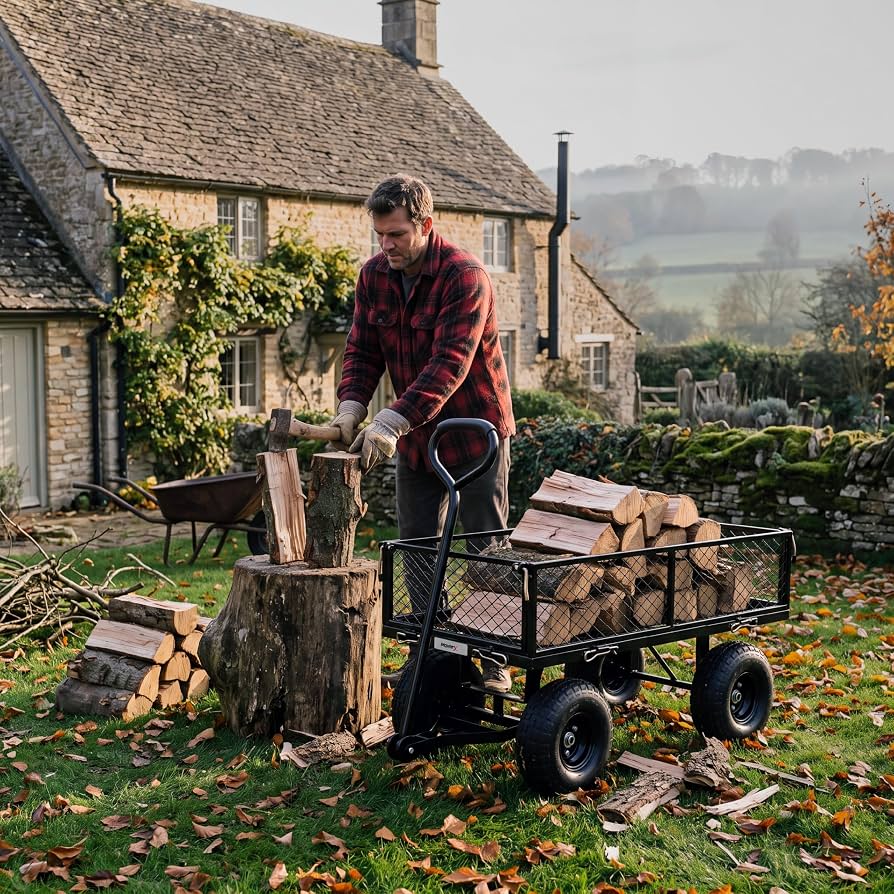

A four-wheeled garden cart can make everyday gardening more comfortable, especially when I need to move compost, mulch, flower pots, tools, lawn debris or harvested vegetables around the garden. However, choosing the right cart involves more than looking at its advertised weight capacity or attractive design. Wheel quality, steering, bed dimensions, frame strength, unloading arrangements and long-term maintenance all affect how useful it will be.
Top 5 4 Wheeled Garden Cart For 2026
| Product | Title | Features | Explore |
|---|---|---|---|
 | Bamiyune 4 Wheeled Garden Dump Cart |
| Check Price |
 | VEVOR 4 Wheeled Poly Garden Dump Cart |
| Check Price |
 | HULISEN 4 Wheeled Garden Cart |
| Check Price |
 | SUNNYFEEL Steel 4 Wheeled Garden Cart |
| Check Price |
 | Finnhomy Heavy Duty 4 Wheeled Garden Cart |
| Check Price |
When I considered moving beyond a basic wheelbarrow, my main concern was practical: I wanted a cart that could carry regular garden loads without requiring constant balancing, excessive physical effort or repeated trips. I also wanted something suitable for narrow garden paths, planted beds and different ground conditions.
What Is 4 Wheeled Garden Cart?
A 4 wheeled garden cart is a gardening tool designed to transport soil, compost, mulch, flower pots, garden tools, lawn debris and harvested produce around the garden. It has four wheels that support the cart’s frame and bed, helping it remain upright when stationary on suitable ground. Unlike a traditional wheelbarrow, which has one main wheel and requires the user to balance the handles, a four-wheeled cart distributes support across four wheels.
Most models feature a metal or plastic bed, a sturdy frame and a handle for pushing or pulling. Some include pneumatic or solid tyres, removable mesh sides, folding frames or tipping mechanisms for easier unloading. Their construction, load capacity and steering systems vary according to the intended use.
A 4 wheeled garden cart is particularly useful for gardeners who regularly move compost to vegetable beds, carry mulch around young fruit trees, transport flower pots or collect lawn clippings. However, the right choice depends on the garden’s size, path width, ground conditions and typical load weight.
Before buying, I recommend checking the cart’s rated load capacity, bed dimensions, empty weight, wheel quality and manoeuvrability. A suitable model should handle your regular gardening tasks comfortably without being too heavy, too wide or difficult to control.
5 Best 4 Wheeled Garden Carts For 2026
Choosing the right four-wheeled garden cart can make everyday gardening easier, from transporting compost and mulch to moving flower pots and collecting lawn debris. Here, I’ll explore the 5 best 4 wheeled garden carts for 2026, focusing on load capacity, durability, manoeuvrability and practical features to help you find the right option for your garden.
Bamiyune 4 Wheeled Garden Dump Cart
The Bamiyune Garden Dump Cart supports up to 551 lbs, featuring a sturdy iron frame, durable polypropylene bed, and spacious loading area. Four pneumatic tires, a 90-degree adjustable handle, and a convenient dumping mechanism simplify hauling soil, mulch, gravel, and gardening supplies. I found its spacious design, adjustable handle, and dumping function practical for organising garden materials and making routine outdoor hauling tasks easier.
expert start
What Is It and Its Features?
The Bamiyune Garden Dump Cart is a four-wheel hauling cart with a maximum stated load capacity of 551 lbs. Its 37.01 × 20.08 × 8.27-inch bed provides space for different gardening supplies, while the iron frame supports the overall structure.
The pneumatic tires help absorb bumps on uneven ground, and the adjustable handle rotates up to 90 degrees for convenient steering and pulling. The dump bed allows materials to be unloaded more easily without lifting the entire load manually.
Why It Matters
The Bamiyune Garden Dump Cart can be useful for gardeners who regularly transport heavy or bulky materials around their outdoor spaces. Carrying soil, compost, gravel, and garden waste by hand often requires several trips and extra effort.
This cart combines a spacious bed with four wheels to make hauling more organised. Its dumping mechanism is particularly helpful when unloading loose materials, while the pneumatic tires support movement across grass, dirt, and gravel. These features can save time during routine yard maintenance.
My Set-Up and My Experience
Setting up the Bamiyune Garden Dump Cart requires assembly, so I would recommend checking the included English assembly diagram and organising all the supplied accessories before starting. The product measures approximately 40.94 inches long, 20.08 inches wide, and 37.8 inches high, making it important to check the available storage space beforehand.
Its black finish gives it a simple appearance, and the combination of an iron frame and PP bed suits outdoor hauling tasks. Before first use, I would check the wheel fittings, handle movement, dumping mechanism, and fasteners to ensure everything is properly secured.
Performance
The Bamiyune Garden Dump Cart offers several practical features for regular garden work. Its four pneumatic tires are designed to improve comfort and traction when travelling across grass, dirt, and gravel. The four-wheel layout also helps support stability when the load is distributed evenly.
The adjustable handle provides flexibility when pushing, pulling, or steering the cart, while the dump bed makes unloading loose materials more convenient. Although the stated maximum capacity is 551 lbs, actual handling depends on the terrain, load distribution, and safe operating conditions. I would start with lighter loads before attempting heavier jobs.
Practical Tips
- Check the assembly and tighten loose fasteners before use.
- Distribute heavy materials evenly across the dump bed.
- Keep loads within the stated 551 lbs maximum capacity.
- Move slowly across slopes and uneven ground.
- Check tire pressure regularly and avoid overinflating the pneumatic tires.
expert end
pro start
| Pros | Cons |
|---|---|
| ✔️ Supports loads up to 551 lbs. | ❌ Requires assembly before use. |
| ✔️ Four pneumatic tires help on uneven ground. | ❌ Tires require regular pressure checks. |
| ✔️ Dump bed makes unloading materials easier. | ❌ Heavy loads can be harder to manoeuvre. |
| ✔️ Adjustable handle improves steering flexibility. | ❌ Requires adequate storage space. |
| ✔️ Iron frame provides sturdy structural support. | ❌ Exposed metal may need protection from rust. |
pro end
VEVOR 4 Wheeled Poly Garden Dump Cart
The VEVOR Garden Dump Cart features a 600-pound load capacity, 4-cubic-foot bed, durable polypropylene construction, and sturdy metal frame. Its 10-inch rubber tires, 360-degree swivel wheels, adjustable padded handle, and quick-release dumping system improve maneuverability and unloading. My setup experience highlighted its practical design, comfortable handle, spacious bed, and useful features for transporting everyday gardening materials efficiently.
expert start
What Is It & Its Features
The VEVOR Heavy Duty Garden Dump Cart is designed to make gardening, landscaping, and outdoor material transport easier. It features a 4-cubic-foot capacity, a stated weight limit of 600 lbs, a durable polypropylene bed, and a sturdy metal frame.
Its 10-inch rubber tires help it move across grass and uneven ground, while the adjustable handle makes pulling and steering more convenient. The quick-release dumping system also helps users unload soil, mulch, leaves, and other garden materials with less effort. It is a practical option for gardeners who need a versatile cart for regular outdoor tasks.
Why It Matters
The VEVOR Heavy Duty Garden Dump Cart matters because moving heavy garden materials by hand can take considerable time and energy. Its large load capacity allows users to transport several items in one trip, reducing repeated lifting and carrying.
The rubber wheels help improve movement over common garden surfaces, while the swivel-wheel design supports easier turning in tight spaces. The mesh cover helps keep smaller items contained during transport, and the padded handle offers a more comfortable grip. These features make the cart useful for maintaining gardens, moving harvested crops, and completing general yard work more efficiently.
My Set-Up And My Experience
When preparing the VEVOR Heavy Duty Garden Dump Cart for garden work, I would first assemble the frame, attach the wheels, and check that the handle and dumping mechanism move correctly. I would also inspect the polypropylene bed and tighten the fasteners before carrying any materials.
For everyday gardening, the 4-cubic-foot capacity seems suitable for transporting compost, weeds, plant pots, and bags of soil. The adjustable handle is useful for different pulling positions, while the padded grip should make longer trips more comfortable. However, I would begin with lighter loads to become familiar with its balance and steering.
Performance
The VEVOR Heavy Duty Garden Dump Cart offers several useful features for regular outdoor transportation. Its 10-inch rubber tires are designed to absorb some bumps and support movement across grass, garden paths, and moderately uneven surfaces. The 360-degree swivel wheels can help with turning, particularly when working around raised beds or narrow pathways.
The quick-release dumping system is another practical feature because it allows materials to be unloaded without manually lifting everything out of the bed. Although the cart is rated for 600 lbs, I would distribute weight evenly and avoid overloading it on slopes or soft ground.
Practical Tips
- Tighten all fasteners before the first use.
- Spread soil, compost, and other materials evenly across the bed.
- Keep your hands clear of moving parts when releasing the frame.
- Avoid steep slopes and very soft ground when carrying heavy loads.
- Use the mesh cover to help prevent loose materials from falling out.
expert end
pro start
| Pros | Cons |
|---|---|
| ✔️600 lbs stated load capacity | ❌Assembly required |
| ✔️4 cu. ft. carrying capacity | ❌Can be harder to steer when fully loaded |
| ✔️Durable polypropylene bed | ❌Bed may be damaged by severe impacts |
| ✔️Strong metal frame with protective coating | ❌Requires sufficient storage space |
| ✔️10-inch rubber tires | ❌Heavy loads are difficult to control on slopes |
pro end
HULISEN 4 Wheeled Garden Cart
The HULISEN Garden Cart features a detachable EVA foam seat, carbon steel frame, and 300-pound stated weight capacity for practical gardening support. Four solid rubber wheels, a convenient storage basket, and a compact design help keep gardening tools organised and accessible during outdoor tasks. My setup approach keeps essential tools within reach, while the removable seat offers flexible positioning for planting, weeding, and routine garden maintenance.
expert start
What Is It and Its Features?
The HULISEN Garden Cart with Detachable Seat is designed for gardeners who want a convenient place to sit while keeping their supplies within reach. Its main feature is the removable seat, which can be separated from the storage basket and placed beside the area where work is needed. The basket provides space for gloves, hand tools, seed packets, and small plants.
Its carbon steel frame provides structural support, while the EVA foam seat offers cushioning during seated tasks. Four solid rubber wheels help move the cart across suitable garden surfaces, and the handle makes pulling it between work areas easier. The combination of seating, storage, and mobility makes this cart a useful option for planting, weeding, and general garden care.
Why It Matters
The HULISEN Garden Cart with Detachable Seat matters because gardening often involves repeated bending, kneeling, standing, and walking to collect tools. These movements can make routine garden work tiring, particularly during longer sessions. Having a seat available can make small tasks more comfortable, while the storage basket helps keep essential supplies together.
The detachable design is especially useful because gardeners can position the seat and basket according to the job they are doing. Instead of carrying several tools by hand, they can move their supplies in one place. Its compact design also suits gardeners who have limited storage space. For people who regularly maintain flower beds, vegetable patches, or backyard plants, this combination of seating and storage can make daily tasks easier to organise.
My Set-Up and My Experience
When setting up the HULISEN Garden Cart with Detachable Seat, I would first check that the frame, wheels, handle, basket, and removable seat are properly assembled and securely fitted according to the instructions. I would then place frequently used items, such as pruning scissors, gardening gloves, a hand trowel, and seed packets, inside the basket. Keeping heavier items low and distributing the load evenly would help maintain stability when moving the cart.
During gardening, I would position the seat close to the flower bed or vegetable patch and keep the tools within easy reach. The removable design offers flexibility because the seat does not have to remain attached to the basket. This arrangement is particularly convenient for small gardening jobs that require frequent access to different hand tools.
Performance
The HULISEN Garden Cart with Detachable Seat combines three useful functions: seating, tool storage, and movement around the garden. Its four solid rubber wheels are intended to help it roll across lawns, garden paths, and other suitable outdoor surfaces. However, performance may vary on soft soil, uneven ground, or thick grass.
The carbon steel frame provides a sturdy base, while the EVA foam seat adds cushioning for tasks that can be completed comfortably while sitting. The 300-pound stated capacity is a useful specification, although users should follow the manufacturer’s separate limits for sitting and carrying supplies. The storage basket is best suited to everyday gardening essentials rather than very large or heavy equipment.
Practical Tips
- Make sure the wheels, handle, frame, and seat are secure before using the cart.
- Keep frequently used items near the top of the basket for easy access.
- Choose firm, stable surfaces when sitting down or getting up from the seat.
- Place heavier supplies evenly in the basket to help maintain balance while moving.
- Remove soil and moisture from the frame, seat, and wheels before storing the cart.
expert end
pro start
| Pros | Cons |
|---|---|
| ✔️ Detachable seat offers flexible positioning. | ❌Compact basket limits storage capacity. |
| ✔️ EVA foam provides cushioned seating. | ❌Rough terrain may affect movement. |
| ✔️ Basket keeps small tools organised. | ❌Uneven ground can reduce stability. |
| ✔️ Four solid rubber wheels support mobility. | ❌Seat must be repositioned when needed. |
| ✔️ Carbon steel frame offers structural support. | ❌Frame and wheels need regular cleaning. |
pro end
SUNNYFEEL Steel 4 Wheeled Garden Cart
The SUNNYFEEL garden cart features a reinforced steel frame, 900 lbs load capacity, rust-resistant mesh, and durable construction for heavy-duty hauling. Its 10-inch rubber wheels, removable mesh sides, and 180-degree adjustable handle provide versatile transport across various outdoor surfaces. I found its versatile design practical for moving gardening tools, plants, and soil, while proper assembly and balanced loading remain important.
expert start
What Is It and Its Features?
The SUNNYFEEL Steel Garden Cart Heavy Duty 900 LBS Utility Wagon on Wheels is a versatile hauling cart made for demanding outdoor tasks. Its reinforced steel frame provides support for heavy loads, while the mesh bed allows dirt and water to drain away. The removable sides make it useful for carrying both loose materials and larger items.
Its 10-inch rubber wheels have deep treads to help with movement across different surfaces. The rotating handle provides better control when navigating garden paths, and the powder-coated finish helps protect the metal from rust and corrosion.
Why It Matters
The SUNNYFEEL Steel Garden Cart Heavy Duty 900 LBS Utility Wagon on Wheels can be useful for gardeners who regularly move heavy materials around their yards. Carrying soil, compost, pots, and tools by hand can take time and effort, especially when working over a large area.
A sturdy cart helps bring these supplies together and reduces repeated trips. Its removable sides offer extra flexibility when transporting bulky objects, while the wide wheelbase helps support stability on uneven ground. These features make it a practical option for regular garden maintenance and other outdoor jobs.
My Set-Up and My Experience
When setting up the SUNNYFEEL Steel Garden Cart Heavy Duty 900 LBS Utility Wagon on Wheels, I would start by checking the frame, wheels, handle, and fixing hardware before using it. Following the assembly instructions carefully helps ensure that the parts are fitted correctly.
For everyday gardening, the mesh sides are useful for keeping smaller items together, while the adjustable handle can help with steering around beds and narrow paths. I would also check how easily the wheels turn and whether the cart remains stable with a typical garden load. These simple checks help prepare the cart for practical outdoor use.
Performance
The SUNNYFEEL Steel Garden Cart Heavy Duty 900 LBS Utility Wagon on Wheels offers several features that can make outdoor hauling more convenient. Its steel construction is designed to support substantial loads, although the manufacturer’s 900 lbs rating should not be treated as a guarantee for every surface or situation.
The rubber wheels are intended to handle grass, gravel, and other uneven areas, but performance will depend on the terrain and load distribution. The removable sides are especially useful when switching between carrying loose gardening materials and bulky equipment. Regular cleaning and checking the wheel fittings can also help maintain reliable operation.
Practical Tips
- Distribute soil bags, pots, and tools evenly to help maintain balance.
- Keep a comfortable grip and turn slowly around tight garden corners.
- Keep the mesh sides attached for loose materials and remove them for oversized items.
- Remove wet soil and plant debris to help protect the steel finish.
- Keep the cart in a dry shed or garage when possible to reduce exposure to moisture.
expert end
pro start
| Pros | Cons |
|---|---|
| ✔️Supports a stated load capacity of up to 900 lbs. | ❌Heavy loads can require considerable pulling effort. |
| ✔️Removable sides provide mesh cart and flatbed configurations. | ❌Assembly is necessary before the first use. |
| ✔️10-inch rubber wheels feature deep treads for outdoor terrain. | ❌Very rough ground can still make movement difficult. |
| ✔️The 180-degree handle supports flexible steering. | ❌The steel frame may need considerable storage space. |
| ✔️Coated steel and corrosion-resistant mesh help resist rust. | ❌Cleaning and regular hardware checks remain important. |
pro end
Finnhomy Heavy Duty 4 Wheeled Garden Cart
The Finnhomy Garden Cart features a heavy-duty steel frame, a 1,000-pound advertised capacity, and a spacious mesh platform for gardening supplies. Its 10-inch flat-free wheels, 180-degree rotating handle, and removable side panels provide flexible transport for various outdoor materials. I found its spacious design, flexible handle, and removable sides useful for organizing gardening supplies and moving bulky items around outdoor spaces.
expert start
What Is It and Its Features?
The Finnhomy Heavy Duty 1000 Lbs Capacity Mesh Steel Garden Cart is a pullable utility wagon made for carrying bulky gardening supplies and outdoor equipment. It measures 40.5 inches long, 21 inches wide, and 21.6 inches high, with a steel mesh platform measuring approximately 37 by 19.6 inches.
Its advertised weight capacity is 1,000 pounds, although actual safe loading depends on the load distribution and ground conditions. The 10-inch flat-free wheels eliminate the need for air inflation, while the 180-degree rotating handle improves steering flexibility. The removable mesh sides allow the cart to convert into a flatbed for transporting wider items.
Why It Matters?
The Finnhomy Heavy Duty 1000 Lbs Capacity Mesh Steel Garden Cart can help reduce the effort involved in moving heavy gardening supplies from one place to another. Carrying several pots, bags of compost, hand tools, and other materials separately can take extra time and energy.
A spacious wagon allows these items to be transported together, making garden maintenance more convenient. Its removable sides provide additional flexibility for handling long branches or wider equipment. The powder-coated steel construction is also designed for outdoor use, while the flat-free wheels remove the inconvenience of dealing with punctures and regular tyre inflation.
My Set-Up and My Experience
When preparing to use the Finnhomy Heavy Duty 1000 Lbs Capacity Mesh Steel Garden Cart, I would first check that the wheels, handle, frame, and removable side panels are fitted securely. I would then test its movement with a light load before carrying heavier supplies.
For regular gardening tasks, the open mesh platform looks practical for transporting pots, tools, and bags of garden materials. The rotating handle should make it easier to pull the wagon around garden paths and open spaces. I would also remove the side panels when carrying longer branches or bulky items, while checking that everything remains balanced during movement.
Performance
The Finnhomy Heavy Duty 1000 Lbs Capacity Mesh Steel Garden Cart offers several practical features for everyday outdoor work. Its large platform provides space for multiple gardening supplies, while the flat-free wheels avoid the maintenance associated with inflatable tyres. The rotating handle should be helpful when changing direction around open lawns and garden beds. The removable sides also make the cart more versatile for different loads. However, the mesh platform may not be suitable for very small loose materials unless a liner or container is used. On uneven ground, slopes, or soft soil, moving a heavily loaded cart can still require considerable effort, so careful loading is important.
Practical Tips
- Tighten all fittings and inspect the wheels before the first use.
- Place heavier items near the centre to improve stability.
- Use a tray or container to prevent loose soil and small tools from falling through the mesh.
- Create a flatbed for longer branches and wider garden equipment.
- Remove soil and moisture, then store the cart in a dry place to help protect the metal frame.
expert end
pro start
| Pros | Cons |
|---|---|
| ✔️High advertised load capacity of 1,000 lbs | ❌Heavy steel construction can be difficult to lift |
| ✔️Flat-free wheels require no inflation | ❌Small items may fall through the mesh platform |
| ✔️Removable sides support different load types | ❌Wide frame may struggle in narrow spaces |
| ✔️180-degree rotating handle improves steering flexibility | ❌Soft or muddy ground can make pulling harder |
| ✔️Powder-coated steel frame suits outdoor tasks | ❌Assembly and fitting require some time |
pro end
Why I Considered Four-Wheeled Garden Cart
The limitations of ordinary garden equipment
A traditional wheelbarrow is useful for moving loose soil, compost and construction materials. Its single front wheel, however, means the user must support and balance the load through the handles. With a heavy load, that arrangement can put considerable pressure on the arms and back, particularly when travelling over uneven ground or turning around a planted bed.
Two-wheeled garden carts provide better lateral stability than a single-wheel barrow in many situations, but they still require attention to handle height, wheel alignment and turning space. Their wider wheel arrangement can also be awkward on narrow paths. Neither design is automatically unsuitable; the problem is whether it matches the workload.
My buying priorities centred on repeated garden jobs rather than occasional heavy hauling. I wanted to carry several bags of compost, move mulch towards young fruit trees, transport flower pots without excessive tilting and collect grass clippings after mowing. A four-wheeled garden cart appeared practical because its four contact points could support the load while the cart was stationary, reducing the need to balance it continuously.
There was an important limitation. Four wheels do not eliminate pushing effort, guarantee stability on slopes or make a fully loaded cart easy to turn. A cart with poorly designed steering or small wheels can be harder to control than a well-made wheelbarrow.
- For repeated heavy loads: prioritise frame strength, wheel quality and a suitable working capacity.
- For flower beds and narrow paths: prioritise overall width, steering response and a manageable turning radius.
- For compost and mulch: examine bed volume, cleaning requirements and unloading arrangements.
- For lawn maintenance: consider manoeuvrability, empty weight and the ability to carry bulky, lightweight material.
The first decision was therefore not which cart looked strongest, but which design would reduce effort during my actual gardening routine without introducing new handling problems.
Choose Right Four-Wheel Cart Type
Manual garden carts for everyday jobs
A manual four-wheeled garden cart is generally the most straightforward option for a home garden. It uses a handle or drawbar to move the cart, with the wheels supporting the load. Some models have a rigid utility bed, while others include a removable tub, mesh sides or a quick-release tipping mechanism.
I would choose a manual cart for moving moderate quantities of compost, tools, pots and harvested produce across mostly level paths. It avoids battery charging, motor servicing and towing requirements. Its main limitation is that the operator still supplies the pulling or pushing force, so a heavy load can become tiring even when four wheels provide good support.
Dump carts for loose garden materials
A four-wheeled dump cart is designed to make unloading easier. Depending on the mechanism, the bed may tilt, pivot or release from a supporting frame. This is useful when distributing mulch around young fruit trees or unloading loose compost close to a vegetable bed.
Before buying one, I would inspect the locking mechanism, pivot points and handle clearance. A dumping system should release deliberately and return securely to its carrying position. Its rated hauling capacity may also be higher than its permitted dumping capacity, so both figures must be checked separately.
Mesh, folding and towable designs
A steel utility cart with removable mesh panels suits containers, tools and irregularly shaped items. Its sides can help contain equipment, while removable panels make loading longer objects easier. However, mesh is less suitable for very fine compost unless the bed is lined with a manufacturer-approved material.
Folding carts are attractive where storage space is limited. Their hinges and locking joints, however, introduce additional parts that must remain secure. Fabric-sided folding wagons may be useful for lightweight pots and lawn debris but are not necessarily appropriate for concentrated loads of wet soil.
Towable carts can be connected to a compatible lawn tractor or other approved towing vehicle. This arrangement can reduce manual effort across large properties, but the cart, hitch, towing vehicle, braking arrangements and permitted speed must all be compatible. A hand-pulled cart should never be assumed suitable for vehicle towing.
Powered carts add a motor, battery, controls and usually additional weight. They may be worthwhile for frequent heavy hauling, long distances or users who struggle with manual effort. Before selecting one, I would check battery availability, charging arrangements, motor protection, replacement costs and the manufacturer’s guidance on gradients.
For an ordinary home garden with short paths and recurring maintenance, I would begin by comparing manual carts. A powered or towable model becomes more attractive when distance, workload or physical limitations justify the extra cost and complexity.
Understand How Four-Wheel Cart Works
Frame, axles and steering work together
The frame supports the bed and transfers the load towards the wheel assemblies. The axles carry the wheel loads, while the steering mechanism determines how the cart changes direction. The handle transfers the operator’s pulling or pushing force into the frame or steering assembly.
On a simple fixed-axle cart, the wheels may remain aligned with the frame, limiting the ability to make tight turns. Other designs allow the front wheels or front axle assembly to pivot. This can improve manoeuvrability, although the steering arrangement may change the turning radius and the way the cart responds to a sharp pull.
Some carts use a steering linkage, while others use a rotating front axle. These designs are not interchangeable in every respect. I would examine the turning movement, joint clearances and proximity of the wheels to the frame before deciding which arrangement suits my paths.
A cart with a short wheelbase may turn more easily but can behave differently over bumps. A longer wheelbase may track steadily on straight paths but need more space to turn. Wheel track, which is the distance between the left and right wheels, also influences stability and the width of the route required.
Bed design and unloading mechanism
The bed contains the load and transfers its weight to the supporting frame. A fixed bed is simple and often has fewer moving parts. A tipping bed introduces a pivot and locking arrangement that can save considerable effort when unloading loose material.
For example, when moving a measured 20-litre container of compost, a fixed bed allows controlled unloading with a shovel. A dump bed may be more convenient for several containers’ worth of loose mulch, provided the material weight remains within the permitted dumping limit.
Dumping changes the load distribution and centre of gravity. The cart must be positioned on suitable level ground, with the wheels secured as instructed and people kept clear of the bed’s movement. Releasing the latch while the cart is moving or standing on an incline can cause an uncontrolled shift.
The operating principle is straightforward, but the quality of the joints, wheel alignment, handle geometry and locking system determines how smoothly that principle works in the garden.
Calculate Capacity Before Buying
Rated payload is not the same as bed volume
One of the most important comparisons is between the maximum permitted load and the physical volume of the bed. Manufacturers may advertise capacity in pounds or kilograms, while bed volume is expressed in cubic feet or litres. These measurements describe different things.
A cart can have a generous volume but a relatively modest payload rating. Bulky grass clippings occupy considerable space while weighing comparatively little. Wet compost, dense soil and stone can reach the weight limit before the bed appears full.
For an example calculation, a bed measuring 90 cm long, 55 cm wide and 25 cm deep has a theoretical rectangular volume of approximately 124 litres. A curved or tapered bed will generally hold less than that calculation suggests. Actual usable volume must be checked against the manufacturer’s dimensions or stated capacity.
Payload means the permitted mass of the load, not the combined mass of the cart and its contents. Empty cart weight matters separately because the operator must move the cart itself as well as the load. A heavier frame may be appropriate for regular demanding work, but it can be inconvenient when moving an empty cart or lifting it over a storage threshold.
| Buying measurement | What it tells me | How I use it |
|---|---|---|
| Rated payload | Maximum permitted load under stated conditions | Check the limits for normal hauling and dumping separately |
| Bed volume | Space available for material | Compare bulky lawn debris with dense compost |
| Empty weight | Mass of the cart before loading | Assess handling, lifting and storage |
| Overall width | Space needed between plants and obstacles | Measure gates and narrow paths |
| Ground clearance | Space beneath the frame or bed | Check raised roots, edging and uneven paths |
| Dumping capacity | Maximum permitted load when tipping, if specified | Avoid exceeding the unloading mechanism’s limit |
Set a realistic working load
I would not buy a cart solely because its advertised payload is impressive. The practical load depends on surface conditions, slope, wheel size, steering design, operator strength and the distribution of material. A maximum rating established for an evenly distributed load on suitable ground does not automatically apply to a steep path or a towing situation.
Suppose a cart has a stated payload of 250 kg. That does not mean I should routinely fill it with 250 kg of wet soil and pull it over uneven ground. I would begin with a much lighter load and increase it only after confirming that the cart remains easy to control and the manual permits the intended conditions.
For a home gardener, I would prioritise a cart that carries my usual load comfortably rather than one that reaches a high maximum rating at the expense of manageable weight, steering or storage.
Inspect Wheels, Tyres and Bearings Carefully
Pneumatic tyres versus solid wheels
Wheel choice can change the experience considerably. Pneumatic tyres contain air and may absorb small bumps, making them useful on grass, compacted soil and uneven garden paths. They require pressure checks and can puncture, so replacement tubes or tyres must be available when needed.
Solid or flat-free tyres avoid ordinary punctures, which can be convenient around thorny plants and garden debris. However, their cushioning characteristics differ from those of pneumatic tyres. Depending on their construction, they may transmit more vibration across rough ground.
Wheel diameter also matters. Larger wheels can generally roll over small obstacles more easily than smaller wheels of a comparable design. Wider tyres may spread the load over a larger contact area, although the result depends on tyre construction, pressure and surface conditions.
Before purchasing, I would compare tyre diameter, width, load suitability, tread pattern and replacement availability. A tyre advertised as suitable for all terrain should not be treated as proof that the cart can safely cross every surface.
Axles, bearings and steering joints
The axle supports the wheel and transfers force into the frame. Bearings or bushings allow rotation and influence friction, wear and maintenance requirements. Their design varies, so I would not assume that every four-wheeled garden cart has sealed bearings or serviceable wheel hubs.
During an in-store inspection, where permitted, I would move each wheel gently by hand and look for obvious wobble, scraping, uneven rotation or excessive looseness. I would also check whether the axle brackets sit squarely and whether the steering pivots move without binding.
A short inspection cannot prove long-term bearing durability. It can, however, reveal assembly defects or poor alignment before money changes hands. I would also ask whether the manufacturer supplies individual wheels, bearings, bushings, axle assemblies and steering components.
- For puncture-prone gardens: consider flat-free tyres if their ride quality suits the surface.
- For uneven lawn paths: compare larger pneumatic tyres and the manufacturer’s pressure instructions.
- For frequent turning: pay close attention to steering-joint smoothness and wheel clearance.
- For long-term ownership: confirm the availability of replacement wheels and axle parts.
Good wheels and serviceable axles are more valuable than decorative features because they directly affect control, maintenance and the ability to keep the cart in service.
Compare Frame, Bed and Build Quality
Steel, aluminium and polymer construction
A powder-coated steel frame can provide a strong supporting structure for repeated garden work. The coating helps protect the metal, but scratches, damaged edges and poorly protected joints can still develop corrosion. Welds, brackets, fasteners and the shape of the supporting members matter as much as the coating itself.
Aluminium can reduce frame weight and does not rust like ordinary steel, but strength depends on alloy, section design, joint construction and load rating. I would not assume an aluminium cart is automatically stronger or weaker than a steel alternative without comparing the actual specifications.
A polymer bed is often easy to clean and resistant to ordinary moisture-related corrosion. Its durability still depends on material quality, thickness, support underneath and exposure to impact, ultraviolet light and temperature changes. A thin tub with poorly supported edges may flex more than a better-designed alternative.
Steel beds can suit heavy-duty work, especially when reinforced properly, but they may need more attention to paint damage and rust. Mesh-sided designs can be practical for tools and containers, though gaps can allow fine soil and small debris to escape.
Fasteners, folding joints and finishing
When comparing lower-priced and better-built carts, I would look for actual differences rather than relying on price as a quality indicator. Uneven welds, misaligned holes, rough-cut edges, thin brackets and poorly fitting fasteners deserve attention. On the other hand, a reasonably priced cart with a well-supported frame and replaceable parts may offer better value than an expensive cart with proprietary components that are difficult to obtain.
Folding models need additional checks. Their joints should lock securely, and the frame should not collapse unexpectedly when opened or loaded within its permitted limits. I would inspect hinge pins, retaining clips and locking tabs for visible damage or incomplete engagement.
For a cart with a tipping bed, I would examine the pivot bolts, release latch and supporting brackets. The mechanism should operate according to the manufacturer’s instructions without requiring improvised adjustments. I would never modify a locking component simply to make it release more easily.
My preference would be a straightforward design with sound welds, secure fasteners, a well-supported bed and parts that can be replaced individually. Those details provide more useful evidence of build quality than a heavy-duty label alone.
Match the Cart to Garden Materials
Compost, soil and mulch
Compost and soil can become heavy when damp. I would use a stable bed with a suitable payload rating and avoid piling material above the sides, where it can shift or spill. For a vegetable garden, a cart that can stop close to the bed reduces carrying distance and unnecessary handling.
Mulch is often bulky rather than especially dense, but wet or compacted material can weigh considerably more. When distributing mulch around young fruit trees, I would choose a route that allows the cart to approach without damaging roots, trunks or low branches. I would also avoid piling mulch directly against a tree trunk.
A tipping bed can save shovelling time when unloading loose material. However, I would compare its permitted dumping load with the likely weight of the material. A high hauling rating is not a substitute for a separate dumping limit.
Flower pots, lawn debris and harvested produce
Flower pots need a different approach. Their weight may be concentrated at a few points, and tall containers can tip when the cart turns. A flat bed, low centre of gravity and removable sides can help, but I would still secure unstable pots and avoid placing heavy containers on top of lighter ones.
Lawn debris is usually lighter, but grass clippings can be damp and slippery. A mesh-sided cart may contain larger debris, while a solid bed is preferable when fine material needs to remain inside. I would empty and clean the bed regularly to prevent residue from collecting around joints.
Harvested vegetables require gentle handling. A cart that is easy to steer at low speed helps me move produce without sudden jolts. I would use suitable crates or containers rather than letting delicate vegetables roll loosely across a metal or polymer bed.
Before purchase, I would list the materials I move most often and match them to the cart’s bed design. No single surface or side arrangement is ideal for every gardening task.
Assess Steering, Comfort and Ground Clearance
Turning space and handle comfort
A cart can feel stable while travelling straight but become awkward around a corner. Steering geometry, wheelbase, wheel track and the handle’s turning range all influence manoeuvrability. On a narrow path, a wide cart may scrape plant pots even if its steering mechanism is well designed.
I would measure the narrowest gate and path before buying. For example, a 75 cm garden gate leaves little spare clearance for a cart that is 70 cm wide, particularly when the handle or wheels need additional room to turn. These example dimensions should be replaced with the actual measurements of the garden and selected cart.
Handle height and grip shape also matter. A handle that is too low can encourage an uncomfortable posture, while one that is too high may make control awkward. I would check whether the handle permits a natural arm position and whether its grip feels secure without sharp edges.
Ground clearance and different surfaces
Ground clearance affects whether the frame catches on edging, exposed roots or uneven paving. I would compare the lowest point beneath the cart with the obstacles on my usual route rather than assuming that large tyres guarantee adequate clearance.
On compacted paths, a cart with smaller wheels may work well. On grass or slightly uneven ground, larger tyres and suitable clearance can help. Soft soil creates another challenge because the wheels may sink, increasing rolling resistance even when the cart is within its rated load.
Slopes require particular caution. Four wheels do not guarantee that a cart will remain stationary on a gradient. If the manufacturer does not approve a particular slope or surface, I would choose another route rather than trying to establish a limit through experimentation.
- Measure the narrowest gate, path and storage opening before choosing overall dimensions.
- Check the handle’s height, grip and range of movement while the cart is unloaded.
- Look at the lowest frame point, not only the tyre diameter.
- Plan heavy-load routes around steep slopes, loose gravel and soft ground where possible.
For a garden with tight corners, I would accept a smaller bed if it provides substantially better access. For an open lawn with longer routes, a larger cart may be the more practical choice.
Buy from a Seller You Can Verify
Local shops and specialist garden suppliers
Local garden equipment shops and established garden suppliers offer one important advantage: the opportunity to inspect the actual cart before paying. I can check the frame finish, steering movement, handle position, bed dimensions and wheel construction rather than relying entirely on photographs.
Where demonstrations are permitted, I would ask the seller to show the steering mechanism, folding locks or tipping latch. An unloaded demonstration can reveal binding or awkward movement, but it does not establish how the cart performs at maximum capacity or prove its durability over time.
I would also ask whether the displayed model is exactly the one being sold. Similar-looking carts may have different wheel sizes, bed materials, capacities or included accessories. The model number and manufacturer documentation should match.
Manufacturer websites and online sellers
Buying online can provide access to more models and technical specifications. However, I would check the seller’s identity, the exact model number, the stated package contents, delivery charges and the return policy before ordering. Product images alone are not enough to confirm the construction or accessories supplied.
Manufacturer specifications and instruction manuals are particularly useful for checking payload, dumping limits, tyre pressure, assembly requirements and maintenance. As one example of why model-specific checking matters, a four-cubic-foot cart may be offered in versions with different stated load ratings. Capacity should never be inferred from volume or appearance.
Before paying, I would confirm the following:
- The precise model and version, including the bed and frame materials.
- The rated payload and any separate dumping or towing restrictions.
- The wheel diameter, tyre type and availability of replacement wheels.
- Whether the package includes all wheels, fasteners, handle components and required hardware.
- The delivered cost, return conditions and responsibility for return shipping.
- The applicable regional warranty, proof-of-purchase requirements and technical support arrangements.
- Availability of axles, bearings, steering components, latches and other replacement parts.
I would compare the total ownership cost rather than the advertised price alone. A less expensive cart may be good value when replacement parts are readily available. A higher-priced cart may be worth considering if its construction, support and warranty provide tangible advantages for my workload.
Check Assembly and Test the Cart Safely
Delivery inspection and assembly
Once the cart arrives, I would inspect the packaging for damage and compare the supplied components with the parts list. I would check the bed for cracks or deformation, the frame for bent members, the wheels for damage and the hardware for missing pieces.
Assembly should follow the supplied instructions. I would use the specified fasteners and tightening procedure rather than substituting bolts or guessing torque values. Over-tightening can damage components, while loose fasteners can allow the frame or wheel assemblies to move under load.
After assembly, I would check that each wheel is properly retained, the axles are seated correctly and the handle or steering linkage moves through its intended range. A dump cart needs a further check of the latch and pivot, with the bed returned to its secure carrying position.
Begin with unloaded checks
Before loading the cart, I would move it slowly across a level, clear area. The first check would last only a few minutes and would focus on wheel rotation, straight tracking, steering response, unusual noises and handle comfort.
I would then stop the cart and inspect the wheels, axle connections and fasteners again. If one wheel wobbled, a joint bound or the cart pulled unexpectedly to one side, I would investigate the cause before carrying material. An unloaded check can reveal assembly issues, but it cannot establish a safe working capacity.
Increase the load gradually
For a sensible initial garden trial, I would use a small, evenly distributed load of approximately 5–10 kg, provided that the manufacturer permits it. I would travel over a short, level route for around 5–10 minutes and observe how easily the cart starts, turns and stops.
If everything remained secure, I would increase the load in modest increments appropriate to the cart’s rating and my ability to control it. During a later 10–15-minute trial, I would carry a measured container of compost or a comparable gardening material across the same route. These durations and loads are proposed testing examples, not recorded results from an actual cart.
For each trial, I would record the load, route, surface, duration, steering response, effort required and any signs of movement in the frame or wheel assemblies. I would stop immediately if the cart became difficult to control, a wheel appeared loose or the load shifted unexpectedly.
This gradual approach is more useful than immediately filling the cart to its maximum rating. It identifies handling problems early without deliberately overloading the equipment or testing unsafe conditions.
Evaluate Performance During Real Garden Work
Vegetable beds and compost transport
After the basic checks, I would use the cart for a small compost delivery to a vegetable bed. I would measure the quantity in a bucket or container, distribute the load evenly and follow a level route wherever possible.
The practical questions would be whether the cart fits beside the bed, whether the handle allows controlled turns and whether unloading takes less effort than carrying separate containers. A dump mechanism may be helpful for loose compost, but I would use it only within the manufacturer’s permitted dumping load.
For repeated work, I would note how many trips are required and whether the bed volume matches the quantity normally needed. A larger cart may reduce trips, but that advantage disappears if its width prevents access or its loaded weight makes manoeuvring difficult.
Mulch, flower pots and lawn debris
For mulch around young fruit trees, I would carry a modest, evenly distributed load and position the cart on firm, level ground before unloading. I would watch for mulch spilling over the sides and check whether the wheels leave deep marks on soft soil. These observations would help determine whether the chosen tyre type and cart width suit the planting area.
For flower pots, I would use containers of known weight and arrange them so that the heaviest items sit low and remain stable. I would make slow turns and avoid sudden changes in direction. If the pots shifted, I would reduce the load or secure them rather than assume that four wheels prevented tipping.
For lawn debris, I would collect a modest quantity of grass clippings and move it over a short section of the lawn. I would observe wheel sinkage, rolling effort and the ease of emptying the bed. A cart that handles lightweight debris well may still struggle with dense wet soil, so each type of work needs its own assessment.
After these tasks, I would inspect the wheels, steering joints, fasteners and bed for visible damage or unusual movement. Repeated trials over several weeks could reveal emerging problems, but even a few weeks of use would not prove long-term durability.
Protect the Cart and Maintain Its Value
Cleaning and corrosion prevention
After carrying compost, soil or damp lawn debris, I would remove loose material before it accumulates around wheel brackets and moving joints. For a polymer bed, I would use a cleaning method permitted by the manufacturer’s instructions. For coated steel, I would avoid leaving wet soil against damaged paint or allowing water to collect in joints.
I would not apply an arbitrary chemical cleaner, solvent or lubricant without checking component compatibility. Some products can damage polymer surfaces, rubber tyres, protective coatings or bearing seals. Any cleaning product should be used according to its label and the cart manufacturer’s guidance.
After cleaning, I would allow the cart to dry where appropriate and inspect exposed metal for scratches, rust or damaged coating. A short inspection can identify visible corrosion, but it cannot establish how well the finish will withstand several seasons of exposure.
Wheels, bearings and fasteners
Maintenance requirements vary by model. Pneumatic tyres need the pressure specified by the manufacturer, while solid tyres need inspection for cuts, deformation and loose mounting hardware. Bearings or bushings should be serviced only as directed; sealed components may not require the same maintenance as serviceable hubs.
I would inspect fasteners periodically and after the first few uses, following any instructions for rechecking them after assembly. I would also examine the steering pivots, axle brackets and dumping latch for looseness, corrosion or damage.
If a wheel becomes difficult to rotate, I would check for trapped debris, damage or an assembly issue rather than forcing it to turn. A damaged axle, cracked bed, defective latch or compromised frame should be repaired or replaced before further use.
Storage and repairability
Storage affects how long the cart remains usable. I would keep it in a dry, reasonably sheltered location and avoid placing heavy objects on a folding cart or storing it in a way that strains the handle and joints. If outdoor storage is unavoidable, I would follow the manufacturer’s guidance on weather protection and avoid trapping moisture beneath a cover.
For a folding model, I would check that the locking joints engage correctly after opening and closing it. For a dump cart, I would ensure the bed is secured before storage. These checks help identify faults but do not replace regular maintenance.
Before buying, I would confirm whether replacement wheels, tyres, bearings, axles, steering linkages, handles and latches can be obtained individually. A cart with a replaceable wheel or axle can remain useful after a minor component failure, whereas an unavailable proprietary part may make an otherwise serviceable cart uneconomical to repair.
Warranty terms also matter. I would retain the proof of purchase, model number and manual, and confirm which components and types of failure are covered. The cheapest purchase is not necessarily the least expensive over several years if repairs, unavailable parts or replacement costs become substantial.
Follow Essential Four-Wheel Cart Safety Rules
Loading, movement and stopping
I would distribute the load evenly across the bed and keep heavy items low. Nothing should be balanced precariously on the rim or stacked so high that it obstructs visibility or shifts during a turn. The manufacturer’s payload limit remains mandatory, and any lower dumping or towing limit must also be respected.
Four wheels can support a stationary cart well on level ground, but they do not guarantee stability when a load is top-heavy, uneven or moving over a slope. I would choose a firm route, reduce the load on difficult ground where permitted and avoid sharp turns at speed.
If the cart has brakes, I would verify their operation and follow the manual’s instructions. I would not assume every garden cart has a brake or that a parking lock can safely hold a heavy cart on an incline. Where the cart cannot be controlled safely, I would select a different route or use suitable equipment.
Dumping, towing and moving parts
Before unloading a tipping cart, I would position it on stable, level ground, keep other people clear and follow the manufacturer’s procedure. Hands and feet must remain away from pinch points around the pivot, latch and frame. I would never attempt to steady a tipping bed by placing a hand beneath it.
For towing, I would use only a cart and vehicle approved for that arrangement, with the correct hitch and stated limits. I would follow the manufacturer’s speed restrictions and instructions for slopes, turns and stopping. A manual garden cart should never be attached to a vehicle simply because its handle appears strong enough.
Powered models introduce further risks around motors, batteries, moving wheels and controls. I would inspect the controls before use, keep clear of moving parts and follow the supplied charging and battery-storage instructions. Passengers should never ride in a garden cart unless the manufacturer specifically designed and approved it for that purpose.
- Never exceed the stated payload, dumping or towing limits.
- Keep children away from moving carts, tipping beds and folding joints.
- Stop using the cart if a wheel, axle, frame or locking mechanism is damaged.
- Wear suitable footwear and maintain a clear view of the route.
- Do not use a load or slope to test the limits of an unfamiliar cart.
Safe handling depends on the entire arrangement: load, terrain, wheel design, steering, braking where fitted and operator control. Four wheels are helpful, but they are not a substitute for careful operation.
Make the Final Buying Decision
After comparing the practical requirements, I would make the decision according to workload rather than appearance or headline capacity. A compact manual cart is a sensible choice for flower pots, tools, harvested produce and occasional compost deliveries on relatively level paths. A larger dump cart suits repeated movement of loose compost and mulch when its payload, dumping limit and turning space match the garden.
For lawns and narrow planted areas, I would give extra attention to width, tyre performance and steering. A folding design makes sense where storage is restricted, provided its joints and locking mechanisms are well made. A towable or powered cart becomes more attractive for longer routes and demanding workloads, but only when the extra cost, maintenance and operating requirements are justified.
Before paying, I would confirm the exact model, bed dimensions, payload, empty weight, tyre type, assembly requirements, warranty, return terms and replacement-part availability. After delivery, I would inspect the components, assemble the cart correctly and begin with unloaded checks followed by gradual, controlled garden trials.
My original concern was the effort involved in moving garden materials repeatedly. A well-matched four-wheeled garden cart can reduce balancing demands, make routine transport more organised and simplify certain unloading jobs. Its limitations remain important: heavy loads still require effort, narrow paths restrict manoeuvrability, tyres need maintenance and four-wheel stability does not eliminate the risks of slopes or uneven loading.
The best purchase is therefore not necessarily the largest, strongest-looking or most expensive model. It is the cart that fits the garden, handles the materials I move most often, remains controllable under a realistic working load and can be maintained with available parts. By checking these details before buying, I can choose equipment that supports everyday gardening without paying for capacity or features I rarely need.
Conclusion
Choosing the right 4 wheeled garden cart depends on your garden size, workload, terrain and budget. I recommend prioritising a strong frame, durable wheels, suitable load capacity, easy steering and reliable safety features. A well-chosen cart can make moving compost, mulch, flower pots and garden waste much easier. Before buying, check the specifications, warranty, replacement parts and maintenance requirements to ensure your cart remains a dependable gardening companion for years.