5 Top Weed Sprayer Cart 2026: How To Choose Best One Guide
- The global agricultural sprayer market reached USD 5.2 billion in 2025 and is projected to hit USD 10.4 billion by 2035, according to Global Market Insights.
- A weed sprayer cart sits at the practical center of that growth for gardeners and small farms.
- A wheeled tank, pump, hose, and wand let one person treat large areas without carrying a heavy load.
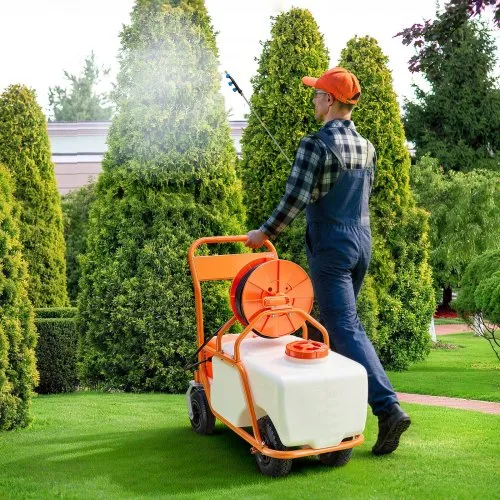

The global sprayer equipment market was valued at “USD 5.79 billion in 2025”, driven by mechanization and precision farming trends. In this context, a “weed sprayer cart’ stands out as a valuable tool for growers. It is essentially a wheeled tank and pump system designed to apply liquid herbicides (weed-killing chemicals) over large areas.
An Overview Of 5 Top Weed Sprayer Cart For 2026
| Product | Title | Features | Explore |
|---|---|---|---|
 | VEVOR Battery-Powered Weeding Sprayer Cart |
| Check Price |
 | Garvee Battery Powered Sprayer Wheeled Cart |
| Check Price |
 | weeflos Battery Powered Electric Sprayer Wheeled Cart |
| Check Price |
 | PULMIC Battery Powered Cart Sprayer |
| Check Price |
 | VEVOR Battery Powered Garden Weed Sprayer Cart |
| Check Price |
By mounting the tank on wheels and adding a pump and spray wand, a sprayer cart lets one person cover ground much faster than with a backpack or handheld sprayer. This reduces physical strain and increases productivity. management in the future.
What Is Weed Sprayer Cart?
A weed sprayer cart (also called a spray cart or sprayer trolley) is essentially a garden sprayer mounted on a wheeled frame. The operator pushes or tows the cart, and the sprayer applies herbicide from its tank through a hose and nozzle as it rolls.
The main purpose is to reduce physical strain and increase coverage area compared to hand-held or backpack sprayers. Key components of a sprayer cart include:
i. Tank: Usually made of polyethylene or stainless steel, this stores the diluted herbicide (weed killer). Common cart tank sizes range from 5 to 25+ gallons.
ii. Pump: Creates pressure inside the tank. It may be a manual pump (hand lever or piston), an electric pump (battery-operated), or a gas engine pump. The pump pushes the liquid into the hose at a constant pressure for spraying.
iii. Hose and Spray Wand: The hose carries liquid from the tank to the handheld wand or lance. The wand often has a trigger valve and screw-on nozzle. Nozzles determine spray pattern and droplet size; many carts include multiple nozzles (flat-fan, cone, etc.) for different tasks.
iv. Wheels and Frame: A sturdy frame (steel or plastic) supports the tank and pump on wheels. Wheel size varies (larger wheels roll better over rough ground). Some carts have pneumatic tires for easy transport on uneven terrain. The handle or drawbar lets you push or attach the cart to a vehicle.
Unlike a hand-held or backpack sprayer, the sprayer cart’s wheeled frame carries the load. This means the operator doesn’t bear the weight of gallons of liquid, significantly reducing fatigue. It also allows for a larger tank, so fewer refills. In summary, anyone who needs to spray herbicides on more than a few small beds or spots will find a sprayer cart much more convenient than a conventional sprayer.
Best Weed Sprayer Cart for 2026
Choosing the best weed sprayer cart for 2026 can make weed control easier, faster, and more convenient for your lawn, garden, or farm. Here, we’ll explore the top options, compare their key features, and help you find a reliable sprayer cart that suits your spraying needs, property size, and budget.
VEVOR Battery-Powered Weeding Sprayer Cart
The VEVOR sprayer features a 10,5-gallon tank, adjustable 0–80 PSI pressure, and five nozzles for versatile garden spraying applications. Its wheeled cart, long hose, and rechargeable 4Ah battery provide convenient mobility and advertised 3–6-hour spraying time. During setup, I found that testing connections with clean water first helps identify leaks and ensures smoother spraying.
expert start
What Is It and Its Features?
The VEVOR Battery-Powered Sprayer with Wheeled Cart is an electric garden sprayer designed for larger yards, lawns, greenhouses, and farm tasks. Its 10.5-gallon plastic tank holds plenty of liquid, while adjustable pressure helps match the spray to different jobs. The included nozzles, long hose, wide-mouth filling opening, and built-in filter make it a practical option for regular outdoor use.
Why It Matters
The VEVOR Battery-Powered Sprayer with Wheeled Cart matters because it can save time during repetitive spraying jobs. Instead of carrying a heavy tank on your back, you can move the cart around the garden and use the hose to reach plants, borders, and other areas. Its adjustable pressure also provides more control, making it useful for different spraying needs when set up correctly.
My Set-Up and My Experience
When setting up the VEVOR Battery-Powered Sprayer with Wheeled Cart, I would first assemble the cart, connect the hose and spray wand, and charge the battery fully. Before adding any weed killer, I would test the connections with clean water to check for leaks and confirm that the nozzle works properly. The wheels and extended hose should make movement easier, although the filled tank will still require care on uneven ground.
Performance
The VEVOR Battery-Powered Sprayer with Wheeled Cart offers useful features for people who regularly maintain lawns, gardens, or larger outdoor spaces. Its adjustable 0–80 PSI pressure range allows different spray patterns and strengths, depending on the selected nozzle.
The advertised 3–6-hour battery runtime may support extended jobs, but actual performance will depend on pressure settings, spraying frequency, and battery condition. The long hose is especially helpful for reaching areas without moving the cart constantly.
Practical Tips
- Charge the battery fully before starting a long spraying session.
- Test the sprayer with clean water before adding chemicals.
- Choose the correct nozzle for the job and required spray pattern.
- Keep the hose untangled to prevent interruptions while working.
- Clean the tank, filter, wand, and nozzle after every use.
expert end
pro start
| Pros | Cons |
|---|---|
| ✔️Large 10.5-gallon tank reduces frequent refilling. | ❌The filled tank can be heavy to move. |
| ✔️Adjustable 0–80 PSI pressure offers useful control. | ❌Plastic construction requires careful handling. |
| ✔️Wheeled cart reduces carrying effort. | ❌The cart may struggle on rough ground. |
| ✔️Long hose improves reach around the garden. | ❌Actual battery runtime depends on usage. |
| ✔️Five nozzles support different spraying applications. | ❌Regular cleaning is needed after spraying chemicals. |
pro end
Garvee Battery Powered Sprayer Wheeled Cart
The Garvee sprayer features a 5,3-gallon tank, 12V 8Ah battery, and cordless operation for convenient lawn and garden spraying tasks. It offers adjustable pressure up to 90 PSI, six interchangeable nozzles, two wands, and a wheeled cart for versatile spraying. I found its wheeled design, multiple nozzle options, and adjustable pressure useful for making routine garden spraying more convenient and manageable.
expert start
What Is It and Its Features?
The Garvee 5.3 Gallons Battery Powered Sprayer with Wheeled Cart is an electric garden sprayer designed to make liquid spraying more convenient. Its 5.3-gallon tank can hold a good amount of liquid for regular gardening tasks.
The 12V 8Ah battery offers a stated runtime of 4–6 hours, depending on usage conditions. Its adjustable pressure reaches up to 90 PSI, and six nozzles provide different spray patterns for various applications. Two wands offer additional flexibility, while the trigger lock helps reduce hand strain during longer spraying sessions.
Why It Matters
The Garvee 5.3 Gallons Battery Powered Sprayer with Wheeled Cart is helpful for gardeners who want to cover larger areas without carrying a heavy tank on their backs. Its wheeled design allows the user to move the sprayer across suitable garden paths with less physical effort.
The adjustable pressure is useful when switching between delicate plants and areas that need stronger spraying. The cordless operation also removes the need for a power outlet during use. Together, these features make everyday spraying more manageable and convenient.
My Set-Up and My Experience
When setting up the Garvee 5.3 Gallons Battery Powered Sprayer with Wheeled Cart, I would first charge the battery fully and check that the tank, hose, wand, and nozzle connections are secure. I would then fill the tank according to the product instructions and test the spray using clean water.
During garden work, the wheeled cart offers a practical way to move the unit between plants and lawn sections. I also appreciate the choice of six nozzles, as different spraying tasks can require different patterns. The trigger lock is another useful feature when working for longer periods.
Performance
The Garvee 5.3 Gallons Battery Powered Sprayer with Wheeled Cart offers a combination of adjustable pressure, cordless operation, and convenient mobility. The maximum pressure of 90 PSI provides flexibility for different spraying needs, although the best setting depends on the nozzle and the application.
The battery’s advertised 4–6-hour runtime may help with extended jobs, but actual operating time can vary with pressure settings, spraying frequency, and battery condition. The tank capacity is useful for reducing refill breaks, while the wheeled cart helps make movement easier. Overall, its features are suited to regular lawn and garden maintenance.
Practical Tips
- Charge the battery fully before starting a spraying session.
- Test each nozzle with clean water before adding any treatment.
- Start with low pressure when spraying delicate plants.
- Check the cart wheels and hose connections before use.
- Clean the tank, wand, and nozzles after every application.
expert end
pro start
| Pros | Cons |
|---|---|
| ✔️Cordless operation provides freedom of movement. | ❌The battery needs charging before use. |
| ✔️5.3-gallon tank reduces refill breaks. | ❌The tank can become heavy when filled. |
| ✔️Adjustable pressure reaches up to 90 PSI. | ❌Actual spraying pressure depends on the setup. |
| ✔️Six nozzles and two wands offer versatility. | ❌Extra attachments require cleaning and storage. |
| ✔️Wheeled cart helps reduce carrying effort. | ❌Moving across rough ground may be difficult. |
pro end
weeflos Battery Powered Electric Sprayer Wheeled Cart
The weeflos sprayer features a 4,2-gallon tank, 21V rechargeable battery, wheeled cart, and built-in mixing system for convenient garden spraying. Eleven nozzle types and a 31,5-inch telescopic wand provide flexible spraying options for fertilizer, weed control, and pest management. I found its wheeled design, large tank, and adjustable nozzles useful features for simplifying garden maintenance and reducing frequent refills.
expert start
What Is It and Its Features?
The weeflos 4.2 Gallon Battery Powered Electric Sprayer is a portable spraying system made for homeowners and gardeners who need to cover larger areas. Its 4.2-gallon tank reduces the need for frequent refilling, while the 21V rechargeable lithium battery powers the spraying system without requiring manual pumping.
The tank is made from high-density polyethylene (HDPE), and the sprayer includes nylon components. It also features an internal mixing system, 11 nozzle types, and a 31.5-inch telescopic wand. These features make it suitable for different spraying needs, from applying liquid fertilizer to treating weeds and garden pests.
Why It Matters
The weeflos 4.2 Gallon Battery Powered Electric Sprayer matters because it can save time and reduce physical effort during regular garden maintenance. Its battery-powered operation removes the need for repeated hand pumping, which can become tiring when treating a lawn or vegetable garden.
The large tank is helpful when working across several garden beds, while the wheels make transportation easier than carrying a full tank by hand. The different nozzle options also provide flexibility for various jobs. However, users should select the correct spray pattern and follow the instructions for each liquid to avoid wasting chemicals or damaging nearby plants.
My Set-Up and My Experience
When preparing the weeflos 4.2 Gallon Battery Powered Electric Sprayer for garden work, I would first check the tank, battery, hose, wand, and nozzle connections. I would charge the battery fully and add the required liquid according to its product label. The internal mixing feature is useful for keeping suitable spray mixtures evenly distributed during application.
I would also test the nozzle with clean water before using fertilizer or weed-control products. The wheeled cart is a practical feature because it allows the unit to move alongside me while I work. For the best experience, I would avoid overfilling the tank and check the wheels before moving across uneven ground.
Performance
The weeflos 4.2 Gallon Battery Powered Electric Sprayer offers several features that can improve the efficiency of everyday spraying tasks. Its rechargeable 21V battery supports powered operation, while the large tank helps reduce interruptions caused by refilling. The adjustable nozzle options are useful for changing between a fine mist and a stronger stream, depending on the job.
The telescopic wand can also help reach plants that are difficult to spray directly by hand. The built-in mixing system is another useful addition when the selected product requires regular mixing. Actual battery runtime, spray pressure, and coverage will depend on the liquid used, nozzle setting, and working conditions, so these details should be checked during use.
Practical Tips
- Charge the battery before starting a long spraying session.
- Test the spray pattern with clean water first.
- Choose a suitable nozzle for each gardening task.
- Follow the correct mixing instructions on the product label.
- Keep the tank below its maximum fill level.
- Move the cart slowly over uneven garden paths.
expert end
pro start
| Pros | Cons |
|---|---|
| ✔️Large 4.2-gallon tank reduces frequent refilling. | ❌A full tank can be heavy to move. |
| ✔️21V rechargeable battery eliminates manual pumping. | ❌Battery runtime is not specified. |
| ✔️Wheeled cart makes transportation easier. | ❌Wheels may struggle on rough terrain. |
| ✔️Eleven nozzle types offer flexible spraying options. | ❌Choosing the right nozzle may require practice. |
| ✔️Telescopic wand helps reach difficult areas. | ❌Regular cleaning is required after use. |
pro end
PULMIC Battery Powered Cart Sprayer
The PULMIC sprayer features a 9,25-gallon tank, removable 18V lithium battery, and electronic pressure control delivering up to 60 PSI. Its 20-foot hose, three nozzle options, fiberglass components, and pre-pump filter support versatile and convenient garden spraying applications. I find its large capacity, separate battery charging, and flexible hose useful for managing larger garden areas with fewer interruptions.
expert start
What Is It and Its Features?
The PULMIC Battery Powered Cart Sprayer is an electric spraying system designed to make garden and landscape maintenance easier. Its large tank holds 9.25 gallons of liquid, reducing the need for frequent refilling during bigger jobs. The removable 18V lithium battery can be charged separately, which is helpful when the tank is filled.
It also offers three-stage electronic pressure control, with a maximum pressure of 60 PSI. The included accessories feature three nozzle options, a charger, a measuring cup, and fiberglass spraying components. The pre-pump filter helps keep debris away from the pump, while the 20-foot hose provides flexibility when treating plants, garden beds, and lawn edges.
Why It Matters?
The PULMIC Battery Powered Cart Sprayer matters because covering a large garden with a small manual sprayer can take considerable time and effort. Its generous tank capacity helps reduce interruptions, while battery-powered operation removes the need for repeated hand pumping.
The adjustable pressure settings also make it easier to choose a suitable spray output for different tasks. I particularly appreciate the idea of having different nozzle options for changing application needs, from general garden spraying to more targeted weed treatment. For anyone maintaining a lawn, orchard, or large vegetable garden, these features can make routine spraying more organized and manageable.
My Set-Up and My Experience
When preparing the PULMIC Battery Powered Cart Sprayer for use, I would first check the tank, hose connections, filter, battery, and nozzle to make sure everything is properly fitted. I would charge the removable battery, add the correct amount of treatment according to its label, and select a suitable nozzle for the job.
The cart-style design and 20-foot hose offer flexibility when moving around garden beds and shrubs. I also like the practical benefit of charging the battery separately instead of moving the entire sprayer. Although actual comfort and runtime depend on the working conditions, this design offers useful convenience for regular garden maintenance.
Performance
The PULMIC Battery Powered Cart Sprayer offers several features intended to support consistent spraying. Its electronic pressure control is designed to reduce uneven output, while the maximum pressure of 60 PSI provides flexibility for different applications. The three included nozzle options can help users adjust the spray pattern according to the task.
The fiberglass spraying components are another useful feature because they offer an alternative to basic plastic parts. The large tank is particularly helpful for covering extended areas, although its weight increases when filled.
Practical Tips
- Fully charge the removable 18V battery before starting a spraying session.
- Select a suitable nozzle for the intended treatment and required coverage.
- Inspect the pre-pump filter regularly to help prevent debris from affecting operation.
- Use only approved products and follow the recommended mixing rates.
- Wear gloves, goggles, and suitable protective clothing when spraying..
expert end
pro start
| Pros | Cons |
|---|---|
| ✔️Large 9.25-gallon tank reduces refilling. | ❌Tank becomes heavy when filled. |
| ✔️Removable 18V lithium battery. | ❌Runtime depends on workload. |
| ✔️Pressure control up to 60 PSI. | ❌May be oversized for small gardens. |
| ✔️Three nozzle options for varied tasks. | ❌Requires regular cleaning after use. |
| ✔️20-foot hose provides working flexibility. | ❌Battery charging and storage require care. |
pro end
VEVOR Battery Powered 15 Gallon Garden Weed Sprayer Cart
The VEVOR weed sprayer features a 15-gallon tank, 12Ah battery, adjustable 0–90 PSI pressure, and five to six hours of advertised spraying time. It includes a 126-foot hose with reel, eight nozzles, two spray wands, pneumatic wheels, and a locking trigger for convenient operation. I found its large capacity, adjustable pressure, and wheeled cart useful for simplifying garden spraying, reducing manual effort, and covering larger areas.
expert start
What Is It and Its Features?
The VEVOR Battery Powered 15 Gallon Garden Weed Sprayer is a cart-mounted spraying system for weed control, watering, and other suitable outdoor cleaning tasks. Its 15-gallon capacity reduces the need for frequent refilling, while the battery-powered pump removes the need for repeated manual pumping.
The manufacturer states that the 12Ah battery can provide approximately five to six hours of spraying on a full charge, depending on operating conditions. The pump offers up to 90 PSI pressure and a maximum flow rate of 4.1 liters per minute. It includes eight nozzles, a metal wand adjustable from 21.5 to 39.4 inches, and a plastic wand intended for compatible corrosive liquids. The long hose, hose reel, pneumatic wheels, and locking spray trigger add convenience for extended jobs.
Why It Matters?
The VEVOR Battery Powered 15 Gallon Garden Weed Sprayer matters because spraying a large garden with a small handheld sprayer can take considerable time and effort. Its battery-powered operation helps reduce fatigue, especially when treating weeds across lawns, paths, and garden borders.
The long hose allows movement around the work area without constantly relocating the cart, and the pressure adjustment helps match the spray output to different tasks. I also find the large tank capacity useful for planning longer jobs with fewer interruptions. However, the full tank can be heavy, so the wheels and cart become important when moving between different sections of the garden.
My Set-Up and My Experience
When preparing the VEVOR Battery Powered 15 Gallon Garden Weed Sprayer, I would first check the cart, wheels, hose connections, battery, and spray wand to make sure everything is secure. The wide tank opening should make filling easier, while the built-in filter screen helps catch debris before it enters the tank.
I would start with clean water to check for leaks, test the pressure adjustment, and compare the nozzles before adding any garden treatment. The hose reel is helpful for keeping the long hose organized after use. I would also test the cart on the actual garden surface before filling the tank completely, as its weight can affect maneuverability.
Performance
The VEVOR Battery Powered 15 Gallon Garden Weed Sprayer offers several features that can improve the spraying process during routine garden work. Its adjustable pressure makes it easier to choose a suitable spray pattern for the job, while the different nozzles provide options for targeted application and broader coverage. The locking trigger can reduce hand strain during longer spraying sessions.
The cart helps support the tank, and the pneumatic wheels are designed to handle uneven outdoor surfaces better than small, hard wheels. Actual battery life, spray distance, and coverage will depend on pressure settings, nozzle selection, liquid viscosity, and working conditions. Regular cleaning and proper battery care should help maintain reliable operation.
Practical Tips
- Make sure the hose, wand, and fittings are secure before starting.
- Check the pump and nozzle pattern before adding chemicals.
- Use a suitable nozzle for targeted weed control or wider coverage.
- Start low and increase it only when needed.
- Keep the long hose organized to reduce tangling and tripping hazards.
- Avoid steep slopes and rough ground when the tank is full.
expert end
pro start
| Pros | Cons |
|---|---|
| ✔️Large 15-gallon tank | ❌Heavy when completely full |
| ✔️Battery-powered spraying | ❌Requires regular charging |
| ✔️Adjustable 0–90 PSI pressure | ❌Runtime varies with usage |
| ✔️Eight interchangeable nozzles | ❌Accessories need organized storage |
| ✔️Two spray wands included | ❌Chemical compatibility must be checked |
pro end
How Does Weed Sprayer Cart Work?
A weed sprayer cart works by combining pressurization and mobility. The operator fills the tank with a herbicide solution (water mixed with weed killer) and primes the pump. When the pump is engaged (manually pumped or activated), it pushes the liquid out of the tank under pressure. That pressurized liquid travels through the hose to the spray wand.
On the wand, adjustable nozzles release the liquid as a spray or stream. The nozzle’s size and design control flow rate and spray pattern. For example, a fan nozzle spreads a wide, even pattern; a cone nozzle produces a more concentrated spray for spot treatments. Many carts include multiple nozzle options to match different tasks (broad coverage vs targeted spot spraying).
The wheels and handle allow the operator to push or pull the cart easily across the field or lawn. Large tires reduce rolling resistance and make it easier to move on soft soil or grass. The handle design can be ergonomic to improve control. For tow-behind models, the cart connects to a tractor or ATV so it can be pulled, letting the operator spray while riding.
A well-chosen sprayer cart turns weed control from a tiring chore into an efficient task, letting one person cover large areas with far less fatigue than a backpack sprayer.
Mechanically, pressure from the pump forces herbicide from the tank through the hose. When the operator pulls the trigger on the spray wand, the pressurized liquid flows out through the chosen nozzle. The pressure must be sufficient (often 30–60 psi for many herbicide applications, though some weed control tasks use 80–100 psi) to ensure the herbicide reaches and covers the weeds effectively.
Higher pressure can cover more area but may cause drift; lower pressure provides larger droplets and less drift but shorter range. The pump type (manual vs electric vs gas) dictates how that pressure is maintained. Sprayer carts are simple but effective. An operator walks or drives the cart at a steady pace. If the cart is manual pump type, the operator periodically pumps a lever to restore pressure. If electric/gas, the motor keeps pressure steady automatically.
The wheels do not pump the sprayer; the pump does that. However, the motion is akin to mowing or gardening chores: as you move, you spray. At the end of spraying, the operator releases the wand, allowing the pump to idle or the pressure to safely drop. Then the herbicide tank can be refilled or emptied following proper cleanup.
Types of Weed Sprayer Cart
Weed sprayer carts come in different types to suit various gardening, lawn care, and agricultural needs. They vary in power source, tank capacity, mobility, and spraying performance, so choosing the right type depends on the size of your property and the amount of weed control required. Weed sprayer carts come in various designs depending on how they are powered and used. The main categories include:
1. Manual Pump Weed Sprayer Cart: Manual pump carts use a hand lever or pistol-grip pump to pressurize the tank. These carts require periodic pumping by the operator, similar to a backpack sprayer but easier because the pump is on the cart. Their advantages are simplicity and low cost.
The disadvantage is that the operator still does pumping work, making them best for small to medium areas. Manual carts often hold 5–20 gallons. They have no battery or fuel costs, but the pump requires physical effort.
2. Battery-Powered Weed Sprayer Cart: Battery-powered carts have an electric pump running on a rechargeable battery. Typical batteries are 12–18 V lithium-ion or lead-acid. These allow “drift-free” continuous spraying without manual pumping. A full charge can typically spray tens to hundreds of liters; for example, Fortune Business Insights notes an 18V battery sprayer can cover 100–400 L per charge.
Battery sprayers are very convenient for moderate areas (0.5–2 acres). However, they need charging time (often 4–8 hours) and battery lifespan is finite (requiring eventual replacement). When using one, the operator can spray almost hands-free, only walking and pulling the trigger.
3. Electric (Corded) Weed Sprayer Cart: Less common are electric (corded) carts that plug into a power outlet or generator. These are similar to battery carts but require a nearby power source or a long extension cord. They can run indefinitely (no recharge stops), making them good for fixed locations like orchards or nurseries with power available.
However, extension cords can limit range and become a tripping hazard. Corded pumps are typically quieter than gasoline and cheaper than battery setups, but they tie you to the plug.
4. Gas-Powered Weed Sprayer Cart: Gas-powered carts use a small engine (often 2-stroke or 4-stroke) to drive the pump. They offer high pressure and long running time as long as there is fuel. Gas carts are best for large or remote areas without electricity. An engine (say 1.5–5 HP) can pressurize up to 100+ PSI, spraying a stream that reaches far.
The downside is weight (engines add heft) and emissions. They require gasoline and spark plugs maintenance. Gas pumps can pump large volumes (100+ liters per minute in some models), making them suitable for farm or ranch scale operations.
5. Tow-Behind Weed Sprayer Cart: Tow-behind sprayers attach to a tractor, ATV, or UTV. They often have very large tanks (50+ gallons) and may include a boom (multi-nozzle bar) for broadcast spraying. The operator drives the vehicle and controls the sprayer valve from the seat.
These are effectively miniature agricultural sprayers that require minimal physical effort by the operator other than steering. They cover large areas quickly. Tow-behind carts typically use tractor hydraulics or the vehicle’s power take-off (PTO) to drive the pump. They cost more and need a tow vehicle.
6. Push Weed Sprayer Cart: Push carts are a subset of manual carts but with a rolling bar pump or hand lever integrated into the handle. Instead of pumping by hand while standing still, the user pumps the handle up and down as they walk, similar to pumping a hand truck.
This allows simultaneous pumping and moving, increasing efficiency. Push carts can cover more ground per pump cycle than stationary manual carts. Like other manual carts, they’re best for small farms or large gardens.
7. Spot Sprayer Carts for Targeted Weed Control: Spot sprayer carts (a smaller type) are designed for precise application on individual weeds or narrow strips. They hold a small tank (1–5 gallons) and have a long wand (often with a shut-off nozzle). The operator walks slowly and applies a direct stream to each weed. The advantage is minimal chemical use and less drift.
These are often battery-powered or hand-pump because coverage is limited. Spot sprayer carts are ideal where weeds are sparse (driveways, fence lines, around trees). Some call them “turbo nozzle” or “pin stream” sprayers because they use concentrated nozzles.
Key Features to Look for Best Weed Sprayer Cart
Choosing the best weed sprayer cart depends on more than just its price or tank size. You should consider important features such as pump performance, spray pressure, nozzle adjustments, hose length, wheel design, and overall durability to ensure efficient and convenient weed control.
1. Tank Capacity and Liquid Storage
The tank capacity determines how much herbicide solution you can carry before refilling. Common sizes range from 5 to 20+ gallons for walk-behind carts, and 25–50+ gallons for tow-behind units. Larger tanks reduce refilling frequency on big jobs but make the cart heavier (especially when full) and harder to push.
For example, a 15-gallon cart will typically weigh over 200 pounds when filled. Match tank size to property size: small gardens do well with 5–10 gallons, while large lawns or farms may need 20–50 gallons. Also look at the tank material: polyethylene (plastic) tanks are common (chemical-resistant and lightweight), while some heavy-duty carts use metal tanks.
Check for convenient features like a wide fill opening (for easy pouring) and a drain/flush outlet to empty the tank completely after use. Some tanks are translucent or have level indicators to monitor solution volume.
2. Pump Type and Pressure Rating
The sprayer pump pressurizes the herbicide. Common pump types include diaphragm pumps, piston pumps, and roller pumps. Diaphragm pumps (driven by a motor or manual lever) are popular for battery carts and small tractors; they are self-priming and provide even pressure.
Piston pumps can generate very high pressure and are durable, often found on high-end or ATV sprayers. Roller pumps (similar to diaphragm) are common too. The pump’s pressure rating (usually in PSI – pounds per square inch) affects spray distance and droplet size. Many garden carts operate around 30–100 PSI.
Higher pressure lets you spray finer droplets or achieve longer spray range, but may use more battery or fuel. Check the flow rate (gallons or liters per minute) as well: higher flow means covering ground faster.
For example, a strong battery sprayer might output 3–4 L/min (around 0.8–1.0 GPM) at 90 PSI, allowing a faster application rate than a weak manual pump. Look for a pump that matches your spraying needs: if you have wide areas, prioritize higher flow; for spot work or drift-sensitive areas, lower pressure might suffice.
3. Battery Life and Charging Time
If choosing a battery-powered cart, check the battery specifications. Lithium-ion batteries are common because they’re lighter and last longer than lead-acid. Battery capacity (Ah – ampere-hours) and voltage (e.g., 12V) determine runtime. A typical 12V 8Ah battery might power 6 hours of spraying, while a 12V 12Ah could give more.
Battery life on a charge often depends on usage (spraying continuously or intermittently). Also note the recharge time: lithium batteries might recharge in 2–3 hours, whereas sealed lead-acid could take 8–12 hours.
If covering a large area, having a spare battery or fast charger can be important. Some carts come with removable batteries (like a portable pack), allowing swapping mid-task. Remember that battery adds weight (especially lead-acid types) and cost. The benefit is no pumping labor and consistent pressure, which can make the job significantly easier.
4. Hose Length and Spray Wand Design
Longer hose length allows reaching distant spots from the cart without repositioning. Standard hoses on sprayer carts range from 10 to 30 feet. A longer hose means more flexibility (e.g., spraying the far side of a bed while the cart stays on the path). However, very long hoses add drag and make the wand heavier to hold.
The spray wand should be ergonomically designed (lightweight, comfortable grip) and often telescopic for reach. Many carts include two wand holders or dual hoses for simultaneous spraying. Check that the hose and wand have quality fittings (sturdy clamps and gaskets) to prevent leaks.
Some wands are insulated or have filters. Also, note if the hose is coiled or comes with a reel for neat storage. In summary: a hose around 15–25 feet is versatile for most garden use, and a well-designed wand can improve precision and ease of spraying around obstacles.
5. Adjustable Nozzles and Spray Patterns
The nozzle determines the spray pattern (fan, cone, straight stream) and droplet size. Good sprayers include multiple interchangeable nozzles or an adjustable nozzle system. Nozzles are often color-coded by size (e.g., 11002, 11004, etc.), indicating flow rate. For weed control, common nozzles include flat-fan nozzles for broadcast spraying and cone nozzles for better coverage under foliage.
Some carts feature adjustable or multi-pattern nozzles you can twist to change the spray. Being able to fine-tune the pattern is critical: a coarse droplet (lower pressure, larger orifice) is used to prevent drift on windy days, while a fine mist covers wide areas quickly on calm days. The cart should have easy nozzle-access: quick-connect fittings or a built-in wrench for nozzle changes.
Also consider anti-drip or low-drift nozzle designs if you need extra control. Research shows that using multiple well-chosen nozzles can significantly improve coverage: for example, activating several nozzles instead of one resulted in over 92% weed control and 95% biomass reduction in trials.
6. Wheel Size, Tires, and Maneuverability
Large wheels and durable tires improve how the cart moves over rough or uneven ground. Wheels of 12 inches or more (often pneumatic with pneumatic tires) can roll over bumps, grass, mud, and gravel. Small hard plastic wheels may work on smooth surfaces but struggle on soft ground.
Consider tire tread: deeper treads or wide tires give better traction on slopes or soft soil. Some carts have two large rear wheels and a smaller front caster, which allows turning in place, while others have four equally sized wheels. Swivel front wheels enhance turning in tight spots (at the cost of some stability).
When evaluating maneuverability, test turning radius and whether the cart can handle full loads of liquid. Also check handle design: some have height adjustment or a flexible tow bar that absorbs motion. Good maneuverability means the cart doesn’t tip or bounce excessively when full, and it stays stable when pushing across slopes or corners.
7. Frame Material and Overall Durability
The frame of the cart should be sturdy. Common materials are powder-coated steel or stainless steel (for metal frames) and high-density plastic for tank/frame combos. Steel frames resist twisting under load but can rust if not protected; look for corrosion-resistant coatings. Plastic frames (or reinforced polyethylene) avoid rust and are lighter, but ensure it’s UV-stabilized plastic that won’t crack in sun.
Also inspect welds, joints, and fasteners. The overall build should be robust enough to handle years of use and rough terrain without leaking or breaking. Durability ties into price (premium carts use heavier-gauge metal and sealed bearings). Check the warranty: many quality sprayer carts offer at least one year. A durable cart will last long enough that it may be more cost-effective despite higher upfront cost.
8. Flow Rate and Spraying Performance
Flow rate (L/min or GPM) combined with pressure determines how fast you cover area. High flow means more solution delivered, which is good for broad coverage but uses more chemical. Typically, sprayer carts have flows from ~0.5 to 4.5 liters per minute (0.13–1.2 GPM).
For large lawns, a higher flow pump (2–4 L/min) at moderate pressure lets you spray a wider swath or use multiple nozzles, reducing the time it takes to treat an area. Low flow (<1 L/min) works for small spots or precise applications. Spraying performance also includes consistency of pressure: an electric or gas pump will maintain nearly steady pressure, yielding an even spray.
Manual pumps may have more variability. When choosing, consider the **coverage rate**: some manufacturers specify how many acres per hour you can spray. Also consider if a flow control valve is present to adjust output on the fly. Ultimately, flow and pressure should match your weed control needs (quick broad applications vs. slow targeted spraying).
9. Tank Fill Opening and Drain System
A convenient tank fill opening saves time. Look for a large cap that screws off easily (often 3–4 inches diameter). This lets you pour in herbicide and water without spills. Some models have a removable lid or strainer to filter debris. Also check for built-in drain/fill hose adapters: a quick-connect drain fitting allows you to attach a hose and easily drain the tank for cleaning or storing the cart.
A well-designed drain system prevents leftover herbicide from concentrating and clogging the tank. The location of the opening is key – it should be accessible (not buried under handles) and seal tightly to keep pressure. Together, fill/drain features make daily use and maintenance much easier.
Business Research Insights, 2026 found that over 41% of modern sprayers now integrate automated nozzle controls to reduce drift. This trend underscores how advanced weed sprayer carts are focusing on precision and operator ease.
How to Choose Right Weed Sprayer Cart
Making a list of your priorities (area size, spraying frequency, chemical types, and budget) will guide which features and type of cart to prioritize. Selecting a weed sprayer cart involves matching the equipment to your property, workload, and budget. Key considerations include:
a. Choose the Right Tank Size for Your Property: Estimate how many gallons you need to cover your area without constant refilling. For small gardens, a 5–10 gallon cart may suffice, while a large orchard or field may require 15–25 gallons or more. Remember that a full tank adds weight, so do not exceed what you or your tow vehicle can safely manage.
b. Select a Pump Based on Your Spraying Needs: For spot treatments and small plots, a manual pump or low-pressure electric pump may work. For larger fields, an engine-driven or high-flow electric pump can maintain consistent pressure and flow over longer periods, reducing spraying time. If your weeds require fine misting (e.g. pre-emergence herbicides), ensure the pump can reach the higher pressure needed.
i. Consider Manual, Battery, or Gas Power: Manual carts (hand pump) are cheapest and simple, but require effort. They are best if you only need to spray occasionally or small areas.
ii. Battery carts save labor; if you plan to spray medium areas regularly, a battery model may pay off despite higher upfront cost. They also avoid fumes. Check battery life vs area: an 18V battery may cover a quarter to half an acre per charge.
iii. Gas carts are ideal for large fields or areas without electricity. They run as long as you have fuel. However, they cost more, are heavier, and need maintenance.
c. Check the Sprayer’s Compatibility With Your Herbicide: Some herbicides (especially oil-based or thick mixtures) might clog certain nozzles or pumps. Ensure the materials (tank, seals, hoses) are compatible with the chemicals you use. For example, heavy surfactants might require a stainless steel or chemical-resistant pump. Also confirm that the pump can handle the viscosity of premixed herbicides.
d. Consider Terrain, Wheel Design, and Portability: If you often work on hilly or rough ground, larger pneumatic wheels are key. For flat lawns, smaller solid wheels may suffice. Also think about where you’ll store or transport the cart: does it need to fit in a trailer or truck bed? Is it light enough to push uphill when empty? Ease of assembly or foldable handles can aid portability.
e. Compare Build Quality, Warranty, and Price: Look for brands or models with good reviews for durability. A warranty on pumps or frames can save money if parts fail. Balance cost against expected lifespan: a $200 cart that lasts 5 years may be more cost-effective than a $100 cart lasting 1 year.
f. Choose Between Spot Spraying and Broad-Area Application: Some carts are better for spot treatments (small tank, fine nozzle), while others for area coverage (boom attachments, large tank). If you mostly need to kill isolated weeds (driveways, garden beds), a spot sprayer cart may serve you. If you need to broadcast spray entire fields or lawns, a cart with boom nozzles and high flow might be better.
Weed Sprayer Cart vs. Other Spraying Equipment
i. Weed Sprayer Cart vs. Backpack Sprayer: A backpack sprayer is carried on the user’s back (usually 2–5 gallons). The main difference is capacity and effort. A backpack is more portable in very tight spaces and cheaper upfront, but you carry the weight and cover less area per fill. A sprayer cart holds much more liquid (5–20 gallons) and rides on wheels, so it greatly reduces physical strain.
On the other hand, carts are bulkier and less nimble than a backpack. For example, spraying under bushes might be easier with a backpack, but walking 1,000 feet with a 5-gallon backpack all day can be very tiring. In most gardens and fields, a cart allows one person to do the job faster with less fatigue.
ii. Weed Sprayer Cart vs. Handheld Sprayer: Handheld sprayers (also called pump sprayers) are the smallest: typically 1–2 gallons, with a small hand pump. These are suitable for very small jobs or spot treatments. They are very lightweight and inexpensive. The downsides are the small tank (frequent refills) and manual pumping.
A wheeled cart eliminates those limits: no need to continuously pump and far larger coverage per fill. Essentially, a cart is a scaled-up sprayer for bigger jobs. The trade-off is storage space: a cart needs more storage room than a handheld unit. Also, handheld units can go places a cart cannot (like steep slopes) but cannot cover the same area efficiently.
iii. Weed Sprayer Cart vs. Tow-Behind Sprayer: A tow-behind sprayer (hitched to a tractor/ATV) is effectively a large cart, but usually with bigger capacity and booms. The line here is blurred: a tow-behind is just a kind of cart. The difference is scale – tow-behinds are for very large areas. In fact, many carts are specifically designed to be towed.
If we compare a small push cart to a large tow-behind, the tow-behind can carry more herbicide and cover ground faster, but requires a vehicle and is less maneuverable in tight spaces. In short, a tow-behind is a heavy-duty extension of the push cart concept. When choosing, consider whether you already have a vehicle: if yes, a tow-behind attached to a mower or tractor might be ideal for acreage.
iv. Weed Sprayer Cart vs. ATV Sprayer: An ATV sprayer is like a small tank mounted on an all-terrain vehicle. It is essentially an ATV-mounted sprayer, often used on farms or ranches. The main difference is that with a sprayer cart you push or tow by a tractor, whereas with an ATV sprayer you drive. The principle of spraying is the same. ATV sprayers often have booms and large tanks (30+ gallons).
The advantage of a cart is that you do not need a motorized vehicle; it can be more affordable. A powered cart might use a 4-wheeler anyway. However, ATV sprayers cover terrain faster and handle rough ground better. So a sprayer cart is for slower, more manual work, while an ATV sprayer is for when speed and reach over tough terrain are needed.
v. Weed Sprayer Cart vs. Pull-Behind Garden Sprayer: “Pull-behind” often refers to any sprayer you tow (which is a cart). If we distinguish, a “garden pull-behind sprayer” typically means a tractor/truck trailer style. Again, it’s similar to a tow-behind sprayer. The difference is minimal: sprayer carts can be built to be pulled by hand or machinery, whereas some sprayers are designed only for tractor hitches.
Basically, a weed sprayer cart that attaches to a tractor is a type of pull-behind sprayer. So, they’re quite similar. The key is to match the hitch and capacity. For example, a small garden tractor may tow a 50-gallon cart with a pump, whereas a larger row-crop tractor might tow a 500-gallon sprayer trailer. For small to mid-size needs, a standard weed sprayer cart covers that category.
Benefits of Using Weed Sprayer Cart
A weed sprayer cart makes weed control easier, faster, and more convenient, especially when treating large lawns, gardens, and agricultural areas. Its wheeled design reduces the need to carry a heavy tank, while features like adjustable nozzles, long hoses, and efficient pumps help deliver herbicide where it is needed.
A. Easier Movement Across Large Areas: Because the weight is on wheels, one operator can treat much more ground. This is especially helpful in big yards or fields. For example, a tow-behind cart can cover acres per hour that a person couldn’t on foot with a backpack.
B. Reduced Physical Strain: You no longer carry a heavy tank on your back or shoulders. Walking behind or towing a wheeled cart is far less tiring, preventing back and shoulder strain. Users of battery carts report up to **40% less effort** compared to manual pumping (Farmonaut research) when covering the same area.
C. Large Tank Capacity and Fewer Refills: Sprayer carts hold much more liquid. Fewer refills means more continuous work. For example, a 15-gallon cart might treat the equivalent of five 3-gallon backpack tankfuls before refilling, which saves time.
D. Better Spray Control: With the right nozzle and pump, cart sprayers deliver a uniform spray pattern. You can adjust pressure and nozzle for optimal coverage. This consistency improves efficacy: multiple trials show a well-tuned sprayer dramatically improves weed kill rates (see Research Spotlight). It also means less overlap and waste.
E. Convenience and Safety: Having a centralized tank means safer handling. You can easily mix and carry one batch of herbicide rather than many small containers. Many carts have safety features like pressure relief valves and visible level indicators. Modern carts also often include hose holders and wand holsters, keeping the equipment neat and reducing spills during transport.
Limitations of Weed Sprayer Wheelbarrow
Although a weed sprayer wheelbarrow makes weed control easier, it also has a few limitations to consider before buying one. Factors such as uneven terrain, storage space, maintenance needs, and tank weight can affect its overall performance and ease of use.
- Storage Space Required: Wheeled carts take up more garage or shed space than a handheld sprayer. Make sure you have room for the cart’s footprint and height.
- Challenging Rough Terrain: On very uneven, rocky, or muddy ground, pushing or towing a full cart can be difficult. Even the best wheels have limits, so in very rough fields it may be hard to maintain speed and control. Large tanks also make tipping a risk on steep slopes.
- Maintenance Needs: Sprayer carts have more components (pump, engine/battery, hoses, wheels) that require upkeep. Pumps may need winterizing or repairs, tires can puncture, and fittings can leak. In contrast, a simple hand sprayer has almost no maintenance. Scheduled checks of seals and filters are important to avoid downtime.
- Power Requirements: Battery-powered carts need charging between uses, and gas carts need fuel and oil. If battery life is short, you may have to interrupt spraying to swap or recharge batteries. Similarly, gas carts require engine maintenance. If electricity or fuel isn’t available on site, a manual cart might actually be easier.
- Risk of Drift or Non-Target Damage: All sprayers carry the risk that wind or incorrect settings spray herbicide where it’s not wanted. Because carts can output higher volume, the risk of drift can be greater if not managed properly. Operators must still take care to adjust nozzles and not spray on windy days to avoid damaging neighboring plants.
How to Use Weed Sprayer Cart
Start by reading both the sprayer manual and the herbicide label; these explain safe handling, dilution rates, and spray conditions. Always wear recommended PPE (gloves, goggles, respirator) when mixing or spraying chemicals.
Fill the cart tank with water first, then add herbicide to avoid spills. Prime the pump (e.g. a manual lever or switch) until it builds pressure, then adjust the pressure to the level the label or nozzle manufacturer recommends.
Test the spray pattern on a target area: the spray width and droplet size should look even. Walk at a steady pace to overlap just slightly between swaths. Keep the nozzle low for better coverage on weeds and to minimize drift. Avoid spraying if it’s windy; even with drift-reducing nozzles some spray will float away. After spraying, follow cleanup steps before storage.
How to Maintain Weed Sprayer Cart
Regular maintenance keeps your weed sprayer cart working efficiently and helps extend its lifespan. By cleaning the tank, checking the hoses and nozzles, and inspecting the pump regularly, you can prevent common problems and ensure smooth, reliable spraying whenever you need it.
i. Clean the tank after each use: Empty any leftover herbicide and rinse the tank thoroughly. This prevents chemical buildup or crystallization. Some carts have a built-in rinse nozzle or drain port to help flush the tank.
ii. Flush the hose, wand, and nozzle: Run clean water through the entire system until it runs clear. Remove the nozzle to clean the screen if it has one. This prevents clogs and corrosion from leftover chemicals.
iii. Inspect seals, filters, and connections: Check O-rings, gaskets, and filters regularly. Replace any worn or cracked seals to prevent leaks. Replace or clean the inlet filter/suction strainer to keep debris out of the pump.
iv. Check pump performance: Observe if the pump holds pressure between sprays. If it loses pressure quickly, there may be an internal leak or worn seal. Address issues early by tightening fittings or servicing the pump as recommended by the manufacturer.
v. Maintain wheels and frame: Keep wheels inflated and greased (if applicable). Tighten any loose bolts or welds on the frame. Clean mud and debris off moving parts. A stable chassis will extend the life of the sprayer.
vi. Care for the battery or engine: For battery carts, charge the battery after use and store it in a cool, dry place. Check battery terminals for corrosion. For gas carts, change the engine oil seasonally, and drain fuel if storing for a long time. Replace spark plugs annually.
vii. Winterize if needed: Before cold weather, ensure all water is drained to prevent freezing damage. Store the sprayer cart in a dry location. Cover it to prevent dust accumulation.
Common Weed Sprayer Cart Problems and Solutions
Even a reliable weed sprayer cart can develop problems over time, such as low pressure, clogged nozzles, leaking hoses, or uneven spraying. Understanding these common issues and their solutions helps you maintain consistent spraying performance, avoid unnecessary repairs, and extend the life of your equipment.
a. Pump not building pressure: Check for loose fittings or leaks in the tank/hose. Make sure the pump is primed (filled with liquid). For manual pumps, ensure the pressure release valve is closed. If issues persist, the pump diaphragm or seals may need replacement.
b. Nozzle becoming clogged: Dirt or chemical residue can block nozzles. Remove the nozzle tip and clean it with a soft brush and water. Screen filters in the wand should also be cleaned. Using a strain cloth while pouring liquid can reduce debris in the tank.
Hose or tank leaking: A leak usually shows up as dripping. Inspect hose clamps and joints for tightness. A crack in the tank or hose requires replacement. Small cracks can sometimes be sealed with compatible epoxy as a temporary fix, but a replacement part is safest.
c. Uneven spray patterns: Often caused by a worn or incorrect nozzle. Ensure the nozzle is matched to the herbicide and pressure. Replace old nozzles annually. Also check that the wand’s pressure gauge (if present) is accurate. Debris in the nozzle can also cause irregular spray; clean as needed.
d. Battery losing charge quickly: Batteries degrade over time. Make sure the battery is fully charged before use. Check for parasitic drains (like leaving lights on). For lead-acid batteries, check electrolyte levels (if non-sealed) and replenish with distilled water. Replace the battery if it can no longer hold a charge near its rated capacity.
e. Wheels difficult to move: Mud, grass, or debris might be wrapped around axles. Clean the wheels and axles regularly. If wheels are stiff, check for a locked axle or missing lubrication. A seized bearing might need replacement.
f. Sprayer not drawing liquid: Ensure the intake is below liquid level and filters are not clogged. Air leaks at suction fittings can also prevent drawing. Verify that the pump is primed; some pumps need initial manual priming. Replace faulty suction tubes or seals if they are damaged.
Weed Sprayer Cart Safety Tips
Using a weed sprayer cart safely helps protect you, your plants, pets, and the surrounding environment from harmful chemicals. Before spraying, always read the herbicide label, wear the recommended protective equipment, and check the weather to avoid spray drift.
1. Follow all label instructions: Always read the herbicide label and the sprayer manual. Use only approved herbicides and apply at recommended rates. This ensures effectiveness and safety for people, pets, and the environment.
2. Use recommended protective equipment: Wear gloves, eye protection, long sleeves, and pants to avoid skin contact. A respirator may be needed if spraying volatile chemicals. Never spray without PPE.
3. Avoid spraying in wind: Wind can carry spray droplets away from the target. If possible, spray when wind is below 5-10 mph to minimize drift. This protects nearby plants, water sources, and yourself.
4. Keep children and pets away: Do not allow children or animals in the area during application and until the spray has dried or settled, as recommended on the label. Store the cart and chemicals locked away from unauthorized use.
5. Prevent cross-contamination: If switching chemicals (e.g., from herbicide to insecticide), thoroughly clean the sprayer to avoid mixing residues. Use separate carts or clearly flush and label the sprayer for a single type of chemical if needed.
6. Clean and store safely: After use, clean the sprayer outdoors away from well-watered plants. Dispose of rinse water according to label guidance. Store the cart in a sheltered place, empty of any chemicals, to prevent accidental spills or leaks.
How Much Does Weed Sprayer Cart Cost?
Prices vary widely with size and power. A basic 2–5 gallon manual cart might cost around $50–$150 (source unspecified). Mid-range electric or battery-powered carts (5–10 gallon) often run $200–$500 (source unspecified). High-capacity tow-behind or PTO-driven carts for large fields can exceed $2,000 (source unspecified).
Additional expenses include batteries (often $50–$100 each), replacement nozzles ($10–$20 each), and routine parts like hoses or filters. Manual models save money but require hand pumping. Battery carts cost more initially but cut labor and can spray faster. Gas-powered and tow-behind sprayers serve big acreages but bring engine maintenance costs.
When budgeting, consider how much spraying you do: spending more on durability, larger tanks, or better pumps can pay off in efficiency for heavy use. Finding the right balance between capacity, quality, and price is key for each grower’s needs.
Conclusion
Choosing the best weed sprayer cart comes down to matching its capacity, power source, pump, and wheels to your property and purpose. For a small garden, a lightweight 5–10 gal manual or battery cart may suffice; for large lawns or fields, a 15–25+ gal electric or gas cart (or even a tow-behind boom sprayer) is better. Consider where and how you’ll use it: level yard vs. rugged terrain, occasional spot-spraying vs. frequent broadcast spraying, and your comfort with maintenance. A well-chosen cart sprayer will become an indispensable tool in your garden or farm, improving productivity with every use.
Frequently Asked Questions (FAQs)
What size weed sprayer cart do I need?
Choose based on area size. A small yard may only need a 5–10 gallon cart, while farms or large lawns benefit from 20–50+ gallon carts. A good rule is 1 gallon per 1000–2000 sq ft of coverage.
Are battery-powered weed sprayer carts worth it?
For medium to large areas, yes. Battery carts eliminate manual pumping and offer consistent pressure. They do cost more upfront and need charging, but many users find the ease of use and time savings outweigh these cons, especially if spraying is frequent.
Can I use a weed sprayer cart for lawns and gardens?
Absolutely. Most carts are versatile. You can use them to spray pre-emergent weed control on a lawn or post-emergent spray on weeds in a garden bed. Just use the appropriate herbicide and nozzle for the job.
Can a weed sprayer cart be attached to a riding lawn mower?
Yes, many carts have tow attachments for tractors or mowers. Tow-behind sprayers are specifically designed for that purpose. Smaller push carts with a hitch can also often be adapted to a mower’s drawbar.
What type of pump is best for a weed sprayer cart?
It depends on use. For general use, a 12V diaphragm pump is common (balance of pressure and flow). Diaphragms are self-priming and durable for low-maintenance. If you need very high pressure, a piston pump might be better. Manual pumps are fine for light-duty or infrequent use.
Can I use the same sprayer for different herbicides?
You can, but you must clean it thoroughly between chemicals. Some sprayers are rated only for certain types (liquid vs wettable powders). Always rinse the tank, hose, and nozzles well after each use to avoid unwanted chemical reactions or residues.
How do I clean a weed sprayer cart after using herbicide?
First, drain any leftover herbicide as per label disposal instructions. Rinse the tank multiple times with clean water, and flush all hoses and the spray wand. Use a cleaning agent if recommended. Operate the pump with clean water to clear internal passages. Dispose of rinse water safely.
What is the difference between a weed sprayer cart and a fertilizer sprayer cart?
The equipment is essentially the same; the main difference is the chemical used. A weed sprayer cart typically applies herbicides, while a “fertilizer sprayer cart” might be used to apply liquid fertilizers or pesticides. They differ only in the liquid loaded and possibly nozzle selection. In fact, many sprayer carts are multipurpose and used for both weed control and fertilizer application.
references:
1. Bolley, H. L. (1908). Weeds and Methods of Eradication; Weed Control by Means of Chemical Sprays (No. 80). North Dakota Agricultural College, Government Agricultural Experiment Station for North Dakota.
2. Malek, F., Patel, D., Padia, Y., Kundariya, M., & Jarsania, V. (2016). Mechanically Operated Cart for Pesticide Sprayer for Agriculture. International Journal of Innovative Research in Science, Engineering and Technology ISSN, 2347-6710.
3. Zhou, J., Zheng, Y., Zheng, X., & Peng, K. (2025). Research on Path Planning and Control of Intelligent Spray Carts for Greenhouse Sprayers. Vehicles, 7(4), 123.
4. Deng, B., Lu, Y., Siemens, M., & Brainard, D. (2026). Dye-based field evaluation of an integrated high-precision smart sprayer for weed control in vegetables. Precision Agriculture, 27(5), 124.
5. Jin, X., Liu, T., Yang, Z., Xie, J., Bagavathiannan, M., Hong, X., … & Chen, Y. (2023). Precision weed control using a smart sprayer in dormant bermudagrass turf. Crop Protection, 172, 106302.
6. Vijayakumar, V., Ampatzidis, Y., Lacerda, C., Burks, T., Lee, W. S., & Schueller, J. (2025). AI-driven real-time weed detection and robotic smart spraying for optimised performance and operational speed in vegetable production. Biosystems Engineering, 259, 104288.