5 Top Self Propelled Garden Cart 2026: How To Choose Best One


A self propelled garden cart was not something I planned to buy when I first started gardening, because I assumed a wheelbarrow could handle everything. My garden measures roughly 400 square metres, with a vegetable area at the back and a compost bay about 45 metres from the gate, and each spring I moved around twelve loads of compost to the beds.
Most Top Best 5 Self Propelled Garden Cart 2026 Comparison
| Product | Title | Features | Explore |
|---|---|---|---|
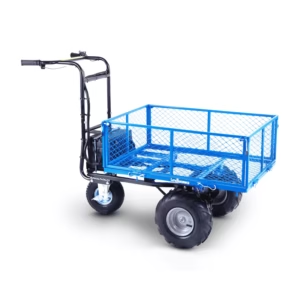 | Landworks Electric Utility Self Propelled Garden Cart |
| Check Price |
 | GZD 3 Wheel Dump Self-Propelled Garden Cart |
| Check Price |
 | Hydraulic Self-Propelled Power Garden Cart |
| Check Price |
 | 4-Wheel Drive Self-Propelled Garden Dump Cart |
| Check Price |
 | MIDE Portable Electric Self-propelled Garden Cart |
| Check Price |
By the eighth trip my wrists and lower back were complaining, and a single-wheel barrow tipped sideways on damp grass, which cost me one spilled load of mulch. That frustration made me look closely at how powered carts work and whether the extra cost made sense for a garden like mine.
Why My Wheelbarrow Stopped Being Enough
My frustration with basic garden carts and wheelbarrows built up slowly rather than arriving in one bad afternoon. My garden measures roughly 400 square metres, with a vegetable area at the back, a flower border along the boundary and a compost bay about 45 metres from the gate.
Each spring I moved around twelve loads of compost to the beds, and by the eighth trip my wrists and lower back were complaining. A single-wheel barrow also tipped sideways on damp grass, which cost me one spilled load of mulch and a lot of patience.
I first tried a cheap two-wheel trolley with a plastic tub, hoping stability would solve everything. It did help with balance, but the thin axle flexed under wet soil, and pushing it across soft lawn still demanded the same effort.
That experience taught me the real issue was not the container but the pushing force required over distance. A powered drive attacks exactly that problem, which is why I began considering a self-propelled model.
Before looking at any product, I wrote down my workload. A common reference range for bulk densities is 0.4 to 0.7 kg per litre for compost, 0.2 to 0.4 kg per litre for bark mulch and 1.2 to 1.6 kg per litre for wet garden soil. Multiplying volume by density showed that a 90-litre tub of wet soil could weigh well over 100 kg, whereas the same tub of mulch stayed comfortable. That calculation shaped my whole search.
- Heaviest regular load: wet soil and compost in spring.
- Longest route: about 45 metres, partly over lawn.
- Narrowest point: the side gate, measured at 82 cm clear width.
- Charging point: a socket inside the garage, which ruled out nothing but affected storage planning.
With these targets fixed, I could compare machines by what they had to achieve in my garden rather than by advertising language. Whether a powered cart is worth the extra money depends on repeated heavy trips, and for short level paths with light loads I would still keep a good wheelbarrow.
What a Self-Propelled Garden Cart Really Is
A self-propelled garden cart is a wheeled carrier whose wheels are driven by a motor or engine, so the operator steers and controls speed instead of supplying all the pushing force. It differs from a large-wheeled trolley, which remains entirely manual, and from a ride-on carrier, where the operator sits and travels with the load. Because garden loads are heavy but speeds are low, these machines normally work at walking pace.
Drive Types and Operating Styles
Two power sources dominate. Battery-electric carts use a rechargeable pack and a motor, start instantly and run quietly, which I valued because my neighbours are close. Petrol carts use an engine and transmission, offer longer continuous working and quick refuelling, but they bring fuel handling, servicing and exhaust emissions.
Petrol machines must never run in a closed shed or garage because carbon monoxide is odourless and dangerous. Drive layout also matters. Some carts drive two rear wheels, others drive a pair through a differential, and a few use tracks. The number of wheels does not tell you how many are powered, so I asked each seller which wheels receive drive.
Walk-behind models are controlled by handlebar levers, while others use a throttle lever and a separate reverse control. For a garden of my size, a walk-behind battery model matched the work, whereas a petrol machine appeared better suited to larger plots with frequent loads over long distances.
How the Parts Work Together
The working chain is simple: stored energy reaches the motor or engine, the transmission turns that power into torque at the wheels, and tyre grip converts torque into movement. Weak links appear when one part is mismatched. A strong motor with narrow smooth tyres spins on wet grass, and good tyres with weak brakes become unsafe on a slope.
Battery energy is estimated as volts multiplied by ampere-hours, divided by 1,000, giving kilowatt-hours, so a 24 V, 20 Ah pack holds about 480 Wh of nominal energy. That figure is a starting comparison only, because real runtime depends on load, terrain and temperature.
- Battery model: quiet, low maintenance, limited by charge time and pack cost.
- Petrol model: long working periods, more servicing and fuel storage.
- Walk-behind control: better for tight paths and gates.
- Tracked drive: useful on soft ground but heavier and costlier to repair.
Having settled on a walk-behind battery machine as the realistic choice, I moved to reading specifications properly, since this is where most buying mistakes begin.
5 Best Self Propelled Garden Carts For 2026
Self propelled garden carts make it easier to transport soil, plants, tools, mulch, and other heavy gardening supplies with less physical effort. Here, we explore the 5 Best Self Propelled Garden Carts for 2026, focusing on their key features, carrying capacity, performance, and ease of use to help you choose the right cart for your gardening needs.
Landworks Electric Utility Self Propelled Garden Cart
The Landworks Electric Utility Wagon features a 48V brushless motor, 500-pound load capacity, and spacious 6-cubic-foot cargo bed for hauling. Its four rechargeable AGM batteries, 13-inch pneumatic wheels, and modular cargo panels provide convenient movement and flexible loading options. I find its electric assistance, roomy cargo bed, and adjustable panels useful for reducing effort during everyday gardening and hauling tasks.
expert start
What Is It and Its Features?
The Landworks Self-Propelled Electric Utility Wagon is a battery-powered hauling cart that helps move heavy materials without requiring constant manual pushing. Its 48V brushless motor supports forward speeds of up to 3.1 mph and reverse speeds of up to 2.2 mph.
The 6-cubic-foot cargo bed provides useful space for everyday gardening loads, while the 13-inch pneumatic wheels help it travel over different outdoor surfaces. Its modular bed panels can also be removed or folded to create a flatbed for carrying larger items.
Why It Matters?
The Landworks Self-Propelled Electric Utility Wagon can be useful for gardeners who regularly transport heavy bags of compost, soil, mulch, or plant containers. Its powered movement reduces the physical effort needed to move loaded materials around a property.
The 500-pound maximum capacity offers flexibility for demanding jobs, while the rechargeable AGM battery system provides cordless operation. I also appreciate the adjustable cargo bed design because it allows the wagon to handle different types of loads instead of being limited to one specific gardening task.
My Set-Up and My Experience
When preparing the Landworks Self-Propelled Electric Utility Wagon for gardening work, I would first check the battery charge, inspect the pneumatic tyres, and make sure all panels and connections are secure. I would begin with a light load to understand the controls and handling before carrying heavier supplies.
The spacious bed is useful for organising gardening essentials in one trip, and the removable panels offer extra flexibility for bulky items. Its electric drive is particularly appealing for reducing the effort involved in repeated hauling jobs around the garden.
Performance
The Landworks Self-Propelled Electric Utility Wagon offers a useful combination of hauling capacity, powered movement, and outdoor mobility. Its forward and reverse speeds are suitable for controlled movement around garden paths and work areas, while the pneumatic wheels help absorb some bumps on uneven ground.
The brushless motor provides electric assistance, and the AGM batteries are designed for rechargeable, spill-resistant operation. The wagon’s performance will depend on the weight carried, terrain, tyre pressure, and battery condition, so I would avoid overloading it or expecting the same results on every surface.
Practical Tips
- Charge the AGM batteries fully before starting a long gardening session.
- Check tyre pressure regularly and maintain the recommended 30–31 PSI.
- Distribute heavy materials evenly across the cargo bed.
- Use a light load when learning the forward and reverse controls.
- Remove or fold the bed panels when transporting oversized items.
expert end
pro start
| Pros | Cons |
|---|---|
| ✔️Supports loads up to 500 pounds. | ❌Requires regular battery charging. |
| ✔️Electric drive reduces manual pushing. | ❌Maximum forward speed is relatively low. |
| ✔️Offers a spacious 6-cubic-foot cargo bed. | ❌Cargo space may limit bulky loads. |
| ✔️13-inch pneumatic wheels support outdoor mobility. | ❌Tyres require pressure checks and maintenance. |
| ✔️Modular panels allow flatbed conversion. | ❌Panel removal or adjustment takes extra effort. |
pro end
GZD 3 Wheel Dump Self-Propelled Garden Cart
The GZD 3 Wheel Dump Cart features an 800W motor, 48V 20Ah battery, steel frame, and spacious cargo bucket for transporting gardening materials. It offers handbrake and power-off braking systems, a maximum speed of 7km/h, and an advertised load capacity requiring supplier confirmation. My evaluation focuses on checking stability, braking, garden access, and loading convenience to assess its suitability for everyday gardening transportation tasks.
expert start
What Is It and Its Features?
The GZD 3 Wheel Dump Cart Self-Unloading Tricycle Cargo Cart is an electric cargo trolley designed to reduce the physical effort involved in transporting heavy garden materials. It has a 940 × 680 × 480mm bucket, a steel frame, and a listed machine weight of 100kg.
The 800W motor and 48V 20Ah battery provide electric assistance, while the handbrake and power-off brake support controlled stopping. The supplier advertises a maximum load of approximately 1,000kg, although the specifications also list a 400kg bucket capacity, so the safe working load should be confirmed before purchase.
Why It Matters?
The GZD 3 Wheel Dump Cart Self-Unloading Tricycle Cargo Cart can be valuable for gardeners who need to transport bulky materials without repeatedly lifting and carrying them by hand. Its electric drive can help reduce pushing effort, particularly when moving supplies over longer distances.
The cargo bucket is suitable for carrying different types of materials, while the steel frame is intended for regular working use. Its low stated speed can also help with careful movement around garden beds and pathways. However, buyers should confirm its actual dumping mechanism, battery runtime, and load rating before relying on it for demanding jobs.
My Set-Up and My Experience
When considering the GZD 3 Wheel Dump Cart Self-Unloading Tricycle Cargo Cart for gardening tasks, I would first check the available space, ground conditions, charging arrangements, and access routes. Its bucket dimensions make it important to measure narrow gates and garden paths before using it.
I would also inspect the tyres, brakes, battery connections, and steel frame before loading materials. For routine gardening, I would begin with a light load of compost, soil, or garden waste and gradually assess its handling. I cannot confirm long-term personal testing from the supplied specifications alone, so these are practical evaluation steps rather than claims of completed hands-on use.
Performance
The GZD 3 Wheel Dump Cart Self-Unloading Tricycle Cargo Cart offers useful features for transporting materials across suitable garden and farm surfaces. Its 800W motor and 48V 20Ah battery provide the basis for powered movement, while the maximum stated speed of 7km/h prioritises slower transportation over fast travel.
The 940 × 680 × 480mm bucket provides space for everyday gardening supplies, although bulky loads must remain stable during movement. The steel frame is designed for practical working use, but performance on slopes, loose soil, and uneven ground will depend on the actual design and load. Battery runtime, charging time, and unloading performance should be verified with the supplier.
Practical Tips
- Confirm the permitted working load before transporting heavy soil, stones, or compost.
- Distribute materials evenly to help maintain stability during movement.
- Test both braking systems before starting work, especially on uneven ground.
- Follow the manufacturer’s charging instructions and keep electrical connections clean and dry.
- Check gates, pathways, and turning spaces to ensure the cart can move safely.
expert end
pro start
| Pros | Cons |
|---|---|
| ✔️Electric motor reduces manual pushing. | ❌Battery runtime is not specified. |
| ✔️Steel frame supports practical cargo use. | ❌Maximum load rating needs clarification. |
| ✔️Bucket carries a range of garden materials. | ❌Low speed may limit travel efficiency. |
| ✔️Two listed braking systems support stopping. | ❌Uneven ground may affect stability. |
| ✔️Custom colours and branding are offered. | ❌Self-unloading details need verification. |
pro end
Hydraulic Self-Propelled Power Garden Cart
The Self-Propelled Power Barrow features a 1500W motor, 48V battery, four-wheel design, and hydraulic tipping skip for efficient material handling. Its spacious 105 × 72 × 50cm container, stated 50–70km range, and electric drive support demanding gardening and landscaping tasks. I would check its payload, battery, brakes, and hydraulic system before use, then test stability and unloading on suitable ground.
expert start
What Is It and Its Features?
The Self-Propelled Power Barrow Hydraulic Tipping Skip 4 Wheel Ride-on Wagon is a ride-on electric utility vehicle that helps transport heavy loads with less manual effort. It has a 1500W motor, a 48V 20Ah battery, a stated driving range of 50–70km, and a maximum speed of 30km/h.
Its container measures 105 × 72 × 50cm, while the overall machine measures 150 × 72 × 119cm. The supplier lists a 600kg loading capacity, although another product highlight mentions 250kg, so the actual safe payload should be confirmed before use. Its hydraulic tipping skip is designed to simplify unloading, while the four-wheel design provides a practical base for moving materials around suitable garden and estate grounds.
Why It Matters?
The Self-Propelled Power Barrow Hydraulic Tipping Skip 4 Wheel Ride-on Wagon matters because transporting heavy gardening materials can take considerable time and physical effort. Its electric drive reduces the need to push a fully loaded barrow manually, while the spacious skip allows users to carry several items in one trip.
The hydraulic tipping feature is particularly useful when unloading soil, compost, gravel, or collected garden waste. Its stated 50–70km range may also suit larger properties where materials need to travel between different work areas. However, battery performance, load limits, and travel range can vary depending on the terrain, payload, and operating conditions.
My Set-Up and My Experience
When considering the Self-Propelled Power Barrow Hydraulic Tipping Skip 4 Wheel Ride-on Wagon for garden work, I would first check the available space, charging arrangements, and the type of ground where it will operate. Its 150 × 72cm footprint means it needs sufficient room to move, turn, and park safely.
I would also check the battery connections, tyres, brakes, steering, and hydraulic tipping mechanism before loading it. For gardening tasks, I would begin with a lighter load and test its movement on level ground before attempting slopes. These are sensible setup and evaluation steps; actual hands-on performance should be confirmed through personal use rather than assumed from the manufacturer’s specifications.
Performance
The Self-Propelled Power Barrow Hydraulic Tipping Skip 4 Wheel Ride-on Wagon has specifications that suggest it is intended for heavier hauling jobs than a traditional hand-pushed garden cart. Its 1500W motor and electric drive are designed to help transport materials across suitable outdoor areas, while the four-wheel layout supports load stability when used correctly.
The hydraulic tipping skip is a useful feature because it can reduce the effort involved in emptying loose materials. The stated maximum speed of 30km/h and grade ability of at least 25° should be treated as manufacturer claims, not guaranteed performance under every condition. For safe garden use, I would prioritise controlled speed, balanced loading, suitable terrain, and the manufacturer’s operating instructions.
Practical Tips
- Confirm the approved load limit before carrying soil, stones, compost, or equipment.
- Distribute the weight evenly to help maintain stability during movement.
- Follow the manufacturer’s charging instructions and avoid operating with an unsuitable battery condition.
- Stop on firm, level ground before raising the skip to unload materials.
- Check the tyres, brakes, steering, battery, and hydraulic system for visible problems.
expert end
pro start
| Pros | Cons |
|---|---|
| ✔️1500W motor supports demanding hauling tasks. | ❌Charging takes approximately 7–9 hours. |
| ✔️Electric drive reduces manual pushing effort. | ❌Heavy 160kg weight may limit handling. |
| ✔️Hydraulic tipping skip simplifies unloading materials. | ❌Hydraulic components require regular maintenance. |
| ✔️Large container carries bulky gardening supplies. | ❌Wide dimensions may restrict access to narrow paths. |
| ✔️Four-wheel design supports outdoor transportation. | ❌Listed payload figures require supplier confirmation. |
pro end
4-Wheel Drive Self-Propelled Garden Dump Cart
The 6,HP Loncin petrol engine, four-wheel drive, and self-propelled system support efficient material transport across suitable garden surfaces. Weighing 160 kg, this red mini dumper offers a one-year warranty, low-maintenance design, and customisation options for buyers. I recommend checking engine oil, testing small loads first, and assessing steering and traction before tackling demanding gardening and landscaping tasks.
expert start
What Is It and Its Features?
The 6.5HP Loncin Gas Engine Mini Dumper 4-Wheel Drive Self-Propelled Power Wheelbarrow is a motorised garden transport machine designed to reduce the effort needed to carry heavy materials. Its 6.5HP Loncin petrol engine provides power for movement, while the four-wheel-drive design is intended to improve traction on different outdoor surfaces.
The self-propelled system helps reduce manual pushing, making it useful for larger gardening jobs. The manufacturer lists a low-maintenance design as its main selling point and provides a one-year warranty. The machine comes in red and weighs approximately 160 kg, with a gross packaged weight of 180 kg. Customisation options include colour and nameplate changes, subject to supplier confirmation.
Why It Matters
The 6.5HP Loncin Gas Engine Mini Dumper 4-Wheel Drive Self-Propelled Power Wheelbarrow can be a practical choice for gardeners who need to transport materials regularly. Carrying bags of compost, piles of soil, or garden waste by hand can take considerable time and energy. A powered dumper can help reduce this workload and make repeated trips easier.
Four-wheel drive is particularly useful to consider when working on uneven ground, although traction depends on the tyres, soil conditions, and load. Its petrol engine also avoids dependence on a battery charging system. For anyone maintaining a large garden or working on landscaping projects, these features may offer greater convenience than a traditional wheelbarrow.
My Set-Up and My Experience
When preparing to use the 6.5HP Loncin Gas Engine Mini Dumper 4-Wheel Drive Self-Propelled Power Wheelbarrow, I would first choose a level outdoor area and check the engine oil, fuel level, tyres, controls, and fasteners. I would also read the manufacturer’s instructions before starting the engine.
For garden work, I would begin with a small load of compost or soil to understand how the machine moves and responds to steering. Its four-wheel-drive design and self-propelled operation are useful features to assess during setup. The supplier also offers customisation options, which may help buyers match the machine to their business or gardening needs.
Performance
The 6.5HP Loncin Gas Engine Mini Dumper 4-Wheel Drive Self-Propelled Power Wheelbarrow has features intended to support demanding garden and landscaping tasks. The 6.5HP engine is designed to provide mechanical power, while four-wheel drive may help the machine maintain movement across suitable uneven surfaces.
Its self-propelled design can reduce the physical effort involved in transporting materials compared with a standard wheelbarrow. However, the available product information does not confirm its maximum payload, travel speed, fuel consumption, climbing ability, or noise level. I would check these details before relying on it for heavy-duty work.
Practical Tips
- Check the engine: Inspect the oil and fuel before each use, following the manufacturer’s instructions.
- Start with small loads: Learn how the machine handles before transporting heavier materials.
- Use suitable ground: Avoid slippery slopes, deep mud, and unstable surfaces that may affect traction.
- Distribute materials evenly: Keep the load balanced to improve stability and control during movement.
- Maintain the machine: Clean off soil and debris, inspect tyres, and follow the recommended service schedule.
expert end
pro start
| Pros | Cons |
|---|---|
| ✔️6.5HP Loncin petrol engine for powered garden transport. | ❌The 160 kg machine weight can make handling and storage difficult. |
| ✔️Four-wheel drive may improve traction on suitable terrain. | ❌Petrol costs and safe fuel storage must be considered. |
| ✔️Self-propelled operation reduces manual pushing effort. | ❌Maximum payload and travel speed are not specified. |
| ✔️Advertised low-maintenance design may appeal to regular users. | ❌Routine engine servicing and inspections are still necessary. |
| ✔️Colour and nameplate customisation options are available. | ❌Warranty coverage and customisation costs require confirmation. |
pro end
MIDE Portable Electric Self-propelled Garden Cart
The MIDE MD-01 features a 1000W motor, 48V 20Ah battery, durable steel construction, and three solid tyres for material transportation. Its 1260 × 600 × 930 mm dimensions and puncture-resistant wheels suit gardening and construction tasks, while carrying capacity requires confirmation. My setup checks focus on battery connections, load balance, wheel condition, and safe operation to assess suitability for regular garden work.
expert start
What Is It and Its Features?
The MIDE Portable Electric Self-Propelled Trolley is a powered wheelbarrow designed to carry materials without relying entirely on manual pushing. Its 1000W motor supports powered movement, while the 48V 20Ah battery supplies electricity to the system. The metal and steel construction is intended for demanding outdoor tasks, and the three-wheel design provides a different balance and handling experience compared with traditional single-wheel wheelbarrows.
It measures 1260 × 600 × 930 mm, offering a practical size for moving materials around suitable work areas. The solid tyres are designed to avoid punctures, although the actual carrying capacity and operating range should be confirmed with the seller before purchase.
Why It Matters?
The MIDE Portable Electric Self-Propelled Trolley matters because moving heavy gardening materials by hand can quickly become tiring, especially when preparing planting beds, spreading compost, or clearing garden waste. Its electric drive can reduce the effort needed to move a loaded trolley across suitable ground. The steel body is useful for regular material handling, while the solid tyres remove the need to worry about ordinary punctures.
For gardeners and construction workers who frequently transport heavy supplies, these features can make repetitive jobs more manageable. However, the battery runtime, maximum load, and performance on steep or muddy ground are important details to check before deciding whether it suits your needs.
My Set-Up and My Experience
When considering the MIDE Portable Electric Self-Propelled Trolley for garden work, I would first check the available space, the route between the storage area and garden beds, and the type of materials being transported. Its 1260 mm length and 600 mm width make measuring narrow gates and pathways particularly important.
Before use, I would inspect the steel body, wheels, controls, and battery connections, then read the manufacturer’s instructions for charging and operation. I would also test the trolley with a small load on level ground before moving heavier materials. These checks help establish whether the machine is comfortable to control and suitable for the intended tasks. Actual personal testing is necessary to confirm its real-world performance.
Performance
The MIDE Portable Electric Self-Propelled Trolley has several specifications that suggest it could be useful for regular material transportation. Its 1000W motor provides powered assistance, while the 48V 20Ah battery offers a substantial battery configuration for this type of equipment. However, motor power alone does not determine how much weight the trolley can carry or how long it will operate between charges
. The steel construction should suit general material-handling work, and the solid tyres eliminate puncture-related interruptions. In practical use, performance will depend on load weight, terrain, slope, battery condition, and maintenance. Since verified carrying capacity, runtime, charging time, and speed have not been provided, these details should be confirmed before relying on it for demanding work.
Practical Tips
- Confirm the manufacturer’s maximum carrying capacity before loading soil, stones, or construction materials.
- Check the battery connections and charge level before starting work.
- Distribute materials evenly inside the square bucket to help maintain stability.
- Use firm, reasonably level ground when possible, and take extra care on slopes and wet surfaces.
- Remove mud and debris, inspect the tyres, and follow the recommended battery storage and charging instructions.
expert end
pro start
| Pros | Cons |
|---|---|
| ✔️1000W motor supports powered movement. | ❌Maximum load capacity is not specified. |
| ✔️Steel body is designed for regular use. | ❌Battery runtime needs confirmation. |
| ✔️Solid tyres resist ordinary punctures. | ❌Charging time is not provided. |
| ✔️48V 20Ah battery enables cordless operation. | ❌Performance on steep terrain is unconfirmed. |
| ✔️Comes with a stated one-year warranty. | ❌Heavy package requires careful handling. |
pro end
Reading Specifications Before You Pay
I compared specification sheets side by side before visiting any seller. The following table summarises what I checked and why each item affected my decision, and I suggest you build the same grid for the two or three models you shortlist.
| Specification | What to verify | Why it mattered to me |
|---|---|---|
| Rated payload | Maximum load on the rating plate and any slope or tipping limits | Sets the ceiling for wet soil and stone loads |
| Empty weight | Weight without battery and with battery | Affects lifting into a vehicle and storing |
| Overall width | Widest point including tyres and handles | My gate clear width was 82 cm |
| Battery details | Voltage, Ah, charge time, replacement availability | Drives runtime and long-term cost |
| Speed range | Forward and reverse speeds, variable or fixed | Slow control matters near raised beds |
| Braking | Service brake and parking brake type | Safe stopping with weight on a gentle slope |
| Tyres | Diameter, width, tread, replacement cost | Controls traction and lawn damage |
| Warranty | Period, exclusions, who services it locally | Defines repair risk |
Payload deserves extra care. The figure printed by the manufacturer is a maximum under stated conditions, not a target, and it normally excludes the cart’s own weight. I decided in advance never to plan routine work near the limit, and I did not accept a seller’s verbal assurance in place of the written rating. Motor power in watts is only part of the story, because torque, gearing and tyre diameter decide whether the cart climbs a lawn edge. Ground clearance matters in the same way; if the tub or frame sits low, roots and stones will catch it.
For choosing, my recommendation is straightforward. If your loads are mostly mulch, leaves and pots, prioritise a roomy tub and light handling over maximum power. If you move wet soil, stone or logs, prioritise rated payload, brake quality and tyre grip, and accept a heavier machine. In either case, confirm the dimensions against your tightest gate, because an unusable cart is expensive however well it performs.
Matching Self Propelled Cart to Your Garden
Compatibility came down to three measurements: width, surface and slope. I measured my side gate at 82 cm, the vegetable path at about 95 cm and the lawn crossing at roughly 12 metres. I added at least 10 cm of working room to the widest cart I considered, because steering through a gap with no margin is tiring and scrapes both paintwork and plants.
A cart that appears to fit on paper may not turn at a narrow path junction, so I also checked the stated turning radius against my bed layout. Surface needs separate thought. Firm paving rolls easily, while soft damp lawn increases resistance and invites wheel spin. A gradient is often expressed as a percentage, and a
10 percent slope rises 10 cm for every metre travelled.My own garden has one gentle rise of about that steepness near the compost bay, so I looked for a model whose manual stated slope guidance clearly. Where a manufacturer gives no slope limit, I would treat steep ground as unsuitable instead of guessing.
- Vegetable beds: narrow tub, tight turning, low speed for compost and harvested produce.
- Lawns and borders: wider tyres, light weight, gentle handling for clippings and lawn-care supplies.
- Orchard or hedge work: secure sides for prunings, good clearance over roots.
- Autumn leaf work: large volume, low weight, so tub size matters more than payload.
Seasons change what a cart does. In spring I carried compost and potting mix, in summer harvested vegetables and tools, and in autumn leaves and pruning waste. Winter was lighter, mostly mulch and tools. Because the heaviest work happens in spring, I judged the machine by that period rather than by an easy week in July. If your use is occasional, a simpler and cheaper cart may be the wiser decision.
Cheaper Versus Better Built Carts
Price alone did not tell me quality, so I compared construction. Cheaper carts I examined often used thinner sheet steel, plastic wheel hubs and smooth-tread tyres, while better-built ones had thicker welded frames, metal gearbox housings and deeper tread. Yet some budget models had sound frames with fewer accessories, and one premium model had a poorly guarded wiring run. I therefore judged each part separately rather than by label.
Frame, Tub and Drive Components
During in-store inspection, I pressed on the frame, looked at weld continuity, checked fasteners and examined the underside, where coating is often thinner. Steel frames are strong but rust where paint is chipped, aluminium is lighter and resists rust but is usually costlier, and plastic tubs do not corrode but can crack in cold weather or under sharp loads.
I also noted whether the battery compartment was sealed against water, whether connectors were protected, and whether the handle height could be adjusted. These were visual and hand checks only, and a showroom inspection cannot prove long-term durability.
The component details that separated good from poor were practical. Sealed wheel bearings resist grit, a grease point or accessible gearbox makes servicing easier, and a replaceable tyre and tube can be sourced locally. I also asked how long the maker stocks spare parts, because a repairable cart outlasts one that is discarded when a small part fails.
- Frame: continuous welds, protected coating, no visible flex under hand pressure.
- Tub: suited to your materials, with smooth edges and a sound latch or tipping lock.
- Wheels and bearings: sealed, easy to turn, with obtainable replacements.
- Electronics: protected connectors and a clearly rated charger.
Which Trade-Offs I Accepted
My final decision accepted a heavier frame in exchange for stronger brakes and better tyre grip, even though the machine cost more than my first shortlisted model. I declined a larger battery pack because a bigger pack adds weight and cost, and my longest working session was well within the smaller pack’s range.
For you, the right trade-off depends on workload: heavy soil users should not economise on frame and brakes, whereas leaf and mulch gardeners can choose a lighter, cheaper machine without much loss.
Where and How to Buy
I considered four routes: local garden suppliers, garden machinery shops, manufacturer websites and reputable online sellers. Local suppliers and machinery shops allow in-store inspection, a short demonstration where permitted, and a nearby service contact.
Manufacturer sites give accurate specifications and clear warranty terms, while established online sellers can offer wider choice. Each route can be good, and the choice depends on how much you value inspection against convenience.
| Check | In-store purchase | Online purchase |
|---|---|---|
| Model identity | Compare the plate and model code on the machine | Confirm the exact model code and package contents in writing |
| Seller identity | Visible premises and staff | Business name, contact details and complaint route |
| Total cost | Price plus any delivery fee | Price plus delivery, taxes and charger or battery items |
| Returns | Written return terms on the receipt | Return window, who pays shipping, condition required |
| Warranty | Local service point and exclusions | Whether the warranty is valid in your region |
| Proof of purchase | Itemised receipt with model and date | Saved order confirmation and invoice |
My own approach was to shortlist two models online, then visit a machinery shop to inspect them. I asked six questions: which exact model I was buying, what the box contained, who serviced it locally, how long spare parts would be stocked, what the warranty excluded and how a battery replacement would be sourced.
I also asked about the delivered cost and obtained the final amount in writing. I did not rely on advertised prices, since fees for delivery and accessories can change the real total, so I recommend you compare the delivered figure rather than the headline price.
If you buy online, verify the seller’s identity, read the return conditions before paying and check that the listing matches the manufacturer’s model code. Photograph the package on arrival, keep the invoice and test the machine promptly, because many returns and warranty claims depend on reporting faults early. If a seller cannot answer basic questions about warranty or parts, I would walk away, whatever the discount.
First Weeks After Delivery and Use
After purchase, my approach changed from comparing to observing. On delivery I checked the box for visible damage, matched the model code and serial number with my invoice, counted the contents against the packing list and read the manual before charging. I then charged the battery fully with the supplied charger, which in my case took about five hours, and carried out a brief test on firm level ground with no load to check controls, brakes and reverse.
Garden Trials and What I Observed
My trials ran over three weeks, using the cart on most working days. In the first week I moved light loads of mulch and tools across paving, then added compost in the second week. I loaded the tub to about 40 kg, kept the weight low and central, and drove the 45 metre route to the vegetable beds, staying well below the printed rating.
In the third week I carried harvested produce, lawn-care supplies and a few loads of leaf and pruning waste. I stopped using the cart on soaked grass, because the tyres slipped and left marks, so wet lawn remained a limit.
The benefits were clear in effort and time. A twelve-trip compost session that previously tired me finished with far less strain, and I could steer calmly at slow speed beside raised beds. The brakes held the loaded cart steady on the gentle rise, although I used the parking brake every time I stopped.
A single battery charge covered a full session of about ten trips in my case, though I do not treat that as a guaranteed runtime. Three weeks also cannot prove durability, so I continue to inspect bolts, tyres and connectors regularly.
- Improved: effort on long compost and soil trips, steadiness compared with my single-wheel barrow.
- Remained limited: grip on soaked lawn, storage space and the weight of the cart when lifted.
- Still manual: tight corners between beds, where I switched to a hand cart.
Safe Operation and Everyday Care
Safety habits matter more than features. I read the manual, wore sturdy shoes and gloves, loaded within the printed rating and kept the load low and evenly spread. I avoided sudden turns, kept children and pets away from the route and never worked on a slope the manual did not approve.
After each session I brushed off soil, wiped the tub and kept water away from the motor, battery and connectors. Batteries were charged in a dry, ventilated place and removed from the machine if the manual required it.
Storage followed the same logic. I kept the cart under cover, charged the battery to the level recommended by the manufacturer before a long break and checked tyre condition every month. My servicing plan was simple: grease points and fasteners every few weeks during the busy season, and a full inspection before spring.
Total Ownership Cost and Repair Planning
The purchase price is only part of ownership. I added the cost of a replacement battery, the likely price of tyres, the charger cost if it fails and any servicing fees, then compared those with the warranty period.
A cheaper cart with an expensive proprietary battery can cost more over several seasons than a better-built one with a replaceable, widely available pack. I also noted that warranty cover usually excludes wear parts such as tyres and may exclude damage from overloading, so reading exclusions is as important as reading the duration.
- Energy cost: electricity for charging is usually small; petrol adds fuel and engine service.
- Wear parts: tyres, bearings and brake components.
- Battery life: replacement cost and availability.
- Repairability: local workshop, manuals and parts supply.
For the reader, the practical rule is to ask for the likely cost of a battery and a tyre before paying, then add them to the purchase price. If those parts cannot be priced or sourced, the cart is a risk however impressive it looks in the shop.
Making Your Final Cart Decision
My original problem was simple: the pushing effort across a 45 metre route with wet, heavy loads. The priorities I chose were fit through an 82 cm gate, reliable brakes, good tyre grip, a repairable build and a warranty with local support. A self-propelled cart improved the heavy compost and soil trips and made routine transport steadier, but it did not solve soaked lawns, tight corners or storage. Those limits are worth accepting only if your garden resembles mine.
Your next step is to measure your tightest gate, estimate your heaviest load using volume multiplied by density, and write down your longest route and steepest slope. Then shortlist two models, compare them using the specification table, ask the seller the questions listed above and inspect before paying where possible.
If your work is mainly light and short, keep your barrow and spend the money elsewhere. If it is heavy and repeated, a well-matched powered cart can be a sensible investment, provided you buy it for your garden rather than for its power figure.
Conclusion
Choosing the right self-propelled garden cart depends on your garden size, load requirements, terrain and budget. Before buying, compare the drive system, load capacity, tyre quality, braking, durability and maintenance costs. A well-matched cart can reduce physical effort and make transporting soil, compost, tools and garden waste easier. Always verify the specifications, warranty and spare-parts availability to ensure your investment suits your gardening needs.