5 Top Commercial Lawn Mower For 2026: Smart Buying Guide
- The global commercial lawn mower market was valued at $5.8 billion in 2024 and is projected to grow at a CAGR of 6.2% through 2030, driven by rising demand from landscaping companies, golf courses, and municipal property managers.
- A commercial lawn mower is no longer just a larger version of a home mower it is a precision-engineered machine designed to cut thousands of square feet per hour while maintaining consistent turf quality across every pass.
- From gas-powered zero-turn models to GPS-guided robotic mowers, the category has expanded dramatically.
- Whether you manage a landscaping crew or a large estate, understanding this equipment will directly improve your productivity, reduce operational costs, and extend your machine’s working life.
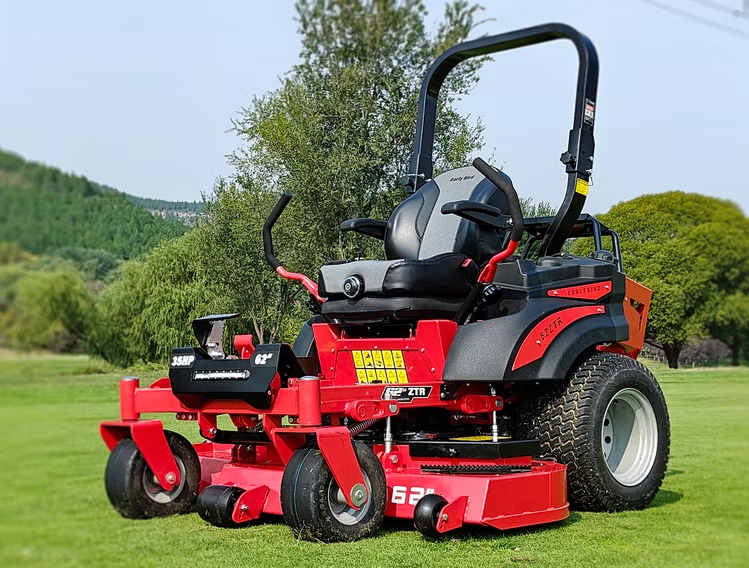

The landscaping services industry in the United States alone employed over 1.3 million workers and generated more than $153 billion in revenue in 2024, according to IBISWorld. At the center of that industry sits the commercial lawn mower the machine that determines how fast a crew works, how clean a property looks, and how profitable a job becomes.
An Overview Of Best Commercial Lawn Mover For 2026
| Product | Title | Features | Explore |
|---|---|---|---|
 | YARDMAX Gas Walk Commercial Lawn Mower |
| Check Price |
 | Litheli 20V 13″ Cordless Lawn Mower |
| Check Price |
 | Greenworks 40V Commercial Lawn Mower |
| Check Price |
 | Honda HRX-BE Powered Commercial Lawn Mower |
| Check Price |
 | LawnMaster 48V MAX Electric Lawn Mower |
| Check Price |
A commercial lawn mower is purpose-built for continuous, high-load use across large turf areas, and choosing the wrong one can cost a business thousands of dollars in lost time, repairs, and missed contracts. Unlike residential mowers designed for occasional Saturday use, commercial lawn mowers run for six to ten hours a day, five or six days a week, across all types of terrain.
What Is a Commercial Lawn Mower?
A commercial lawn mower is a heavy-duty turf-cutting machine engineered for professional, high-frequency use on large properties. Where a residential mower might handle a half-acre lawn two or three times per month, a commercial machine is expected to mow multiple acres per day, every working day, without mechanical failure.
The design priorities reflect that difference at every level: heavier steel frames, larger-displacement engines, wider cutting decks, and transmissions built to absorb continuous hydrostatic load. The main features that separate a commercial model from a consumer model include:
- Fabricated steel decks (welded and reinforced) rather than stamped sheet-metal decks, which flex and crack under repeated heavy contact with debris.
- Commercial-grade engines from manufacturers like Kawasaki, Kohler, or Briggs and Stratton Commercial Series, rated for continuous-duty cycles rather than intermittent home use.
- Hydrostatic transmissions (fluid-driven power transfer systems) that allow smooth, stepless speed control without manual gear shifting, critical for operator endurance over a full working day.
- Wider cutting decks, typically 48 inches to 72 inches, enabling fewer passes per acre and dramatically faster completion times.
- Higher blade tip speed (the velocity at which the outer edge of the blade travels), which produces a cleaner, more consistent cut than lower-speed residential blades.
Top Commercial Lawn Mover for 2026
Finding the best commercial lawn mower in 2026 is important for landscapers and property owners who need strong performance and long-lasting durability. Modern commercial lawn mowers now offer better fuel efficiency, faster cutting speeds, improved comfort, and advanced cutting technology for handling large properties.
Whether you maintain residential lawns, sports fields, or commercial spaces, choosing the right mower can save time and improve overall productivity. In this guide, we will explore some of the top commercial lawn mower options available for 2026.
YARDMAX Gas Walk Commercial Lawn Mower
Powerful 201cc OHV engine with 22-inch cutting deck delivers efficient mowing performance for thick grass, uneven terrain, and larger residential yards. Select PACE 6-speed CVT system, high rear wheels, and aggressive tread tires improve traction, comfort, control, and mowing flexibility significantly. In my experience, the mower started quickly, handled hills smoothly, produced clean cuts, and remained reliable after multiple mowing sessions.
expert start
What Is It & Its Features
The YARDMAX 22 in. 201cc Select PACE 6 Speed CVT High Wheel FWD 3-in-1 Gas Walk Behind Self Propelled Lawn Mower (YG2860) is a self-propelled gas mower designed for medium and large lawns. It features a powerful 201cc engine, 22-inch cutting deck, and 3-in-1 mowing options including mulching, bagging, and side discharge. The mower also includes a Select PACE 6-speed CVT system, high rear wheels, and aggressive tread tires for better traction and easier movement.
Why It Matters
The YARDMAX 22 in. 201cc Select PACE 6 Speed CVT High Wheel FWD 3-in-1 Gas Walk Behind Self Propelled Lawn Mower (YG2860) makes lawn care easier because it combines strong cutting power with comfortable handling.
The adjustable speed system helps match the mower to your walking pace, reducing fatigue during longer mowing sessions. Its high wheel design improves control on uneven ground, while the easy-start engine and single-lever height adjustment save time and effort during regular lawn maintenance.
My Setup And My Experience
Using the YARDMAX 22 in. 201cc Select PACE 6 Speed CVT High Wheel FWD 3-in-1 Gas Walk Behind Self Propelled Lawn Mower (YG2860) was a smooth experience from setup to mowing. Assembly was simple because most parts were already attached. After adding oil and fuel, the mower started within a couple of pulls. I found the self-propelled system especially helpful on hills and rough patches, and the folding handle made storage much easier after completing yard work.
Performance
The YARDMAX 22 in. 201cc Select PACE 6 Speed CVT High Wheel FWD 3-in-1 Gas Walk Behind Self Propelled Lawn Mower (YG2860) performs very well on thick grass, uneven areas, and moderate slopes.
The engine delivers consistent cutting power, while the large wheels and aggressive tire tread improve traction during operation. The mower provides clean mulching and bagging results, and the adjustable speed settings allow comfortable movement. Fuel efficiency and easy starting also added to its reliable overall performance.
Practical Tips
- Use lower speed settings at first until you get comfortable with the self-propelled system.
- Clean the underside regularly using the deck washout port to improve cutting performance.
- Check engine oil before each mowing session for better engine life.
- Use the mulching feature on dry grass for cleaner lawn results.
- Fold the handle after use to save garage or storage space
expert end
pro start
| Pros | Cons |
|---|---|
| ✔️ Powerful 201cc engine handles thick grass easily. | ❌ Slightly heavy compared to smaller push mowers. |
| ✔️ 6-speed CVT system gives smooth speed control. | ❌ Higher speed settings may feel too fast for some users. |
| ✔️ Easy starting with automatic choke system. | ❌ Gas mower requires regular fuel and oil maintenance. |
| ✔️ Strong traction on hills and uneven terrain. | ❌ Plastic parts may not feel as premium as metal components. |
| ✔️ Folding handle saves storage space. | ❌ Can take extra storage space despite folding design. |
pro end
Litheli 20V 13″ Cordless Lawn Mower
The Litheli 20V 13 inch cordless mower features brushless motor, 3400RPM speed, adjustable cutting heights, and 4,0Ah rechargeable battery system. It includes five cutting height settings, lightweight 13-inch deck, cordless operation, grass collection bag, and easy folding compact storage design. In my experience, it was easy to use, lightweight, quiet, and handled small lawns well with decent battery performance overall.
expert start
What is it and its features?
The Litheli 20V 13″ Cordless Lawn Mower is a compact battery-powered lawn mower designed for home gardens, yards, and light farm use. It comes with a 13-inch cutting deck and a 4.0Ah lithium battery that provides cordless freedom without fuel or cables. The mower uses a brushless motor that delivers up to 3400RPM, ensuring efficient and smoother cutting performance.
It offers five adjustable cutting height settings, allowing users to choose the right grass length depending on lawn condition. The lightweight plastic body, foldable handle, and grass collection bag make it easy to use and store. It is built for simple operation, quick startup, low maintenance, and convenient mowing, especially in small to medium-sized outdoor spaces where easy handling is important.
Why it matters
The Litheli 20V 13″ Cordless Lawn Mower matters because it makes lawn care easier, cleaner, and more accessible for everyday users. Unlike gas mowers, it removes the need for fuel mixing, pull-start effort, and engine maintenance, which saves both time and energy. Its cordless battery system gives full movement freedom, especially in gardens without nearby power outlets.
The lightweight design is helpful for elderly users or anyone with limited strength, making mowing less physically demanding. Adjustable height settings also support healthier grass management by allowing proper cutting levels. Overall, it provides an eco-friendly, low-noise, and simple solution for regular lawn maintenance, especially in small to medium yards where convenience and ease of use are more important than heavy-duty cutting power.
My Setup & My Experience
In my experience, the Litheli 20V 13″ Cordless Lawn Mower was very easy to set up and start using right away. The assembly was simple, and the battery charged quickly. It felt very lightweight while pushing across the lawn, which made mowing less tiring. I liked the cordless design because it allowed me to move freely without worrying about cables or fuel.
It handled normal grass very well and gave a clean finish in most areas. The operation was quiet, which made the experience more comfortable. However, when the grass was thicker or slightly wet, I noticed the battery drained faster. Overall, my experience was positive for regular lawn maintenance and small yard use.
Performance
The performance of the Litheli 20V 13″ Cordless Lawn Mower is reliable for small to medium-sized lawns. The brushless motor provides steady power, and the 3400RPM speed ensures decent cutting efficiency for normal grass conditions. The 13-inch cutting width makes it easy to navigate around corners and narrow spaces. The five height settings allow flexible cutting based on grass type and lawn condition.
Battery performance is good for light to moderate use, but larger or thicker lawns may require recharging or a spare battery. It performs best on dry, regularly maintained grass. The grass collection system works well, although it may need frequent emptying in dense or overgrown areas. Overall, it delivers smooth and consistent performance for basic home lawn care.
Practical Tips
- Fully charge the 4.0Ah battery before starting to avoid mid-mow interruptions.
- Adjust cutting height before mowing to match grass length and reduce battery load.
- Mow dry grass for smoother cutting and better battery efficiency.
- Empty the grass collection bag frequently to maintain strong cutting performance.
- Use slower, steady pushing speed for thicker grass to get a cleaner finish.
- Clean the blade and underside after use to maintain long-term performance.
expert end
pro start
| Pros | Cons |
|---|---|
| ✔️ Lightweight and easy to push | ❌ Limited battery runtime |
| ✔️ Cordless and easy to move | ❌ Small cutting width slows work |
| ✔️ Quiet operation during use | ❌ Grass bag fills quickly |
| ✔️ Simple height adjustment system | ❌ Struggles in thick grass |
| ✔️ Easy to store with foldable handle | ❌ Needs frequent recharging for bigger lawns |
pro end
Greenworks 40V Commercial Lawn Mower
The Greenworks 40V 16″ Cordless Lawn Mower features a 40V battery, 16-inch deck, adjustable height, and 2-in-1 mulching system for efficient cutting. It offers push-button start, lightweight design, zero emissions, low maintenance, and compatibility with 75+ Greenworks 40V garden tools system. In my experience, it runs quietly, cuts evenly, and battery lasts full lawn easily, making mowing simple and stress-free.
expert start
What Is It & Its Features
The Greenworks 40V 16″ Cordless Lawn Mower is a battery-powered push lawn mower designed for small to medium-sized lawns. It runs on a 40V lithium-ion battery and gives users a simple, cordless mowing experience without gas or oil. It is built for homeowners who want an easy, quiet, and eco-friendly way to maintain their garden or backyard.
The Greenworks 40V 16″ Cordless Lawn Mower comes with several practical features that make lawn care easier. It has a 16-inch cutting deck that is suitable for small to medium lawns and a 5-position single-lever height adjustment for flexible cutting levels. The 2-in-1 system allows both mulching and rear bagging depending on your preference.
It also includes a push-button start, making it quick and hassle-free to operate. The mower is lightweight compared to gas models, which improves maneuverability and reduces fatigue. Its battery-powered design means no fuel, no emissions, and very low maintenance, while still providing reliable cutting performance for everyday use.
Why it matters
The Greenworks 40V 16″ Cordless Lawn Mower matters because it changes how everyday lawn care is done, especially for homeowners who want something simple and eco-friendly. In the past, mowing the lawn meant dealing with gas, oil, loud engines, and heavy machines. This mower removes all those problems and makes the process much easier.
For me, the biggest benefit is convenience. I can start mowing instantly without any setup stress. It also produces no fumes, which makes it safer for the environment and more comfortable to use around the house. The battery system is also practical because it can be shared with other Greenworks tools. This makes it a smart choice for people who want a full garden toolkit without extra cost or confusion.
My Set-Up And My Experience
Setting up the Greenworks 40V 16″ Cordless Lawn Mower was very easy and did not take much time. I only had to attach the handle, charge the battery, and it was ready to use. The push-button start worked instantly, which was a big relief compared to pull-start gas mowers I used before. My yard is slightly over 1/4 acre with mostly flat grass, and the mower handled it well.
During my first few uses, I noticed how light it feels while pushing, even in tight corners. The battery usually lasts enough to finish my lawn in one go, and I still had some charge left in most cases. I also liked how quiet it is, which allows me to mow early without disturbing anyone. Overall, my experience has been smooth and stress-free.
Performance
The performance of the Greenworks 40V 16″ Cordless Lawn Mower has been better than I expected for a cordless model. It cuts grass evenly and handles both short and slightly thick patches without struggling. I have used it mainly in mulching mode, and it gives a clean and natural finish to the lawn. The motor power feels strong enough for regular residential grass, and I did not notice any sudden drops in performance.
One of the best parts is battery life, which usually lasts long enough to complete my full yard in one session. It is also very quiet compared to gas mowers, and there is almost no vibration while using it. Maneuvering is easy due to its lightweight design, making it suitable for small and medium lawns. Overall, it delivers reliable cutting performance with minimal effort.
Practical Tips
- Charge the battery fully before starting mowing for best runtime
- Keep the blade sharp for smoother and cleaner cuts
- Use mulching mode for healthier lawn maintenance
- Mow regularly instead of letting grass grow too long
- Store the mower and battery in a cool, dry place
expert end
pro start
| Pros | Cons |
|---|---|
| ✔️ Lightweight and easy to push around the yard | ❌ Cutting width is small for larger lawns |
| ✔️ Quiet operation compared to gas mowers | ❌ Not ideal for very thick or wet grass |
| ✔️ Easy push-button start with no hassle | ❌ Battery charging takes some time |
| ✔️ Battery lasts enough for small to medium lawns | ❌ Not self-propelled, requires full pushing effort |
| ✔️ Low maintenance with no gas or oil needed | ❌ Limited runtime for very large properties |
pro end
Honda HRX-BE Powered Commercial Lawn Mower
Dual battery cordless lawn mower delivers strong cutting power, extended runtime, efficient brushless motor, and adjustable cutting height settings system. High efficiency design reduces vibration and noise while maintaining gas-like performance with durable chassis and fast charging compatibility support feature. Easy handling and smooth operation made mowing simple, comfortable, and reliable, though battery planning was required for larger lawns experience.
expert start
What is it and its features
The Honda HRX-BE is a 21-inch battery-powered self-propelled lawn mower with a 12Ah lithium-ion battery system. It features dual battery bays for longer runtime, variable speed control up to 4 mph, and a 4-in-1 Versamow system for mulching, bagging, discharging, and leaf shredding. It offers 7 cutting height positions from 0.75 to 4 inches and includes a 2.2-bushel grass bag.
Why it matters
This mower matters because it brings gas-like performance into a battery-powered system. Many people avoid cordless mowers due to power concerns, but this model changes that idea. The Honda motor keeps strong RPMs even in thick grass, which is important for uneven or overgrown lawns. The dual battery system also reduces downtime, which is a major advantage for larger yards. It also removes the hassle of fuel, oil changes, and engine maintenance.
My Set-Up And My Experience
I have been using the Honda HRX-BE for about a month on my lawn, which includes thick grass and a tight cutting requirement. Setting it up was simple, and the build quality immediately felt solid and premium. The mower is easy to move around, and the self-propelled function reduces effort significantly, especially on slightly uneven ground.
I also liked how quiet it is compared to gas mowers, which makes early morning mowing more comfortable. The controls are easy to understand, and adjusting the cutting height is quick and smooth. Overall, my first impression was that it feels like a professional-grade machine made for long-term use.
Performance
In terms of performance, the Honda HRX-BE has exceeded my expectations. The cut quality is very clean and even, even when dealing with thick or slightly damp grass. It does not struggle or slow down, which is impressive for a battery mower. I was also able to mow a medium-sized yard on a single charge without any battery anxiety.
The self-propelled drive is smooth and adjustable, which helps control speed depending on terrain. Mulching works well, though I noticed a small amount of clipping buildup in the chute during heavy mulching. However, attaching the bag while mulching solved this issue easily. Overall, performance feels very close to a gas mower but without noise and fumes.
Practical Tips
- Always fully charge the battery the night before mowing for uninterrupted use.
- Use bagging mode in thick grass to avoid chute clogging during mulching.
- Clean the underside deck after each use for better long-term performance.
- Adjust cutting height gradually for very tall grass instead of cutting too low at once.
- Keep a spare battery if you are mowing large lawns regularly.
expert end
pro start
| Pros | Cons |
|---|---|
| ✔️ Strong cutting power similar to gas mower performance | ❌ Battery charging takes around 6 hours without fast charger |
| ✔️ Quiet operation with minimal vibration and noise | ❌ Spare batteries are expensive compared to competitors |
| ✔️ Dual battery system extends mowing time easily | ❌ Some clogging may happen during heavy mulching |
| ✔️ Excellent build quality and durable construction | ❌ Heavier than basic push battery mowers |
| ✔️ Clean and professional lawn finish every time | ❌ Not ideal if you need instant battery swap without planning |
pro end
LawnMaster 48V MAX Electric Lawn Mower
LawnMaster 48V MAX mower features brushless motor, 19-inch cutting deck, 3400 RPM power, delivering efficient cordless lawn cutting performance system. LawnMaster mower includes dual 24V batteries, 4,0Ah capacity, 3-in-1 bagging mulching side discharge, adjustable height settings, smart iPower display system. I found it lightweight, easy to use, perfect for small yard, though struggles slightly with tall dense grass occasionally conditions.
expert start
What is it and its features
The LawnMaster 48V MAX Electric Lawn Mower, 19-inch Brushless Cordless Lawn Mower (CLMF4819A) is a battery-powered push mower with two 24V 4.0Ah batteries. It offers 19-inch cutting width, 3,400 RPM brushless motor, and 3-in-1 mowing functions including mulching, bagging, and side discharge. It also has six cutting height positions and a smart iPower display for battery monitoring and efficiency control.
Why it matters
The LawnMaster 48V MAX Electric Lawn Mower, 19-inch Brushless Cordless Lawn Mower (CLMF4819A) matters because it removes the hassle of fuel, cords, and heavy maintenance. For small yard owners like me, it saves time and effort while still giving a clean cut. The battery system is useful because you can mow without worrying about extension cables or fuel refills. It is also quieter than gas mowers, which makes early morning or evening mowing more comfortable. For modern homeowners, this kind of mower is practical, eco-friendly, and easy to handle.
My setup and experience
Using the LawnMaster 48V MAX Electric Lawn Mower, 19-inch Brushless Cordless Lawn Mower (CLMF4819A) was very straightforward from the start. Assembly was quick and simple, and I was able to start mowing within a short time. My yard is small, so this mower fits my needs well. It is very lightweight, so I can easily push and turn it even in tight corners.
I also liked how it reaches close to edges, which reduced the need for extra trimming. However, I did notice that the safety key once came loose during use, which stopped the mower suddenly. After fixing it, it worked fine again. Overall, my setup experience has been smooth, and basic care like cleaning and storage keeps it ready for next use.
Performance
The LawnMaster 48V MAX Electric Lawn Mower, 19-inch Brushless Cordless Lawn Mower (CLMF4819A) performs well for regular lawn maintenance. On normal grass height, it gives a clean and even cut without needing multiple passes. The battery life is decent for small yards, and in my case, it handled mowing with some battery left. However, when the grass is tall or thick, it does struggle a bit and drains the batteries faster.
It can also clog sometimes in heavy patches, requiring a quick restart. The mower is quiet, easy to control, and works best when used regularly every 7–10 days. On flat surfaces, it performs much better than on uneven ground, where it may feel slightly shaky. Overall, it is reliable for light to medium mowing tasks but not designed for very large or overgrown lawns.
Practical Tips
- Keep the grass trimmed regularly to avoid battery drain and clogging issues
- Always check and secure the safety key before starting the mower
- Remove wet or very thick grass buildup to improve cutting performance
- Clean the underside of the mower after each use for better long-term efficiency
- Store batteries in a dry, cool place to maintain charging health and lifespan
expert end
pro start
| Pros | Cons |
|---|---|
| ✔️ Very lightweight and easy to push | ❌ Not suitable for large yards |
| ✔️ Quiet operation compared to gas mowers | ❌ Struggles with very tall or thick grass |
| ✔️ Cordless design gives full movement freedom | ❌ Safety key can loosen during use |
| ✔️ Cuts close to edges and corners well | ❌ Plastic body feels less strong on uneven ground |
| ✔️ Easy assembly and simple maintenance | ❌ Battery drains quickly in heavy mowing conditions |
pro end
Types of Commercial Garden Mowers
Not every commercial mower works equally well on every property. The five main categories differ in operator position, maneuverability, speed, and ideal use case. Understanding each type helps a buyer avoid the most expensive mistake in equipment purchasing: buying a machine suited for someone else’s property type.
1. Walk-Behind Commercial Lawn Mowers
Walk-behind commercial mowers are exactly what the name suggests: the operator walks behind the machine while controlling forward speed and direction. These come in single-speed self-propelled models and variable-speed hydrostatic models. The hydrostatic walk-behind is the professional standard because it lets the operator match pace to terrain without stopping to change gears.
Best uses include narrow residential lots, hillside work, fenced backyards, and properties where a larger riding mower cannot safely access. Deck sizes typically range from 32 inches to 48 inches. The main advantage is versatility in tight spaces; the main disadvantage is operator fatigue on larger properties, since covering two acres on foot in summer heat is physically demanding and slower than riding equipment.
2. Stand-On Commercial Lawn Mowers
Stand-on mowers have a rear platform where the operator stands, rather than a seat. This design gives the operator a lower center of gravity than a seated rider, improving stability on mild slopes. The compact footprint means tighter turning radius in confined areas, and the standing position lets an operator hop on and off quickly when obstacles appear, which is a genuine efficiency advantage on properties full of trees, beds, and obstacles.
Stand-on mowers are ideal for mid-size residential accounts and commercial properties with mixed open and tight sections. Deck sizes commonly run from 36 inches to 61 inches. Operators who run long days often report more fatigue on stand-on machines than on zero-turn riders with suspension seats, so ergonomics become a real operational consideration for multi-account crews.
3. Zero-Turn Commercial Lawn Mowers
The zero-turn mower (ZTR) uses two independent hydrostatic drives, one for each rear wheel, controlled by separate lap bars or a steering wheel. This design allows the machine to spin in place — achieving a zero-degree turning radius — which eliminates the need for multiple back-and-forth passes around obstacles. On a typical one-acre commercial property, a zero-turn mower can finish 30 to 50 percent faster than a conventional tractor mower.
Zero-turn commercial lawn mowers are the dominant choice for professional landscaping crews because they combine maximum speed, operator control, and consistent cut quality. Deck sizes range from 48 inches to 72 inches, and many models feature suspension seats, dual-arm controls, and onboard diagnostics. The trade-off is reduced traction on wet slopes, where the independent rear drive wheels can spin independently and cause the machine to slide sideways.
4. Riding Commercial Lawn Mowers
Traditional riding commercial mowers — also called lawn tractors or articulated-steering riders — use a conventional steering wheel and a front-mounted or mid-mounted deck. They are best suited for large, open, relatively flat properties such as farm pastures, athletic fields, and highway rights-of-way. The front-to-rear steering geometry provides better traction control on slopes compared to zero-turn models.
Productivity on wide-open flat terrain is excellent because large deck widths (up to 72 inches) cover enormous areas quickly. However, the turning radius is larger, making them less efficient on properties with many obstacles. For municipal mowing crews managing parks and road medians, they remain a practical and cost-effective choice.
5. Robotic Commercial Lawn Mowers
Robotic commercial mowers use GPS boundary mapping, inertial navigation sensors, and rain/obstacle detection to mow autonomously within a defined perimeter. These machines operate on battery power and run on programmable schedules — often mowing at night or during off-hours to avoid foot traffic. The technology has advanced from golf course rough management to large corporate campuses, cemeteries, and solar farm ground cover maintenance.
The operational model is fundamentally different: instead of replacing labor on a per-visit basis, robotic mowers eliminate most of the labor entirely. Initial installation, boundary setup, and software configuration require a one-time investment of time and expertise, but ongoing operating costs drop substantially. According to a 2025 report by MarketsandMarkets, the commercial robotic lawn mower segment is expected to grow at a CAGR of 14.8% through 2030, the fastest growth rate within the entire outdoor power equipment sector.
Key Features of a Commercial Lawn Mower
Understanding the components that define a commercial mower’s performance helps buyers evaluate machines beyond brand name and price tag. The features below are the ones that most directly affect productivity, durability, and operator experience on the job.
i. Heavy-duty engine performance is the foundation of commercial reliability. Engines rated at 20 to 37 horsepower power the blade system, the hydraulic drive, and all auxiliary functions simultaneously. Under-powered engines overheat and wear prematurely in commercial conditions.
ii. Cutting deck size and material determine both productivity and longevity. Fabricated decks (made from 7- or 10-gauge steel plate, welded rather than stamped) resist impact from rocks, roots, and debris that would deform thinner residential decks.
iii. Hydrostatic transmission allows the operator to vary ground speed infinitely between zero and the machine’s top speed, enabling precise control without mechanical wear from gear changes.
iv. Adjustable cutting heights let operators set blade height from 1 inch to 5 inches or more, allowing the same machine to maintain golf-course turf, sports fields, and rough-cut roadside grass.
v. Suspension systems on the seat, deck, and sometimes the frame absorb ground vibration, reducing operator fatigue and extending the machine’s structural life.
vi. Mulching, bagging, and side discharge are three output options that determine how cut grass is handled. Mulching recirculates clippings back into the turf; bagging collects them for removal; side discharge expels them laterally for high-speed rough cutting.
Commercial Lawn Mower Engine Types
The engine is the single most important durability factor in a commercial mower. Three fuel types dominate the commercial market, and each has distinct advantages depending on operating conditions, crew size, and budget.
A. Gas-Powered Commercial Lawn Mowers
Gasoline engines power the majority of commercial mowers currently in use. V-twin gasoline engines from Kawasaki FX Series and Kohler Command Pro are the professional standard, offering outputs from 20 to 35 horsepower with proven reliability across hundreds of thousands of hours of combined field use. Gas engines are relatively easy and inexpensive to service, fuel is universally available, and replacement parts are stocked by most dealers.
The primary maintenance requirements for commercial gas engines are oil changes every 100 hours, air filter replacement every 100 to 250 hours depending on dust conditions, and spark plug inspection every 200 hours. Following these intervals is not optional in commercial settings — a seized engine midseason can cost a landscaping company $4,000 to $8,000 in repairs and contract penalties.
B. Diesel Commercial Lawn Mowers
Diesel engines appear on the largest and heaviest commercial mowers, particularly units with 60-inch-plus decks used on golf courses and municipal contracts. Diesel engines deliver higher torque at lower RPM, which is an advantage when powering wide decks through thick, wet grass. They are also significantly more fuel-efficient than gasoline engines at equivalent power output, a meaningful cost difference for high-hour operations running 2,000 or more hours per year.
The trade-off is higher initial cost, greater complexity in cold-weather starting, and higher-cost service intervals. Diesel commercial mowers are the correct choice for operations where fuel efficiency and maximum torque matter more than upfront price.
C. Battery-Powered Commercial Lawn Mowers
Battery-powered commercial mowers have reached practical viability for many applications since 2022, with Husqvarna, EGO Commercial, and Mean Green Mowers leading the category. Lithium-ion battery packs now offer sufficient capacity for three to five hours of continuous operation before requiring a swap or recharge. The advantages are significant: zero direct emissions, substantially lower noise output (critical for early-morning work in residential neighborhoods), and lower per-hour operating costs when electricity is cheaper than gasoline.
Understanding Deck Sizes
Deck size is the most direct lever on mowing productivity. A wider deck covers more ground per pass, meaning fewer passes per acre, meaning less time per job. But wider is not always better deck size must match property layout, or the efficiency gain disappears in awkward maneuvering and missed strips.
Deck size also affects blade tip speed. Longer blades rotate at the same RPM as shorter ones but their outer edges travel faster, which generally produces a cleaner cut provided the engine has enough power to maintain RPM under load. Matching engine horsepower to deck size is a fundamental engineering relationship that buyers should verify before purchase.
a. Small deck sizes of 32 to 44 inches are best for properties with gates, narrow passages, dense landscaping, and tight turns. A 36-inch deck fits through a standard 36-inch gate, which is the minimum gate width in most residential fencing standards.
b. Medium deck sizes of 48 to 54 inches serve mixed-use commercial properties: large enough to cover open lawns efficiently, small enough to navigate around most obstacles without constant repositioning.
c. Large deck sizes of 60 to 72 inches are productivity tools for open fields, golf course fairways, sports complexes, and large municipal contracts. On a completely flat, obstacle-free five-acre site, a 72-inch deck mower completes the work in roughly 40 percent of the time a 48-inch deck would require.
How Commercial Lawn Mower Works
At its core, a commercial mower converts engine power into three coordinated functions: blade rotation, machine propulsion, and grass management. Understanding how these systems interact helps operators diagnose problems and get the most from their equipment.
- The engine generates rotational power at the crankshaft, which is transferred via a belt-and-pulley system to the blade spindles under the deck. Each blade spindle holds one cutting blade, and most commercial decks carry two or three spindles depending on deck width.
- The blade system creates a high-velocity airflow underneath the deck. This airflow lifts grass blades to a vertical position just before the cutting blade reaches them, ensuring a level, consistent cut rather than a ragged tear. Blade tip speed on commercial mowers typically runs between 18,500 and 19,500 feet per minute.
- The drive system uses hydrostatic pumps and motors to translate engine power into wheel rotation. Each rear wheel on a zero-turn mower has its own hydraulic circuit, giving the operator independent speed control on each side.
- Grass collection and discharge happen through one of three paths: side discharge ejects clippings through an opening in the deck’s right side; mulching routes clippings back under the deck for re-cutting until fine enough to fall into the turf; bagging routes clippings through a chute into a collection container mounted at the rear.
Benefits of Using Professional Lawn Equipment
The business case for commercial mowers over residential alternatives is straightforward when measured in time and cost per acre. A professional landscaping crew using residential equipment on commercial accounts runs longer hours, earns less per hour, and replaces equipment far more frequently. The following benefits apply specifically to commercial-grade machines in professional contexts.
a. Faster mowing directly increases the number of accounts a crew can service in a day. A crew covering eight accounts with a 60-inch zero-turn commercial lawn mower can often cover twelve to fourteen accounts with the same labor hours.

b. Better cutting quality means fewer call-backs and complaints. Commercial blade systems maintain consistent height and cut grass cleanly rather than tearing it, which reduces disease entry points in the turf and leaves a more professional finished appearance.
c. Durability and long lifespan translate to lower cost-per-hour over the machine’s life. A commercial zero-turn mower used properly and maintained on schedule typically runs 2,000 to 3,000 hours before major engine or transmission work is needed, compared to 500 to 800 hours for a residential mower.
d. Reduced labor costs per acre result from higher mowing speed and operator efficiency. When a machine cuts three times as fast, labor cost per acre drops proportionally, which is the single largest variable in landscaping profitability.
The right commercial lawn mower does not just cut grass faster — it restructures the economics of a landscaping business, turning time saved per account into additional revenue capacity for the same crew.
Attachments and Accessories
Most commercial mower platforms support a range of attachments that extend the machine’s utility across seasons and property types. Adding the right accessories to an existing mower is usually far more cost-effective than purchasing a separate machine for occasional tasks.
- Striping kits attach to the rear of the deck and use rollers or chains to bend grass blades in alternating directions, creating the visually appealing striped pattern associated with professional sports field maintenance.
- Mulching kits replace standard discharge blades with specially shaped mulching blades and block the side discharge opening, converting the deck to a dedicated mulching system that reduces clippings to fine particles that decompose within days.
- Bagger systems connect to the deck’s discharge port and collect clippings in fabric or hard-sided containers. These are essential for early-season mowing when heavy clipping volumes would smother turf if left on the surface.
- Tow-behind attachments, including aerators, spreaders, and rollers, mount to the mower’s rear hitch and allow operators to complete additional lawn care tasks without changing equipment.
- Snow blades and utility carts convert a commercial mower into a year-round revenue tool, particularly for landscaping businesses in northern climates where the mowing season ends in November and restarts in April.
Best Applications and Use Cases
Commercial mowers appear across a wider range of settings than most people realize. The common thread is high-volume, professional-grade turf management where equipment reliability and efficiency directly affect business outcomes.
Landscaping companies are the primary market, using commercial mowers on residential accounts, commercial properties, HOA communities, and municipal contracts. Golf courses represent one of the most demanding applications: greens require reel mowers (cylinder-blade mowers) for sub-inch cutting heights, while fairways and rough are typically maintained with large-deck commercial rotary mowers.
Sports fields require consistent, precise cutting heights to maintain safe and uniform playing surfaces, making commercial zero-turn mowers or riding mowers the standard tool. Parks, public spaces, farms, and large residential estates all share the same need: a machine that covers ground efficiently, maintains consistent quality, and does not break down mid-job.
Maintenance Tips That Extend Machine Life
The most expensive commercial mower maintenance is deferred maintenance. A $15 oil change skipped at 100 hours can lead to a $3,000 engine replacement at 600 hours. A structured preventive maintenance schedule is not optional for commercial equipment — it is the operational foundation that keeps a mowing business running profitably.
- Check engine oil level before every operating day. Commercial engines consume small amounts of oil during normal operation, and running even one hour with low oil can score cylinder walls and begin bearing damage.
- Clean the mower deck after every use, especially the underside. Accumulated grass clippings create a moisture-holding layer that accelerates deck corrosion and imbalances blade rotation by adding asymmetric weight.
- Sharpen blades every 8 to 10 operating hours under normal conditions, or immediately after striking a hard object. Dull blades tear grass rather than cutting it cleanly, which stresses turf and leaves a ragged appearance.
- Replace air filters on schedule — typically every 100 hours in clean conditions, every 25 to 50 hours in dusty environments. A clogged air filter starves the engine of oxygen, increasing fuel consumption and reducing power output.
- Check tire pressure weekly. Uneven tire inflation changes the deck’s effective cutting height on one side, producing an uneven cut that is difficult to diagnose visually without measuring.
- For battery-powered models, store battery packs at 40 to 60 percent charge if the machine will sit unused for more than two weeks. Storing fully discharged or fully charged lithium-ion cells accelerates capacity degradation.
Common Problems and How to Identify Them
Even well-maintained commercial mowers develop problems over time. Recognizing early warning signs prevents small issues from becoming costly breakdowns at the worst possible moment — mid-contract, in peak season.
- Starting issues in gas-powered machines most often trace to a dirty carburetor, a fouled spark plug, a clogged fuel filter, or stale fuel. Ethanol-blended gasoline degrades in as little as 30 days and leaves varnish deposits that block carburetor jets.
- Uneven cutting is almost always caused by dull or damaged blades, an unlevel deck, uneven tire pressure, or a bent blade spindle. Diagnosing which factor is responsible requires checking all four in sequence.
- Excessive vibration during operation signals a bent blade, a loose blade bolt, a damaged spindle bearing, or a damaged drive pulley. Vibration that appears suddenly during a job, rather than gradually, is almost always the result of a blade strike.
- Transmission problems in hydrostatic systems typically manifest as loss of power in one direction, jerky motion, or a gradual inability to hold speed. Low hydraulic fluid or a worn hydrostatic pump are the most common causes.
- Battery charging issues in electric commercial mowers are often caused by a faulty charger connection, a degraded battery cell, or a Battery Management System (BMS) fault requiring a dealer diagnostic tool to reset.
Safety Tips for Proper Operation
A commercial mower moving at seven miles per hour with 72-inch spinning blades traveling at nearly 19,000 feet per minute is one of the most dangerous machines in routine commercial use. OSHA reports that lawn mower injuries account for over 80,000 emergency room visits annually in the United States, with commercial operators at disproportionate risk due to daily exposure hours. The following safety practices are non-negotiable for professional operators:
- Wear steel-toed boots, safety glasses, and hearing protection on every shift. Blade discharge can propel rocks and debris at velocities comparable to firearm projectiles.
- Inspect the mowing area before starting. Walk the perimeter and all areas to be mowed, removing rocks, branches, toys, wires, and any debris that could become a projectile or damage the blade system.
- Follow strict slope-mowing protocols: zero-turn mowers should not operate on slopes exceeding 15 degrees (approximately a 27% grade). On slopes approaching this limit, mow across the slope, not up and down it.
- Handle fuel away from any heat source, with the engine completely cool. Gasoline fumes are heavier than air and can travel several feet from an open fuel can before reaching an ignition source.
- Establish a clear exclusion zone when mowing: no children, pets, or bystanders within 300 feet of an operating commercial mower in standard residential or commercial settings.
Smart Buying Guide
Buying a commercial lawn mower is a capital investment decision that will affect daily operations for the next five to ten years. The following factors should drive the decision, in priority order:
- Choose deck size based on your most common property type, not your largest occasional job. A 72-inch deck is counterproductive if 80% of your accounts have fenced backyards requiring a 36-inch gate.
- Select engine power matched to deck width. The industry rule of thumb is approximately 1.5 to 2 horsepower per foot of cutting width. A 60-inch deck needs at least 22 to 25 horsepower for consistent performance in commercial-weight grass.
- Consider fuel type based on your operational infrastructure. Battery-powered commercial mowers require access to charging stations and incur higher upfront costs; gas mowers require fuel storage; diesel requires diesel fuel availability at your yard.
- Match machine type to property size. Walk-behinds for under one acre per visit; stand-ons or compact zero-turns for one to three acres; full-size zero-turns or riding mowers for three-plus acres.
- Evaluate ergonomic features if your operators run eight-plus hour days. Suspension seats, padded armrests, vibration-dampened controls, and adjustable lap bars have a direct effect on operator fatigue and long-term health outcomes.
- Set a realistic budget that includes the machine, essential attachments, a first-year parts budget (approximately 5 to 8 percent of purchase price), and dealer service contract costs if applicable.
Recommended Models for Different Needs
Rather than recommending specific model-year units (which change annually), the practical guidance is to match machine category to operational need. For large properties over three acres, a full-size commercial zero-turn with a 60-inch or larger deck and a commercial V-twin engine over 25 horsepower is the productivity standard.
For operators on a tighter budget entering commercial work, a mid-range stand-on mower with a 48-inch deck offers a strong balance of access, speed, and initial cost. The best zero-turn commercial mower for a given operation is the one with the deck size matched to typical property dimensions, the engine brand with the strongest local dealer support, and the ergonomic package suited to daily operator use.
The best battery commercial lawn mower choice currently comes from Mean Green Mowers or Husqvarna’s EPOS robotic commercial line for operations prioritizing zero emissions and noise reduction.
Pricing Guide
Commercial mower pricing spans a wide range, and understanding what each tier delivers helps buyers avoid both overspending and false economies.
Entry-level commercial mowers, including basic walk-behinds and entry stand-ons with smaller decks, run from $3,500 to $6,000. Mid-range professional models, including quality zero-turn and stand-on mowers with 48- to 54-inch decks and proven commercial engines, typically fall between $7,000 and $12,000.
Premium heavy-duty machines, including large-deck zero-turns, diesel riders, and advanced robotic systems, range from $12,000 to $30,000 or more. Factors affecting price include deck width, engine brand and displacement, transmission type, suspension quality, and included attachments.
Commercial Lawn Mower vs Residential Lawn Mower
The performance gap between commercial and residential mowers is significant enough that using residential equipment for commercial work is a strategic error, not just an inconvenience. Residential mowers use stamped steel decks rated for 100 to 200 hours of annual use.
Commercial decks are fabricated and rated for 600 to 1,000 or more hours annually. Residential engines run at lower RPM with lighter duty cycle expectations; commercial engines run continuously at higher output. The cost difference at purchase ($800 vs $8,000) appears to favor residential equipment until the true cost-per-hour is calculated over three to five years of actual commercial use.

A residential mower used commercially will likely require engine replacement or complete machine replacement within two seasons, resulting in total costs that exceed the commercial alternative while delivering lower productivity throughout.
Environmental Impact
Commercial gas-powered mowers contribute measurably to local air quality issues. The U.S. Environmental Protection Agency estimated in 2023 that gasoline-powered lawn and garden equipment accounts for approximately 5 percent of U.S. total volatile organic compound (VOC) emissions, with commercial equipment running at higher duty cycles contributing disproportionately per unit.
Battery-powered commercial mowers eliminate direct VOC emissions entirely and reduce noise pollution to levels that are genuinely acceptable in residential areas before 7 a.m., which opens new early-morning service windows for landscaping businesses.
The transition to electric commercial mowing equipment is accelerating, driven by municipal emissions regulations in California, New York, and multiple European markets that are progressively restricting gas-powered commercial landscaping equipment.
Conclusion
The commercial lawn mower market offers more options, more technology, and more performance than at any point in the industry’s history. From walk-behind hydrostatics built for tight residential accounts to GPS-guided robotic commercial mowers operating autonomously on large campuses, the right machine for any operation exists the challenge is matching specifications to actual operational needs rather than buying on brand name or price alone.
Frequently Asked Questions (FAQs)
How Long Do Commercial Lawn Mowers Last?
A properly maintained commercial lawn mower typically runs 2,000 to 3,000 engine hours before requiring major overhaul. At eight hours of operation per day and 200 working days per year, that represents three to five years of productive life. Operators who follow manufacturer maintenance schedules consistently report machines exceeding 4,000 hours before major engine work.
Are Commercial Lawn Mowers Worth It?
For any operation mowing more than 20 acres per week, commercial mowers are unambiguously worth the investment. The productivity gain alone typically recovers the price premium over residential equipment within one to two seasons, and the reliability advantage makes the comparison even more favorable when the cost of residential equipment downtime is included.
What Size Commercial Mower Do I Need?
Start with your most common property type. If you regularly mow properties of one to two acres with moderate fencing and obstacles, a 48-inch to 52-inch zero-turn or stand-on commercial mower is the practical starting point. Scale up to 60-inch-plus decks only when your account mix consistently involves properties over three acres with minimal obstacles.
Which Commercial Mower Is Easiest to Maintain?
Zero-turn commercial mowers from major brands with accessible service points, centralized grease fittings, and large dealer networks are generally the easiest to maintain in a commercial setting. Brands with direct service manuals available online and nationwide dealer networks make daily and seasonal maintenance significantly simpler to manage without specialized facilities.
How Often Should Blades Be Sharpened?
Commercial operators should sharpen blades every 8 to 10 hours of mowing under normal conditions. On sandy or abrasive soil, this interval can shorten to 4 to 6 hours. A simple test: if the tip of a cut grass blade looks torn or frayed rather than cleanly cut, the blade needs sharpening immediately.
references:
1. Palladini, A., Guerrini, L., Fontanelli, M., & Bortolini, L. (2024, June). Analysis of Technical Characteristics and Main Performances in Commercial Autonomous Lawn Mowers. In International Mid-Term Conference of the Italian Association of Agricultural Engineering (pp. 354-361). Cham: Springer Nature Switzerland.
2. Thrailkill, E. A., Lowndes, B. R., & Hallbeck, M. S. (2013). Vibration analysis of the sulky accessory for a commercial walk-behind lawn mower to determine operator comfort and health. Ergonomics, 56(1), 115-125.
3. Lutz, T. J., & McKenzie, E. A. (2005). Remote controls on a zero-turn commercial lawn mower to conduct SAE J2194 rollover tests. In 2005 ASAE Annual Meeting (p. 1). American Society of Agricultural and Biological Engineers.
4. Peless, U. (1998). ROBOMOW BY FRIENDLY MACHINES THE FIRST COMMERCIAL FULLY AUTOMATIC AND SYSTEMATIC LAWN MOWER. May 19th and 20th, 1998 Technion—Israel Institute of Technology Haifa, Israel, 570.