5 Best Garden Dump Cart In 2026: Top Picks and Buying Guide
- The global garden carts and wheelbarrows market reached $2.6 billion in 2024 and is on pace to climb toward $3.6 billion by 2030, a sign that hauling equipment has become a real purchase decision.
- Choosing the best garden dump cart means weighing weight capacity, bed material, and dumping mechanism against the jobs on your property, from wet compost to dry gravel.
- As poly and steel construction keep improving, the dump cart is steadily replacing the traditional wheelbarrow as the default hauling tool for serious gardeners.
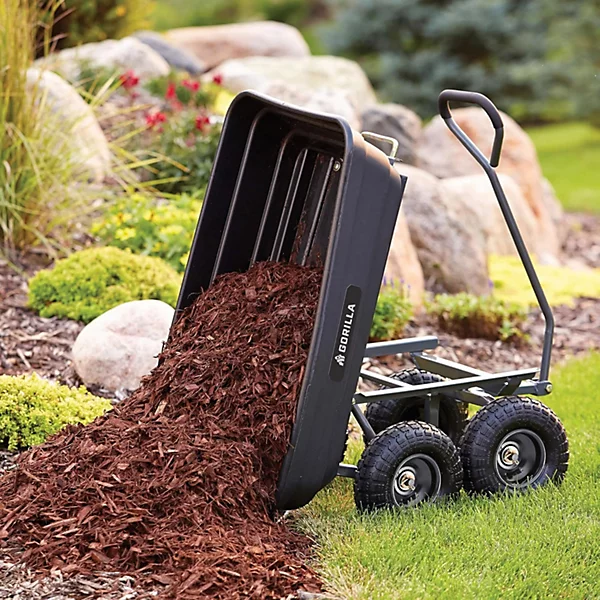

A garden dump cart carries loose material from one point in the yard to another, then tips it out without lifting or shoveling by hand. Choosing the best garden dump cart for your property comes down to matching bed size, weight rating, and tire type to the materials you move most often, whether that is topsoil, mulch, gravel, or firewood.
A Comparison Between 5 Best Garden Dump Cart
| Product | Title | Features | Explore |
|---|---|---|---|
 | VEVOR Poly Garden Dump Cart |
| Check Price |
 | CAMMOO Garden Dump Cart |
| Check Price |
 | Sekey 1000 lb Garden Dump Cart |
| Check Price |
 | AAIN 600 lb Poly Garden Dump Cart |
| Check Price |
 | Autodaya Garden Dump Cart |
| Check Price |
What Is Garden Dump Cart & Why It Matters
A garden dump cart combines four working parts: a wheeled frame, a cargo bed, a handle, and a release mechanism. The frame supports the axle and wheels and determines how much flex the cart tolerates under load. The bed sits on top, either bolted rigidly for standard carts or mounted on a pivot point for dump carts.
When the operator releases the latch, the bed’s pivot point lets gravity rotate it forward or downward until the contents slide out. Most designs use a simple hook-and-pin or spring latch, which keeps the bed locked flat during transport and only releases on purpose.
The dumping feature is what separates a dump cart from an ordinary garden utility cart. A standard utility cart requires shoveling or manually tipping the entire cart by hand, which becomes difficult once the load exceeds a light weight. A dump cart’s pivot mechanism handles material that would otherwise require two people or repeated shoveling, which is why the category has grown alongside general landscaping and DIY gardening activity.
Most dump carts hold soil, mulch, compost, gravel, or yard waste more efficiently than repeated wheelbarrow trips because the bed sits low and wide, which keeps the load stable while moving over grass, gravel paths, or packed dirt. The dumping mechanism also reduces the number of times a person bends, lifts, and twists during a single hauling session, which matters over a full afternoon of yard work.
The right choice depends on four practical factors: how much weight you need to move, how large a volume of material fits your typical load, what terrain the cart will cross, and how quickly you need the bed to empty. This article compares specific models against those four factors so you can shortlist a garden dump cart that fits your actual workload rather than a generic spec sheet.
5 Best Garden Dump Cart For 2026
Each review below focuses on the specification differences that separate one garden dump cart from another in daily use: bed size, frame strength, dumping action, and the terrain each model handles well.
VEVOR Poly Garden Dump Cart
The VEVOR Poly Garden Dump Cart offers a 4 cu ft, capacity, 600 lbs load rating, and durable polypropylene bed for gardening tasks. Its four 10-inch rubber wheels, adjustable handle, quick-release dumping system, and sturdy metal frame support convenient outdoor material transportation. I appreciate its spacious design, practical dumping mechanism, and adjustable handle, which make moving and unloading gardening supplies more manageable.
expert start
What Is It and Its Features?
The VEVOR Poly Garden Dump Cart is a four-wheel garden wagon designed for transporting heavy materials around gardens, farms, orchards, and outdoor work areas. It has a 3mm-thick polypropylene bed supported by a sturdy metal frame. The cart measures 74.8 inches long, 25 inches wide, and 21 inches high.
Its 4-cubic-foot capacity and 600-pound load rating make it suitable for carrying different gardening supplies. It also includes 10-inch rubber tires, a 180-degree adjustable handle, a quick-release dumping system, and a mesh cover to help keep smaller items secure during transportation.
Why It Matters?
The VEVOR Poly Garden Dump Cart matters because moving heavy gardening materials by hand can take considerable time and effort. Its four-wheel design helps distribute the load, while the large carrying capacity allows gardeners to transport several supplies together. This can make regular gardening tasks more manageable.
Another useful feature is its dumping system, which helps users unload materials without lifting the entire cart. The polypropylene bed is designed for outdoor use, while the rubber tires help the cart travel over uneven ground. These features make it practical for different gardening jobs.
My Set-Up And My Experience
When setting up the VEVOR Poly Garden Dump Cart, I would first assemble the metal frame, attach the wheels, and secure the polypropylene bed according to the manufacturer’s instructions. I would also check the handle and quick-release mechanism before loading it. The adjustable handle is a useful feature because it provides flexibility when moving the cart around the garden.
Performance
The VEVOR Poly Garden Dump Cart is designed to handle demanding transportation tasks. Its 600-pound load rating provides substantial carrying capacity, while the four 10-inch rubber wheels are intended to improve movement over grass and uneven surfaces. The swivel wheels help with turning, especially when working around garden beds or other obstacles.
The quick-release dumping system is another practical addition because it allows materials to be unloaded more conveniently. However, actual performance will depend on the load, ground conditions, and how evenly the materials are distributed.
Practical Tips
- Check that all wheels and frame connections are secure before use.
- Distribute heavy materials evenly across the cart bed.
- Avoid exceeding the manufacturer’s 600-pound load rating.
- Use the dumping mechanism carefully and keep your hands clear of moving parts.
- Clean the polypropylene bed after transporting soil, mulch, or wet gardening materials.
expert end
pro start
| Pros | Cons |
|---|---|
| ✔️ Large 4 cu. ft. capacity for carrying gardening supplies. | ❌ Its large size may require extra storage space. |
| ✔️ Strong 600 lbs load capacity for transporting heavy materials. | ❌ Heavy loads can make maneuvering more difficult. |
| ✔️ Quick-release dumping system makes unloading soil and mulch easier. | ❌ The dumping mechanism requires careful operation. |
| ✔️ Four 10-inch rubber wheels support movement across outdoor terrain. | ❌ Its wide frame may be difficult to use on narrow garden paths. |
| ✔️ Durable polypropylene bed and sturdy metal frame for regular gardening tasks. | ❌ Assembly is required before the first use. |
pro end
CAMMOO Garden Dump Cart
The CAMMOO Garden Dump Cart supports 900 lbs and features a reinforced steel frame, durable polypropylene bed, and secure locknuts for strength. Its 10-inch no-flat tires, 270-degree rotating handle, expandable sides, and 90-degree dumping mechanism provide convenient hauling and unloading. Its practical design offers useful features for garden chores, including flexible steering, sturdy construction, and convenient unloading of gardening materials.
expert start
What Is It and Its Features?
The CAMMOO 10-in No-Flat Tires 900lb Garden Dump Cart is a heavy-duty garden wagon designed for transporting soil, mulch, firewood, plants, tools, and yard debris. It measures 39.4 inches long, 23.6 inches wide, and 20.1 inches high.
Its body is made from 100% virgin polypropylene, while the thickened carbon steel frame provides structural support. The cart also features 10-inch no-flat tires, dual steel bearings, secure locknuts, expandable side slots, and a rotating handle for easier steering.
Why It Matters?
The CAMMOO 10-in No-Flat Tires 900lb Garden Dump Cart can help reduce the effort involved in moving heavy gardening materials. Its 900-pound capacity provides room for substantial loads, while the no-flat tires eliminate the need to inflate them. This can make regular outdoor chores more convenient.
Another useful feature is its 90-degree dumping mechanism, which allows materials to be unloaded by tilting the cart. The expandable sides also provide flexibility when carrying larger items. These features can help save time during garden cleanups, landscaping projects, and farm work.
My Set-Up and My Experience
When setting up the CAMMOO 10-in No-Flat Tires 900lb Garden Dump Cart, I would check that the steel frame, wheels, handle, and locknuts are properly assembled and secured. Its rotating handle is designed to improve maneuverability, while the expandable sides offer extra carrying space when needed. The ridged bed is worth considering when loading smaller items.
Performance
The CAMMOO 10-in No-Flat Tires 900lb Garden Dump Cart is designed to handle demanding outdoor jobs. Its deep-tread tires provide traction across surfaces such as grass, gravel, mud, sand, and cement.
The dual steel bearings support smoother rolling, while the reinforced frame helps maintain stability. The dumping mechanism is particularly useful for unloading loose materials such as soil, mulch, and leaves. However, the actual ease of movement will depend on the load, terrain, and slope.
Practical Tips
- Check that all bolts and locknuts are secure before using the cart.
- Distribute heavy materials evenly to help maintain balance.
- Use the dumping mechanism carefully and keep your feet clear.
- Add suitable boards to the expansion slots when extra capacity is needed.
- Avoid exceeding the 900-pound rated capacity, especially on uneven ground.
expert end
pro start
| Pros | Cons |
|---|---|
| ✔️ 900 lbs capacity for heavy loads. | ❌ Difficult to maneuver when fully loaded. |
| ✔️ No-flat tires require no inflation. | ❌ Ridged bed is not completely flat. |
| ✔️ 90-degree dumping for easy unloading. | ❌ Extra boards needed for expansion. |
| ✔️ Durable steel frame and PP body. | ❌ Requires sufficient storage space. |
| ✔️ Rotating handle for flexible steering. | ❌ Heavy loads need careful handling. |
pro end
Sekey 1000 lb Garden Dump Cart
The Sekey Garden Dump Cart supports loads up to 1,000 pounds, featuring a sturdy carbon steel frame and durable four-wheel construction. Its quick-release dumping system, easy-clean polypropylene bed, 10-inch rubber tires, and 180-degree turning handle simplify transporting and unloading materials. I appreciate its spacious bed, balanced design, and convenient dumping mechanism, which make everyday gardening tasks easier and material handling more manageable.
expert start
What Is It and Itst Features?
The Sekey Garden Dump Cart is a four-wheel utility cart with a 40.5-inch depth, 28-inch width, and 35-inch height. It features a strong carbon steel frame and a polypropylene tub that is easy to clean and resistant to rust. Its quick-release mechanism allows the bed to tilt for unloading materials. The cart also has 10-inch rubber tires and a 180-degree turning handle to help with maneuverability.
Why It Matters?
The Sekey Garden Dump Cart can be useful for gardeners who regularly move heavy materials around their outdoor spaces. Its four-wheel design helps distribute the load, while its 1,000-pound capacity makes it suitable for transporting substantial quantities of soil, mulch, and gardening supplies.
The quick-release dumping system is another helpful feature because it allows users to unload materials without removing everything manually. Its polypropylene bed is easy to clean, and the rubber tires help the cart move across different outdoor surfaces, including grass and gravel.
My Set-Up and My Experience
When using the Sekey Garden Dump Cart, I would focus on assembling the frame correctly and tightening all the hardware before loading it. Its spacious bed, four-wheel design, and turning handle make it practical for regular gardening tasks. I also appreciate the quick-release feature for simplifying unloading.
Performance
The Sekey Garden Dump Cart offers several features that support everyday gardening work. Its four-wheel construction is designed to provide balanced movement, while the rubber tires help absorb some of the impact when traveling over uneven ground. The 180-degree turning handle helps with steering around garden beds and other obstacles.
Its quick-release dumping mechanism is particularly useful when unloading soil, mulch, or similar materials. However, the cart’s actual performance will depend on the terrain, load distribution, and assembly quality. The 1,000-pound capacity is a maximum rating, so users should avoid exceeding it and should consider the conditions in which they are working.
Practical Tips
- Tighten all bolts and hardware properly before using the cart.
- Distribute heavy materials evenly across the bed.
- Use the quick-release mechanism carefully when unloading materials.
- Avoid overloading the cart beyond its 1,000-pound capacity.
- Clean the polypropylene bed after carrying soil, mulch, or other materials.
expert end
pro start
| Pros | Cons |
|---|---|
| ✔️ High 1,000-pound rated capacity for heavy gardening loads. | ❌ Large loads may require considerable effort to move. |
| ✔️ Quick-release mechanism makes unloading easier. | ❌ The dumping mechanism needs careful operation. |
| ✔️ Easy-clean polypropylene bed resists rust. | ❌ The bed still needs cleaning after messy jobs. |
| ✔️ Four-wheel design supports balanced transportation. | ❌ Maneuvering may be harder in tight garden spaces. |
| ✔️ Rubber tires and 180-degree handle support maneuverability. | ❌ Proper assembly and hardware tightening are important. |
pro end
AAIN 600 lb Poly Garden Dump Cart
The AAIN Garden Dump Cart supports 600 pounds, offering 4-cubic-foot capacity, a sturdy steel frame, and a protective coating against rust. Its 180-degree rotating handle, 10-inch pneumatic tires, and quick-release dumping system provide flexible maneuvering and convenient unloading across outdoor surfaces. I appreciate its practical hauling features, flexible handle, and dumping mechanism, which help make transporting gardening supplies and unloading materials easier.
expert start
What Is It & Its Features
The AAIN 600 lb Poly Garden Dump Cart is a four-wheel garden wagon designed for carrying soil, mulch, firewood, gardening tools, and other outdoor materials. It features an alloy steel frame with a protective coating to help resist rust and corrosion. Its 4-cubic-foot capacity provides useful space for everyday hauling tasks.
The cart also comes with 10-inch pneumatic tires, a flexible 180-degree rotating handle, and a quick-release dumping system. These features are designed to make transportation and unloading easier. It weighs approximately 30 pounds, making it manageable to move when empty. Its versatile design makes it suitable for gardens, farms, yards, and camping activities.
Why It Matters
The AAIN 600 lb Poly Garden Dump Cart matters because moving heavy gardening materials can take considerable time and physical effort. Its 600-pound capacity allows users to transport larger loads, while its four-wheel design provides a practical alternative to carrying materials by hand during outdoor work.
Another useful feature is its quick-release dumping system, which helps simplify unloading. The pneumatic tires are designed to handle different surfaces, including grass, soil, mud, and sand. Its rotating handle also provides flexibility when maneuvering around garden beds, pathways, and outdoor spaces.
My Set-Up and My Experience
Setting up the AAIN 600 lb Poly Garden Dump Cart is designed to be straightforward because it comes with assembly instructions and does not require special tools. I appreciate this feature because a simple assembly process makes a gardening cart more convenient to prepare for outdoor work. Its handle and dumping mechanism are also important features to check before use.
When using a garden cart like this, I find that having enough space for tools, soil, and other supplies helps make gardening tasks more organized. The rotating handle is particularly useful for changing direction, while the dumping feature can reduce the effort involved in unloading materials. These features make the cart practical for regular outdoor jobs.
Performance
The AAIN 600 lb Poly Garden Dump Cart is designed to handle demanding hauling tasks with its steel frame and high load capacity. Its four pneumatic tires help provide movement across different outdoor surfaces, while the rotating handle supports flexible steering. The quick-release dumping system is another helpful feature for unloading soil, leaves, mulch, and garden waste.
However, the cart’s actual performance depends on the load, ground conditions, and tire pressure. Although it is designed for rough outdoor surfaces, very soft or uneven ground may still make transportation more difficult. Staying within the recommended weight capacity can help maintain safe and reliable operation.
Practical Tips
- Check that all bolts and connections are secure before using the cart.
- Keep the load balanced to improve stability and make steering easier.
- Check the pneumatic tires regularly and maintain suitable tire pressure.
- Avoid exceeding the recommended 600-pound maximum load capacity.
- Clean the cart after use and store it in a dry place to help protect its frame.
expert end
pro start
| Pros | Cons |
|---|---|
| ✔️ Supports heavy loads up to 600 pounds. | ❌ Its 4-cubic-foot capacity may be limited for very large jobs. |
| ✔️ Quick-release dumping system helps simplify unloading. | ❌ Pneumatic tires require occasional pressure checks and maintenance. |
| ✔️ 180-degree rotating handle supports flexible maneuvering. | ❌ Assembly is required before the first use. |
| ✔️ Steel frame with protective coating helps resist rust and corrosion. | ❌ A heavy load may be difficult to pull across soft or uneven ground. |
| ✔️ Suitable for gardening, yard work, farms, and camping. | ❌ The cart needs sufficient storage space when not in use. |
pro end
Autodaya Garden Dump Cart
The Autodaya Garden Dump Cart Wagon offers a 1000-pound capacity, reinforced steel frame, durable polypropylene bed, and convenient quick-release dumping system. Its four 10-inch pneumatic tires, adjustable ergonomic handle, and expandable design provide flexible handling for various gardening and landscaping tasks. My experience highlights the importance of even load distribution, proper tire pressure, comfortable steering, and careful unloading during demanding garden work.
expert start
What Is It and Its Features?
The Autodaya Garden Dump Cart Wagon is a four-wheel utility cart with a 1000-pound weight capacity and a 5-cubic-foot steel-frame design. It measures 40.55 inches long, 27.95 inches wide, and 32.28 inches high. Its polypropylene bed, reinforced steel frame, and rust-resistant construction are designed for regular outdoor work. The cart also features 10-inch pneumatic tires, an adjustable ergonomic handle, and side expansion slots for adding suitable boards.
Why It Matters?
The Autodaya Garden Dump Cart Wagon matters because it can help reduce the effort involved in moving heavy gardening materials. Its four-wheel design provides balanced support, while the adjustable handle makes steering more comfortable. These features can make transporting soil, mulch, and firewood easier.
Another useful feature is its quick-release dumping system. Instead of manually lifting everything out, you can release the safety pin and tilt the bed for unloading. This can save time during landscaping projects and reduce repeated bending when moving loose materials around your garden.
My Set-Up and My Experience
When setting up the Autodaya Garden Dump Cart Wagon, I would recommend assembling it on a flat surface and checking that all frame connections and wheels are securely attached. The assembly may take around 45–60 minutes, and having another person available can make the process easier. I also recommend checking the tire pressure before using it.
During gardening work, the adjustable handle and four-wheel design are useful features to consider. The cart is designed to carry different materials, including soil, mulch, and firewood. Its dumping mechanism can also make unloading more convenient. I would distribute the load evenly and avoid exceeding the recommended weight capacity.
Performance
The Autodaya Garden Dump Cart Wagon is designed for demanding outdoor tasks. Its pneumatic tires help absorb bumps when travelling over grass, gravel, and uneven garden paths. The widened treads are intended to improve traction and help reduce deep marks on softer ground.
The quick-release dumping system also makes it easier to unload loose materials. However, performance will depend on the terrain, load distribution, and tire pressure. Although the cart is rated for 1000 pounds, I would avoid overloading it or pulling extremely heavy loads across steep slopes.
Practical Tips
- Check the pneumatic tire pressure regularly and follow the recommended 30 PSI specification.
- Distribute soil, stones, and other heavy materials evenly across the cart bed.
- Remove the safety pin carefully and ensure the unloading area is clear before dumping.
- Add suitable side boards if you need extra carrying volume; boards are not included.
- Clean the cart after use and touch up scratched frame coating to help protect against corrosion.
expert end
pro start
| Pros | Cons |
|---|---|
| ✔️ Heavy-duty design with a 1000-pound rated capacity. | ❌ Pneumatic tires require regular pressure checks. |
| ✔️ Quick-release dumping system helps simplify unloading. | ❌ Assembly can take around 45–60 minutes. |
| ✔️ Four pneumatic tires help provide a smoother ride. | ❌ Side expansion boards are not included. |
| ✔️ Adjustable handle supports flexible steering and control. | ❌ Heavy loads may be difficult to move on steep slopes. |
| ✔️ Expandable design offers flexibility for different hauling tasks. | ❌ The cart needs suitable storage space when not in use. |
pro end
Types Of Lawn Dump Carts
Garden dump carts fall into a handful of categories based on what the bed is made from and how many wheels support the frame. Each type trades off differently between weight, durability, and cost.
1.Poly Garden Dump Carts
Polyethylene beds resist rust and corrosion completely, since there is no metal surface for moisture to attack. They also clean easily with a hose, which makes them a strong match for soil, compost, and mulch that would otherwise stain or corrode a steel bed over time.
Because polyethylene will not corrode, a poly bed left outside through a wet season shows no rust streaks or pitting the way an unprotected steel bed eventually does. The trade-off is impact resistance: a hard strike from a dropped rock or tool can crack a poly bed in a way that dents but rarely breaks steel.
2. Steel Garden Dump Carts
Steel beds and frames support higher weight ratings than most poly equivalents at the same price point, which is why heavy-duty and gravel-hauling carts tend to use steel. Rust prevention through coatings or covered storage becomes a maintenance requirement that poly carts avoid entirely.
A powder-coated steel bed holds its shape under sustained heavy loads better than poly, which is why most carts rated above 1,000 pounds use steel construction. Regular buyers in wetter climates should plan on touching up any scratched paint promptly, since exposed steel begins to show surface rust within a season if left unaddressed.
3. Mesh Garden Dump Carts
Mesh beds allow water and debris to drain through small gaps, which suits leaves, brush, and damp yard waste that would otherwise pool water. The drainage advantage becomes a limitation with fine soil or loose compost, since material simply falls through the gaps.
A mesh bed drains rainwater and loose debris automatically, which keeps a cart left outside overnight from filling with standing water the way a solid bed can. That same drainage becomes a drawback the moment fine material like sand or compost is loaded, since it simply falls through the mesh gaps during transport.
Bed material decides how a cart ages; wheel configuration decides how it handles today.
4. Two-Wheel Dump Carts
A two-wheel, wheelbarrow-style design balances the load between the wheel axle and the operator’s grip, giving tight maneuverability in narrow spaces. It requires more active balance from the user than a four-wheel cart, especially with an uneven load.
A two-wheel cart pivots around its axle almost like a wheelbarrow, which lets an experienced user swing it into a tight corner in one motion rather than a wide arc. That maneuverability comes with a learning curve, since an unevenly loaded two-wheel cart can tip sideways more easily than a four-wheel design carrying the same weight.
5. Four-Wheel Dump Carts
Four-wheel carts distribute the load across the entire frame rather than relying on the operator to balance it, which improves stability with heavier or lopsided loads. The turning radius is wider than a two-wheel design, which matters in tight garden layouts.
Four contact points spread the load across the frame automatically, so a four-wheel cart stays level even when material is piled higher on one side than the other. The wider stance that provides this stability also means a four-wheel cart needs more open space to turn, which can be a limitation in a small backyard.
6. Tow-Behind Dump Carts
These carts attach to a tractor, riding mower, or ATV through a hitch pin or clevis connection, extending hauling capacity well beyond what a person can pull by hand. The towing vehicle’s own rated capacity, not just the cart’s, sets the practical weight limit.
Attaching a dump cart to a riding mower turns a single afternoon of trips into one continuous pass, which matters most on properties larger than a typical suburban lot. Towing speed should stay low and steady, since a loaded cart bouncing over uneven ground at mower speed can shift its center of gravity unexpectedly.
How to Choose Best Garden Dump Cart
Matching a garden dump cart to your yard comes down to eleven factors that interact with each other rather than a single standout spec.
1. Weight Capacity
A cart’s maximum rated capacity is a ceiling set by the manufacturer, not a target to load every trip. Wet soil, gravel, and compost weigh considerably more per cubic foot than dry mulch or leaves, so the same bed volume can hit the weight limit at very different fill levels depending on material.
2. Bed Capacity and Dimensions
Cubic-foot capacity describes total volume, but length, width, and depth also determine whether the cart fits through garden gates and along narrow paths. Always measure your tightest access point before buying a wide-bed cart.
3. Bed Material
Poly resists corrosion and cleans easily; steel handles higher weight and abrasive material like gravel better over time. Match the bed material to the task you do most often rather than the one you do occasionally.
4. Dumping Mechanism
A quick-release latch should open with one hand and tilt smoothly, even under a full load. Test the mechanism in a showroom or read owner reviews carefully, since a stiff latch becomes a daily annoyance.
5. Tire Type
- Pneumatic tires absorb shock better on rough terrain but require occasional air pressure checks and carry puncture risk near thorny plants or debris.
- No-flat tires eliminate maintenance and puncture risk but transmit more vibration on rocky or uneven ground.
6. Wheel Configuration
Two-wheel carts maneuver tightly in narrow spaces but demand more balance from the operator. Four-wheel carts distribute weight automatically and suit open yards with heavier, less balanced loads.
7. Frame and Axle Construction
A thicker steel frame and a solid axle resist bending under repeated heavy loads far longer than lightweight tubing. Check whether the axle is a single continuous rod or two separate stub axles, since the former typically handles more stress.
8. Handle Design
A rotating or convertible handle lets one cart switch between manual pulling and towing behind a mower, which adds versatility without buying a second cart. Grip height should match the primary user’s comfortable pulling posture.
9. Terrain and Maneuverability
Larger wheels with more ground clearance roll over roots, ruts, and gravel more easily than small hard wheels, which tend to sink into soft lawn or mud. Confirm your turning space matches the cart’s minimum turning radius before committing to a wide four-wheel model.
10. Assembly and Maintenance
Most garden dump carts arrive partially disassembled and require basic tools for the frame and wheels. Routine care includes cleaning the bed after wet material, lubricating the dump latch, and checking tire pressure or tread condition.
11. Price and Overall Value
Budget carts in the $100 to $190 range cover occasional, light hauling well. Mid-range and heavy-duty models above $250 justify their price with higher weight ratings, steel construction, and tow compatibility for buyers with recurring, heavier workloads.
Garden Dump Cart vs. Wheelbarrow
| Factor | Garden Dump Cart | Wheelbarrow |
|---|---|---|
| Wheel configuration | Two or four wheels | Single wheel |
| Load capacity | Typically 500 to 1,200 lb | Typically 300 to 600 lb |
| Stability | High, self-supporting | Requires operator balance |
| Maneuverability | Wider turning radius | Tight, single-point pivot |
| Dumping and unloading | Hands-free latch release | Manual tilt by the operator |
| Narrow paths | Can be limited by width | Excellent |
| Ease of handling | Low effort once loaded | Requires more arm and core strength |
| Typical use | Bulk material, repeated heavy loads | Small, frequent loads in tight spaces |
The best tool is not the one with the highest capacity; it is the one that actually fits through your gate.
A dump cart makes more sense once loads regularly exceed what one person can comfortably tilt by hand, or when repeated trips make the hands-free dumping feature worth the extra bed width. A traditional wheelbarrow still wins in tight side-yard access or raised-bed gardens where a wider cart simply will not fit.
Garden Dump Cart vs. Regular Garden Cart: Key Differences
A regular garden utility cart has a fixed bed that must be emptied by hand, either by shoveling out material or manually tipping the entire cart, frame included. A dump cart isolates the bed on a pivot so only the load moves during unloading, not the wheels or frame.
- Utility carts often suit hauling tools, potted plants, or bagged supplies where nothing needs to be dumped in bulk.
- Dump carts justify their added mechanical complexity specifically when the cargo is loose material like soil, mulch, or gravel that benefits from a quick, hands-free release.
The dumping mechanism is worth paying for once loose-material hauling becomes a regular task rather than an occasional one, since the time saved per trip adds up quickly over a season of yard work.
What Can You Haul with a Garden Dump Cart?
A garden dump cart makes it easier to move different materials around your yard, garden, or farm. You can use it to haul soil, mulch, compost, leaves, firewood, gardening tools, and harvested crops. Its spacious bed and dumping feature also help make unloading materials quicker and more convenient.
1. Soil and Topsoil
A cubic yard of topsoil weighs roughly 2,000 to 2,700 pounds depending on moisture content, so even a large 12 cubic-foot cart reaches its weight limit well before its volume limit with wet soil. Load soil in smaller batches and check the rated capacity before each trip.
2. Compost and Manure
Poly beds handle compost and manure better than steel over time, since the smooth surface resists staining and rinses clean. Moisture retention in organic material also makes it heavier than its dry-weight estimate suggests.
3. Mulch and Wood Chips
Mulch and wood chips are bulky but light, so bed volume becomes the limiting factor rather than weight rating. A cart with tall sidewalls transports more material per trip without spilling.
4. Gravel and Small Stones
Gravel is dense and abrasive, so it demands a cart with a strong frame rating and, ideally, a steel or reinforced poly bed. Never exceed the rated weight limit with gravel, since it concentrates weight in a small volume that strains the axle quickly.
5. Leaves and Yard Waste
Tall sidewalls and a wide bed handle bulky seasonal debris efficiently, making leaf and yard-waste cleanup faster than repeated wheelbarrow trips. Mesh-bed carts also work well here since they let rainwater drain rather than pool.
6. Firewood and Gardening Supplies
Bed length matters most for firewood, since split logs need enough surface area to stack without overhanging the sides. A mid-size steel or poly bed usually balances firewood length against overall cart maneuverability.
Garden Dump Wheelbarrow Safety and Proper Use
Using a garden dump cart safely helps prevent accidents, protect your materials, and make gardening tasks easier. Always check the wheels, handle, and frame before use, distribute loads evenly, and follow the recommended weight capacity when transporting or unloading materials.
- Check the manufacturer’s maximum load rating before every heavy haul, and treat it as a hard limit rather than a rough guideline.
- Distribute material evenly across the bed to prevent the cart from tipping sideways during turns.
- Avoid overloading with wet soil, gravel, or other dense material, since these reach the weight limit long before the bed looks full.
- Use extra caution when dumping on slopes or uneven surfaces, where a shifting load can pull the cart off balance.
- Keep hands and feet clear of the dumping mechanism and pinch points during both loading and release.
- Secure the bed and latch fully before moving the cart to prevent an accidental mid-transport dump.
- Follow the manufacturer’s specific instructions for towing speed and hitch attachment when using a tow-behind model.
Manual material handling injuries remain common enough in outdoor and landscaping work that equipment choice genuinely matters for long-term physical strain, not just convenience.
NIOSH (National Institute for Occupational Safety and Health) found that manual material handling contributes to a large share of the over half a million musculoskeletal disorder cases reported annually in the United States. This underlines why a properly rated, well-maintained dump cart is a genuine injury-prevention tool, not just a time-saver.
How to Maintain Garden Dump Cart Longer Service
- Clean the bed with a hose after hauling soil, compost, or manure to prevent residue from hardening or corroding the surface.
- Inspect the frame, axle, wheels, and fasteners on a seasonal basis, tightening any hardware that has worked loose.
- Lubricate the dumping latch periodically so it continues to release smoothly under load.
Tire care depends on the type installed. Pneumatic tires need occasional pressure checks and a visual inspection for cracking, while no-flat tires only need a check for tread wear and debris lodged in the surface.
- Protect steel frames and beds from rust by wiping down moisture after wet-weather use and applying touch-up coating to any scratched paint.
- Store the cart in a dry, sheltered location when possible, since prolonged UV and moisture exposure shortens the life of both poly beds and pneumatic tires.
A study from Universiti Tun Hussein Onn Malaysia (2024) found that modern wheelbarrow-style hauling designs cut load-transfer time by 53.8% compared to manual wheelbarrows, with gear-assisted mechanisms reducing the force needed to lift a load by 20%. The takeaway for gardeners is that a well-engineered cart is not just more comfortable, it is measurably faster over repeated trips.
Conclusion
The best garden dump cart for your property comes down to matching bed size, weight capacity, wheel configuration, and dumping mechanism to the tasks you actually perform, not to the highest specification on the shelf. A compact poly cart suits small gardens and light material, while a steel, tow-behind model earns its price on larger properties with heavier, more frequent loads.
Before buying, compare the specific weight rating, bed material, and tire type of your shortlisted models against the jobs you expect to do most often. A garden dump cart chosen this way pays for itself in saved time and reduced physical strain well before the first season is over.
Frequently Asked Questions (FAQs)
What is the best garden dump cart for home gardening?
For most home gardens, a 4 to 6 cubic-foot poly cart with a 600 to 800-pound rating covers soil, mulch, and compost without the bulk of a heavy-duty steel model. Choose a larger steel or tow-behind cart only if your property regularly requires gravel, firewood, or landscaping-scale loads.
What size garden dump cart do I need?
Match bed volume to your typical material and weight rating to your heaviest regular load. A small suburban lot rarely needs more than 6 cubic feet, while larger properties with construction or landscaping projects benefit from 10 cubic feet or more.
Are poly garden dump carts better than steel carts?
Poly carts resist rust, clean easily, and suit soil and compost well, while steel carts generally support higher weight ratings and hold up better against abrasive material like gravel. Neither is universally better; the right choice depends on the material you haul most.
How much weight can a garden dump cart carry?
Manufacturer-rated capacities on the models covered here range from 500 to 1,200 pounds, but the safe practical load also depends on terrain, tire type, and how evenly the material is distributed in the bed.
Are four-wheel garden dump carts more stable than two-wheel models?
Four-wheel carts distribute weight across the entire frame, which generally makes them more stable with heavy or uneven loads, while two-wheel designs offer tighter steering in narrow spaces at the cost of requiring more operator balance.
Are no-flat tires worth it on a garden dump cart?
No-flat tires remove the risk of punctures and the need to check air pressure, which suits carts used on gravel or near thorny plants, though they trade away some of the shock absorption that pneumatic tires provide on rough ground.
Can a garden dump cart carry gravel and rocks?
Yes, provided the cart’s weight rating, frame strength, and wheel construction are built for dense material. Always confirm the manufacturer’s specific rating for gravel or stone rather than assuming the general capacity applies without limits.
Can you attach a garden dump cart to a riding mower or tractor?
Tow-behind models with a hitch-compatible handle can attach to most riding mowers, ATVs, and garden tractors, but always check both the cart’s towing rating and the towing vehicle’s rated pulling capacity before loading.
How do you dump a garden dump cart?
In general, releasing the latch allows the bed to pivot and empty its contents, but the exact release mechanism and recommended dumping angle vary by model, so following the specific manufacturer’s instructions is the safest approach.
references:
1. Manual, G. C. Heavy Duty Garden Dump Cart Model# GOR866D. available from Tricam Industries of Eden Prairie, MN.
2. Wendroff, A. P. (1993). Human powered garden carts: appropriate farm transportation.
3. Sazaleigh, M. A. S., Ab Latif, N., & Ismail, A. M. M. (2023). Design and fabrication of garden storage tool cart.
4. Kotowski, S. E., Davis, K. G., & Waters, T. R. (2009). Investigation of select ergonomic interventions for farm youth. Part 2: wheelbarrows. Journal of agromedicine, 14(1), 44-57.
5. Lin, Y. H., & Lu, S. Y. (2020). Effects of ground and load on upper trapezius, biceps brachii muscle and hand forces in one-and two-wheeled wheelbarrow pushing. Applied Ergonomics, 88, 103151.