Choosing 5 Best Indoor and Outdoor Garden Cart Wisely Guide
- In 2024, 122.3 million United States households took part in lawn and garden activities, a participation rate of 84.1 percent.
- The indoor and outdoor garden carts people buy for that work look similar at first glance, yet they differ sharply in wheels, frames, load limits and weather tolerance.
- Buyers who understand these differences spend once and avoid the common mistake of using the wrong cart in the wrong place.


Choosing a cart starts with one technical distinction. Load capacity (the maximum weight a manufacturer rates a cart to carry safely) decides what a cart can move. Wheel size decides where it can move it. Indoor and outdoor models answer those two questions differently, and that split shapes every design choice that follows.
An Overview Of 5 Best Indoor & Outdoor Garden Cart
| Product | Title | Features | Explore |
|---|---|---|---|
 | TKYHRMAS Flower Display Indoor and Outdoor Garden Cart |
| Check Price |
 | PakaLife Indoor And Outdoor Flower Cart |
| Check Price |
 | Wisfor 6 Potted Metal Indoor And Outdoor Garden Cart |
| Check Price |
 | Mobile Raised Indoor And Outdoor Garden Cart |
| Check Price |
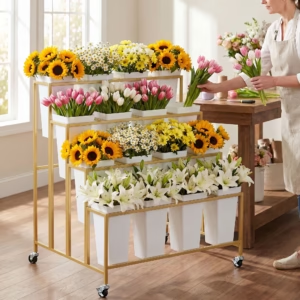 | 4-Tier Flower Display Indoor and Outdoor Garden Cart |
| Check Price |
Why Indoor and Outdoor Garden Cart Are Built Differently
An indoor and outdoor garden cart comparison starts with place. Indoor carts move plants and supplies across smooth floors, greenhouse paths and potting rooms.
Outdoor carts haul soil, compost and harvests across grass, gravel and uneven ground. The indoor and outdoor garden cart buyer faces one core choice: a light, compact mover or a rugged, high-capacity hauler.
This growth means buyers face more models, more claims and more confusion. Clear comparison matters more than ever. Indoor and outdoor carts differ in five visible ways: design, size, wheels, materials and load limits. A cart built for a living room floor fails on wet grass, while a cart built for a muddy allotment scratches hardwood.
5 Best Top Indoor & Outdoor Garden Carts 2026
Choosing the right indoor and outdoor garden cart can make gardening, plant organisation, and moving supplies much easier. I’ll cover 5 best indoor and outdoor garden carts for 2026, focusing on their practical features, versatility, and suitability for different gardening needs.
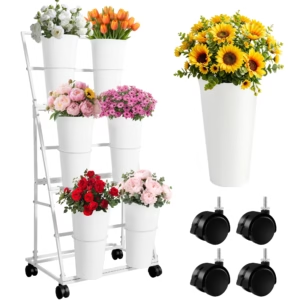
TKYHRMAS Flower Display Indoor and Outdoor Garden Cart
The TKYHRMAS flower stand features a three-tier iron frame, six detachable buckets, and a space-saving design for organized flower displays. Four 360-degree swivel wheels with locking brakes provide convenient movement, while the white finish complements indoor and outdoor decorations. I found its vertical layout useful for arranging flowers neatly, saving floor space, and adjusting plant displays for easier maintenance.
expert start
What Is It and Its Features?
The TKYHRMAS Flower Display Stand with 6 Buckets is a mobile plant rack designed to hold flowers at different heights. Its iron frame supports six buckets arranged across three tiers, helping separate plants and improve their display. The buckets can be removed for easier handling, and the four swivel casters allow the stand to move in different directions.
Locking brakes help keep it stationary when needed. It weighs approximately 6.7 pounds and comes with an assembly manual. These features make it suitable for arranging flowers without taking up too much ground space.
Why It Matters
The TKYHRMAS Flower Display Stand with 6 Buckets can be useful when you want to organize several small flowering plants in one place. Instead of spreading pots across the floor, its three-tier layout creates a more organized display. The detachable buckets also offer flexibility when changing flower arrangements or moving individual plants.
Its wheels are particularly helpful when cleaning the surrounding area or adjusting the display for sunlight. For homes with limited gardening space, this design offers a practical way to make a small balcony, patio, or corner look more attractive.
My Set-Up and My Experience
When setting up the TKYHRMAS Flower Display Stand with 6 Buckets, I would first check all the parts and follow the supplied instruction manual. The frame should be assembled on a level surface, with each bucket support secured properly before adding plants. I would arrange lighter pots on the upper tiers and keep heavier ones lower to help maintain balance.
The white metal finish works well with colorful flowers and green foliage. I would also check that all four wheels rotate freely and that the locking brakes hold the stand in place before using it for a full flower display.
Performance
The TKYHRMAS Flower Display Stand with 6 Buckets offers several useful features for everyday flower organization. Its vertical frame makes efficient use of space, while the removable buckets allow different arrangements to be created without moving the entire stand.
The swivel wheels should make repositioning easier on smooth surfaces, and the brakes provide additional control when the stand is parked. However, performance will depend on the weight and distribution of the plants, the condition of the floor, and the assembly quality. Since the product is made from iron, I would also check its coating regularly if it is kept outdoors in wet weather.
Practical Tips
- Distribute plant weight evenly across all three tiers.
- Place heavier containers on the lower level when possible.
- Lock the wheels whenever the stand is parked.
- Check bucket supports and fasteners periodically.
- Move the stand slowly, especially when all six buckets are filled.
expert end
pro start
| Pros | Cons |
|---|---|
| ✔️Three-tier design saves floor space. | ❌Maximum weight capacity is not specified. |
| ✔️Six detachable buckets allow flexible arrangements. | ❌Bucket size may limit larger plants. |
| ✔️Four swivel wheels help with movement. | ❌Small wheels may struggle on uneven ground. |
| ✔️Locking brakes help keep the stand stationary. | ❌Wheel locks need regular checking. |
| ✔️White iron frame offers a clean appearance. | ❌Outdoor moisture may increase rust risk if the coating is damaged. |
pro end
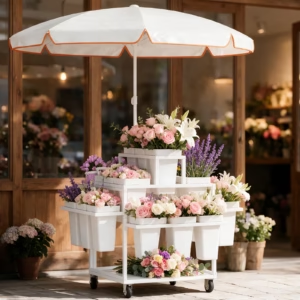
PakaLife Indoor And Outdoor Flower Cart
The PakaLife Flower Cart features three tiers, 18 buckets, a durable metal frame, and a 120-pound maximum load capacity. Its adjustable parasol, four swivel wheels, two locking brakes, and foldable side table offer convenient flower display and workspace flexibility. I found its tiered layout, movable design, and extra workstation useful for organizing flowers and creating an attractive display area.
expert start
What Is It and Its Features?
The PakaLife Flower Cart Display Stand with Parasols is a mobile flower display station designed to hold multiple flower buckets in a compact space. It measures 23.6 inches wide, 23.6 inches deep, and 67 inches high, with a stated maximum load capacity of 120 pounds.
Its three-tier ladder-style structure helps keep flowers visible on different levels. The adjustable parasol provides shade, while the foldable side table offers extra working space. Four swivel casters make movement easier, and two locking wheels help keep the cart stationary when needed.
Why It Matters?
The PakaLife Flower Cart Display Stand with Parasols can make flower display and organization easier, especially when working with several bouquets at once. Instead of placing containers separately on tables or the ground, the stepped shelves help create a tidy arrangement that customers and visitors can view more easily.
The parasol is useful for providing shade during outdoor displays, although it should not be treated as complete protection against heavy rain or strong winds. Its wheels and folding workstation also make it practical for changing display locations and preparing bouquets during sales or special events.
My Set-Up and My Experience
When setting up a flower cart like the PakaLife Flower Cart Display Stand with Parasols, I would begin by checking all the parts and following the supplied assembly instructions. I would tighten the connections carefully, attach the wheels securely, and test the locking brakes before adding flowers.
I would then arrange the buckets across the three levels, keeping taller arrangements toward the back where possible. The side workstation would be useful for keeping scissors, wrapping paper, and other small supplies nearby. Before outdoor use, I would also check the parasol adjustment and place the cart on a firm, level surface.
Performance
The PakaLife Flower Cart Display Stand with Parasols offers several practical features for everyday flower presentation. Its three-tier layout helps make the most of limited floor space, while the 18-bucket capacity allows different flowers and colors to be displayed together. The swivel wheels should make repositioning easier on suitable surfaces, and the locking brakes help prevent unwanted movement when the cart is stationary.
The foldable side table adds flexibility for flower preparation. However, the cart’s actual stability and long-term durability will depend on assembly, load distribution, surface conditions, and proper care. I would avoid overloading it or leaving the parasol exposed to strong winds.
Practical Tips
- Place heavier buckets evenly across the lower and central sections to help maintain balance.
- Engage both locking brakes before arranging flowers or serving customers.
- Wipe away moisture and dirt regularly to help preserve the coated metal finish.
- Adjust the shade according to sunlight and close it during strong winds.
- Use the foldable side workstation for lightweight tools and bouquet-wrapping materials.
expert end
pro start
| Pros | Cons |
|---|---|
| ✔️Three-tier design improves flower visibility. | ❌Assembly is required. |
| ✔️Accommodates up to 18 buckets. | ❌Product weight is 58 pounds. |
| ✔️Adjustable parasol provides shade. | ❌Parasol use is limited in strong winds. |
| ✔️Four swivel casters support easy movement. | ❌Requires a stable, level surface. |
| ✔️Two locking wheels help prevent movement. | ❌No written warranty is listed. |
pro end
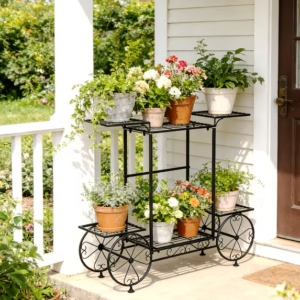
Wisfor 6 Potted Metal Indoor And Outdoor Garden Cart
The Wisfor plant stand features six spaces, a decorative black metal frame, and a space-saving tiered design for indoor and outdoor use. Its welded upper tier, support bars, and round support pads improve stability, with different weight limits for safer plant placement. I found its tiered layout useful for organizing plants neatly, saving floor space, and creating an attractive display in small garden corners.
expert start
What Is It and Its Features?
The Wisfor 6 Potted Metal Garden Cart Plant Stand is a multi-level metal rack designed to display plants without taking up too much floor space. It measures approximately 32.2 x 8.3 x 27.8 inches and weighs around 6.61 pounds, making it relatively lightweight to move.
The middle tier supports up to 20 kg, the lower side tier up to 15 kg, and the upper side tier up to 2 kg. Its welded upper tier, support arch bars, and four round support pads help improve stability. The black finish and Parisian-style details give it a decorative look that works with different home and garden settings.
Why It Matters?
The Wisfor 6 Potted Metal Garden Cart Plant Stand is useful for gardeners who want to organize their plants in a small area. Instead of spreading pots across the floor, its tiered design helps create a cleaner display and makes better use of available space.
I particularly appreciate the idea of keeping plants at different heights, as this can make a balcony or garden corner look more attractive. Its metal construction also offers a practical alternative to bulky wooden shelves, while its indoor and outdoor design gives gardeners more flexibility when arranging their plants.
My Set-Up and My Experience
Setting up the Wisfor 6 Potted Metal Garden Cart Plant Stand is designed to be straightforward because of its universal side plate design. I would begin by checking all the parts and following the assembly instructions before tightening the connections.
Once assembled, I would place it on a flat surface and arrange lighter pots on the upper tier while keeping heavier containers on the stronger supported levels. Its narrow shape is helpful for fitting beside a wall or near a sunny window. The black frame also provides a simple background that allows green leaves and colorful flowers to stand out.
Performance
The Wisfor 6 Potted Metal Garden Cart Plant Stand offers a practical way to keep several plants together while maintaining an attractive display. Its tiered layout helps separate pots, making it easier to organize plants according to their size, appearance, or sunlight needs.
The support bars and ground-contact pads are useful design features for everyday stability, although the stand should always be placed on level ground. Its lightweight construction can make repositioning easier, but heavier pots should be handled carefully. Since the upper tier has a much lower weight limit, checking the load for each section is important before arranging the plants.
Practical Tips
- Keep heavier pots on the stronger tiers and reserve the upper tier for lightweight containers.
- Place the stand on firm, even ground to help prevent wobbling or tipping.
- Arrange plants according to their sunlight requirements so each one receives suitable light.
- Wipe away standing water and dirt regularly, especially after rain or watering.
- Check the available floor area before assembly to ensure the rack fits comfortably.
expert end
pro start
| Pros | Cons |
|---|---|
| ✔️Holds up to six potted plants. | ❌Upper tier supports only 2 kg. |
| ✔️Decorative black metal design. | ❌Narrow depth limits pot size. |
| ✔️Space-saving tiered arrangement. | ❌Assembly is required. |
| ✔️Support bars help improve stability. | ❌Strong winds may affect outdoor stability. |
| ✔️Lightweight and easier to reposition. | ❌No written warranty is listed. |
pro end
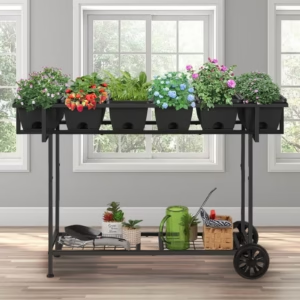
Mobile Raised Indoor And Outdoor Garden Cart
The Mobile Raised Garden Cart features six drainage trays, a powder-coated metal frame, and an elevated design for growing herbs, vegetables, and flowers. Its two-tier structure includes a lower mesh storage shelf and two large wheels for organizing supplies and repositioning plants conveniently. I found its separate planting trays, raised working height, and handy storage shelf useful for keeping small-space gardening organized and accessible.
expert start
What Is It and Its Features?
The Mobile Raised Garden Cart with 6 Planting Trays is an elevated planter stand designed for growing herbs, strawberries, leafy vegetables, and small flowers. It includes six individual plastic trays with drainage holes, a black powder-coated metal frame, and a lower mesh shelf for storing gardening supplies. The two large wheels help with repositioning, while its 43.70-inch height provides a raised working area.
Why It Matters?
The Mobile Raised Garden Cart with 6 Planting Trays helps make gardening easier when floor space is limited. I appreciate how its six separate trays allow different plants to grow without mixing their soil. The elevated structure also reduces frequent bending, while the lower shelf keeps watering cans and hand tools organized instead of scattered around the garden.
My Set-Up and My Experience
I found the Mobile Raised Garden Cart with 6 Planting Trays useful for arranging a small collection of plants in one place. I would position the cart where the plants receive suitable sunlight and keep frequently used tools on the lower shelf. The separate trays make planting more organized, and the wheels offer flexibility when the growing area needs to be rearranged.
Performance
The Mobile Raised Garden Cart with 6 Planting Trays offers a convenient combination of planting space and storage. Its drainage holes help excess water escape, although I would still check the trays regularly to avoid waterlogging. The metal frame provides a supportive structure, and the wheels make repositioning easier on suitable surfaces. Its long-term outdoor performance will depend on proper care and exposure to weather.
Practical Tips
- Keep the six planting trays free from blocked drainage holes to help prevent waterlogged soil.
- Grow herbs, strawberries, leafy greens, or small flowers according to each plant’s space and sunlight needs.
- Spread the trays and stored supplies across the frame rather than concentrating heavy items on one side.
- Push the cart slowly and use a stable, level surface when repositioning it.
- Clean off dirt and moisture regularly, and inspect the metal coating for scratches or signs of rust.
expert end
pro start
| Pros | Cons |
|---|---|
| ✔️ Six separate trays support organized planting. | ❌ The trays may limit space for larger plants. |
| ✔️ Drainage holes help excess water escape. | ❌ Drainage water may need a collection solution. |
| ✔️ The lower shelf stores gardening tools. | ❌ The open shelf does not protect supplies from rain. |
| ✔️ Elevated height reduces repeated bending. | ❌ The height may not suit every gardener. |
| ✔️ Two wheels help with repositioning. | ❌ Two wheels may be less convenient on uneven ground. |
pro end
4-Tier Flower Display Indoor and Outdoor Garden Cart
The 4-tier flower display stand features 16 removable plastic buckets, a sturdy metal frame, and an attractive white and gold finish. Its four wheels, including two lockable casters, allow easy repositioning, while the stand measures approximately 36,61 × 29,53 × 41,34 inches. I found its removable buckets useful for rearranging flowers, simplifying individual plant care, and creating an organised, attractive display in limited garden spaces.
expert start
What Is It and Its Features?
The 4-Tier Flower Display Stand with 16 Removable Buckets is a metal plant display cart designed to hold different flowers in one organised space. It measures approximately 36.61 x 29.53 x 41.34 inches and weighs around 32 pounds.
The stand includes 16 removable plastic buckets, four tiers, and two lockable casters alongside two swivel wheels. Its white frame and gold accents give it a decorative appearance for indoor and outdoor settings.
Why It Matters?
The 4-Tier Flower Display Stand with 16 Removable Buckets helps keep flower pots organised without spreading them across the floor. I appreciate the separate buckets because they allow me to change individual plant arrangements without disturbing the others. The rolling wheels also make it easier to move the display towards better sunlight or a more suitable position when needed.
My Set-Up and My Experience
I would place the 4-Tier Flower Display Stand with 16 Removable Buckets on a level surface and check that all parts are securely assembled before adding plants. I like the flexibility of its removable buckets because different flowers can be arranged according to their colours and sizes. The rolling frame is useful for adjusting the display, while the locking wheels help keep it stationary during plant care.
Performance
The 4-Tier Flower Display Stand with 16 Removable Buckets offers a convenient way to display multiple plants in a compact arrangement. Its tiered structure helps separate flowers visually, allowing the plants on different levels to remain noticeable.
The removable buckets simplify rearranging and cleaning, while the metal frame provides a supportive structure. However, I would check the wheel locks and overall balance before loading all 16 buckets.
Practical Tips
- Measure your balcony, patio, or garden space before assembling the stand.
- Place heavier plant containers carefully to maintain balance.
- Take out individual buckets when watering or changing flowers.
- Engage the brakes after positioning the cart on a level surface.
- Wipe away moisture and dirt regularly to help maintain its appearance.
expert end
pro start
| Pros | Cons |
|---|---|
| ✔️ Holds up to 16 removable buckets. | ❌ Requires assembly before use. |
| ✔️ Four tiers help organise flowers. | ❌ Takes up considerable floor space. |
| ✔️ Wheels make repositioning easier. | ❌ Locking wheels need proper adjustment. |
| ✔️ Attractive white and gold finish. | ❌ Plastic buckets may limit planting depth. |
| ✔️ Suitable for patios, balconies, and flower displays. | ❌ No written warranty is listed. |
pro end
Indoor Garden Carts: Compact Movers for Controlled Spaces
An indoor garden cart is a small, lightweight wheeled cart built for moving plants and supplies inside protected spaces. Its primary purpose is short, gentle transport across flat floors. It carries pots, seed trays, tools and watering cans between rooms, benches and greenhouse aisles.
Common uses cover homes, greenhouses, sheds and dedicated gardening rooms. Growers move houseplants to windows for light, and greenhouse workers shift seedlings from bench to bench. Potting rooms stage soil, pots and labels beside the workbench.
Typical features centre on compact size and easy movement. Indoor carts usually measure under 60 cm wide, so they pass through standard doorways. They weigh little when empty, often under 12 kg, so one person lifts them. Small swivel wheels let them turn in tight aisles.
Plant Carts, Utility Carts and Rolling Potting Carts
Three indoor types dominate the market. Plant carts (low platforms for single heavy pots) suit large houseplants. Utility carts (multi-shelf trolleys for mixed supplies) suit potting rooms. Rolling potting carts (carts with trays and tool holders) suit sowing and transplanting work.
- Plant carts move one or two large pots at a time and protect floors with soft wheels.
- Utility carts carry mixed loads and keep tools, pots and sprays organised.
- Rolling potting carts hold soil, trays and tools together and cut trips during sowing.
- Indoor carts suit growers with limited space, smooth floors and loads under about 40 kg.
An indoor garden cart suits apartment growers, greenhouse hobbyists and anyone who moves plants daily. It also suits older gardeners, because light weight and smooth rolling reduce strain.
Outdoor Garden Cart: Rugged Haulers for Open Ground
An outdoor garden cart is a heavy-duty wheeled cart built for hauling bulk materials across open ground. Its primary purpose is moving soil, compost, tools and harvests over grass, gravel, paths and allotments. It trades compact size for strength, grip and weather tolerance.
Common uses span gardens, lawns, allotments, patios and vegetable patches. Gardeners haul compost to raised beds, and allotment holders move tools, seed potatoes and harvested vegetables. Landscapers shift paving slabs, mulch and prunings across large plots.
Typical features start with durable frames and larger wheels. Outdoor frames use thick steel or heavy plastic, and they resist bending under bulk loads. Wheels measure 20 cm or more, and they roll over roots, ruts and loose gravel. Weather-resistant coatings protect frames from rain and sun.
Garden Utility Wagons, Dump Carts and Heavy-Duty Models
Four outdoor types cover most needs. Garden utility wagons (deep-bed pull carts for mixed loads) suit harvests and prunings.
Garden dump cart models (carts with tipping beds for unloading) suit soil and gravel. Folding garden cart models (collapsible carts for light outdoor trips) suit patios and markets. Heavy-duty garden carts (high-capacity carts for bulk work) suit allotments and landscaping.
- Utility wagons carry bulky loads, and their deep beds stop produce rolling off.
- Dump carts tip soil where it belongs and save repeated shovelling.
- Folding carts pack flat and handle light loads on firm paths.
- Heavy-duty models carry 100 kg or more and suit bulk compost and stone.
“Choose the cart for the ground it will cross most, not the ground it looks best on.” An outdoor garden cart suits anyone with a garden, allotment or large patio. It also suits growers who haul compost, soil and fertiliser weekly.
Key Differences Between Indoor and Outdoor Garden Cart Designs
Indoor and outdoor carts differ first in design intent. Indoor carts prioritise compact form and gentle handling. Outdoor carts prioritise strength and rough-ground performance. Every other difference flows from that split.
Compact Indoor Designs Versus Rugged Outdoor Construction
Indoor frames use thin steel tube or moulded plastic. Outdoor frames use thick steel, reinforced joints and braced beds. Indoor carts fold or stack neatly. Outdoor carts use fixed frames that resist twisting under bulk loads.
WiseGuy Reports, 2024 found that the garden wagons and carts market was valued at USD 2,128.7 million in 2024 and is expected to reach USD 3,500 million by 2035, at a compound annual growth rate of 4.6 percent.
Size, Storage and Garden Cart Wheels Compared
Indoor carts stay narrow and low for doorways and aisles. Outdoor carts run wider and taller for bulk loads and stability. Garden cart storage differs by type. Indoor carts store in corners, cupboards or under benches. Outdoor carts need shed, garage or covered outdoor space.
Swivel castor (a small wheel that rotates freely to steer in any direction) defines indoor mobility. Indoor carts use 10 to 15 cm castors for smooth floors. Outdoor carts use 20 to 25 cm wheels for grass, gravel and soil.
- Indoor wheels roll quietly on tile, wood and concrete, and they protect delicate floors.
- Outdoor wheels grip soft ground, and their tread clears mud.
- Pneumatic tyre (an air-filled tyre that flexes over bumps) suits grass and uneven paths best.
- Solid tyres suit puncture-prone ground, and they need no inflation checks.
Materials, Load Capacity and Weather Resistance
Indoor materials favour light plastic, thin steel and soft wheel coatings. Outdoor materials favour powder coating (a dry paint finish baked onto metal for rust protection), galvanised steel and UV-stable plastic.
UV degradation (breakdown of plastic by sunlight) weakens cheap outdoor plastics within seasons. Load limits show the gap plainly. Indoor carts typically carry 20 to 40 kg safely. Outdoor carts typically carry 80 to 250 kg. Overloading an indoor cart bends frames and breaks castors fast.
Weather resistance separates the two types sharply. Indoor carts tolerate occasional splashes only. Outdoor carts resist rain, sun, frost and mud through coatings and sealed bearings. Floor protection also reverses: indoor wheels guard floors, while outdoor wheels grip terrain.
Garden cart maintenance and price follow the same pattern. Indoor carts need a quick wipe and wheel check. Outdoor carts need mud removal, drying and lubrication. Stronger frames, bigger wheels and coatings raise outdoor prices, yet they repay the cost through longer service.
Indoor Versus Outdoor Garden Cart: Full Comparison Table
The table below compares both cart types across the features buyers ask about most. Read it as a guide to typical models, not a promise about any single product.
Specifications vary by model, so buyers should check the manufacturer’s stated capacity and materials before paying.
Feature | Indoor Garden Cart | Outdoor Garden Cart |
Intended use | Plants and supplies indoors | Soil, compost and harvests outdoors |
Frame material | Light steel or plastic | Thick steel, heavy plastic |
Wheel design | Swivel castors, 10 to 15 cm | Treaded wheels, 20 to 25 cm |
Load capacity | Typically 20 to 40 kg | Typically 80 to 250 kg |
Weather resistance | Low, splashes only | High, rain, sun, frost resistant |
Size | Compact, under 60 cm wide | Wider, over 60 cm wide |
Maintenance | Wipe clean, check wheels | Remove mud, dry, lubricate |
Storage | Corners, cupboards, benches | Sheds, garages, covered areas |
Typical applications | Greenhouses, potting rooms, homes | Gardens, lawns, allotments, patios |
The table exposes one trap clearly. A buyer who compares only price misses the real cost: an indoor cart used outdoors fails early, and an outdoor cart used indoors damages floors and blocks doors.
“The cheapest cart is the one you buy once, for the right ground.” Demand for outdoor wagons keeps rising in the United States, which confirms that heavy outdoor models hold a large market share. That trend supports spending more on a cart built for real outdoor loads, and the next two sections test crossover use.
Can You Use an Indoor Garden Cart Outdoors
An indoor cart works outdoors in narrow, gentle situations. Moving pots across a covered patio suits it well. Shifting trays along a smooth concrete path also works. Short trips on dry, flat paving cause little harm.
Grass, gravel, wet ground and uneven surfaces expose its limits fast. Small castors sink into soft soil and jam in gravel gaps. Thin frames flex under soil bags and crack under planters. Ground clearance (the distance between the cart base and the ground) stays low indoors, so roots and ruts stop the cart.
Weather exposure creates lasting damage. Rain rusts uncoated steel joints within weeks. Sun weakens thin plastic trays through UV degradation. Mud packs into castor bearings and locks the wheels.
- Use indoor carts outdoors only on smooth, dry, flat surfaces.
- Keep loads light, under half the rated capacity, on any outdoor trip.
- Dry the cart fully after use and oil the castors.
- Never drag an indoor cart across gravel, wet lawns or muddy beds.
Occasional outdoor use stays safe under those rules. Regular outdoor work demands an outdoor cart. The reverse question matters just as much for greenhouse growers.
Can You Use an Outdoor Garden Cart Indoors?
An outdoor cart earns its place indoors in large, tough spaces. Greenhouses with wide paths suit compact outdoor models. Garages and potting rooms handle heavy carts easily.
Three challenges appear in normal homes. Large dimensions block standard doorways and narrow aisles. Heavy frames strain backs during lifting. Knobbly outdoor tyres mark floors, drop mud and scratch wood.
- Measure every doorway and aisle before bringing an outdoor cart inside.
- Fit soft wheel covers or swap to smooth tyres for indoor runs.
- Clean wheels and beds outdoors before entry, and lay a mat at the door.
- Lock the wheels during loading, and keep pathways clear of hoses and pots.
“Versatility means a cart that crosses both worlds without harming either one.”
A compact outdoor-rated cart offers the best crossover option. Models under 60 cm wide with smooth, medium wheels bridge greenhouse and patio work. They carry more than indoor carts, yet they fit indoor spaces. Buyers with mixed use should shortlist that size first.
Which Garden Cart Fits Each Gardening Task Best?
Different jobs stress different cart features. Small indoor plants need gentle wheels and compact size, while bulk compost needs strength and grip.
- Moving small indoor plants suits a plant cart with soft castors and low sides.
- Organising tools in a shed or greenhouse suits a multi-shelf utility cart.
- Transporting compost, soil and fertiliser suits a heavy-duty cart or dump cart.
- Moving heavy planters around a patio suits a platform cart or utility wagon.
- Carrying harvested vegetables and garden waste suits a deep-bed wagon with a pull handle.
- Handling supplies across lawns and uneven paths suits a cart with pneumatic tyres.
One pattern runs through every task. Light, delicate work rewards indoor carts. Heavy, dirty, outdoor work rewards outdoor carts. Mixed work rewards a compact outdoor-rated model or two specialised carts. Buying factors sharpen that choice further. The next section turns tasks into a practical checklist.
Factors to Consider Before Choosing Your Garden Cart
Choice improves when buyers test seven factors in order. Each factor filters the options, and the survivors fit the real garden.
- Record where you use the cart most often, since indoor and outdoor needs diverge sharply.
- Weigh your typical loads and choose a garden cart load capacity above your heaviest load.
- Check wheel size and tyre type against your ground, from smooth floors to gravel paths.
- Inspect frame strength and moisture resistance, especially for carts stored outdoors.
- Measure storage, doorways and narrow paths before ordering any model.
- Judge cleaning effort, since muddy carts need regular washing.
- Compare budget against long-term value, because cheap carts fail early under heavy loads.
One cart for both settings suits buyers with small gardens and light loads. A compact outdoor-rated cart covers patios, greenhouses and short lawn trips. Buyers with large gardens, allotments or heavy compost work need a dedicated outdoor cart plus a light indoor one. Overall equipment spending keeps rising, which makes durability a sound investment rather than a luxury.
MarketResearch.com, 2024 found that the global lawn and garden equipment market was valued at USD 41 billion in 2024 and is forecast to grow at 6.7 percent yearly to USD 77.7 billion by 2034.
Common Mistakes to Avoid When Choosing Garden Carts
Most cart failures trace back to six avoidable mistakes. Buyers rush the choice, trust appearance, or ignore one critical measurement.
- Choosing indoor wheels for rough outdoor terrain breaks castors and strands loads on grass.
- Ignoring load capacity bends frames and tips carts on slopes.
- Buying a cart that cannot fit through doorways wastes the purchase entirely.
- Assuming every outdoor cart is weatherproof invites rust on uncoated joints and fittings.
- Overlooking wheel quality and floor protection scratches indoor floors.
- Choosing a cart based on price alone buys weak frames and short service life.
Indoor and Outdoor Garden Cart Safety Tips
Safe cart use follows simple physics. Even loads, locked wheels and clear paths prevent most accidents. Each setting adds its own hazards.
- Distribute weight evenly and keep heavy items low and central.
- Lock the wheels when loading or unloading, where locking wheels are available.
- Use caution on slopes and uneven surfaces, and push uphill rather than pulling downhill.
- Keep indoor pathways clear of pots, hoses and cables before moving plants.
- Clean and dry the cart after outdoor use before bringing it indoors.
Household participation in gardening stays high. Light, well-balanced loads protect backs and joints. That scale shows why safe, suitable carts matter for millions of growers.
Conclusion
The indoor and outdoor garden cart decision comes down to terrain, load capacity, materials and intended use. Indoor carts win on compact size, light weight and floor protection. Outdoor carts win on strength, grip, capacity and weather resistance. Neither type beats the other in every setting. Suitability and durability matter more than appearance or price alone.
A cart that fits your doorways, carries your heaviest load and survives your ground repays its cost for years. A cart chosen for looks or a low price fails early and costs twice. Measure your space, weigh your loads, inspect the wheels, and choose the cart your garden actually needs.
Frequently Asked Questions (FAQs)
Can an indoor garden cart be used outdoors?
Yes, on smooth, dry, flat surfaces for light loads only. Grass, gravel and wet ground damage small castors fast.
Are outdoor garden carts suitable for greenhouses?
Compact outdoor models suit wide greenhouse paths well. Large, muddy models block aisles, so measure paths first.
Which garden cart wheels are best for grass and gravel?
Large pneumatic tyres grip grass and roll over gravel best. Solid tyres suit thorn-prone ground.
What materials are best for outdoor garden carts?
Powder-coated or galvanised steel frames resist rust best. UV-stable plastic beds resist sun damage.
Can one garden cart be used for both indoor and outdoor gardening?
A compact outdoor-rated cart under 60 cm wide handles both settings for light loads. Heavy work still needs a dedicated outdoor cart.
How much weight can an indoor or outdoor garden cart carry?
Indoor carts typically carry 20 to 40 kg. Outdoor carts typically carry 80 to 250 kg. Always check the manufacturer’s stated rating.
How do you maintain an outdoor garden cart to prevent rust?
Remove mud after use, dry the frame fully, and touch up paint chips promptly. Lubricate bearings twice a year.