5 Top Push Lawn Mower in 2026: Buying Guide
- The global lawn mower market reached a valuation of $11.4 billion in 2024, with push lawn mowers accounting for a significant share of residential sales driven by rising demand for affordable, low-maintenance lawn care tools (Grand View Research, 2024).
- A push lawn mower remains one of the most practical investments a homeowner or small-scale land manager can make, combining simplicity with effective grass cutting performance across a wide range of lawn sizes and terrain types.
- From manual reel models that require zero fuel to battery-powered cordless units that deliver quiet, emission-free cuts, the push mower category has evolved far beyond its basic origins.
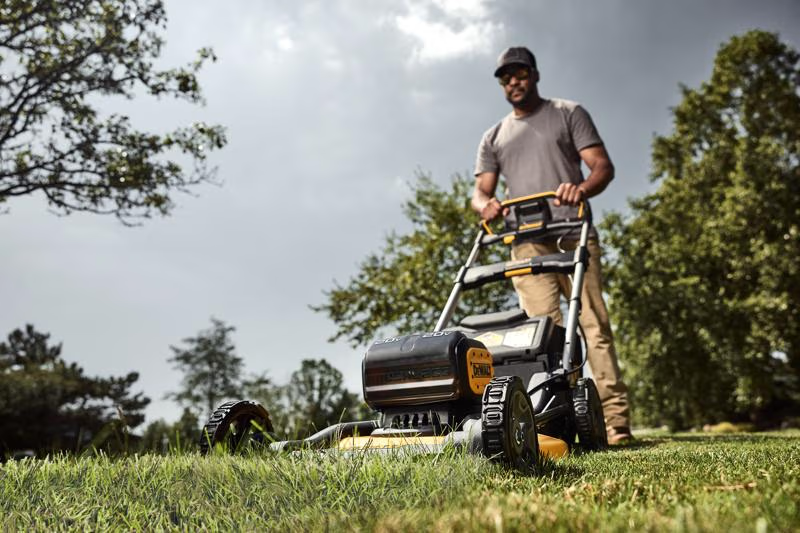

Any push lawn mower dramatically and ensures that every session produces a clean, consistent cut that keeps the lawn healthier season after season. Whether you choose a gas, battery, corded, or manual reel push mower, the investment pays back in the form of a well-maintained outdoor space, lower lawn care costs over time, and in many cases, a genuinely satisfying reason to step outside and get moving.
Overview Of Top Push Lawn Mover In 2026
| Product | Title | Features | Explore |
|---|---|---|---|
 | American 4-Blade Push Reel Lawn Mower |
| Check Price |
 | SENIX 4-Cycle Engine Push Lawn Mowers |
| Check Price |
 | Earthwise 1715-16EW Push Reel Lawn Mower |
| Check Price |
 | PowerSmart EasyCut Push Lawn Mower |
| Check Price |
 | Greenworks 40V Push Cordless Lawn Mower |
| Check Price |
Introduction to Push Lawn Mowers
A push lawn mower is a walk-behind grass cutting machine that the operator moves forward manually by pushing it across the lawn. Unlike self-propelled mowers that use an internal drive system to pull themselves forward, a push mower relies entirely on the operator’s physical effort to move across the grass. The cutting mechanism itself, whether a spinning reel blade or a motor-driven rotary blade, does all the cutting work. The operator simply guides direction and speed.
Push lawn mowers work by engaging a cutting blade or set of blades as the mower moves over the grass. In gas and electric models, an engine or motor spins a horizontal rotary blade at high speed inside a cutting deck. The suction and centrifugal force created by the spinning blade lifts the grass upright before cutting it cleanly. In reel models, a cylindrical set of helical blades rotates against a fixed bedknife to create a scissor-like cutting action.
The difference between a push mower and a self-propelled mower comes down to drive mechanics. A self-propelled mower has a transmission that sends power to the rear or front wheels, moving the machine forward without the operator pushing. This adds mechanical complexity, weight, and cost. A push mower skips all of that, keeping the design lighter and simpler.
Homeowners continue to prefer push lawn mowers for several strong reasons. They cost less to buy, require fewer repairs, store more easily, and give the operator complete control over pace and cutting direction. According to a 2024 consumer survey by Statista, over 48% of homeowners with lawns smaller than 5,000 square feet reported that they actively preferred a push mower over a self-propelled model, citing ease of storage and lower maintenance as the top reasons.
Push mowers suit a specific type of lawn owner best: someone with a flat to gently sloping yard up to about a quarter-acre, who wants a reliable tool that starts easily, stores compactly, and does not require a steep learning curve. They also suit fitness-conscious homeowners who view mowing as a form of exercise rather than a chore to minimize.
5 Best Push Lawn Mover in 2026
Choosing the best push lawn mower in 2026 depends on lawn size, grass type, and preferred power source such as gas, electric, or manual operation. Modern models offer improved cutting efficiency, better battery life, and reduced maintenance compared to older designs. The following top push lawn mowers stand out for their performance, durability, and user-friendly features across different lawn care needs.
American 4-Blade Push Reel Lawn Mower

The American Lawn Mower 1204-14 features a 14-inch cutting width, 4 steel blades, and adjustable height for precise eco-friendly cutting. It is lightweight at 19 pounds, manually operated, and uses a scissor-like reel system that keeps grass healthy and green. My experience shows it is easy to use, quiet, effective on short grass, but struggles slightly with tall or wet lawns.
expert start
What is it and its features
The American Lawn Mower Company 1204-14 14-Inch 4-Blade Push Reel Lawn Mower is a traditional reel-style mower that cuts grass using a scissor-like motion instead of spinning blades. It has a 14-inch cutting width, 4 heat-treated alloy steel blades, and adjustable cutting height from 0.5 to 1.75 inches. The mower is lightweight at around 19 pounds, which makes it easy to push and control even for beginners. It also comes with durable polymer wheels that help with smooth movement on flat lawns.
Why it matters
This product matters because it offers a clean, eco-friendly way to maintain a lawn without fuel costs or engine maintenance. The American Lawn Mower Company 1204-14 14-Inch 4-Blade Push Reel Lawn Mower also promotes healthier grass growth since it cuts rather than tears the blades of grass. This helps keep the lawn greener and reduces damage over time. It is also very low maintenance, which is ideal for users who want a simple gardening tool without mechanical complications.
My Set-Up and My Experience
Setting up the American Lawn Mower Company 1204-14 14-Inch 4-Blade Push Reel Lawn Mower was quick and simple. The assembly did not take much time, and the instructions were easy to follow. Once ready, the mower felt light in my hands, and the handle grip was comfortable. I used it on a small to medium-sized grassy area in my garden, mainly dry grass, as recommended.
My experience was mostly positive. The American Lawn Mower Company 1204-14 14-Inch 4-Blade Push Reel Lawn Mower was easy to push, and I liked how quiet it was compared to a petrol mower. I could easily hear the cutting sound, which actually helped me know when it was working properly. However, I noticed that it works best when the grass is not too long. If the grass grows beyond a certain height, I had to go over the same area more than once to get an even cut. Small sticks or debris also stopped the blade, so the lawn needs to be cleaned before use.
Performance
In terms of performance, the American Lawn Mower Company 1204-14 14-Inch 4-Blade Push Reel Lawn Mower performed well on dry, short to medium grass. It gave a clean and neat cut when used regularly. The scissor-like cutting action helped keep the grass healthy and green, which I noticed after a few uses. The mower is also easy to maneuver around corners and edges due to its lightweight design.
However, performance drops when dealing with tall or wet grass. The mower struggles in those conditions and may push the grass down instead of cutting it properly. It also requires more physical effort if the lawn is not maintained regularly. Overall, the American Lawn Mower Company 1204-14 14-Inch 4-Blade Push Reel Lawn Mower is best suited for users who mow frequently and keep their lawn in good shape.
Practical Tips
- Always mow dry grass for smoother cutting performance
- Clean the lawn from sticks and debris before use
- Mow regularly to avoid tall grass buildup
- Overlap passes slightly for an even cut
- Adjust cutting height based on grass length
expert end
pro start
| Pros | Cons |
|---|---|
| ✔️ Lightweight and easy to push | ❌ Struggles with tall or wet grass |
| ✔️ Eco-friendly with no fuel or electricity needed | ❌ Stops easily if small sticks are present |
| ✔️ Quiet operation, no noise pollution | ❌ Requires frequent mowing for best results |
| ✔️ Simple assembly and low maintenance | ❌ Not suitable for large lawns |
| ✔️ Gives a clean, scissor-like cut for healthy grass | ❌ Needs physical effort to operate continuously |
pro end
SENIX 4-Cycle Engine Push Lawn Mowers
SENIX Lawn Mower features a 144cc 4-cycle engine, 20-inch cutting deck, and 3-position height adjustment for efficient mowing performance. Lightweight push design with 7-inch wheels offers easy maneuverability, fuel efficiency, and reliable cutting on small to medium yards. In my experience, SENIX Lawn Mower starts easily, handles regular grass well, and feels simple, practical, and budget-friendly overall.
expert start
What is it and its features
The SENIX Lawn Mower, 20″ 144 cc Push Mower Gas, 4-Cycle Engine Walk-Behind Push Lawn Mower is a manually operated gas mower with a 144cc 4-cycle engine that delivers steady cutting power. It has a 20-inch cutting deck, which helps cover more grass in fewer passes, saving time during mowing.
The mower also offers a 3-position height adjustment system, allowing you to adjust grass length depending on lawn conditions. Its lightweight build and 7-inch wheels help it move easily around tight corners, fences, and uneven surfaces.
Why it matters
This matters because many homeowners need a mower that is simple but still strong enough to handle overgrown grass and small slopes. The SENIX Lawn Mower, 20″ 144 cc Push Mower Gas, 4-Cycle Engine Walk-Behind Push Lawn Mower provides a balance of power and simplicity, making it a practical choice for everyday lawn maintenance without unnecessary complexity.
My Set-Up And My Experience
Setting up the SENIX Lawn Mower, 20″ 144 cc Push Mower Gas, 4-Cycle Engine Walk-Behind Push Lawn Mower was fairly easy. The packaging was secure, and all parts were included, even oil and basic tools, which made the process more convenient. Assembly took around 30–45 minutes, and even without closely following instructions, it was straightforward to figure out. Once assembled, the mower started easily, usually on the first pull, which was impressive for a gas engine.
In my experience, the mower feels light and easy to push, even in tighter garden areas. It moves smoothly around flower beds and edges, which makes it suitable for small yards. However, one limitation I noticed is the wheel height adjustment system, which requires removing and repositioning bolts. While not difficult, it is less convenient compared to modern lever-based systems.
Performance
The SENIX Lawn Mower, 20″ 144 cc Push Mower Gas, 4-Cycle Engine Walk-Behind Push Lawn Mower performs well for its size and price range. The 144cc engine provides enough power to handle regular grass, thick patches, and even slightly overgrown areas. It does struggle a bit with very wet or extremely tall grass, but restarting is quick and easy, so interruptions are minimal.
The 20-inch cutting width is a strong advantage because it reduces mowing time by covering more area in each pass. On flat lawns and small slopes, the performance remains stable, and the wheels provide decent traction. Overall, it delivers reliable cutting power for typical home lawn care, especially for users who maintain their yard regularly.
Practical Tips
- Use fresh non-ethanol fuel for smoother engine performance
- Clean the deck after each use to avoid grass buildup
- Adjust cutting height before starting the job, not during use
- Avoid mowing very wet grass to prevent engine strain
- Check oil level regularly for longer engine life
expert end
pro start
| Pros | Cons |
|---|---|
| ✔️ Easy first-pull start in most cases | ❌ Wheel height adjustment is not quick or tool-free |
| ✔️ Lightweight and easy to push around yard | ❌ Struggles slightly with very wet or overgrown grass |
| ✔️ Strong 144cc engine for regular grass cutting | ❌ No self-propel feature for uphill comfort |
| ✔️ Wide 20-inch cutting deck saves mowing time | ❌ Can stall if grass is too long or dense |
| ✔️ Good value for small and medium yards | ❌ Assembly instructions could be clearer for beginners |
pro end
Earthwise 1715-16EW Push Reel Lawn Mower
The Earthwise 1715-16EW features seven sharp alloy steel blades with adjustable cutting heights for clean, healthy lawn maintenance performance. Its lightweight 16-inch manual design offers quiet operation, smooth maneuverability, and eco-friendly mowing without fuel, electricity, or emissions completely. I found this reel mower easy to push, extremely quiet, and excellent for maintaining healthy Bermuda grass lawns regularly.
expert start
What Is It And Its Features
The Earthwise 1715-16EW is a manual push reel lawn mower powered completely by human effort. It has seven alloy steel blades that stay sharp for a long time and provide smooth, even cuts. The 16-inch cutting width helps cover a decent area without making the mower too large or difficult to control. It also features 10-inch composite wheels that roll smoothly across the lawn and make turning easier around flower beds, trees, and garden edges.
One feature that really stands out is the adjustable cutting height from 0.5 inches to 2.5 inches. This allows you to keep your grass short and neat, especially if you have Bermuda or Zoysia grass that looks best at lower heights. The durable steel side plates and metal construction make the mower feel strong and long-lasting. I also liked the cushioned T-style handle because it made pushing the mower more comfortable during longer mowing sessions.
Another important advantage is that this mower is environmentally friendly. Since it does not use fuel, there are no emissions, no oil changes, and almost no maintenance compared to gas mowers. You simply push it and mow. This makes it a good choice for homeowners who want a low-maintenance and planet-friendly gardening tool.
Why It Matters
The Earthwise 1715-16EW matters because it gives homeowners a healthier and quieter way to maintain their lawn. Many gas-powered lawn mowers are noisy, heavy, and expensive to maintain. With this reel mower, there is no need to buy fuel, change spark plugs, or worry about engine problems. You can simply take it out of storage and start mowing immediately.
I also noticed that the grass looked fresher and greener after using this mower regularly. Reel mowers cut grass cleanly like scissors, while rotary mowers often tear the grass blades. Clean cuts help reduce stress on the lawn and improve overall grass health. This becomes very noticeable on Bermuda and fine-blade grass types where appearance matters a lot.
Another reason this mower is useful is its lightweight construction. It weighs around 22 pounds, which makes it much easier to move compared to large self-propelled mowers. Even people with less physical strength can handle it comfortably. It is also safer for families because there is no engine heat or flying debris like you often get with gas mowers.
My Set-Up And My Experience
I used the Earthwise 1715-16EW mainly on a small Bermuda grass section around my garden area. The assembly process was quick and simple, and the blades came properly adjusted from the factory. The mower felt light right away, which made pushing it across the lawn surprisingly easy. I expected manual mowing to feel tiring, but the smooth wheels and sharp blades helped reduce the effort.
During my first few uses, I noticed that this mower works best when the grass is not overly tall. If the lawn becomes too thick or overgrown, it may require multiple passes from different directions. However, for regular weekly maintenance, it performed very well. I also appreciated how quiet the mower was. I could mow early in the morning without disturbing anyone nearby.
The mower handled tight spaces better than my larger rotary mower. Moving around garden borders, trees, and flower beds felt easier because of the compact size. I also liked that there was no dust cloud, smoke, or fuel smell during mowing. After each use, I lightly cleaned the blades and applied a small amount of oil to keep everything running smoothly.
Performance
In terms of performance, the Earthwise 1715-16EW delivered a very clean and professional-looking cut. The 7-blade reel system worked especially well on Bermuda grass and other fine-bladed lawns. The mower created a neat striped appearance that reminded me of golf course-style grass. The adjustable cutting height also helped maintain the lawn exactly the way I wanted.
The lightweight design made the mower easy to push, but it also meant the mower could bounce slightly on uneven ground. On flat lawns, this was not an issue at all. The blades stayed sharp for a long time, and the cutting action remained smooth throughout the season. I never experienced clogging problems because the reel design naturally keeps the grass flowing through the blades.
One of the biggest performance benefits was the reduced maintenance. There was no engine to service, no fuel to store, and no loud startup process. The mower was always ready to use. I simply grabbed it from storage and started mowing immediately. For small lawns, this convenience was excellent and saved a lot of time.
Practical Tips
Keep the lawn trimmed regularly for the best cutting performance
Apply light oil to the blades after mowing to prevent rust
Use this mower mainly on flat and maintained lawns
Adjust the cutting height based on your grass type
Mow in different directions for a cleaner finish on thick grass
expert end
pro start
| Pros | Cons |
|---|---|
| ✔️ Quiet and eco-friendly operation | ❌ Not ideal for tall overgrown grass |
| ✔️ Lightweight and easy to push | ❌ Requires more physical effort than powered mowers |
| ✔️ Sharp 7-blade cutting system | ❌ Can bounce slightly on uneven lawns |
| ✔️ Adjustable cutting height settings | ❌ Better suited for smaller yards |
| ✔️ Low maintenance and no fuel needed | ❌ May need multiple passes on thick grass lawns |
pro end
PowerSmart EasyCut Push Lawn Mower
Powerful 144cc OHV engine, 18-inch steel deck, and 3-in-1 mulching, bagging, side discharge system deliver efficient lawn cutting performance. Six-position height adjustment, lightweight design, smooth wheels, and ergonomic handle provide comfortable maneuverability across uneven lawns and tight spaces. My experience was excellent because the mower started quickly, handled thick grass easily, stayed quiet, and delivered clean, even cutting results.
expert start
What Is It And Its Features
The PowerSmart EasyCut 18-Inch 144cc Push Gas Lawn Mower is a manual push gas mower designed for homeowners who want a simple and reliable machine for everyday mowing. It uses a 144cc OHV engine with recoil start and auto choke system, which helps the mower start quickly without too much pulling.
In my experience, it usually started on the second pull, which is much better than many older gas mowers I have used before. The 18-inch steel cutting deck feels strong and durable while still keeping the mower lightweight enough to push comfortably around the yard. The mower also includes six height adjustment settings from 1.5 inches to 3.9 inches, making it easy to cut both short and taller grass. I also noticed the mower stayed stable even on uneven ground and around tree roots.
Why It Matters
The PowerSmart EasyCut 18-Inch 144cc Push Gas Lawn Mower matters because it offers a good balance between power, size, and affordability. Many homeowners do not need a very large or expensive mower, especially if they have a city lot or medium lawn. In my opinion, this mower gives enough cutting power to handle thick grass, crab grass, and even slightly overgrown sections without stalling.
I also appreciated how safely the blade operated even at the lowest cutting height. This mower handled those areas much better. The lightweight body also makes it a practical choice for beginners, older users, or even younger family members learning how to mow. It feels manageable without sacrificing mowing performance.
My Set-Up And My Experience
The handle unfolded easily, and I did not need any special tools for assembly. The complete setup took me around 20 minutes including adding oil and fuel. Once ready, the mower started on the second pull and felt smooth right away. I tested it on different areas of my lawn including thicker grass, uneven patches, and places with roots near the surface. The mower stayed balanced and easy to control throughout the job.
What impressed me most was how lightweight and comfortable it felt while pushing. Even after mowing for a longer time, my arms did not feel overly tired. The cutting quality looked clean and even, giving the lawn a neat carpet-like appearance. I also tested both the mulching and bagging functions, and both worked properly. The rear bag was easy to remove and empty, which saved time during cleanup.
Performance
When it comes to performance, the PowerSmart EasyCut 18-Inch 144cc Push Gas Lawn Mower performed better than I expected for a mower in this price range. The 144cc engine provided enough power to handle thick grass without bogging down. I compared it mentally to an older electric mower I previously owned, and this gas mower clearly had more cutting strength and consistency. It moved through crab grass and dense patches without slowing down, which made mowing quicker and less frustrating.
The steel deck and heavy blade also helped produce a cleaner and more even cut.T he mower remained stable even on slightly uneven terrain, and the wheel design helped maintain smooth movement. Another thing I appreciated was that the mower was not excessively loud. Some gas mowers can become tiring because of engine noise, but this one stayed at a more comfortable sound level. Fuel efficiency also seemed decent for regular weekly mowing.
Practical Tips
- Check engine oil before every major mowing session.
- Use the mulching mode for healthier grass and less cleanup.
- Adjust cutting height higher for thick or wet grass.
- Clean the deck after use to prevent grass buildup.
- Tighten and inspect the rubber flap regularly for safety.
expert end
pro start
| Pros | Cons |
|---|---|
| ✔️ Lightweight and easy to push. | ❌ Rubber flap attachment feels weak. |
| ✔️ Starts quickly with minimal effort. | ❌ Not self-propelled for steep lawns. |
| ✔️ Strong cutting power for thick grass. | ❌ Small cutting width for large yards. |
| ✔️ 3-in-1 mowing options are useful. | ❌ Rear bag fills up quickly in tall grass. |
| ✔️ Quiet operation for a gas mower. | ❌ Plastic adjustment parts may wear over time. |
pro end
Greenworks 40V Push Cordless Lawn Mower
Greenworks 40V bundle includes mower, blower, trimmer with interchangeable batteries, steel deck, variable speed, turbo mode, and versatile cutting options. 20 inch mower offers 3-in-1 mulching bagging discharge, adjustable height, powerful airflow blower, pivoting trimmer head for precise edging control. Easy setup, decent battery life for small lawns, efficient trimming, but faster drain on thick grass requires extra batteries needed.
expert start
What is it & Its Features
The Greenworks 40V 20″ Cordless Lawn Mower (Push), Axial Leaf Blower (500 CFM / 120 MPH), 12″ String Trimmer with 2 Batteries (5Ah+2Ah) and Chargers is a 3-in-1 lawn care system built around a universal 40V platform. The mower has a 20-inch steel deck with a 3-in-1 cutting system, allowing mulching, side discharge, and rear bagging.
It also has a single lever height adjustment that makes it easy to choose cutting length between 35mm to 95mm. The blower delivers up to 500 CFM airflow and 120 MPH speed, with turbo mode for tougher debris.
Why It Matters
The trimmer converts into an edger and has a 90° pivoting head for flexible cutting angles. This system matters because it replaces multiple gas tools with one battery platform. For homeowners, it reduces maintenance, eliminates fuel costs, and offers a cleaner way to maintain lawns. The shared battery system also makes expansion easier if you already own Greenworks tools.
My Set-Up And My Experience
Setting up the Greenworks 40V 20″ Cordless Lawn Mower (Push), Axial Leaf Blower (500 CFM / 120 MPH), 12″ String Trimmer with 2 Batteries (5Ah+2Ah) and Chargers was simple and quick. I only had to charge the batteries, attach a few parts, and adjust the cutting height before starting. Everything felt straightforward even for a first-time user. In my daily use,
I mostly work on a small residential yard. I mow, trim edges, and use the blower to clean driveways and paths. The 5Ah battery gives decent run time, but I noticed it drains faster when grass is thick or when I use higher power settings. The 2Ah battery helps finish small tasks or final cleanup.
Performance
The performance of the Greenworks 40V 20″ Cordless Lawn Mower (Push), Axial Leaf Blower (500 CFM / 120 MPH), 12″ String Trimmer with 2 Batteries (5Ah+2Ah) and Chargers is good for regular home use but has some limits. The mower cuts cleanly and handles normal grass well, but it struggles slightly with very thick or overgrown grass. Battery life is the main factor here, as heavy use drains power quickly.
The blower is surprisingly strong for a battery unit, and the turbo mode helps clear wet leaves and debris effectively. The trimmer is also reliable, and the 2-in-1 edger function adds extra value for clean borders. However, I did notice occasional starting issues with the mower, especially related to the safety or storage switch. Sometimes it required adjusting the height or resetting the switch to get it running again.
Practical Tips
- Start mower on flat ground for smoother and easier first pull ignition
- Use non-ethanol fuel to improve engine life and reduce clogging issues
- Clean cutting deck after every use to maintain strong cutting performance
- Adjust cutting height before mowing to avoid stopping during work
- Avoid wet grass mowing to prevent engine strain and uneven cutting
expert end
pro start
| Pros | Cons |
|---|---|
| ✔️ Keep both batteries fully charged before starting full lawn work | ❌ Battery drains quickly in thick or tall grass |
| ✔️ Use higher Ah batteries for longer mowing sessions | ❌ Not suitable for very large lawns or heavy-duty use |
| ✔️ Clean mower deck after every use to improve performance | ❌ Mower may have occasional starting or switch issues |
| ✔️ Switch batteries between tools to save time during work | ❌ Runtime is limited with included smaller batteries |
| ✔️ Use blower turbo mode only when needed to save battery | ❌ Customer support response and spare parts availability can be slow |
pro end
Types of Push Lawn Mowers
Push lawn mowers come in several types, and each one is designed for specific lawn conditions, grass thickness, and user preferences. Some models focus on simplicity and eco-friendly operation, while others provide stronger cutting power for larger or tougher lawns.
Understanding the differences between manual, gas-powered, and electric push mowers helps homeowners choose equipment that matches their lawn size, terrain, and maintenance needs. Selecting the right mower type also improves cutting efficiency, lawn health, and long-term operating costs.
1. Manual Reel Push Lawn Mowers
A manual reel mower uses a cylindrical reel of five to eight helical blades that rotate as the mower is pushed forward. The spinning reel blades pass against a fixed horizontal bedknife, and this scissor-like contact cuts each grass blade cleanly. There is no engine, no battery, and no cord. The cutting action is powered entirely by the forward momentum of pushing.
Reel mowers work best on fine-blade grass varieties such as Bermuda, Kentucky Bluegrass, and Zoysia kept at a height between 1.5 and 3 inches. They perform poorly on thick, coarse grasses like St. Augustine or on grass that has grown taller than 4 inches.
Reel mowers produce a cleaner, more precise cut than rotary blades because the scissor action severs the grass blade rather than tearing it, reducing moisture loss and disease risk in the lawn.
They are the most environmentally friendly mowing option available, producing zero emissions, zero noise pollution, and requiring no fuel or electricity whatsoever.
Their primary limitation is coverage speed. A typical reel mower covers a 14-to-16-inch cutting width, making them impractical for lawns larger than about 2,000 square feet unless the operator has significant time available.
2. Gas Push Lawn Mowers
Gas-powered push mowers use a small four-stroke or two-stroke internal combustion engine to spin a rotary blade at speeds between 2,800 and 3,600 RPM (revolutions per minute). Four-stroke engines are now the standard in most residential gas mowers because they burn fuel more efficiently and produce fewer emissions than older two-stroke designs. The engine connects directly to the blade spindle, meaning power delivery is nearly instantaneous once the engine is running.
Gas push mowers typically carry engines ranging from 140cc to 190cc (cubic centimeters, which measures engine displacement and indicates power output). A 160cc engine handles average residential grass comfortably, while a 190cc engine provides the torque needed to push through thick or wet grass without bogging down.
- Gas models deliver consistent power throughout the mowing session regardless of cutting conditions, making them the strongest choice for thick, dense, or uneven grass.
- They require regular maintenance including oil changes every 25 to 50 hours of use, spark plug replacement annually, air filter cleaning, and fuel stabilizer use during off-season storage.
- Gas mowers produce exhaust emissions and noise levels typically between 85 and 95 decibels, requiring ear protection during operation.
3. Electric Push Lawn Mowers
Electric push mowers split into two categories: corded models that draw power from a standard outlet through an extension cord, and cordless battery-powered models that run on rechargeable lithium-ion battery packs.
Corded electric mowers offer unlimited runtime as long as the cord reaches. They typically run on motors drawing 10 to 13 amps of power, delivering consistent blade speed throughout the session. The main limitation is the cord itself: a 100-foot extension cord covers a lawn up to roughly 5,000 square feet when the outlet is centrally located, but cord management adds an extra layer of operational attention.
Cordless battery mowers use lithium-ion (Li-ion) packs typically rated at 40V, 56V, or 80V. Higher voltage generally translates to more torque and longer sustained power under load. A 56V battery with a 5.0Ah (amp-hour) capacity provides approximately 45 to 60 minutes of runtime on a full charge, enough to cut roughly 8,000 to 10,000 square feet of average lawn per charge.
i. Charging time for modern lithium-ion push mower batteries ranges from 30 minutes with rapid chargers to around 90 minutes with standard chargers, depending on the battery capacity and charger specifications.
ii. Cordless mowers operate at noise levels around 75 decibels, significantly quieter than gas models and suitable for early morning or neighborhood-restricted mowing windows.
iii. Battery packs degrade over charge cycles; most manufacturers rate their packs for 500 to 800 full charge cycles before capacity drops noticeably, translating to roughly 5 to 8 years of regular weekly use.

Features to Consider Before Buying
Before buying a push lawn mower, it is important to evaluate the features that directly affect cutting performance, comfort, and long-term reliability. Factors such as cutting width, engine or motor power, and blade quality determine how efficiently the mower handles different grass types and lawn sizes.
Adjustable cutting height, wheel design, and grass clipping options also play a key role in achieving a clean and even finish. Choosing the right combination of features ensures better control, reduced effort, and healthier lawn growth over time.
1. Cutting Width
Cutting width refers to the width of the strip of grass the mower cuts in a single pass, measured in inches across the cutting deck. Push mowers range from 14-inch decks on compact reel models to 21-inch decks on full-size gas and cordless electric models. A wider deck cuts more grass per pass and reduces the total number of passes needed to complete the lawn.
For lawns under 2,500 square feet, a 14-to-16-inch deck is sufficient and easier to maneuver around edges and garden beds. For lawns between 2,500 and 8,000 square feet, a 19-to-21-inch deck cuts mowing time significantly. Decks wider than 21 inches are uncommon on push mowers and generally enter the self-propelled category, where the drive system compensates for the added effort of moving a wider, heavier deck.
2. Engine Power and Motor Strength
Engine displacement in gas models (measured in cc) and motor voltage in battery models both determine how well the mower handles thick, wet, or tall grass without losing blade speed. A blade that slows down under load produces a ragged, torn cut rather than a clean slice, stressing the grass and inviting disease.
For average residential conditions, a 160cc gas engine or a 40V brushless motor performs adequately. For thick fescue, overgrown lawns, or grasses exceeding 4 inches in height, a 190cc engine or a 56V to 80V motor is the better investment. A brushless motor (an electric motor design with no physical carbon brush contacts) is preferred over brushed motors in cordless mowers because it runs cooler, lasts longer, and delivers power more efficiently.
3. Height Adjustment & Grass Clipping Options
Cutting height adjustment lets the operator raise or lower the deck to set the length at which grass is cut. Most push mowers offer cutting heights from 1 inch to 4 inches in increments of 0.25 to 0.5 inches. Single-lever height adjustment changes all four wheels simultaneously with one motion, while individual wheel adjustment requires repositioning each wheel separately but sometimes allows for finer incremental settings. Grass clippings management comes in three forms:
- Mulching chops clippings into fine particles and deposits them back into the lawn as a natural fertilizer. A mulching plug (a rubber or plastic insert that blocks the discharge chute) is required to activate this mode on most mowers.
- Bagging collects clippings in an attached fabric or plastic bag, keeping the lawn surface clean. Bags fill quickly in dense or wet grass and require frequent emptying during longer mowing sessions.
- Side discharge ejects clippings laterally out of an open chute, spreading them across the lawn. This mode handles the highest grass volume without clogging and suits overgrown lawns where large clipping volumes make bagging impractical.
Wheel size affects how smoothly the mower rolls over uneven ground. Larger rear wheels, typically 10 to 12 inches in diameter, roll over bumps and ruts more easily than smaller 7-inch wheels, reducing the physical effort of pushing on imperfect terrain. Wide tires also distribute the mower’s weight to prevent wheel ruts in soft ground after rain.
Handle design affects fatigue over a full mowing session. Foldable handles reduce storage footprint significantly, often cutting the stored length of the mower by nearly half. Adjustable-height handles let operators of different heights maintain an ergonomic pushing posture, reducing lower back strain. Foam or rubber grip padding absorbs vibration from the engine or motor and reduces hand fatigue on longer lawns.
Benefits of Using Mover
Push mowers offer a genuinely compelling set of advantages for the right user. The physical act of pushing a mower across a lawn burns approximately 300 to 400 calories per hour according to the American College of Sports Medicine (2023), making it a meaningful cardiovascular activity, particularly with a manual reel mower that adds the resistance of pushing the cutting mechanism itself.
1. Push mowers cost significantly less than riding mowers. A quality gas push mower retails between $250 and $450, while entry-level riding mowers start at $1,500 and climb quickly past $3,000 for mid-range models.
2. Maintenance is simpler and cheaper. Push mowers have fewer moving parts than self-propelled or riding models, meaning fewer components that can fail and lower annual servicing costs.
3. Storage footprint is minimal. A standard push mower with folding handles stores in a space as small as 2 feet by 2 feet, fitting easily in a small shed or garage corner.
4. Electric push mowers generate zero direct emissions, making them a responsible choice for homeowners in areas with air quality restrictions or urban environments where exhaust fumes accumulate quickly.
Push Lawn Mower vs Other Lawn Mowers
Each mower type is designed for different lawn sizes, terrains, and user needs, making the choice highly dependent on practical conditions. Understanding these differences helps homeowners select the most suitable mowing equipment for performance, comfort, and long-term value.
a. Push Lawn Mower vs Self-Propelled Lawn Mower
The most direct comparison is between a push mower and a self-propelled mower. Self-propelled models use either a front-wheel drive or rear-wheel drive transmission to move the machine forward at a controlled pace. This reduces physical effort considerably on slopes and larger lawns.
However, self-propelled mowers weigh 10 to 20 pounds more than comparable push models and cost $100 to $200 more on average. On flat lawns under a quarter-acre, the self-propelled drive system is rarely necessary, and many homeowners who buy one end up disengaging the drive and using it as a push mower anyway.
b. Push Lawn Mower vs Riding Lawn Mower
A riding mower makes economic sense when lawn size exceeds half an acre. On smaller lawns, a riding mower is difficult to maneuver around tight garden beds and trees, wastes fuel idling in turns, and requires substantial storage space.
Push mowers handle small to medium lawns more precisely and at a fraction of the total cost of ownership. Riding mowers also require blade engagement systems, steering components, transmissions, and tire maintenance that push mowers simply do not have.
c. Push Lawn Mower vs Reel Mower
Comparing a standard rotary push mower to a reel push mower highlights a trade-off between cutting power and cutting quality. Reel mowers produce the finest cut, closest to what a golf course maintains, but they cannot handle tall or thick grass.
Rotary push mowers handle nearly any residential grass type at almost any height. For manicured fine-grass lawns mowed frequently, a reel mower excels. For average residential lawns with mixed grass types or irregular mowing schedules, a rotary push mower is the practical choice.
How to Choose Best One
Selecting the right push mower begins with an honest assessment of your lawn’s size, terrain, and grass type. A flat, 3,000 square foot lawn with fine-blade grass has very different requirements than a rolling, 8,000 square foot yard filled with thick Bermuda. Work through these considerations in order:
i. Measure your lawn accurately. Lawns under 5,000 square feet are well-served by any push mower type. Lawns between 5,000 and 10,000 square feet benefit from a wider cutting deck and a more powerful motor or engine to reduce total mowing time.
ii. Assess your terrain. Slopes steeper than 15 degrees are challenging with any push mower. If your yard has significant inclines, prioritize mowers with larger rear wheels and a lower center of gravity for stability.
iii. Identify your grass type and how often you plan to mow. Fine grasses mowed weekly suit a reel mower. Coarse or mixed grasses, or lawns mowed every 10 to 14 days, need a rotary push mower with enough power to handle accumulated growth.
iv. Set a realistic budget. Quality push mowers exist at every price point. A reliable manual reel mower starts around $100. A dependable corded electric push mower costs $150 to $250. A quality gas push mower runs $280 to $450. Premium cordless models range from $400 to $600.
v. Consider storage and charging logistics. If you lack outdoor electrical access near your storage area, a gas mower avoids the need to run extension cords for charging. If you already own cordless tools from a brand like EGO, Greenworks, or Ryobi, buying a mower from that same battery platform saves money on additional battery purchases.
vi. Factor in noise sensitivity. If you live in a neighborhood with quiet hours or close neighbors, a battery mower running at 75 decibels is far preferable to a gas model at 90 decibels.
How to Use Push Mower Properly
Proper mowing technique makes a noticeable difference in the final appearance of a lawn and the health of the grass itself. Before mowing, walk the lawn to remove stones, sticks, and debris that could become dangerous projectiles when struck by a spinning blade.
Check the blade height setting and adjust it to remove no more than one-third of the grass blade height in a single session, a guideline known in turf management as the one-third rule, which prevents stress and browning of the lawn.
Mowing pattern affects the final appearance and helps prevent compaction ruts from wheel traffic. Alternate between horizontal rows, diagonal passes, and circular patterns across mowing sessions to distribute wheel pressure evenly across the lawn surface. Overlap each pass by approximately 2 to 3 inches to avoid leaving uncut strips.
- Mow when the grass is dry. Wet grass clumps under the deck, clogs the discharge chute, and produces an uneven cut because the wet blades lie flat rather than standing upright to meet the cutting blade.
- Mow during cooler parts of the day, ideally in the morning after dew has dried or in the late afternoon, to reduce heat stress on freshly cut grass.
- Never mow barefoot or in open-toed shoes. Heavy work boots or closed-toe footwear protect against blade contact in the event of a slip or loss of control on slopes.
A lawn mowed correctly with the right tool at the right frequency recovers faster, resists weeds more effectively, and requires less water and fertilizer over its lifetime.
Maintenance Guide
Proper maintenance of a push lawn mower is essential to ensure smooth operation, clean cutting performance, and long equipment life. Regular care helps prevent common issues such as dull blades, engine failure, and uneven grass cutting.
Whether it is a gas, electric, or manual model, routine inspection and cleaning keep the mower efficient and safe to use. A well-maintained push lawn mower not only improves lawn health but also reduces repair costs and extends overall durability
A. Cleaning the Mower After Every Use
Grass buildup under the cutting deck is the most common cause of reduced mowing performance and premature component wear. After every mowing session, disconnect the spark plug wire on gas models or remove the battery on electric models before cleaning. Use a stiff brush or plastic scraper to remove grass clippings from the underside of the deck. A garden hose works for rinsing if used carefully to avoid saturating electrical components or bearing assemblies.
B. Blade Maintenance
A sharp mower blade cuts grass cleanly, while a dull blade tears the grass, leaving ragged brown tips that increase moisture loss and create entry points for fungal disease. Sharpen rotary blades after every 20 to 25 hours of use, or approximately every 8 to 10 mowing sessions under normal conditions. Replace the blade entirely if it shows cracks, large nicks deeper than 1/4 inch, or significant thinning of the blade body from repeated sharpening.
To sharpen a mower blade safely: disconnect power, remove the blade by loosening the center bolt, use a metal file or bench grinder to restore the cutting edge at its original angle (typically 30 to 45 degrees), and balance the blade on a cone balancer before reinstallation to prevent vibration from an unevenly weighted blade.
C. Engine and Battery Care
Gas push mower engines require an oil change at the start of each season and again after every 50 hours of use. Use the oil grade specified in the owner’s manual, typically SAE 30 or 10W-30 depending on operating temperature. Clean or replace the air filter annually to prevent dirt from entering the engine and causing premature cylinder wear.
For battery-powered mowers, avoid storing fully depleted batteries for extended periods. Lithium-ion batteries stored at zero charge suffer accelerated capacity degradation. Store batteries at approximately 40 to 60 percent charge in a cool, dry location between 50 and 70 degrees Fahrenheit. Most manufacturers specify that batteries stored below freezing should be warmed to room temperature before charging to prevent internal cell damage.
D. Seasonal Maintenance
Before winter storage, run the gas mower until the fuel tank is empty or add a fuel stabilizer to prevent the gasoline from breaking down into a sticky residue that clogs the carburetor. Clean the entire mower thoroughly, sharpen the blade, check all bolt torques, and store in a dry area protected from freezing temperatures. Spring startup involves:
- Inspect the blade for damage and sharpen or replace it before the first mow of the season.
- Change the engine oil and replace the spark plug on gas models. A fresh spark plug costs less than $5 and prevents the most common hard-starting complaints.
- Check and clean the air filter. Replace it if it is visibly clogged or damaged.
- Inspect the wheels and axle pins for wear. Lubricate wheel axles with a light machine oil if they rotate stiffly.
- Charge battery packs fully before the first use of the season and inspect battery terminals for corrosion.
Common Problems & How To Fix
Most push mower problems have straightforward causes and solutions once you understand the machine’s basic systems.
- A mower that will not start on a gas model most commonly traces back to stale fuel, a fouled spark plug, or a dirty carburetor. Drain old fuel, replace the spark plug, and clean the carburetor with a spray carburetor cleaner if the problem persists after a fuel change.
- Uneven grass cutting typically indicates a bent or unbalanced blade, an unlevel cutting deck, or one or more wheels set to different heights. Check the blade balance and confirm all four wheel height settings match before each mowing session.
- Poor mulching performance occurs when grass is too wet, too tall, or when the mulching plug is absent or incorrectly installed. Mulching works best on dry grass under 3.5 inches tall.
- Excessive vibration during operation signals a bent blade, a loose blade bolt, or a worn crankshaft bearing. Stop the mower immediately and inspect the blade if vibration develops suddenly mid-session.
- A battery that will not charge often has a faulty charger rather than a faulty battery. Test the charger output with a multimeter if available, or try a known-good battery in the same charger to isolate the fault.
- Smoke from a gas mower can indicate burning oil from an overfilled crankcase, a damaged head gasket, or a clogged air filter starving the engine of oxygen. Check the oil level first and drain any excess before running the engine again.
Safety Tips for Push Lawn Mowers
Push mower blades rotate at speeds that can cause serious injuries in fractions of a second. Safety practices are not optional. Always wear heavy work boots, safety glasses, and hearing protection when operating any push mower. Long pants protect legs from debris ejected by the cutting blade.
On slopes, always mow across the slope horizontally rather than up and down. Mowing up and down on a slope creates a risk of the mower rolling back toward the operator if footing is lost. Keep children and pets completely out of the mowing area at all times while the mower is running. Objects including stones, wire, and toy pieces can be ejected from the discharge chute at speeds exceeding 100 mph, making the mowing zone a danger zone for everyone nearby.
*[Image suggestion: Operator mowing safely in proper footwear and safety glasses | Alt text: “Safe push lawn mower operation with correct protective gear”]*
Push Lawn Mower Accessories
Several accessories extend the capability and convenience of a push mower. A grass catcher bag, whether a fabric model clipped to the discharge chute or an integrated rear bag, keeps clippings contained and allows easy lawn debris collection for composting. Replacement blades are worth keeping on hand, particularly at the start of the mowing season when last-minute replacements are difficult to source quickly.
- A lawn mower cover protects the mower from dust, moisture, and UV damage during off-season storage, extending the life of plastic and rubber components on the deck and handle assembly.
- For corded electric mowers, a heavy-duty 12-gauge extension cord rated for outdoor use provides adequate current delivery for the mower motor without the voltage drop that causes overheating in undersized cords.
- Extra battery packs for cordless models allow continuous mowing without waiting for a recharge cycle, effectively doubling the usable runtime on larger lawns by swapping packs mid-session.
Eco-Friendly Push Lawn Mower Options
Lawn care accounts for approximately 5% of total U.S. air pollution according to the U.S. Environmental Protection Agency (EPA, 2024), primarily from gas-powered mower emissions. Shifting to a manual reel or battery-powered push mower eliminates direct emissions entirely during operation.
Manual reel mowers are the purest zero-emission option, requiring no manufactured energy input beyond the food calories the operator burns. Battery-powered mowers produce indirect emissions tied to electricity generation, but even when powered by a coal-heavy grid, a battery mower produces significantly fewer lifecycle emissions per mowing hour than a gas model.
On a grid supplied substantially by renewables, the carbon footprint of a battery push mower approaches near-zero per mowing session. The shift toward low-emission lawn care tools aligns with municipal regulations in states like California, which began phasing out the sale of new gas-powered lawn equipment in 2024.
Cost of Push Lawn Mowers
Push mower pricing falls into three distinct tiers. Budget models costing $100 to $200 include entry-level corded electric mowers and basic manual reel mowers that deliver acceptable performance on small, flat lawns.
Mid-range models priced between $200 and $400 include quality gas push mowers with 160cc to 190cc engines, 40V cordless electric models with adequate runtime, and premium reel mowers with precision-ground blades and adjustable blade clearances.
Premium push mowers priced from $400 to $600 and above represent the top tier: Honda’s HRX series, EGO’s 56V Select Cut models, and Husqvarna’s battery-powered walk-behind mowers. These machines deliver extended warranties (three to five years), superior build quality, advanced mulching systems, and in some cases self-cleaning deck systems that rinse debris automatically through a garden hose connection.
Long-term ownership costs vary significantly by type. A gas push mower averages $80 to $120 per year in fuel, oil, spark plugs, and air filters. A battery push mower costs approximately $15 to $25 per year in electricity to charge the battery, with the battery pack itself representing the primary eventual replacement cost at $80 to $150 every five to eight years. A manual reel mower’s only recurring cost is professional blade sharpening every two to three years at around $20 to $40 per service.
Best Push Lawn Mowers for Different Needs
Matching the right mower to the right use case is the final step in the selection process. The best mower is always the one that suits your specific lawn conditions, not the one with the highest price or the most features.
- Best for small lawns: A 14-inch manual reel mower such as the Fiskars StaySharp Max handles lawns under 2,000 square feet with zero operational cost after purchase and produces a beautifully precise cut on fine grass.
- Best budget push mower: The Greenworks 16-inch corded electric push mower at around $140 to $160 delivers consistent performance for small-to-medium lawns with zero maintenance beyond periodic blade checks.
- Best gas push mower: The Honda HRN216VKA with its 170cc GCV engine offers exceptional reliability, a 21-inch cutting deck, and a dual-blade MicroCut mulching system that produces finely shredded clippings for fast decomposition.
- Best cordless push mower: The EGO Power+ LM2135SP in push configuration offers an 80-minute runtime from its 56V 10.0Ah battery, a 21-inch steel deck, and a weather-resistant build rated for all-season use.
- Best lightweight model: The Sun Joe MJ401E at under 29 pounds is manageable for operators who find heavier mowers physically difficult to maneuver, making it ideal for older adults or smaller individuals.
- Best for thick grass: The Toro Recycler 60V Max with its high-torque brushless motor maintains blade speed under heavy loads better than most competing cordless models in its price range.
Conclusion
A push lawn mower is not a compromise or a beginner’s tool. It is a deliberate, well-suited choice for millions of homeowners who want an effective, affordable, and manageable way to maintain a healthy lawn. Across the reel, gas, and electric categories, modern push mowers deliver impressive cutting performance, improved ergonomics, and increasingly eco-friendly power options that align with where residential lawn care is heading in 2025 and beyond.
The key to choosing correctly is resisting the urge to overbuy. A manual reel mower serves a compact fine-grass lawn better than a 190cc gas machine. A 56V cordless push mower handles a medium suburban yard with less hassle and cost than a self-propelled model with features the operator will never use. Match the mower’s capabilities to your actual lawn conditions, budget honestly for the total cost of ownership including consumables and batteries, and commit to a basic maintenance routine that keeps the blade sharp and the machine clean.
Frequently Asked Questions (FAQs)
Are Push Lawn Mowers Hard to Use?
Push mowers are among the most straightforward outdoor power tools available. On flat ground, the effort required is comparable to a brisk walk. On moderate slopes, the effort increases, but most healthy adults manage without difficulty on slopes under 15 degrees. Reel mowers require slightly more push force than motorized models because the operator’s momentum drives the cutting mechanism.
How Long Do Push Lawn Mowers Last?
A quality gas push mower maintained properly lasts 10 to 15 years. Battery-powered models last 7 to 10 years before the motor or structural components require attention, though battery packs may need replacement earlier. Manual reel mowers are mechanically simple and can last 20 years or more with periodic blade sharpening and basic cleaning.
Can Push Mowers Cut Tall Grass?
Gas and electric rotary push mowers handle grass up to 6 to 8 inches tall at their highest deck settings, though cutting very tall grass in a single pass strains the engine and reduces cut quality. For grass taller than 6 inches, making two passes, first at maximum height then at desired finish height, produces better results and reduces engine load. Manual reel mowers should not be used on grass taller than 4 inches, as tall grass wraps around the reel and stalls the cutting mechanism.
Are Battery Push Mowers Worth It?
For lawns under 10,000 square feet, a quality 56V or 80V battery push mower delivers performance essentially equivalent to a gas mower at a lower operational cost, with far less noise and zero direct emissions. The higher upfront cost compared to budget gas models is typically recovered within three to four years through fuel and maintenance savings. For homeowners who already own tools from the same battery platform, the value proposition is even stronger.
What Size Lawn Is Best for a Push Mower?
Push mowers perform best on lawns up to about a quarter-acre, roughly 10,000 square feet. Beyond that size, the time and physical effort required make a self-propelled mower or a small riding mower a more practical choice for most users. If the terrain is also hilly, reduce that practical threshold to around 6,000 to 8,000 square feet for comfortable push mowing.