5 Best Gas Powered Lawn Mower For 2026: Types & Uses
- According to Grand View Research (2025), the global lawn mower market was valued at $9.7 billion in 2024 and is projected to grow at a 5.2% CAGR through 2030, with gas lawn mowers holding the largest share of residential and commercial sales.
- A gas lawn mower remains the gold standard for homeowners managing large lawns, thick grass, or uneven terrain where battery-powered alternatives simply cannot deliver the same sustained cutting force.
- Whether you manage a half-acre backyard or a full commercial landscaping operation, the right gas mower, properly maintained, will outperform alternatives for decades and continue to evolve with cleaner, more fuel-efficient engine technology in the years ahead.


As engine technology improves with cleaner combustion and better fuel efficiency, the case for gas mowers only strengthens among users who need reliable cutting power without compromise. Choose the right size for your lawn, maintain it on schedule, use quality fuel, and a gas lawn mower will serve every mowing season with the same performance it delivered on the first day of use.
An Overview Of Top Gas Lawn Mover
| Product | Title | Features | Explore |
|---|---|---|---|
 | SENIX 20″ Gas Lawn Mower |
| Check Price |
 | BILT HARD 20” Push Gas Lawn Mower |
| Check Price |
 | AMERISUN 21″ Gas Lawn Mower |
| Check Price |
 | PowerSmart EasyCut 18″ 144cc Gas Lawn Mowe |
| Check Price |
 | Greenworks Self-Propelled Lawn Mower |
| Check Price |
Gas lawn mowers are best suited for homeowners with lawns exceeding 1/4 acre, anyone dealing with thick or established turf, landscaping professionals requiring all-day operation, and users in rural areas where charging infrastructure is limited.
What Is a Gas Lawn Mower?
A gas lawn mower is a grass-cutting machine powered by an internal combustion engine that runs on gasoline, either as a standalone fuel or blended with oil depending on the engine type. Unlike corded or battery-electric alternatives, gas mowers carry their own power source, which means they operate anywhere far from any outlet and well beyond any battery’s range.
That fundamental advantage explains why gas mowers continue to dominate lawn care even as electric options improve. Homeowners with lawns larger than a quarter acre consistently report that gas mowers complete the job faster, handle thicker turf without bogging down, and require no waiting for a charge cycle between sessions.
The cutting torque (rotational force applied to the blade) generated by even a basic 140cc to 190cc single-cylinder gas engine exceeds what most battery systems produce, especially toward the end of a charge. For anyone managing slopes, wet grass, or dense grass varieties like Zoysia or Bermuda, that raw power difference is decisive.
The main contrast with electric mowers comes down to runtime, terrain handling, and upfront versus ongoing costs. Electric mowers win on noise and emissions; gas mowers win on power, runtime, and availability in areas without reliable electricity access. The right choice depends entirely on lawn size, terrain type, and how you weight convenience against environmental impact.
5 Best Gas Lawn Mover For 2026
Gas lawn mowers remain a popular choice for homeowners who want strong, reliable, and efficient lawn care performance. For 2026, several models stand out for their cutting power, durability, and ease of use across different yard sizes. In this guide, we highlight the 5 best gas lawn mowers that offer excellent value and performance for residential and commercial needs.
SENIX 20″ Gas Lawn Mower
Powerful 144cc 4-cycle engine and 20-inch cutting deck easily handle thick grass while improving mowing speed and efficiency. Lightweight push mower with adjustable cutting heights and smooth wheels delivers comfortable control across uneven lawns and sloped garden areas. During my experience, the mower cut overgrown grass smoothly, started reliably, and made lawn mowing faster, easier, and less tiring.
expert start
What Is It And Its Features
The SENIX 20″ Gas Lawn Mower is a gas-powered walk-behind push mower designed for small to medium-sized yards. It comes with a dependable 144cc 4-cycle engine that provides steady cutting power for regular lawn maintenance and overgrown grass.
One feature I noticed immediately was the 20-inch cutting deck, which covers more lawn area in fewer passes and saves time during mowing. The mower also includes three adjustable cutting heights, allowing you to choose between shorter or taller grass depending on the season and lawn condition.
Why It Matters
Another useful feature is the 7-inch front and rear wheels that help the mower move smoothly across uneven ground and rough patches. Even though it is gas-powered, it feels fairly lightweight for its size, so pushing it around the yard does not become too tiring.
These features matter because they make lawn care faster, easier, and less stressful, especially for homeowners who want a simple mower that can still handle thick grass and larger mowing tasks without spending too much money.
My Set-Up And My Experience
When I received the SENIX 20″ Gas Lawn Mower, the setup process was quick and easy. I had it ready to mow within about 15 minutes after opening the box. Most of the assembly was very simple, and the instructions were straightforward, although the manual itself had extremely small text that made some maintenance details harder to read.
Before the first use, I added engine oil and gasoline, then followed the starting process. At first, the mower did not start after only three primer presses as suggested in the manual, but after pressing the primer bulb more times, it started successfully and ran smoothly afterward.
My lawn had some very thick and overgrown grass areas, including patches close to knee height, and the mower handled them much better than I expected. The mower moved easily across uneven spots, and the lightweight design reduced arm strain during longer mowing sessions. I also appreciated how clean and even the final cut looked after finishing the yard.
Performance
The SENIX 20″ Gas Lawn Mower performed very well during my testing. The 144cc engine had enough power to cut through thick grass without bogging down or slowing too much. Even when mowing taller grass, the engine remained steady and reliable. The 20-inch cutting width helped me cover larger areas quickly, and I was able to mow close to half an acre on one tank of gas.
The mower also performed well on uneven terrain thanks to the wheel design, which made pushing easier than expected for a standard push mower. The adjustable cutting heights were useful because I could switch between shorter and taller grass settings depending on different parts of the yard.
One thing I strongly recommend is performing the first oil change after the initial few hours of use because the oil became very dark after early operation. Aside from the confusing manual instructions, the mower itself felt dependable and practical for regular lawn care. For the price range, the cutting power and mowing efficiency were honestly impressive.
Practical Tips
- Check engine oil before every mowing session.
- Prime the mower more than three times if it struggles to start.
- Perform the first oil change after about 5 hours of use.
- Clean grass buildup under the deck after mowing.
- Use the higher cutting setting for thick or overgrown grass.
expert end
pro start
| Pros | Cons |
|---|---|
| ✔️ Powerful 144cc engine cuts thick grass easily. | ❌ User manual text is too small. |
| ✔️ Lightweight design makes pushing comfortable. | ❌ Starting instructions can be confusing. |
| ✔️ 20-inch deck saves mowing time. | ❌ Only three cutting height options. |
| ✔️ Smooth and even cutting performance. | ❌ Primer may require extra presses to start. |
| ✔️ Easy and quick assembly process. | ❌ Side discharge only may not suit everyone. |
pro end
BILT HARD 20” Push Gas Lawn Mower
BILT HARD 20” gas lawn mower features 144cc 4-cycle OHV engine, delivering strong cutting power for medium-sized lawns efficient performance. Single-lever 8-position cutting height adjustment, 20-inch deck, and side discharge system ensure versatile mowing and consistent lawn results every time. In my experience, BILT HARD mower started first pull, felt lightweight, easy to handle, and delivered smooth reliable cutting performance.
expert start
What Is It And Its Features
The BILT HARD 20” Push Gas Lawn Mower is a gas-powered walk-behind lawn mower designed for medium-sized lawns, yards, and garden spaces. It uses a 144cc 4-stroke OHV engine that produces enough cutting power for thick grass and uneven patches. One feature I really liked was the primer button because it helped the mower start easily, especially during cold mornings.
In my experience, the engine usually started on the first or second pull, which saved time and frustration. The 20-inch cutting deck covers a decent amount of ground in one pass, making mowing faster compared to smaller push mowers. Another feature that stands out is the 8-position single-lever cutting height adjustment. Instead of adjusting every wheel separately, one lever changes all four wheels together.
Why Matters
This makes it very convenient when switching from short grass trimming to taller grass cutting. The side discharge system works well for quickly clearing clippings without clogging. I also noticed the foam-wrapped handle made longer mowing sessions more comfortable because it reduced pressure on my hands. The wheels roll smoothly, and the mower feels easy to control around corners and garden edges. .
My Set-Up And My Experience
I used the BILT HARD 20” Push Gas Lawn Mower on a medium-sized lawn with normal grass growth and a few rough areas near the garden edges. Assembly was straightforward because the hardware and tools were included in the box, and the instructions were easy to follow. I personally wanted a basic blade mower without complicated attachments, so this model fit my needs perfectly.
The mower felt lightweight enough to move around the yard without difficulty, and I liked how balanced it felt during turns. During my first use, the mower started on the first pull, which immediately gave me confidence in the engine quality. I also appreciated the right-side grass discharge because it spread clippings away from my walking path.
After several mowing sessions, the engine continued to run smoothly without noticeable power loss. The mower handled normal grass very well and produced an even cut across the lawn. I also noticed that storing the mower was simple because it does not have bulky extra components attached to it.
Performance
The BILT HARD 20” Push Gas Lawn Mower performs well for regular home lawn maintenance. The 144cc engine provides enough strength to cut through thick and slightly damp grass without struggling too much. During my testing, the blade delivered a clean and even cut, especially when the grass height was adjusted correctly.
The 20-inch deck helped finish mowing faster because it covered more area with each pass. I found the wheel movement smooth on flat surfaces, and the mower remained easy to push even after extended use. The synchronized wheel adjustment system also made height changes quick and convenient. One important thing I noticed is that this mower works best on flat or slightly uneven lawns.
It is not ideal for steep hills or slopes beyond 15 degrees because pushing it uphill becomes tiring. The side discharge system works effectively, especially for people who prefer quick mowing without emptying a grass bag. Fuel consumption also seemed reasonable for a mower in this category. Overall, the mower delivered dependable cutting performance and felt more durable than many low-cost gas mowers I have used before.
Practical Tips
- Check engine oil before every mowing session.
- Do not tilt the mower too much during cleaning.
- Use fresh gasoline for smoother engine performance.
- Adjust cutting height based on grass condition.
- Clean grass buildup under the deck regularly.
expert end
pro start
| Pros | Cons |
|---|---|
| ✔️ Powerful 144cc engine cuts thick grass easily. | ❌ No grass bagging feature included. |
| ✔️ Starts quickly with primer button system. | ❌ Not suitable for steep hills or slopes. |
| ✔️ Single lever adjusts all wheels together. | ❌ Push-only design may tire some users. |
| ✔️ Lightweight design improves maneuverability. | ❌ Side discharge can spread clippings widely. |
| ✔️ Strong 20-inch deck feels durable and sturdy. | ❌ Engine noise is louder than electric mowers. |
pro end
AMERISUN 21″ Gas Lawn Mower
AMERISUN 21″ Gas Lawn Mower features a 144cc engine, 21-inch cutting deck, and 6-position height adjustment for versatile lawn care. It includes 2-in-1 mulching and side discharge system, durable steel deck, and foldable handle for efficient and flexible mowing performance. In my experience, it runs strong, cuts thick grass easily, but some parts feel less durable with repeated long-term use.
expert start
What is it and its Features
The AMERISUN 21″ Gas Lawn Mower is a manual push lawn mower powered by a 144cc gasoline engine. It is built for home lawn care users who want strong cutting performance without relying on electricity. One of its key features is the 21-inch wide steel deck, which allows you to cover more ground in less time. The 6-position height adjustment system makes it easy to control grass length, ranging from about 1.5 inches to 3.9 inches, depending on your lawn needs.
Why It Matters
The 2-in-1 cutting system gives you the option to mulch grass back into the soil or discharge it from the side. It also comes with large rear wheels and front wheels, which help it move more easily on uneven ground. These features matter because they make lawn mowing faster, more flexible, and more suitable for different yard conditions without needing extra tools or complicated setup.
My Setup and My Experience
When I first received the AMERISUN 21″ Gas Lawn Mower, I was surprised that it arrived mostly assembled, except for the handle bar which was easy to attach. It also came with engine oil, which made the setup process simpler than expected. I replaced my old electric mower with this one, mainly because I needed more power and less dependency on extension cords.
From the beginning, the pull-start system worked fine, and after a few tries, it started smoothly every time. The handle design felt comfortable, although it is basic in design. Using it in my backyard felt easier than I expected, especially because the foldable handle helps with storage. My early experience was mostly positive, especially in terms of convenience and setup.
Performance
In terms of performance, the AMERISUN 21″ Gas Lawn Mower does a solid job for regular lawn maintenance. The 144cc engine provides enough power to cut normal grass easily and even handle slightly tall or thick grass without struggling too much. The cutting width helps reduce mowing time, which is very useful if you have a medium-sized yard.
The height adjustment lever works smoothly, allowing me to quickly switch between different grass lengths. However, I did notice that on very uneven ground, the movement can feel a bit rough, and it requires more effort to push. Also, while the engine is strong, it does produce noise and vibration, which is normal for gas mowers but still noticeable.
Practical Tips
- Always check engine oil before starting for smooth operation
- Clean grass buildup under deck after each use
- Use side discharge for tall or wet grass conditions
- Adjust cutting height before starting mowing session
- Store in a dry place to prevent rust and damage
expert end
pro start
| Pros | Cons |
|---|---|
| ✔️ Strong 144cc engine cuts thick grass easily | ❌ User manual is confusing and hard to read |
| ✔️ 20-inch cutting width saves mowing time | ❌ Primer may need extra presses to start engine |
| ✔️ Lightweight design makes pushing easier | ❌ No mulching option included |
| ✔️ Simple height adjustment for different grass levels | ❌ Can feel slightly noisy during operation |
| ✔️ Quick and easy assembly out of the box | ❌ Requires regular maintenance like all gas mowers |
pro end
PowerSmart EasyCut 144cc Gas Lawn Mower
PowerSmart EasyCut 18″ mower features 144cc OHV engine, 18-inch steel deck, side discharge, and 5-level height adjustment system. It offers auto choke starting, smooth wheel movement, durable steel build, and efficient grass cutting with minimal clogging performance. In my experience, it starts easily, handles thick grass well, and performs reliably even on uneven and large yard areas.
expert start
What is it and its features
The PowerSmart EasyCut 18″ 144cc Gas Lawn Mower is a gas-powered push mower designed for homeowners who need consistent cutting power without going for expensive riding mowers or overly advanced machines. Its 144cc engine provides steady performance, while the 18-inch steel deck ensures a durable build and clean cutting path. The auto choke system helps with easier starting, and the primer function improves cold starts, which is especially helpful in early morning mowing sessions.
One of the key features is the side discharge system, which helps release grass clippings efficiently so they do not clog under the deck. The mower also includes 8-inch rear and 7-inch front wheels with ball bearings, which improve movement on uneven ground. The 5-level height adjustment system allows cutting from 1.5 inches to 3.9 inches, making it flexible for different grass conditions.
Why it matters
This matters because many users want a mower that is simple, durable, and effective for regular yard work. The PowerSmart EasyCut 18″ 144cc Gas Lawn Mower offers exactly that balance. It is especially useful for people with medium to large yards who want strong cutting performance without complicated maintenance or expensive machinery.
My Set-Up And My Experience
Setting up the PowerSmart EasyCut 18″ 144cc Gas Lawn Mower was simple and quick. Out of the box, most parts were already included, and I only needed to unfold the handle, tighten a few bolts, and add fuel and engine oil. Once everything was in place, the mower was ready to start without any complicated steps. This made the initial setup easy even for someone using a gas mower for the first time.
In my experience, the engine started after a few pulls and felt smooth during operation. The mower was lightweight yet stable, making it easy to push on uneven ground and thick grass areas. It handled a large yard without losing power, which was impressive for regular lawn maintenance. I also noticed that basic care, like checking the blade after hitting stones, helps maintain performance and keeps it running efficiently.
Performance
The PowerSmart EasyCut 18″ 144cc Gas Lawn Mower delivers steady and reliable cutting performance. Its 144cc engine provides enough power to handle medium to thick grass without stalling, and it maintains consistent speed during use. The 18-inch cutting deck helps cover more area in each pass, making mowing faster and more efficient for medium to large lawns.
The cutting result is clean and even, and grass buildup under the deck stays minimal, which improves continuous performance during long sessions. The side discharge system helps manage heavy grass by preventing clogging, especially in overgrown areas. The mower is also fairly easy to maneuver, although uphill sections require a bit more effort. Overall, it performs as a dependable machine for regular lawn care and moderately tough conditions.
Practical Tips
- Always check engine oil before starting to ensure smooth and safe operation.
- Clean the underside of the deck regularly to avoid grass buildup.
- Sharpen or inspect the blade after hitting stones or hard objects.
- Use correct fuel mix and add stabilizer for long-term storage.
- Adjust cutting height based on grass condition for better results.
- Avoid mowing very wet grass to prevent clogging and uneven cutting.
- Let the engine cool before refueling to maintain safety.
expert end
pro start
| Pros | Cons |
|---|---|
| ✔️ Strong 144cc engine cuts thick grass easily. | ❌ Side chute feels slightly loose. |
| ✔️ Steel deck is durable and reliable. | ❌ Push effort increases on slopes. |
| ✔️ Auto choke helps easy starting. | ❌ Blade wears faster on rough ground. |
| ✔️ Lightweight and easy to move. | ❌ Rear flap can fold sometimes. |
| ✔️ Wide 20-inch cut saves time. | ❌ Not for heavy commercial use. |
pro end
Greenworks 60V Brushless Self-Propelled Lawn Mower
The Greenworks 60V 21-inch mower features brushless motor, dual batteries, 4-in-1 cutting system, and strong gas-like cutting performance efficiency. It includes self-propelled rear-wheel drive, 7 height adjustments, LED lights, and fast charging for powerful, flexible lawn maintenance operation. My experience shows easy setup, smooth handling, quiet operation, and reliable battery life with excellent cutting results across thick grass.
expert start
What is it and its features
The Greenworks 60V 21″ Brushless Self-Propelled Cordless Lawn Mower is a modern cordless mower built to replace gas-powered machines. It uses a brushless motor and a 60V lithium battery system to deliver strong cutting power while staying quiet and eco-friendly.
The mower includes 4-in-1 functionality, allowing you to mulch, bag, side discharge, or use turbo leaf pickup depending on your yard needs. It also offers 7 cutting height adjustments, which makes it suitable for different grass types and seasons.
Why it matters
What makes this mower important is its balance between power and convenience. It removes the need for fuel, oil changes, and engine maintenance while still giving gas-like performance. For homeowners who want a cleaner, quieter, and easier lawn care solution, this mower is a practical and efficient choice.
My Set-Up And My Experience
Setting up the Greenworks 60V 21″ Brushless Self-Propelled Cordless Lawn Mower was very simple and quick. Most parts were already assembled in the box, so I only had to unfold the handle, secure a few bolts, and insert the charged batteries. After that, it was ready to use. From my experience, the mower feels lightweight and smooth when moving across the lawn.
The self-propelled feature is very helpful, especially when working on slightly uneven ground or thicker patches of grass. I also noticed that it starts instantly with just a button press, which saves a lot of time compared to gas mowers. Another positive point is that it runs very quietly, so I can mow early in the morning without disturbing anyone.
Performance
The performance of the Greenworks 60V 21″ Brushless Self-Propelled Cordless Lawn Mower is impressive for a battery-powered machine. It cuts through regular and tall grass very effectively, and even slightly wet grass does not cause major issues. When the grass becomes thick or overgrown, the turbo mode gives an extra boost that helps maintain smooth cutting power.
The dual 4.0Ah batteries last long enough to handle a medium-to-large yard on a single charge, which matches or even slightly exceeds the runtime of a typical gas tank in some cases. The self-propelled system makes it easier to control speed, especially on slopes.
The mower also feels stable and balanced during operation. One of the best parts is how quiet it is compared to gas mowers, while still delivering strong cutting performance. The LED lights are useful when mowing in low light conditions, making it more flexible for different times of the day.
Practical Tips
- Charge both batteries fully before starting large mowing sessions for uninterrupted work
- Use turbo mode only on thick or tall grass to save battery life
- Adjust cutting height based on grass condition for smoother performance
- Clean the deck after each use to maintain cutting efficiency
- Store batteries in a cool, dry place to extend battery life
expert end
pro start
| Pros | Cons |
|---|---|
| ✔️ Strong 60V power handles thick and tall grass easily | ❌ Heavier than some smaller electric mowers |
| ✔️ Quiet operation makes mowing more comfortable | ❌ Battery runtime may reduce in very thick or wet grass |
| ✔️ Dual batteries provide long runtime for large yards | ❌ Full recharge still takes some time |
| ✔️ Self-propelled feature reduces physical effort | ❌ Self-propel speed may feel fast for some users |
| ✔️ LED lights help for early morning or evening mowing | ❌ Not ideal for extremely large properties beyond 3/4 acre |
pro end
Types of Gas Lawn Mowers
Gas lawn mowers are powerful tools designed to handle medium to large lawns with ease and efficiency. They offer strong cutting performance and are ideal for tougher grass conditions compared to electric models. In this guide, we will explore the different types of gas lawn mowers and how each one works.
1. Push Gas Lawn Mowers
A push mower relies entirely on the operator’s walking force to move the machine forward — the gas engine only powers the blade. These are the lightest and least expensive gas mowers, typically weighing between 60 and 80 pounds. They work well on flat lawns under half an acre and are easy to store in tight spaces. Because there is no drive system beyond the blade, maintenance is simpler and parts costs are lower over time.
2. Self-Propelled Gas Lawn Mowers
A self-propelled mower uses engine power to turn the wheels as well as the blade. The operator controls speed through a bail handle or variable-speed lever, and the machine moves forward on its own. This makes a significant difference on slopes or for anyone who finds pushing a heavy mower physically demanding. Front-wheel drive models turn easily; rear-wheel drive models grip better on inclines. Most residential users purchasing a gas mower today choose self-propelled models for the combination of power and reduced fatigue.
3. Riding Gas Lawn Mowers
A riding mower places the operator on a seat above the engine and deck, controlling direction with a steering wheel. These machines carry engines ranging from 344cc to over 540cc and cut decks spanning 30 to 54 inches wide, allowing them to cover large lawns in a fraction of the time a walk-behind mower requires. Riding mowers are the right choice for lawns exceeding one acre where walking the entire area repeatedly is impractical.
4. Zero-Turn Gas Lawn Mowers
A zero-turn mower steers using two independent lap-bar controls connected directly to the rear drive wheels, which allows each wheel to spin independently or in reverse. This design lets the machine rotate on a fixed point — hence “zero turn radius” — and navigate tightly around trees, flower beds, and obstacles without leaving uncut strips. Commercial landscapers favor zero-turn models because they cut mowing time by 25 to 40% compared to traditional riding mowers on the same property, according to Husqvarna field data (2024).
5. Commercial Gas Lawn Mowers
Commercial mowers are built for daily, all-day use on professional landscaping crews. They use heavier steel decks, larger engines (often 22 to 27 horsepower), reinforced drive systems, and commercial-grade spindles and blades designed to handle high-frequency use without rapid wear. They cost significantly more than residential models but provide a longer service life when properly maintained.
How a Gas Grass Mower Works
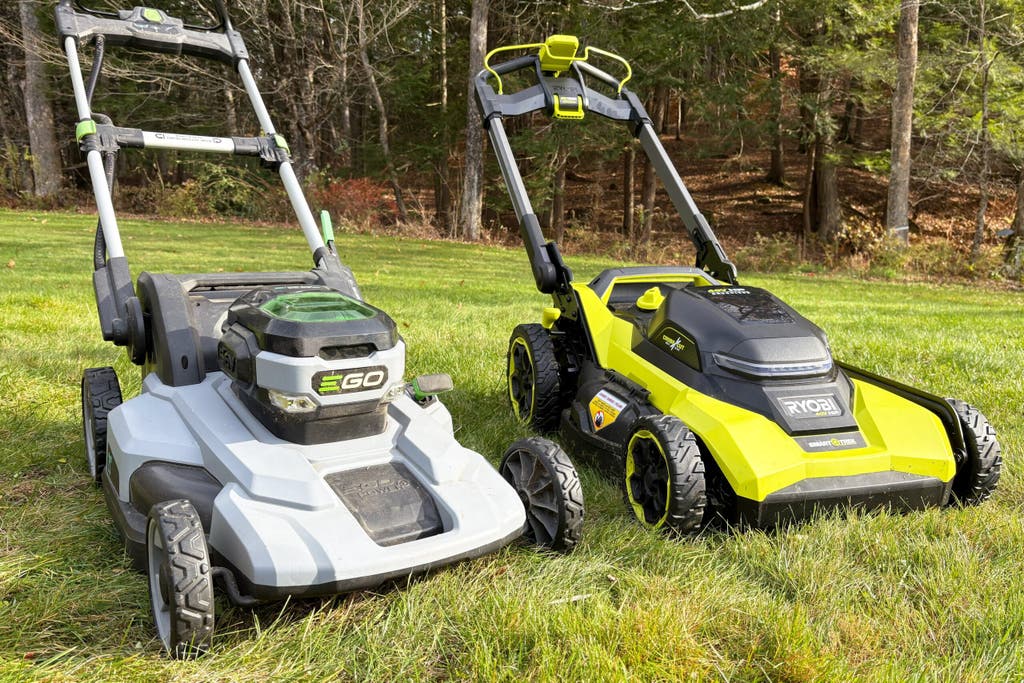
A gas lawn mower works by using a small internal combustion engine that runs on gasoline to power a rotating blade. When the engine starts, it creates energy that spins the blade underneath the mower deck, cutting grass evenly as you push or drive it forward. The cut grass is then either collected in a bag, mulched, or discharged back onto the lawn depending on the mower type.
A. Gas Engine Basics
The engine in a gas lawn mower converts the chemical energy stored in gasoline into rotational mechanical energy through a four-step cycle: intake, compression, combustion, and exhaust. During the intake stroke, the piston moves down and draws in an air-fuel mixture. The compression stroke pushes the piston back up, compressing the mixture.
A spark plug ignites the compressed mixture during the combustion (power) stroke, which drives the piston down with force. The exhaust stroke then pushes spent gases out through the exhaust valve. This cycle repeats hundreds of times per minute, producing the torque that spins the crankshaft and, through a direct connection or belt, turns the blade.
B. Fuel System Overview
Gasoline enters the engine through a carburetor, which mixes it with air in the correct ratio (typically 14.7 parts air to 1 part fuel by weight, known as the stoichiometric ratio) before delivering the mixture to the combustion chamber.
Newer engines use a primer bulb or choke to enrich the mixture during cold starts. The fuel tank on most walk-behind gas mowers holds between 0.5 and 1.0 liters of gasoline, which typically provides 45 to 90 minutes of continuous mowing depending on engine size and load.
C. Blade Operation
The blade connects directly to the crankshaft output below the engine deck. It spins at approximately 2,800 to 3,200 RPM (revolutions per minute), generating a tip speed of roughly 200 km/h at the blade’s outer edge. This tip speed is what cuts grass cleanly rather than tearing it.
A blade with the correct angle and sharpness creates an airflow vortex inside the deck housing that lifts grass upright before cutting it, which produces a cleaner, more even cut than a dull or improperly angled blade.
D. Drive System Explanation
On self-propelled models, the drive system transmits engine power to the wheels through a belt-and-pulley or hydrostatic (fluid-based) transmission. Belt-drive systems are simpler and less expensive to repair; hydrostatic systems provide smoother, more variable speed control and are found on most riding and zero-turn models. The drive is controlled by a cable connected to the handle, allowing the operator to engage and disengage propulsion without stopping the blade.
Benefits of Using for Residential Use
Gas lawn mowers offer several benefits for residential use, especially for homeowners with medium to large yards. They provide strong cutting power, making it easier to handle thick or overgrown grass without slowing down. These mowers also work without cords or battery limits, allowing you to mow freely for longer periods.
- Strong cutting power: Gas engines deliver sustained high torque that holds constant RPM even through thick, wet, or dense grass — something battery mowers struggle to maintain as charge depletes.
- Better for large lawns: A single fuel tank covers lawns of one acre or more without interruption, whereas battery mowers require a recharge or battery swap for the same area.
- No charging required: Fueling takes under two minutes, versus 30 to 90 minutes for a battery charge cycle, making gas mowers more time-efficient for frequent use.
- Longer runtime: Back-to-back mowing sessions are possible with gas mowers by simply refueling, whereas battery systems require waiting between charges.
- Handles thick grass easily: The torque output of a gas engine prevents the blade from bogging down in overgrown or wet grass that would stall a lower-powered electric motor.
What to Consider Before Buying
No single mowing solution is perfect for every user. Gas mowers carry real disadvantages that matter for certain buyers, and understanding them clearly leads to a better purchase decision.
- Noise levels: Most gas lawn mowers produce between 85 and 95 decibels at the operator’s ear — above the threshold where prolonged exposure without hearing protection causes damage. Early morning mowing in residential neighborhoods is socially and legally restricted in many municipalities.
- Fuel and maintenance costs: Annual maintenance — oil changes, spark plug replacements, air filter cleaning, blade sharpening, and occasional carburetor service — typically costs $50 to $150 per year on top of fuel. Battery mowers avoid most of these recurring expenses.
- Emissions and environmental concerns: A consumer-grade gas lawn mower running for one hour emits as much hydrocarbon pollution as driving a passenger car approximately 300 miles, according to the US Environmental Protection Agency (EPA, 2023). This matters for air quality in dense neighborhoods and for owners committed to reducing their carbon footprint.
- Heavier weight: Gas engines, fuel tanks, and drive components add weight. A self-propelled gas mower commonly weighs 70 to 100 pounds, making storage and transport more demanding than lighter battery alternatives.
Key Features to Look for in Gas Mower
Choosing the right gas mower starts with understanding which features directly affect cutting performance, ease of use, and long-term cost. Not every feature matters for every buyer — matching specifications to your actual lawn conditions prevents overspending or under-buying.
1. Engine Size and Horsepower
Engine displacement (measured in cubic centimeters, or cc) is the most reliable indicator of raw power. For a standard residential walk-behind mower, a 140cc to 190cc engine is adequate for lawns under one acre with normal grass growth. A 200cc or larger engine handles thicker turf, longer overgrown grass, or hilly terrain more confidently.
2. Cutting Width and Deck Options
Cutting width determines how many passes you need to cover the entire lawn. A 21-inch deck is the standard for residential walk-behind mowers. Riding mowers range from 30 to 54 inches. Every additional inch of cutting width reduces the total number of passes required, which saves measurable time on large properties.
3. Adjustable Cutting Height
Most gas mowers offer cutting height adjustment between 1 and 4 inches, usually in quarter-inch increments. Grass species have different optimal cutting heights — cool-season grasses like fescue prefer 3 to 4 inches, while warm-season grasses like Bermuda perform best at 1 to 2 inches. A mower with wide height range and easy single-lever adjustment handles seasonal changes without hassle.
4. Mulching, Bagging, and Side Discharge
Most modern gas mowers support three discharge modes. Mulching recycles clippings back into the lawn as a natural fertilizer. Bagging collects clippings for disposal or composting. Side discharge ejects clippings to the side, which works best on overgrown grass that would clog a mulching deck. A 3-in-1 mower gives you the flexibility to switch based on conditions.
5. Self-Propel Function, Wheel Size, and Fuel Tank Capacity
Self-propel speed range matters on hilly terrain — look for variable-speed models with at least a 0 to 4 mph range. Larger rear wheels (typically 8 to 11 inches) roll more smoothly over roots and uneven ground. A fuel tank capacity of at least 150ml provides adequate runtime for most residential sessions without a mid-mow refuel.
Gas Lawn Mower Engine Types
Gas lawn mowers generally use two main engine types: 2-stroke and 4-stroke engines. A 2-stroke engine is lighter, simpler, and delivers strong power for its size, but it requires a mix of oil and fuel and is less commonly used today due to higher emissions and fuel consumption
2-Stroke vs 4-Stroke Engines
A 2-stroke (two-cycle) engine completes the combustion cycle in two piston strokes rather than four, making it lighter and simpler. The tradeoff is that 2-stroke engines require oil mixed directly into the gasoline, produce more emissions, and wear faster under sustained use.
Most modern walk-behind gas lawn mowers use 4-stroke (four-cycle) engines, which have a separate oil reservoir, burn cleaner, and last significantly longer with proper maintenance.
OHV Engine Technology
OHV stands for Overhead Valve, a design where the intake and exhaust valves sit above the piston in the cylinder head rather than beside the piston (as in older flathead designs). OHV engines run cooler, burn fuel more efficiently, and produce more power from the same displacement than flathead engines.
Nearly all modern residential and commercial gas mowers use OHV engines, and the designation appears on the engine label. Brands like Briggs and Stratton, Honda, and Kohler have standardized OHV designs across their consumer and commercial engine lines.
When Gas Outperforms Electric
Gas mowers earn their place most decisively in specific conditions. Understanding these scenarios helps any buyer justify the investment or recognize that a battery mower might actually serve them better.
I. Large residential lawns: Any lawn exceeding half an acre benefits from a gas mower’s extended runtime and wider deck options available in gas-powered riding configurations.
II. Uneven terrain: Slopes, dips, and irregular surfaces demand consistent torque — gas engines maintain RPM under load in ways that battery motors often cannot, especially on extended inclines.
III. Thick or wet grass: Wet grass is heavy and resists cutting. Gas engines respond to throttle and maintain blade speed through conditions that cause battery mowers to decelerate noticeably.
IV. Commercial landscaping jobs: Professional crews need all-day operation with only minutes of downtime for refueling — a standard that battery systems have not yet matched for sustained commercial use.
Keeping Your Mower Performing at Its Best
Consistent maintenance is what separates a gas mower that lasts 10 to 15 years from one that fails after three seasons. Every component in a gas mower requires attention at specific intervals, and skipping any one of them accelerates wear across the entire system.
A. Oil Change Schedule and Procedure
Change engine oil after the first five hours of use on a new mower, then every 25 to 50 hours of operation or at the start of each mowing season, whichever comes first. Use the oil weight specified in the owner’s manual — most residential mowers call for SAE 30 or 10W-30 motor oil. Drain old oil warm, refill to the full mark on the dipstick, and dispose of used oil at a certified recycling center.
B. Air Filter Cleaning and Replacement
A clogged air filter starves the engine of air, which richens the fuel mixture, increases fuel consumption, reduces power, and accelerates carbon buildup in the combustion chamber. Clean foam air filters with soapy water every 25 hours. Replace paper cartridge filters at the start of each season or sooner if heavily soiled. A clean air filter alone can improve engine efficiency by 10 to 15%.
C. Spark Plug Replacement
The spark plug ignites the air-fuel mixture inside the combustion chamber. A worn or fouled plug produces a weak spark that leads to hard starting, rough running, and increased fuel consumption. Replace the spark plug every season or every 100 hours of operation. Use the gap size specified in the manual — typically 0.030 inches (0.76mm) — and verify the gap with a feeler gauge before installation.
D. Blade Sharpening
Mower blades dull after 8 to 10 hours of cutting, especially in sandy or stony soil. A dull blade tears grass rather than cutting it cleanly, leaving ragged ends that turn brown and invite fungal disease. Remove the blade, sharpen it with a metal file or bench grinder to the original bevel angle (typically 30 to 35 degrees), check that it is balanced on a blade-balancing cone before reinstalling, and torque the bolt to the specification in the manual.
E. Fuel Storage Tips and Winter Maintenance Checklist
Gasoline degrades within 30 to 60 days of purchase, forming varnish deposits that clog the carburetor’s tiny fuel passages. Before storing the mower for winter, either run the fuel tank completely dry or add a fuel stabilizer to the tank and run the engine for two minutes to distribute the treated fuel throughout the fuel system. A proper winter storage routine extends carburetor life significantly and eliminates the most common cause of spring starting failures.
- Run the engine until the fuel tank empties completely, or add fuel stabilizer and run for two minutes.
- Change the engine oil while it is still warm from the final use of the season.
- Remove the spark plug, add a teaspoon of engine oil into the cylinder, and pull the starter cord twice to coat the cylinder walls before reinstalling the plug.
- Clean the underside of the deck to remove all dried grass clippings, which trap moisture and accelerate rust.
- Store the mower in a dry, covered location with a protective cover over the engine.
Common Problems and Solutions
Most gas mower problems trace back to fuel issues, ignition failures, or mechanical wear. Diagnosing the correct cause before replacing parts saves time and money.
a. Gas Lawn Mower Won’t Start
The three most common causes of a no-start condition are stale fuel clogging the carburetor, a fouled spark plug producing no ignition, and a clogged air filter starving the engine of air. Work through these in order before assuming a more serious mechanical failure. Drain old fuel, clean or replace the carburetor if varnish is present, replace the spark plug, and clean the air filter before attempting to restart.
b. Engine Smoking, Uneven Cutting, and Pull Cord
Blue or white smoke: Indicates oil burning in the combustion chamber, usually caused by overfilling the oil reservoir or a worn piston ring. Check the oil level first — draining excess oil often resolves it immediately.
Uneven grass cutting: Usually caused by a bent or unbalanced blade, uneven tire pressure across the four wheels, or a warped deck. Inspect and replace the blade, check tire pressure, and inspect the deck for damage.
Pull cord won’t retract: The recoil spring inside the starter assembly has broken or become dislodged. Recoil starter assemblies are inexpensive and can be replaced as a unit without disassembling the starter mechanism.
Overheating engine: Blocked cooling fins around the engine cylinder trap heat. Clean all debris from around the engine block, check that the oil level is correct, and confirm that the air filter is clean.
Fuel leakage: Leaks most commonly originate from a cracked fuel line, a deteriorated carburetor gasket, or a damaged fuel petcock (the valve controlling fuel flow from the tank). Replace the specific component rather than temporary patching.
Gas Lawn Mower Safety Tips
A mower blade spinning at 3,000 RPM is capable of causing severe injury in a fraction of a second. Every gas mower operator needs consistent safety habits, not occasional caution.
- Proper protective gear: Wear steel-toed footwear, hearing protection rated at NRR 25 or higher, and safety glasses when mowing. Long pants protect legs from debris ejected at high speed.
- Safe fueling practices: Never refuel a hot engine. Allow at least two minutes for the engine to cool before adding fuel. Fill the tank away from open flames and wipe up any spilled gasoline before starting the engine.
- Blade safety: Disengage the blade and wait for it to stop completely before clearing a clog, crossing a gravel path, or adjusting the cutting height. Never reach under a running deck.
- Child and pet safety: Keep children and pets indoors or at a safe distance during mowing. Never allow children to ride as passengers on a riding mower — the ejection risk from slopes or sudden turns is severe.
- Storage precautions: Store gasoline in an approved container away from heat sources. Keep the mower in a location that children cannot access without supervision.
Gas Lawn Mower vs Electric Lawn Mower
Choosing between gas and electric comes down to how you use the mower, not which technology sounds better on paper. Both categories have matured enough to serve specific users well.
The best lawn mower is the one matched to your actual lawn — not the one with the best marketing or the strongest environmental argument.
a. Power comparison: Gas mowers produce more sustained torque under load. A 190cc gas engine generates approximately 5 to 6 ft-lbs of torque; comparable battery mowers reach 3 to 4 ft-lbs, which is sufficient for well-maintained lawns but marginal in difficult conditions.
b. Maintenance comparison: Gas mowers require oil changes, spark plug replacement, carburetor cleaning, and fuel management. Battery mowers require only blade sharpening and occasional cleaning, with battery replacement as the major long-term cost.
c. Cost comparison: A quality gas mower costs $300 to $600 for residential models; a comparable battery mower costs $400 to $800 when battery and charger are included. Annual operating costs favor battery over 5 to 7 years once fuel and maintenance savings accumulate.
d. Noise comparison: Gas mowers operate at 85 to 95 dB; battery mowers typically produce 65 to 75 dB, which is roughly half as loud perceptually. This difference matters in noise-sensitive neighborhoods.
e. Which is better for different users: Battery mowers suit lawns under half an acre with uniform turf and owners prioritizing low maintenance. Gas mowers suit large lawns, thick turf, slopes, commercial use, and any situation where all-day runtime without interruption is necessary.
Buying Guide: Making the Right Choice
A gas mower purchase done correctly lasts a decade or longer. Rushing the decision based on price alone leads to buying an underpowered or oversized machine for the specific lawn.
Choosing the Right Mower Size and Budget
Match deck width to lawn size. For lawns under half an acre, a 21-inch walk-behind is the standard choice. Half an acre to one acre benefits from a self-propelled model with a wider deck or an entry-level riding mower. Above one acre, a riding or zero-turn model with a 42-inch or larger deck makes economic sense in time saved per session.
Residential vs Commercial Use
Residential mowers are rated for 25 to 50 hours per season. Commercial mowers are built for 500 or more hours per year. Buying a residential mower for commercial use voids the warranty, accelerates wear, and leads to premature engine failure. If you mow more than three or four properties per week, a commercial-grade machine pays for itself in avoided repair costs.
Trusted Mower Brands and Key Specifications
Brands with consistently strong reliability ratings include Honda, Husqvarna, Toro, Craftsman, and Cub Cadet in the residential segment, and Scag, Ferris, and Exmark in the commercial segment. When comparing specifications, prioritize engine brand and displacement over deck material, as engine quality determines service life more than any other single factor.
Fuel Requirements for Gas Lawn Mowers
Most gas lawn mower manufacturers recommend regular unleaded gasoline with a minimum octane rating of 87 and an ethanol content no higher than 10% (E10). Higher ethanol blends — E15 or E85 — attract water, degrade rubber fuel lines and carburetor seals faster than lower blends, and can void the engine warranty on most consumer-grade mowers.
Ethanol-free fuel (sometimes marketed as recreational fuel or “rec fuel”) is the optimal choice for small engines because it resists the moisture absorption that leads to phase separation (the process where ethanol-water mixtures separate from gasoline in the tank, creating a corrosive layer at the bottom).
Ethanol-free fuel costs more per gallon but dramatically extends carburetor life and reduces starting problems after storage. Fuel stabilizers like Sta-Bil extend the usable life of stored gasoline from the standard 30 to 60 days to 12 to 24 months when added at the correct ratio.
Environmental Impact of Gas Garden Mowers
The EPA estimates that small engine equipment including gas lawn mowers contributes approximately 5% of total US air pollution, a disproportionately large share given how few hours these engines operate annually. The key pollutants are hydrocarbons (HC) and nitrogen oxides (NOx), which react in sunlight to form ground-level ozone — a significant respiratory irritant.
Engine manufacturers have responded with lower-emission carburetors, improved exhaust systems, and stricter manufacturing tolerances that reduce unburned fuel in exhaust. Proper user behavior also reduces emissions meaningfully: a well-tuned engine with a clean air filter and correctly gapped spark plug burns fuel more completely than a neglected one.
For users committed to minimizing environmental impact, using ethanol-free fuel (which reduces permeation emissions from fuel system components), keeping the engine properly tuned, and disposing of used motor oil at a certified recycling facility are the most practical steps.
Seasonal Care for Year-Round Performance
- Spring preparation: Change the engine oil, replace the spark plug, clean or replace the air filter, sharpen the blade, check tire pressure, and verify that the throttle and blade engagement cables move freely. Fill the tank with fresh fuel and start the engine before the first mow of the season to confirm everything functions correctly.
- Summer mowing tips: Check the oil level before every mowing session. Clean grass clippings from the underside of the deck after each use to prevent corrosion. Inspect the blade visually for nicks or bending after mowing in areas with stones or roots.
- Fall cleanup: Remove leaves and debris that accumulate on and under the deck after each fall mowing session. As temperatures drop, consider switching to a thinner oil grade if the manual recommends it for cold-weather operation.
- Winter storage: Follow the full winter maintenance checklist described in the maintenance section above. A mower stored correctly in autumn starts reliably in spring with minimal preparation.
Accessories That Improve Performance
The right accessories extend what a gas mower can do beyond basic cutting. Most are inexpensive and provide immediate practical value.
- Grass catchers and bagger systems: Rear-mount or side-mount grass collection bags attach to the discharge chute and collect clippings for composting or disposal, which is useful when grass is long enough that clippings would smother the turf if left behind.
- Mulching kits: An aftermarket mulching kit includes a mulching blade and a deck plug that closes the side discharge opening, forcing clippings to circulate under the deck until they are reduced to fine particles that fall between grass blades and decompose quickly.
- Replacement blades: Keeping a sharpened spare blade allows you to swap blades mid-season without a gap in mowing while the original is being sharpened. Use only OEM (original equipment manufacturer) or manufacturer-approved blades to maintain the correct balance and tip profile.
- Approved fuel cans and protective covers: A correctly spout-equipped fuel can reduces spills during refueling; a fitted weather-resistant cover keeps the engine and deck clean and dry during storage, extending the lifespan of painted and rubber components.
Conclusion
A gas lawn mower is one of the most reliable, powerful, and versatile tools available for lawn maintenance, from modest residential yards to large-scale commercial properties. Throughout this guide, the case for gas mowers has rested on concrete facts: sustained torque output, unlimited runtime, availability in configurations from basic push mowers to professional zero-turn machines, and a proven service life that makes the purchase economically sound when maintained properly.
The gas lawn mower’s primary advantages — raw power and freedom from charging infrastructure — remain unmatched in the segments that matter most to serious users. Those advantages come with real responsibilities: proper fuel management, seasonal maintenance, safe operation habits, and correct storage. Owners who follow these practices find that their investment performs consistently for a decade or longer.
Frequently Asked Questions (FAQs)
How Long Does a Gas Lawn Mower Last?
A well-maintained residential gas mower from a reputable brand typically lasts 8 to 15 years. Commercial-grade mowers with proper servicing routinely exceed 2,000 hours of engine life before requiring a major rebuild. Neglected maintenance — specifically skipped oil changes — is the primary cause of premature engine failure.
How Often Should Oil Be Changed?
Change engine oil after every 25 to 50 hours of operation, or at minimum once per mowing season before the first use. Fresh oil prevents internal engine wear and keeps internal metal surfaces protected from the acids that accumulate as oil degrades with heat and combustion byproducts.
Can Old Gas Damage the Mower?
Yes. Gasoline older than 60 days begins forming varnish and gum deposits that clog the tiny metering passages inside the carburetor. These deposits are the single leading cause of hard starting and rough running in gas mowers. Always use fresh fuel or add a stabilizer if the mower will sit unused for more than 30 days.
What Size Mower Is Best for My Lawn?
A 21-inch self-propelled gas mower handles most residential lawns up to half an acre efficiently. Lawns between half an acre and one acre benefit from a 30-inch walk-behind or small riding mower. Above one acre, a riding mower or zero-turn with a 42-inch or larger deck reduces mowing time to a practical length.
Are Gas Lawn Mowers Worth It?
For large lawns, uneven terrain, or commercial use, gas mowers remain the most cost-effective and powerful option available. For small, flat lawns in noise-sensitive neighborhoods, a battery mower may serve better. The value of a gas mower is tied directly to the conditions it faces — match the tool to the task and it is worth every dollar of purchase price and maintenance cost over its long service life.
References:
1. Sivaraman, D., & Lindner, A. S. (2004). A comparative life cycle analysis of gasoline-, battery-, and electricity-powered lawn mowers. Environmental engineering science, 21(6), 768-785.
2. Priest, M. W., Williams, D. J., & Bridgman, H. A. (2000). Emissions from in-use lawn-mowers in Australia. Atmospheric Environment, 34(4), 657-664.
3. Yvon, K., & Lorenzoni, J. L. (2006). Hydrogen-powered lawn mower: 14 years of operation. International journal of hydrogen energy, 31(12), 1763-1767.
4. Crum, M. L. (2007). Quantification Of Emissions From Lawn And Garden Equipment In Central Florida.
5. Vojtisek-Lom, M., Pechout, M., & Fenkl, M. (2014). Measurement of exhaust emissions of small gasoline engines under real-world driving conditions (No. 2014-01-2811). SAE Technical Paper.
6. Singh, M., Padhan, A., Saurabh, S., Priyesh, K., Rai, M., & Naveen, T. (2016). A Review and Comparative Analysis of Solar, Electric and Gasoline Lawnmowers: An Extensive Study. International journal of innovative science, engineering and technology, 3, 371-375.
7. RUDOLF, S. (2012). BIO GAS LAWNMOWER (Doctoral dissertation, University of Cincinnati).