Best 30 Inch Lawn Mower: Push, Riding & Zero Turn
- The global lawn mowers market reached USD 33.66 billion in 2024 and is projected to grow at a CAGR of 6.6% through 2030, according to Grand View Research, driven by homeowners demanding smarter, faster, and more precise cutting equipment.
- The 30 inch mower sits at the center of this demand, occupying the perfect middle ground between compact push mowers and full-scale riding decks.
- As battery-powered and zero-turn technologies mature, the 30 inch mower category will continue expanding as the go-to choice for productive, efficient residential and light commercial lawn care.
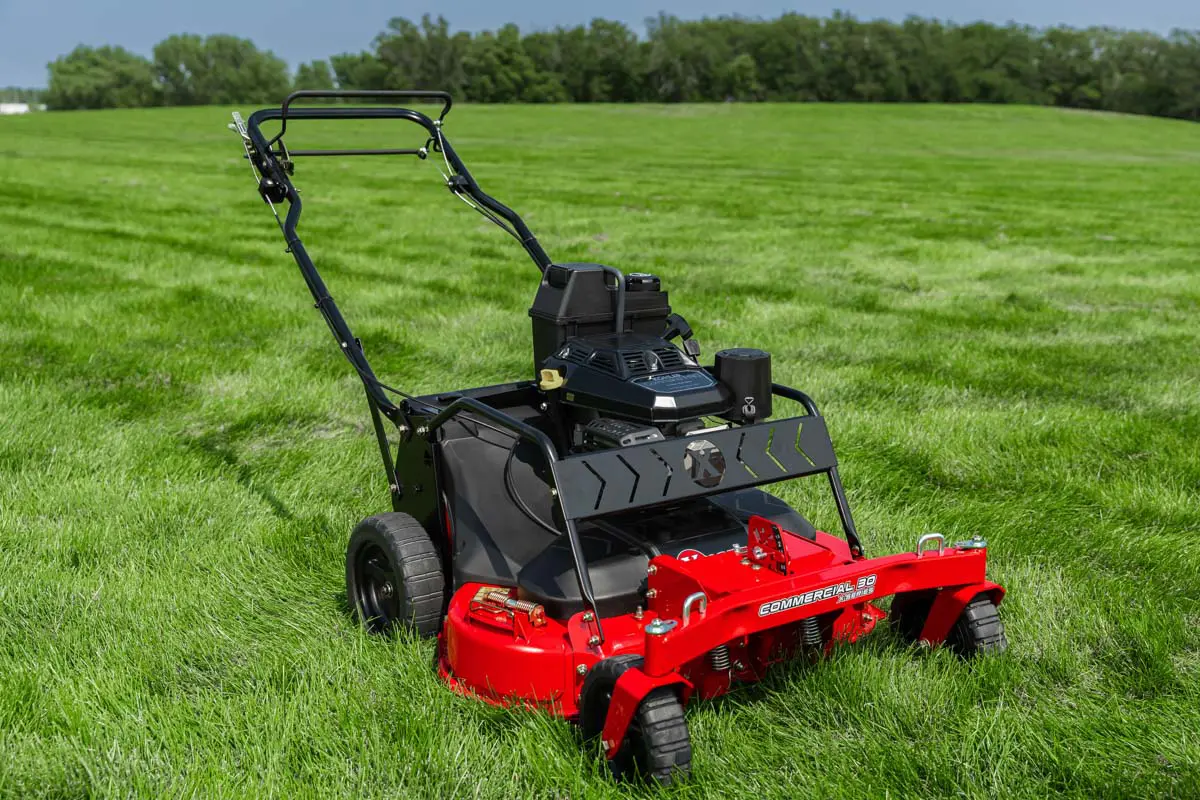

A best 30 inch lawn mower is not simply a size upgrade from a standard 21-inch push mower. It represents a category shift in how you approach lawn care, covering roughly 43% more ground per pass while remaining compact enough to navigate gates, garden beds, and tight corners.
An Overview Of Best 30” Lawn Mower For 2026
| Product | Title | Features | Explore |
|---|---|---|---|
 | EGO POWER+ Electric LM3004SP-2 30” Lawn Mower |
| Check Price |
 | EGO Power+ Electric LM3000SP Lawn Mower |
| Check Price |
 | Greenworks 60V 30′ Riding Lawn Mower |
| Check Price |
 | FenkeYiHui Remote Control 31.5” Lawn Mower |
| Check Price |
 | Greenworks 80V 30″ Cordless Riding Lawn Tractor |
| Check Price |
The 30 inch cutting deck sits between entry-level walk-behind mowers and full-sized riding tractors, making it one of the most versatile deck widths available today. Whether you are a homeowner managing half an acre or a small landscaping crew covering multiple properties, the right 30 inch lawn mower can cut your mowing time by up to 30% compared to a standard 21-inch machine.
What is a 30 Inch Mower?
A 30 inch mower refers to any lawn mower equipped with a cutting deck spanning 30 inches in width. The cutting deck is the housing unit that holds and drives the blade, determining how wide a strip of grass gets cut with each pass. A 30-inch deck covers 2.5 feet of turf in a single run, which significantly reduces the number of passes required to complete a lawn compared to narrower machines.
Ideal Lawn Sizes and Property Types
The 30 inch mower performs best on properties between 0.5 and 1.5 acres. Yards below half an acre do not benefit enough from the wider deck to justify the cost over a standard 21-inch model. Properties above 1.5 acres are better served by 42-inch or wider zero-turn or tractor decks that deliver faster coverage rates.
- Suburban homes with a quarter-acre to one-acre lawn gain the most from a 30 inch mower, reducing total mowing time without the bulk or cost of a full riding tractor.
- Properties with moderate landscaping, flower beds, or garden borders benefit from the 30-inch format because it stays maneuverable enough to cut around obstacles without constant trimmer follow-up.
- Light commercial users, such as small landscaping crews covering multiple residential stops per day, find that a self-propelled 30 inch push mower or compact zero-turn speeds up each job meaningfully.
Best 30” Garden Mower For 2026
In 2026, battery-powered lawn equipment has become more advanced, efficient, and widely used in home gardening. The focus has shifted from gas machines to cleaner and quieter electric solutions. Modern riding tractors now offer strong performance with zero emissions and lower maintenance needs. This makes lawn care easier, more comfortable, and environmentally friendly for everyday users.
EGO POWER+ Electric LM3004SP-2 30” Lawn Mower
Powerful dual motors and Peak Power technology combine two 56V batteries, delivering gas-like performance with impressive cutting torque output. Wide 30-inch Super Composite deck, dual blades, self-propelled controls, and adjustable cutting heights improve mowing efficiency significantly. My lawn mowing time decreased noticeably, while excellent battery life, smooth handling, and clean mulching made work easier.
expert start
What Is It and Its Features?
The EGO POWER+ LM3004SP-2 is a battery-powered walk-behind lawn mower built for medium to large lawns. It uses Peak Power technology that combines two 56V ARC Lithium batteries to produce up to 13.2 foot-pounds of cutting torque. The mower features dual motors and two independent blades that can operate in ECO, Normal, or Turbo modes depending on grass conditions.
Its durable 30-inch Super Composite deck resists rust, dents, and corrosion while remaining lighter than many metal decks. Other useful features include Touch Drive self-propelled control, LED headlights, nine cutting height positions from 1 to 5 inches, and 3-in-1 mowing functions for mulching, bagging, or side discharge. The mower also folds for compact storage, making it practical despite its large size.
Why It Matters?
The EGO POWER+ Electric Lawn Mower LM3004SP-2 matters because it solves many of the common frustrations associated with traditional gas-powered mowers. There is no need to deal with gasoline, oil changes, spark plugs, air filters, or pull-start engines. The mower starts instantly with the push of a button and delivers impressive cutting performance. The 30-inch cutting deck significantly reduces mowing time compared to standard 21-inch models.
For homeowners with larger lawns, this time savings can be substantial. I especially appreciated how the mower combined strong cutting power with a quieter operation, allowing me to mow early in the morning or later in the evening without creating excessive noise. The included batteries also provide excellent runtime, making it possible to complete large mowing jobs on a single charge.
My Set-Up And My Experience
I used the EGO POWER+ LM3004SP-2 on a lawn that requires regular mowing throughout the growing season. Coming from smaller cordless mowers, the first thing I noticed was how much faster this machine completed the job. The 30-inch deck covered noticeably more ground with every pass, reducing overall mowing time significantly. While the mower is heavier than many compact models, the self-propelled system makes it feel manageable during operation.
The Touch Drive controls were easy to learn and allowed me to adjust speed naturally while walking. I was also impressed by the battery performance. The mower maintained strong cutting power throughout the job without any noticeable drop in performance. Storage was another pleasant surprise because the mower folds flat and takes up less space than expected for a machine with such a wide deck.
Performance
The EGO POWER+ Electric Lawn Mower LM3004SP-2 delivers excellent cutting performance in a wide range of lawn conditions. During testing, the dual-blade system produced a clean and even cut while creating strong airflow for effective mulching. The Turbo mode was especially useful when dealing with thicker grass, while Normal mode handled routine mowing efficiently. The self-propelled function worked smoothly and reduced fatigue during longer mowing sessions.
Maneuverability was better than expected considering the mower’s width, making it easy to navigate around landscaping features and obstacles. The LED headlights also proved useful when mowing during low-light conditions. Battery life was impressive, and the mower maintained consistent power from start to finish. Overall, the performance felt very close to a high-quality gas mower while offering the convenience and simplicity of battery operation.
Practical Tips
- Fully charge both batteries before your first mowing session.
- Use ECO mode for routine maintenance cuts to extend runtime.
- Switch to Turbo mode only when cutting thick or overgrown grass.
- Clean the underside of the deck after mowing for better airflow.
- Fold the mower after use to save valuable garage space.
- Adjust cutting height according to seasonal grass growth.
- Keep spare batteries charged if maintaining very large properties.
expert end
pro start
| Pros | Cons |
|---|---|
| ✔️ Wide 30-inch deck cuts mowing time significantly. | ❌ Heavier than many standard cordless mowers. |
| ✔️ Strong dual-blade system delivers clean, consistent cuts. | ❌ Premium price may not fit every budget. |
| ✔️ Excellent battery runtime for larger lawns. | ❌ Large deck can feel bulky in very tight spaces. |
| ✔️ Self-propelled controls are comfortable and responsive. | ❌ Charging time may require planning for larger properties. |
| ✔️ No gas, oil, fumes, or engine maintenance required. | ❌ Collection bag can fill quickly during heavy growth periods. |
pro end
EGO Power+ Electric LM3000SP Lawn Mower
The EGO Power+ LM3000SP features a 30-inch super composite deck, dual motors, Peak Power technology, and gas-like cutting performance. It includes self-propel Touch Drive control, three blade speeds, nine height settings, and supports 3-in-1 mulching, bagging, side discharge. In my experience, it cuts faster, gives an even finish, and feels smoother to operate compared to smaller 21-inch EGO mowers.
expert start
What is it and its features?
The EGO Power+ Electric Lawn Mower, Self-Propelled Cordless with 30″ Super Composite Deck (LM3000SP) is a dual-motor cordless lawn mower powered by two 56V ARC Lithium batteries (sold separately). It uses Peak Power technology to combine battery output and deliver performance comparable to gas mowers. The mower features a 30-inch super composite deck, which is lightweight but very durable and resistant to rust and impact.
It offers self-propelled Touch Drive control, allowing easy speed adjustment through hand pressure and a control dial. The machine also includes three blade speed modes (ECO, Normal, Turbo), nine cutting height positions from 1 to 5 inches, and 3-in-1 functionality for mulching, bagging, or side discharge. In my use, the dual-blade system and wide deck make a clear difference in how quickly and evenly the lawn gets cut.
Why It Matters?
The EGO Power+ Electric Lawn Mower, Self-Propelled Cordless with 30″ Super Composite Deck (LM3000SP) matters because it solves the biggest problems of traditional mowing: time, effort, and maintenance. From my experience, the wider cutting deck alone cuts mowing time nearly in half compared to standard 21-inch mowers. The dual motors and improved blade system create a more even cut, which reduces the need for repeated passes.
It also removes the hassle of gas engines, such as oil changes, spark plugs, and fuel storage. The self-propel system feels smoother and more controlled, especially when working around tight garden areas or obstacles. For anyone managing a medium or large lawn, this mower brings real efficiency and comfort to regular maintenance.
My Set-Up And My Experience
Using the EGO Power+ Electric Lawn Mower, Self-Propelled Cordless with 30″ Super Composite Deck (LM3000SP) felt like a noticeable step up from previous 21-inch EGO models I owned. The mower is heavier, but that extra weight actually helps keep the cut more stable and consistent across uneven patches of grass. I also noticed that the wider deck allowed me to finish mowing in about half the usual time, with fewer overlapping passes.
The self-propel system is smoother and more refined, giving better control, especially when adjusting direction around plants and corners. Unlike older models, I did not experience sudden lock-ups when pulling the mower back. Another thing I liked is the adjustable front and rear cutting height system, which makes leveling more precise. However, the fixed handle design means it requires more storage space compared to sliding-handled mowers.
Performance
In terms of performance, the EGO Power+ Electric Lawn Mower, Self-Propelled Cordless with 30″ Super Composite Deck (LM3000SP) delivers strong and reliable cutting power. The dual blades and dual motors work together to create high lift and a clean, even finish. In my experience, even thick grass areas were handled without slowing down when using Normal or Turbo mode.
The mower also feels efficient with battery use, especially when running a single large battery for standard mowing sessions. The cutting consistency is one of its biggest strengths, as I noticed fewer uneven patches compared to smaller mowers. The wide deck reduces mowing passes, which not only saves time but also reduces physical effort. Overall, the performance feels closer to a light commercial machine rather than a residential one.
Practical Tips
- Use higher-capacity batteries (10Ah or 12Ah) for longer, uninterrupted mowing sessions
- Start in ECO mode for light grass and switch to Turbo only for thick patches
- Adjust front and rear cutting height together for a more balanced lawn finish
- Clean the underside deck after every use to maintain blade efficiency
- Store the mower folded carefully since it requires more space than smaller models
expert end
pro start
| Pros | Cons |
|---|---|
| ✔️ Wide 30-inch deck reduces mowing time significantly | ❌ Heavier design can feel bulky in tight or narrow spaces |
| ✔️ Smooth self-propel system gives better control and comfort | ❌ Requires two batteries for full performance setup |
| ✔️ Strong dual-motor cutting performance handles thick grass easily | ❌ Fixed handle takes more storage space than sliding designs |
| ✔️ Very even and consistent cutting result across the lawn | ❌ Batteries and charger are not included in the package |
| ✔️ Low maintenance with no gas, oil, or engine servicing needed | ❌ Higher price compared to standard residential mowers |
pro end
Greenworks 60V 30” Riding Lawn Mower
Greenworks 60V 30″ Riding Lawn Mower (1,25 Acre, 16 HP Gas Equivalent, 6 MPH, Tow Up to 200 lbs.) features a 30-inch steel deck, SmartCut technology, and powerful 60V brushless motor delivering gas-like cutting performance. It includes four 8,0Ah batteries, 4-in-1 cutting system, slope handling, and towing capacity up to 200 lbs with USB ports. My experience with it showed strong battery life, smooth cutting, easy handling, but minor issues with side chute durability and setup.
expert start
What is it and its Features?
The Greenworks 60V 30″ Riding Lawn Mower (1.25 Acre, 16 HP Gas Equivalent, 6 MPH, Tow Up to 200 lbs.) is a battery-powered riding mower with a 30-inch heavy-duty steel cutting deck and a 4-in-1 cutting system. It runs on four 8.0Ah batteries that provide strong runtime and can cover up to 1.25 acres depending on grass conditions. The brushless motor gives it a gas-like power equivalent of around 16 HP and maintains consistent blade speed even in thicker grass.
It includes SmartCut technology that automatically adjusts power based on grass density. The mower can reach speeds up to 6 MPH, handles slopes up to 15 degrees, and even supports towing up to 200 lbs. It also comes with useful features like USB charging ports, a cup holder, and a comfortable operator seat, making it practical for longer mowing sessions.
Why It Matters
The Greenworks 60V 30″ Riding Lawn Mower (1.25 Acre, 16 HP Gas Equivalent, 6 MPH, Tow Up to 200 lbs.) matters because it offers a real alternative to noisy, high-maintenance gas mowers. For many homeowners, maintaining a gas mower means dealing with fuel, oil changes, and engine problems.
This mower removes those issues completely and replaces them with a cleaner, quieter system. It is also better for the environment since it produces no direct emissions during use. For medium-sized yards, it provides a good balance between power and convenience. The shared battery system across other Greenworks tools also adds long-term value, especially for users who already own compatible equipment.
My Set-Up and My Experience
My experience with the Greenworks 60V 30″ Riding Lawn Mower (1.25 Acre, 16 HP Gas Equivalent, 6 MPH, Tow Up to 200 lbs.) started with delivery, which came in a heavy metal crate on pallets. The packaging was very secure, but it was difficult to remove, and I needed help getting it safely onto the ground. Assembly was fairly simple overall, but a few small parts were missing, which forced me to visit a hardware store to complete the setup.
That was a bit disappointing for such an expensive machine. Once assembled, the mower was easy to drive through garden gates and felt compact enough for tight spaces. On the first use, it took a little time to get comfortable with the controls, but it quickly became easy to handle. I also noticed that even after mowing a small yard and doing extra cleanup work, the battery level remained very high, which impressed me.
Performance
In terms of performance, the Greenworks 60V 30″ Riding Lawn Mower (1.25 Acre, 16 HP Gas Equivalent, 6 MPH, Tow Up to 200 lbs.) delivered strong and consistent results. The cutting quality was clean and even across most of the lawn, and it handled slightly uneven ground without scalping the grass. The SmartCut system adjusted well in thicker patches, keeping blade speed steady.
It also performed well on mild slopes and stayed stable during turns. The ride speed felt comfortable, and after a few uses, steering became smooth and predictable. Battery performance was another strong point, as it lasted longer than expected for a 1/4 acre lawn with extra usage. The only weak point was the side discharge chute, which sometimes dragged on uneven areas or came loose near dips or edges.
Practical Tips
- Check all small parts carefully during delivery before starting assembly
- Keep lawn relatively even to avoid side chute issues
- Fully charge batteries before first full mowing session
- Practice driving slowly in open space to learn controls
- Clean deck after each use for better cutting performance
expert end
pro start
| Pros | Cons |
|---|---|
| ✔️ Long battery life suitable for small and medium lawns | ❌ Side discharge chute may drag on uneven ground |
| ✔️ Quiet operation with very low noise compared to gas mowers | ❌ Heavy crate makes unboxing and setup difficult |
| ✔️ Clean and even grass cutting in most conditions | ❌ Some small parts may be missing in packaging |
| ✔️ Easy handling after short learning time | ❌ Plastic components feel less durable in some areas |
| ✔️ Useful extras like USB ports and towing capability | ❌ Not ideal for very large lawns beyond recommended range |
pro end
FenkeYiHui Remote Control 31.5” Lawn Mower
FenkeYiHui 18HP Remote Control Lawn Mower delivers powerful 452cc engine performance with 31,5-inch cutting deck for fast large area mowing. This mower features remote control operation, 45-degree climbing ability, dual brushless motors, and adjustable cutting height for tough terrain handling. My experience with FenkeYiHui 18HP Remote Control Lawn Mower showed strong build quality, easy control, and reliable performance on slopes.
expert start
What Is It and Its Features?
The FenkeYiHui 18HP Remote Control Lawn Mower is an automatic fuel-powered mower designed for demanding mowing tasks. It features a commercial-grade 452cc engine combined with a 1600W brushless motor system that delivers strong cutting performance. The 31.5-inch cutting deck allows it to cover large areas quickly, while the tracked design provides excellent grip on uneven ground.
One of its most impressive features is the remote-control system with a working range of up to 1,640 feet, allowing the operator to control the mower from a safe location. The machine can climb slopes up to 45 degrees, perform zero-turn movements, and adjust cutting height remotely from 1.2 to 5 inches. It also includes protective safety chains, a reinforced engine shell, spare parts, and a complete maintenance kit.
Why It Matters?
Mowing steep hills, rough fields, and hard-to-reach areas can be tiring and sometimes dangerous with traditional lawn mowers. The FenkeYiHui 18HP Remote Control Lawn Mower helps solve these problems by allowing the user to stay away from hazards while maintaining full control of the machine.
Its powerful engine and tracked system make it suitable for locations where ordinary mowers may struggle for traction. The wide cutting deck increases productivity by reducing mowing time, making it useful for large gardens, farms, orchards, and commercial properties. The remote-control functionality also reduces operator fatigue because there is no need to walk behind the mower for long periods.
My Set-Up And My Experience
When I first received the mower, I was impressed by how solid and well-built it felt. The machine arrived with useful accessories including spare blades, a belt, batteries for the remote, and maintenance tools. Since assembly was not required, I was able to prepare it for operation quickly. During my first few uses, I tested it on uneven grass, thick vegetation, and sloped ground.
The remote control was responsive and easy to learn after a short adjustment period. I particularly appreciated being able to mow difficult areas without standing directly near the machine. The build quality gave me confidence, and every component felt designed for long-term durability. I also found the customer support team helpful and responsive whenever I had questions about operation and maintenance.
Performance
The FenkeYiHui 18HP Remote Control Lawn Mower performs very well in demanding conditions. The 452cc engine provides plenty of power for cutting dense grass and light brush without noticeable slowing. The dual brushless motors contribute to smooth movement and efficient operation across different terrains. What impressed me most was the mower’s ability to climb steep slopes while maintaining traction and stability. The tracked design helps prevent slipping and gives excellent control even on uneven surfaces.
The zero-turn capability makes maneuvering around obstacles easier than expected for a machine of this size. The remote height adjustment is also very convenient because it allows quick changes without stopping work. The emergency auto-stop feature adds extra confidence, especially when operating at longer distances. Overall, the mower combines power, safety, and efficiency in a way that makes large mowing jobs much easier to manage.
Practical Tips
- Read the remote-control instructions carefully before first use.
- Start on open ground to become familiar with steering controls.
- Keep the safety chains clean and free from debris buildup.
- Check blade sharpness regularly for the best cutting results.
- Use lower speeds when working on very steep slopes.
- Inspect tracks after each mowing session for wear or damage.
- Keep the remote batteries fully charged before long jobs.
- Clean grass buildup under the deck after each use.
expert end
pro start
| Pros | Cons |
|---|---|
| ✔️ Powerful 18HP engine handles thick grass easily. | ❌ Heavier than traditional residential mowers. |
| ✔️ Remote control improves safety and convenience. | ❌ Requires time to learn remote operation. |
| ✔️ Excellent climbing ability on steep slopes. | ❌ Large size may limit storage options. |
| ✔️ Wide cutting deck covers large areas quickly. | ❌ Fuel-powered engine requires regular maintenance. |
| ✔️ Strong construction with durable protective features. | ❌ Premium price may not suit casual users. |
pro end
Greenworks 80V 30″ Cordless Riding Lawn Tractor
The Greenworks 80V 30-inch riding tractor uses a brushless motor, four batteries, and 4-in-1 cutting deck versatility. It offers cordless operation, adjustable cutting height, LED headlights, and maintenance-free design for efficient medium-sized lawn mowing performance. My experience shows smooth operation, easy setup, quiet running, and reliable cutting power for regular home lawn maintenance use.
expert start
What is it and its features?
The Greenworks 80V 30″ Cordless Riding Lawn Tractor, (4) 6.0Ah Batteries and 600W Charger is a battery-operated riding mower built with an 80V brushless motor that delivers strong torque for cutting grass efficiently. One of its main highlights is the complete battery kit, which includes four 6.0Ah batteries and a 600W charger, allowing longer runtime and flexible charging options. In my experience, the Greenworks 80V 30″ Cordless Riding Lawn Tractor stands out because it supports up to 1.5 acres depending on lawn conditions.
It has a 30-inch stamped steel deck that helps it move easily in tighter garden spaces while still covering enough width for faster mowing. The 4-in-1 cutting system allows mulching, side discharge, rear bagging (bagger sold separately), and washing through a deck wash port. The adjustable cutting height from 1.5 to 4.5 inches gives good control over lawn finish. It also includes LED headlights, a high-back seat, and simple ergonomic controls, making it comfortable for longer mowing sessions.
Why It Matters?
The Greenworks 80V 30″ Cordless Riding Lawn Tractor, (4) 6.0Ah Batteries and 600W Charger matters because it changes the way lawn maintenance is done for many homeowners. In my experience, the Greenworks 80V 30″ Cordless Riding Lawn Tractor removes the common problems of gas mowers like engine noise, fuel cost, smoke, and regular maintenance. This makes it a more convenient option for people who want a cleaner and easier lawn care routine. It is especially useful for users who are tired of handling oil changes, spark plugs, and fuel storage.
The electric system also makes it environmentally friendlier since it produces zero emissions during use. Another important point is its compatibility with the Greenworks 80V tool ecosystem, meaning the batteries can work with over 75 other tools, which adds long-term value. For homeowners who want a balance of power, comfort, and low maintenance, the Greenworks 80V 30″ Cordless Riding Lawn Tractor offers a practical and modern solution.
My Set-Up And My Experience
Setting up the Greenworks 80V 30″ Cordless Riding Lawn Tractor, (4) 6.0Ah Batteries and 600W Charger was straightforward and did not take much time. In my experience, the Greenworks 80V 30″ Cordless Riding Lawn Tractor arrived mostly assembled, and I only needed to charge the batteries and check basic controls before starting. The inclusion of four batteries made the setup more flexible because I could rotate them while mowing and charging.
The seat was comfortable, and the control layout felt easy to understand even for a first-time user. I liked the cup holder and simple height adjustment system, which made it feel user-friendly. Once everything was ready, the tractor started instantly with a push-button system, which felt much easier compared to pulling a cord or starting a gas engine. Overall, the setup experience was smooth and beginner-friendly.
Performance
The Greenworks 80V 30″ Cordless Riding Lawn Tractor, (4) 6.0Ah Batteries and 600W Charger performs strongly for a battery-powered machine in its category. In my experience, the Greenworks 80V 30″ Cordless Riding Lawn Tractor delivers smooth acceleration and consistent cutting power, especially on flat and moderately uneven lawns. The 80V brushless motor provides good torque, allowing it to handle thick grass without slowing down too much. The 30-inch deck is efficient for medium-sized yards, making mowing quicker compared to smaller push mowers.
Battery life is decent, and with four batteries included, I could complete a full mowing session without interruption. The ride is quiet, which makes it comfortable to use even in residential areas without disturbing neighbors. The LED headlights are helpful when mowing in early morning or late evening. However, like most electric machines, very thick or wet grass can reduce efficiency slightly. Still, overall performance is stable, clean, and reliable for regular lawn maintenance.
Practical Tips
- Keep all four batteries charged and rotate them during mowing for uninterrupted performance
- Always mow dry grass for smoother cutting and better battery efficiency
- Adjust cutting height before starting to avoid stopping mid-mow
- Clean the 30-inch deck after every use using the wash port to prevent grass buildup
- Store batteries indoors in a cool, dry place to maintain long-term battery health
expert end
pro start
| Pros | Cons |
|---|---|
| ✔️ Strong 80V motor gives smooth and reliable cutting performance on medium lawns | ❌ Battery charging can take time if all four batteries are fully drained |
| ✔️ Comes with four batteries, allowing longer runtime and flexible charging cycles | ❌ Not ideal for very large or rough uneven properties |
| ✔️ Quiet operation makes mowing comfortable and neighbor-friendly | ❌ Bagger system is not included and must be purchased separately |
| ✔️ No gas, oil, or engine maintenance required for daily use | ❌ Performance slightly reduces in very thick or wet grass |
| ✔️ Comfortable seat and LED lights improve long mowing sessions | ❌ Heavier build makes manual movement difficult when not powered |
pro end
Key Differences from Smaller & Larger Mower Decks
The 30-inch deck is unique because it fits on both walk-behind and riding chassis. This means you get the same cutting width whether you choose a push format or prefer to ride. The blade configuration also differs: a 30-inch single-blade deck sweeps a clean arc, while larger decks typically use dual or triple blades to achieve even coverage across the wider path.
A 21-inch deck is standard for small lawns up to 0.25 acres. Moving to a 30 inch deck increases cutting coverage per pass by approximately 43%, which translates directly into fewer laps around the yard. A 42-inch or 48-inch riding deck, on the other hand, covers far more ground per pass but requires a riding platform, higher cost, and more storage space.
Benefits of 30-Inch Cutting Width
Wider is not always better in lawn care. A 30-inch deck offers a precise balance between coverage speed and handling agility. Tighter turning radius on push models and compact zero-turn 30-inch machines allows the operator to navigate around trees, posts, and garden edges that would require multiple passes or trimmer use with a larger deck.
- Each mowing pass covers 30 inches of turf, meaning fewer turns and reverse passes to complete a rectangular lawn compared to a 21-inch model.
- Most 30-inch push mowers weigh between 90 and 130 pounds, making them heavier than compact models but still manageable on sloped terrain without the tipping risks of full riding equipment.
- Self-propelled versions reduce physical effort on inclines, allowing consistent forward speed regardless of grade.
Types of 30 Inch Lawn Mowers
Three primary machine types carry a 30-inch deck: push walk-behind mowers, riding lawn mowers, and zero-turn mowers. Each type serves a different operator need based on lawn size, terrain, budget, and desired speed. Understanding the mechanical and operational differences between them prevents expensive mismatch purchases.
1. 30 Inch Push Mower
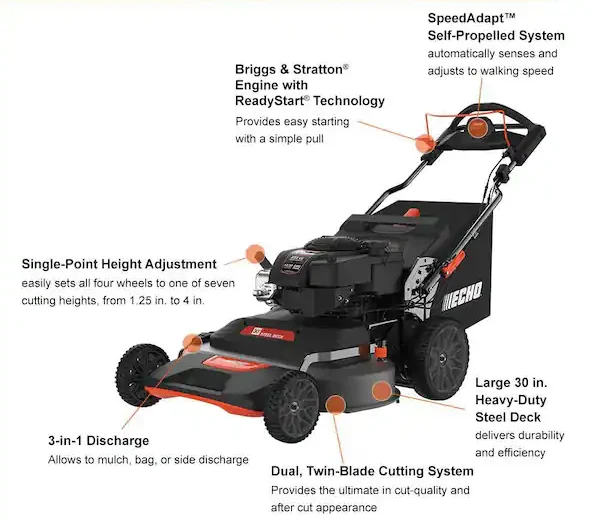
The 30 inch push mower is a walk-behind unit where the operator either manually pushes the machine or engages a self-propulsion system. Self-propelled operation means the rear wheels are driven by a belt-and-gear mechanism connected to the engine or motor, pulling the mower forward at a set speed while the operator guides the direction.
Manual operation vs self-propelled options: Manual push models are lighter, simpler, and cost less, but demand physical effort especially on inclines. Self-propelled models add 10 to 20 pounds but reduce fatigue significantly on lawns with elevation changes. Most current 30-inch push mowers sold in 2025 include variable-speed self-propulsion, letting the operator dial between 0 and 4 mph forward speed.
Pros, limitations, and best use cases:
- 30 inch push mowers are ideal for yards under 0.75 acres where a riding machine would feel oversized and expensive.
- They fit through most standard 36-inch side gates, meaning you can transport the mower from front to back yard without disassembly.
- Gas-powered versions typically run a 163cc to 223cc overhead valve (OHV) engine, providing enough torque to cut through thick, damp grass without bogging down.
- The primary limitation is operator fatigue on large lawns over 1 acre, where a riding format becomes more practical for time and comfort reasons.
2. 30 Inch Riding Grass Mower
A 30 inch riding lawn mower places the operator on a seat above the deck, using a steering wheel or lap bars to guide direction. The engine drives both the cutting blade and the drive wheels, eliminating physical walking effort entirely. Riding mowers in the 30-inch class are typically compact models, smaller than full-size lawn tractors but faster and more comfortable than any push format.
Comfort, speed, and productivity advantages: A riding format allows mowing sessions of 2 to 4 hours without fatigue, making it practical for lawns above 1 acre. Ground speed on compact 30-inch riding mowers typically ranges from 3.5 to 6 mph in forward gear, completing a one-acre lawn in roughly 45 to 60 minutes depending on obstacle density.
When riding mowers make more sense than push mowers:
- When the lawn exceeds 0.75 acres, a riding format cuts total mowing time by 40 to 50% compared to a push model, according to time-study data from landscaping equipment manufacturers.
- Operators with physical limitations that prevent sustained walking benefit directly from the seated riding format.
- Lawns that also require attachment use, such as bagging, mulching, or aerating, are better suited to riding platforms because of their higher engine output and attachment compatibility.
3. 30 Inch Zero Turn Mower
A 30 inch zero turn mower uses independent hydrostatic transmissions on each rear wheel, controlled by two lap bars rather than a steering wheel. Hydrostatic transmission (a drive system using pressurized fluid to generate wheel rotation) allows each rear wheel to spin at different speeds or in opposite directions. The result is a true zero-inch turning radius, meaning the machine pivots on its own footprint.
Turning radius advantage and lawn shaping benefits: Zero-turn capability eliminates the three-point turnaround required by conventional riding tractors. Each row end becomes a pivot, not a wide arc, reducing overlap and uncut strips. This precision is particularly valuable around trees, fence posts, flower beds, and irregular lawn borders where extra passes would otherwise be needed.
Suitable terrain and professional use cases:
- Flat to gently sloped terrain suits zero-turn mowers best, as steep grades above 15 degrees reduce rear-wheel traction and steering control with lap-bar systems.
- Light commercial landscapers covering 5 to 15 residential stops per day use compact 30-inch zero-turn mowers to reduce per-property time without needing a trailer-mounted full-size commercial unit.
- Properties with dense landscaping features, such as multiple trees, garden borders, or decorative beds, benefit most from zero-turn maneuverability at the 30-inch deck width.
Performance Comparison of 30 Inch Mower Types
Comparing the three 30-inch mower types fairly requires looking at efficiency, power source performance, cutting quality, and time investment across different yard sizes. No single type wins across all categories, but each has a clear domain where it outperforms the others.
1. Push vs Riding vs Zero Turn Efficiency
A 30 inch push mower on a half-acre lawn takes approximately 35 to 45 minutes at a comfortable walking pace. The same lawn with a compact 30-inch riding mower takes 20 to 30 minutes. A 30-inch zero-turn mower reduces that further to 15 to 22 minutes due to faster ground speed and eliminated wasted turns. As reported by user data from Tractorbynet forums, experienced zero-turn operators routinely shave 20 to 30 minutes off mowing sessions compared to equivalent riding tractor times on the same property.
Tractor-style riding mowers operate at roughly half the speed of zero-turn units, as confirmed by Homes and Gardens equipment comparisons published in 2024. This speed difference is compounded by turning inefficiency, as standard riding mowers require a wider arc at each row end, leaving uncut strips that require additional passes.
2. Fuel vs Battery-Powered Performance Differences
Gas-powered 30-inch mowers use single-cylinder OHV engines rated between 163cc and 223cc. These engines deliver consistent torque through heavy, wet, or overgrown grass without throttle drops. Battery-powered models, typically running on 40V to 80V lithium-ion platforms, deliver equivalent cutting torque under normal conditions but can slow in thick grass as battery state drops below 20%.
- Gas models cost less upfront (typically $350 to $800 for push, $1,200 to $2,500 for riding) but require annual oil changes, air filter replacements, and fuel stabilizer treatment for storage.
- Battery-electric models cost more upfront but eliminate fuel costs, reduce noise by 15 to 20 decibels compared to gas equivalents, and require no fuel system maintenance.
- Run time on a single charge for battery-powered 30-inch push mowers averages 45 to 60 minutes, covering approximately 0.5 to 0.75 acres per charge depending on grass density.
3. Cutting Quality and Lawn Finish Comparison
Cutting quality depends on blade tip speed (BTS), which is the speed at which the outer edge of the blade travels. Most 30-inch mowers maintain a BTS between 18,000 and 19,000 feet per minute, which is the accepted standard for a clean, tear-free grass cut. Below 17,000 FPM, blades tend to shred rather than slice, leaving brown-tipped grass that invites disease.
Zero-turn models using high-lift blade designs generate additional airflow beneath the deck, standing grass upright before the blade contacts it. This produces a cleaner, more uniform cut finish compared to standard flat blades used on entry-level push models. Mulching blade configurations on 30-inch push mowers recirculate clippings back into the deck for multiple cuts, returning finely chopped organic matter to the turf surface, which reduces the need for synthetic nitrogen fertilizer by an estimated 25% annually.
4. Time-Saving Analysis for Different Yard Sizes
The time advantage of a 30-inch deck over a 21-inch deck grows proportionally with lawn size. On a 0.25-acre lawn, the difference is approximately 10 minutes. On a 1-acre lawn, a 30-inch mower saves 25 to 35 minutes per session compared to a 21-inch machine running the same pass pattern. At 26 mowing sessions per season (a typical Northern US schedule), that equals 10 to 15 hours of recovered time annually.
Buying Guide for Best 30 Inch Mower
Choosing the right 30 inch mower requires evaluating several technical and practical factors beyond deck width. Engine power, deck construction, cutting height range, transmission type, and storage footprint all determine whether a mower will deliver satisfactory long-term performance on your specific property.
1. Engine Power and Deck Build Quality
For a 30-inch gas push mower, an engine displacement of at least 190cc provides adequate torque for thick or damp grass without constant bogging. Riding and zero-turn versions in the 30-inch class typically use engines between 344cc and 500cc, supporting both blade drive and wheel drive simultaneously. The deck should be fabricated from stamped steel at minimum 12-gauge thickness or cast aluminum for residential models, with welded reinforcement at high-stress points around the blade spindle housing.
2. Cutting Height Adjustment Systems
A quality 30-inch mower provides a cutting height range from 1 inch to at least 4.5 inches. Single-lever adjustment (where one handle simultaneously raises or lowers all four deck wheels) saves time compared to four-corner individual adjustment, which requires manually repositioning each wheel bracket separately. For cool-season grasses like Fescue or Bluegrass, a cutting height of 3 to 4 inches is recommended. Warm-season grasses like Bermuda and Zoysia perform best at 1 to 2 inches, requiring a mower with reliably accurate low-height settings.
3. Transmission Types (Manual, Automatic, Hydrostatic)
Three transmission options appear across the 30-inch riding and zero-turn market. Manual transmission (gear-shift) requires the operator to stop and manually select a gear for speed change.
Automatic or belt-drive transmission uses a variable-speed pulley system driven by the engine belt to adjust speed without stopping. Hydrostatic transmission (HST) uses pressurized hydraulic fluid to deliver smooth, stepless speed control from zero to full speed with a single foot pedal or hand lever, offering the most responsive and fatigue-free operation.
- Manual transmissions cost the least but create inconvenient stop-and-shift routines around obstacles.
- Automatic belt-drive transmissions suit general residential mowing and are standard on most mid-price 30-inch riding models.
- Hydrostatic transmissions are the preferred choice for zero-turn mowers and premium riding models because they allow real-time speed adjustment without interrupting cutting momentum.
4. Storage Size and Maneuverability Considerations
A 30-inch push mower has a footprint of roughly 60 by 22 inches when handles are folded down, fitting most standard single-car garage wall storage setups. Riding and zero-turn units in the 30-inch class typically measure 66 to 78 inches in length, requiring dedicated garage or shed space of at least 6 by 7 feet.
Before purchasing a riding model, measure your storage space and your narrowest access point, whether a shed door or garden gate, to confirm the unit will pass through without obstacle.
Budget Planning and Long-Term Value
A 30 inch push mower in the self-propelled gas category costs between $500 and $900 at retail. Battery-powered push models range from $400 to $700 depending on voltage and battery capacity included in the kit.
The right 30 inch mower is not the most expensive or the most powerful, it is the one precisely matched to your lawn’s size, shape, and the physical demands you are willing or able to meet each mowing session.
Compact riding mowers with a 30-inch deck start around $1,500 and reach $3,000 for hydrostatic models with bagging and mulching kits. Zero-turn mowers in the 30-inch class run from $2,000 to $4,500 for residential-grade units.
- A well-maintained gas push mower lasts 8 to 12 years with annual service, giving a per-year cost well below the initial purchase price when amortized across its lifespan.
- Electric and battery models have fewer service requirements, reducing annual maintenance costs by an estimated $80 to $120 compared to gas counterparts.
- Buying a riding mower with a compatible attachment system (bagger, mulcher, spreader) adds long-term value by consolidating multiple lawn care tasks under one machine platform.
30 Inch Riding Mower for Sale
When searching for a 30 inch riding mower for sale, the market splits between new dealer inventory, online retail platforms, and used equipment from private sellers or auction sites. Each channel has distinct advantages and risks that directly affect the value you receive per dollar spent.
New vs Used Riding Mower Considerations
A new 30-inch riding mower comes with a manufacturer’s warranty typically spanning 2 to 3 years on the frame and 1 to 2 years on the engine and drivetrain. This warranty coverage is the strongest argument for buying new, especially for first-time riding mower owners who may encounter mechanical issues during the adjustment period. Used models cost 30 to 50% less than new retail price but carry no warranty unless a certified pre-owned program from a dealer applies.
What to Check Before Buying
When evaluating a used 30 inch riding mower for sale, the engine hour meter is the most critical data point. Residential riding mowers used 1 to 2 hours per week accumulate 50 to 100 engine hours per season. A machine with fewer than 250 hours typically has significant service life remaining. Above 500 hours, budget for potential belt, blade spindle, and deck wear replacement costs.
- Start the engine cold and listen for unusual knocking or smoke, which indicates internal wear or improper oil maintenance history.
- Inspect the cutting deck for warping, deep rust spots, or cracked welds that compromise structural integrity during operation.
- Test the blade engagement by activating the PTO (Power Take-Off) switch and confirming the blades engage smoothly without belt slip or unusual vibration.
- Check tire pressure and tread wear, as uneven tire inflation causes uneven deck height and poor cutting quality on flat ground.
- Confirm the safety interlock system works: sitting off the seat with the blade engaged should stop the engine within 2 to 3 seconds.
Best Places to Find Reliable Deals Online and Offline
New 30-inch riding mowers are available through brand dealerships (Toro, Husqvarna, Cub Cadet, Ariens), national hardware retailers like Home Depot and Lowe’s, and direct online sales through manufacturer websites. Seasonal sales in October and November regularly discount current-year riding mower inventory by 10 to 20% as retailers prepare for model-year changeovers.
- Facebook Marketplace and Craigslist provide the largest volume of used residential riding mowers, often priced 30 to 50% below new equivalent models.
- Local equipment dealers frequently sell certified pre-owned units that have passed an inspection checklist and carry a short warranty period, offering a middle ground between new and private-sale risk.
- Government surplus and estate auctions occasionally list barely-used commercial lawn equipment at below-retail prices, though inspection before bidding is essential.
Maintenance Tips for 30 Inch Lawn Mowers
A properly maintained 30 inch lawn mower performs consistently across its entire lifespan and avoids the most common causes of premature failure. Maintenance intervals differ between gas and electric platforms, but the core principles of blade care, engine service, and storage preparation apply to all types.
Blade Sharpening and Deck Cleaning Routine
Mower blades should be sharpened every 25 hours of use or at least twice per mowing season, as recommended by equipment service guides published by Lowe’s and LawnStarter in 2026. Dull blades shred grass rather than cutting it cleanly, leaving brown-tipped turf that creates entry points for fungal disease. Sharpening should maintain the factory bevel angle of 30 to 45 degrees, which balances cutting sharpness with edge retention during contact with hard debris.
Deck cleaning prevents grass clipping buildup that promotes rust and reduces airflow beneath the housing. After each use, spray the underside with water using a deck wash port if available, or tilt the mower and remove buildup manually. Allow the deck to dry before storage to prevent corrosion, particularly in humid climates where surface rust can develop within 48 hours on unpainted steel surfaces.
Engine Care and Seasonal Servicing
Gas-powered 30-inch mowers require an oil change every 50 hours of use or once per season, whichever occurs first. A push mower holds 15 to 18 ounces of oil, while a riding mower engine holds 48 to 64 ounces.
Use SAE 30 weight oil for warm temperatures above 40 degrees Fahrenheit, or 10W-30 for variable temperature environments. Replace the air filter annually and the spark plug at the start of each season to maintain clean combustion and reliable starting.
- Fuel stabilizer added to the gas tank before storage prevents ethanol-blended fuel from degrading into a varnish that clogs carburetor jets over the winter months.
- Drive belt inspection should occur at the start of each season, checking for cracking, glazing, or stretching that reduces blade drive efficiency.
- Spindle bearing lubrication (applying grease to the blade hub bearings) is recommended every 25 hours during active seasons to prevent excessive heat buildup and premature spindle failure.
Battery Care for Electric Models
Lithium-ion batteries used in electric 30-inch mowers perform best when stored between 40% and 80% charge rather than at full or empty states. Storing at 100% charge for months accelerates cell degradation. Most modern battery-powered mowers include a storage mode or charge maintenance feature in the charging system that holds the battery at an optimal resting state automatically.
Operating in extreme temperatures affects battery performance measurably. At temperatures below 40 degrees Fahrenheit, lithium-ion cells deliver 15 to 20% less usable capacity than at room temperature. Allowing the battery to warm to room temperature before a mowing session in cold weather preserves run time and reduces charge cycle stress on the cells.
Storage Tips for Long-Term Durability
End-of-season storage prepares the mower for months of inactivity without compromising mechanical condition. For gas models, run the engine until the carburetor is dry or add fuel stabilizer and run it briefly to distribute treated fuel through the system. Coat exposed metal surfaces on the deck underside with a light spray lubricant to prevent rust formation during storage.
- Store the mower in a dry, covered space with ambient temperature above freezing to prevent condensation from forming inside the engine crankcase.
- Disconnect battery terminals on riding and zero-turn models to prevent parasitic drain from the electrical system over extended storage periods.
- Place the deck on flat ground or use deck stands to avoid prolonged pressure on tires, which can cause flat spots that create vibration during the first mowing session of the new season.
Common Problems and Troubleshooting
Even well-maintained 30-inch mowers develop operational issues over time. Most problems fall into three categories: uneven cutting, starting failures, and mechanical wear on belts, blades, or drive systems. Identifying the root cause early prevents minor issues from escalating into expensive repairs.
Uneven Cutting Issues and Fixes
Uneven cutting, where one side of the deck leaves taller grass than the other, results from four primary causes: unequal tire pressure, a bent blade, an out-of-level deck, or a damaged blade spindle bearing. The fastest diagnostic step is checking tire pressure first, since even a 2 to 3 PSI difference between opposite tires tilts the deck and changes the effective cutting height on each side.
- Check and equalize tire pressure to manufacturer specifications, typically 10 to 14 PSI for riding mowers and zero-turn rear tires.
- Inspect the blade visually with the engine off for any bend, nick, or missing section that disrupts its aerodynamic cutting sweep.
- Level the deck using the manufacturer’s deck leveling procedure, typically measuring from the blade tip to the ground at four reference points and adjusting the deck hangers or chains until all measurements are equal within a quarter-inch.
- Check spindle bearing play by hand-rocking each blade individually with the engine off. Any lateral movement in a spindle bearing indicates wear that requires replacement.

Starting Problems in Riding and Push Mowers
Starting problems on gas-powered 30-inch mowers are most commonly caused by a fouled spark plug, stale fuel, a clogged air filter, or a disengaged safety interlock. The safety interlock system (a circuit that prevents engine start unless the operator is seated and the blade is disengaged on riding models) is frequently the overlooked cause, particularly on used machines where switch contacts may have corroded.
- Replace the spark plug first when diagnosing a no-start condition, as a fresh plug costs $3 to $8 and eliminates the most common cause immediately.
- Drain and replace old fuel if the machine has sat unused for more than 30 days without stabilizer treatment, as ethanol-blended gasoline degrades into a varnish that prevents carburetor flow.
- Check the safety seat switch and blade engagement switch for continuity using a basic multimeter, replacing any switch that shows an open circuit when activated.
Belt, Blade, and Motor Wear Issues
Drive belts on riding and self-propelled 30-inch mowers typically last 3 to 5 seasons under normal use before cracking or stretching beyond their functional range. A slipping belt causes blade speed reduction (evidenced by rough cut quality even on properly sharpened blades) and intermittent self-propulsion dropout. Belt replacement is a straightforward DIY task on most models costing $15 to $40 in parts and 30 to 60 minutes in labor.
Blade wear progresses gradually. A blade that has been sharpened more than 6 to 8 times across its life becomes too thin for safe operation due to metal removal at each sharpening. At that stage, replacement is the correct action. New replacement blades for 30-inch mowers cost $20 to $45 per blade depending on the manufacturer and blade type (mulching, high-lift, or standard discharge).
Best Use Cases for 30 Lawn Mower
The practical application of a 30 lawn mower varies considerably depending on property type, terrain character, and operator requirements. Matching the machine to the use case produces better performance, lower maintenance demands, and longer equipment life.
Residential Lawns and Suburban Homes
A 30-inch push mower is the optimal residential choice for suburban properties between 0.25 and 0.75 acres with standard rectangular or moderately irregular lawn shapes. The wider deck reduces total mowing sessions per season compared to narrower equipment while remaining easy to store in a standard garage. Self-propelled models handle typical suburban slope gradients of 5 to 15 degrees without requiring excessive push effort from the operator.
For the solo landscaper or small crew operator, a compact 30-inch zero-turn mower closes the gap between residential push mower efficiency and full commercial equipment cost, delivering professional-grade cut quality on a homeowner-friendly budget.
For suburban properties above 0.75 acres, a compact 30-inch riding mower offers the comfort and time savings that justify the higher purchase price. A one-acre suburban property mowed weekly across a 26-session season represents over 40 hours of operator time annually on a push mower. Shifting to a riding format cuts that to approximately 22 to 26 hours, a meaningful return on the investment difference.

Light Commercial Landscaping Use
Small landscaping operations covering 5 to 15 residential properties per day benefit from 30-inch push or zero-turn mowers as their primary cutting tool. A 30-inch zero-turn mower in the hands of an experienced operator can complete a standard 0.5-acre residential stop in 18 to 25 minutes, including perimeter passes and obstacle navigation, making it viable as a one-machine solution for small crew operations.
Sloped vs Flat Terrain Suitability
Terrain type directly influences which 30-inch format performs safely. Push and self-propelled models handle slopes up to 20 degrees (approximately a 36% grade) safely when operated across the slope rather than up and down. Riding and zero-turn models are generally rated for slopes up to 15 degrees (27% grade), as steeper angles shift the center of gravity and create rollover risk on seated platforms.
- Flat terrain maximizes zero-turn efficiency, where straight-line speed and quick pivot turns dominate performance.
- Gently rolling terrain suits self-propelled push mowers that maintain constant forward speed regardless of incline, with variable-speed drives compensating for grade changes automatically.
- Steep or irregular terrain above 20 degrees is better served by a dedicated walk-behind self-propelled model with rear-wheel drive and low center of gravity, rather than any riding platform.
Is a 30 Inch Mower Worth It?
The decision to purchase a 30 inch mower ultimately depends on the realistic match between the machine’s capabilities and the actual demands of your property, schedule, and physical capacity. Paying for a riding platform you do not need wastes money and storage space. Sticking with a 21-inch push mower on a one-acre lawn wastes time every single week. The 30 inch mower earns its value when the fit is correct.
Who Should Buy a 30 Push Mower vs Riding Mower
A 30 push mower is the right choice for operators managing lawns between 0.25 and 0.75 acres who are physically capable of walking during mowing sessions and prefer a lower purchase price with simpler storage requirements. Self-propelled gas or battery models handle this category with excellent performance and low annual service demands.

A 30-inch riding mower makes clear sense when the lawn exceeds 0.75 acres, when the operator has physical limitations that make prolonged walking impractical, or when the property requires frequent attachment use like bagging or spreading. The additional cost of a riding platform pays back through time savings and reduced physical strain across multiple seasons.
Cost vs Performance Summary
- 30 inch gas push mower: $500 to $900, covers 0.25 to 0.75 acres efficiently, best for budget-conscious buyers with small to medium lawns.
- 30 inch battery push mower: $400 to $700, same coverage as gas with lower running costs and no fuel system maintenance, best for eco-conscious buyers near charging infrastructure.
- 30 inch compact riding mower: $1,500 to $3,000, covers 0.75 to 2 acres comfortably, best for medium-large residential properties prioritizing comfort and time savings.
- 30 inch zero-turn mower: $2,000 to $4,500, covers 0.5 to 2 acres with maximum speed and precision, best for properties with dense landscaping features or light commercial use.
Conclusion
Choosing a 30 inch mower is one of the most practical investments a homeowner or light-commercial operator can make for a medium-sized property. The 30-inch cutting width delivers a measurable time reduction over standard 21-inch equipment while staying compact enough to remain practical in residential storage and navigation conditions. For lawns between 0.5 and 1.5 acres, no other single deck size offers the same balance of coverage speed, maneuverability, cost, and availability across push, riding, and zero-turn formats.
Frequently Asked Questions (FAQs)
Can a 30 inch mower handle wet grass safely?
Wet conditions affect performance, safety, and blade clogging on a 30-inch deck in ways that go beyond blade sharpness and grass type selection.
What brand makes the best 30 inch push mower in 2026?
No specific brand names, model numbers, or manufacturer comparisons appear, leaving a major commercial search intent gap for buyers researching specific products.
How wide does a gate need to be to fit a 30 inch mower through?
Gate clearance is mentioned in passing but a specific minimum gate width measurement needed for safe passage is never given.
Can a 30 inch riding mower tow a trailer or cart?
Towing capacity and attachment versatility for riding models are not discussed at all, despite being a common buyer question before purchase.
How long does a 30 inch mower battery last over its full lifespan in charge cycles?
Per-session run time and storage charge levels are covered but total battery cycle life and when a replacement pack should be budgeted for are not addressed.
Is mulching or bagging better with a 30 inch deck?
Mulching is briefly mentioned in the context of nitrogen return but a direct comparison of mulching vs. bagging discharge performance on a 30-inch machine is never made.
What oil type does a 30 inch riding mower engine require?
Oil change intervals for push mowers are noted but oil specifications specific to riding mower engines in the 30-inch class are not addressed separately.