5 Best Garden Hose Cart 2026: Features, Selection & Care
- The global cart hose reels market was valued at USD 450 million in 2025, according to Intel Market Research, and is forecast to reach USD 650 million by 2034.
- A garden hose cart is a wheeled frame that carries a hose reel, so one person can move, unwind and store the hose alone.
- A 100 ft hose with a 5/8 inch bore holds about 1.6 gallons of water, roughly 13 lb. A garden hose cart carries that load on wheels instead of your arms and back.
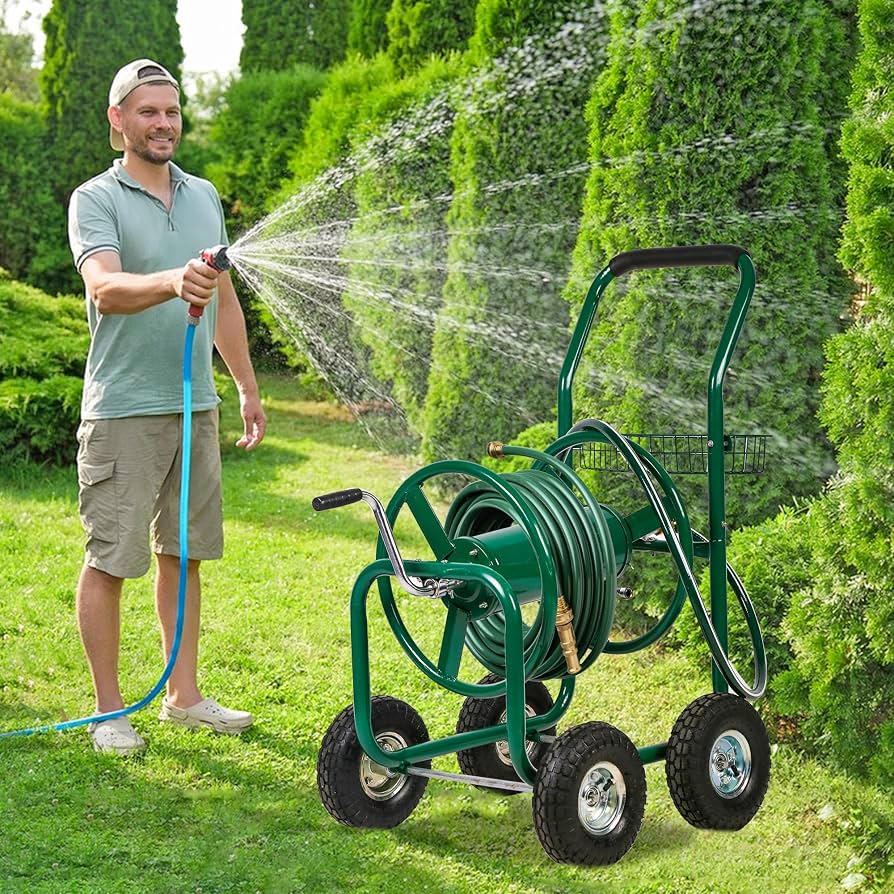

A garden hose cart combines a reel, frame, wheels and handle to store, move and deploy a hose without kinks or strain. Capacity, wheel design, frame material and connection quality decide performance, and each must match garden size and terrain.
An Overview Of 5 Top Garden Hose Cart For 2026
| Product | Title | Features | Explore |
|---|---|---|---|
 | Giraffe Tools Garden Hose Cart |
| Check Price |
 | VEVOR Water Garden Hose Cart |
| Check Price |
 | GOFORWILD 200Ft Reel Garden Hose Cart |
| Check Price |
 | Giraffe Tools 200Ft Garden Hose Cart Reel |
| Check Price |
 | VEVOR 175Ft Reel Garden Hose Cart |
| Check Price |
Regular cleaning, careful winding and proper winter drainage extend service life. As gardeners and growers demand tidier, faster watering, the hose cart is becoming a standard outdoor tool.
What Is Garden Hose Cart and Core Components
A garden hose cart is a mobile hose storage unit that joins a reel (a rotating drum that the hose winds around) to a wheeled frame and a handle. One person can pull it to a flower bed, unroll the length they need and wind it back without lifting the hose. The reel handles storage, the wheels handle transport, and the handle gives you control over both.
Most carts look similar at a glance, but quality shows in the details. A steel or aluminum frame carries the weight of the drum and the water inside the hose. Wheels decide how the cart behaves on lawn, gravel or concrete. The connection at the tap and at the hose end decides whether the whole setup stays dry.
- The reel stores the coiled hose and turns by hand crank or spring.
- The frame holds the reel and carries its weight.
- The wheels let the cart roll across lawn, soil and paths.
- The handle lets you push, pull and tilt the cart.
- The hose connection joins the tap, the reel and the hose without leaks.
- A storage basket or tray, where fitted, carries nozzles and gloves.
Main Parts of a Hose Cart
The reel is the core part. It stores the coiled hose and turns by hand crank or spring. The frame holds the reel and spreads its weight across the wheels. Wheels range from small hard rollers to large air-filled tires, and the handle lets you push, pull or tilt the cart depending on the layout.
The hose connection joins the tap, the reel and the hose through a swivel (a rotating joint that lets water pass into a turning drum). Many carts add a basket or tray for nozzles, gloves and connectors, which keeps small accessories with the hose instead of scattered across the shed.
Garden Hose Cart vs. Hose Reel vs. Hose Holder
A garden hose cart reel is only the drum, usually bolted to a wall or set on a fixed stand. It stores the hose well but stays beside its tap. A hose holder is even simpler, a bracket or hanger that supports a loose coil and offers no help with winding.
A cart adds wheels and a handle to the reel, which makes the whole system portable. That difference matters most in gardens where the tap sits far from the beds, because the cart travels to the work instead of forcing the hose to stretch back to a fixed point.
5 Best Top Garden Hose Cart Reels In 2026
The 5 Best Top Garden Hose Cart Reels in 2026 can make hose handling easier, cleaner, and more convenient, helping you spend less time fighting your hose and more time enjoying your garden.
Giraffe Tools Garden Hose Reel Cart
250-foot capacity, sturdy metal frame, four solid wheels, and brass fittings provide durable, convenient hose storage for larger gardens. Automatic hose guide winds the hose evenly, while the non-slip crank handle and storage basket improve everyday gardening convenience. I found the cart stable and easy to move, while its hose guide reduced tangles during regular watering and cleanup tasks.
expert start
What Is It and Its Features?
The Giraffe Tools Garden Hose Cart is a wheeled hose storage system designed to hold up to 250 feet of 5/8-inch garden hose. It has a sturdy metal frame with a weather-resistant coating and solid brass fittings for better durability. The four solid wheels make it easier to move around the garden, while the automatic hose guide helps wind the hose evenly onto the reel.
I also liked the non-slip crank handle because it made winding more comfortable. The cart includes a storage basket for keeping small gardening and irrigation tools nearby. Its dimensions are approximately 35.33 x 21.97 x 37.67 inches, and the cart weighs around 39.8 pounds.
Why It Matters?
The Giraffe Tools Garden Hose Cart matters because a long hose can quickly become difficult to manage when it is left on the ground. Its large capacity gives me enough room to store a long 5/8-inch hose while keeping the garden area cleaner and more organized.
The four solid wheels and hose guide also make everyday watering easier. I found that moving the cart between different areas reduced the need to carry or drag the hose by hand. The brass fittings add durability and help provide a secure connection during regular outdoor use.
My Set-Up And My Experience
I set up the Giraffe Tools Garden Hose Cart in my garden and connected my 5/8-inch hose to the reel. The hose guide was already installed, which made the initial setup quicker. During use, I liked being able to move the cart around instead of carrying a loose hose.
The crank handle was comfortable to operate, and the guide helped keep the hose more evenly arranged on the reel. The storage basket was also useful for keeping small watering accessories and gardening items close by.
Performance
The Giraffe Tools Garden Hose Cart performed well during regular watering and hose management tasks. Its four solid wheels provided smooth movement on my garden surfaces, while the sturdy metal frame felt stable during use.
The automatic hose guide was particularly helpful because it reduced uneven winding and helped prevent unnecessary kinks and tangles. The 250-foot capacity is useful for larger gardens where a shorter reel may not provide enough reach. The brass fittings also gave the connections a solid feel during repeated use.
Practical Tips
- Check that the hose is properly connected before use.
- Keep the hose guide aligned while winding.
- Avoid overloading the reel beyond its recommended capacity.
- Use the storage basket for small gardening accessories.
- Store the cart in a suitable covered area during long periods of non-use.
expert end
pro start
| Pros | Cons |
|---|---|
| ✔️ Large 250-ft hose capacity | ❌ Hose is not included |
| ✔️ Sturdy metal frame | ❌ Relatively heavy at about 39.8 lbs |
| ✔️ Four solid wheels for mobility | ❌ Takes up considerable storage space |
| ✔️ Automatic hose guide helps prevent tangles | ❌ Large size may feel bulky in small gardens |
| ✔️ Durable brass fittings | ❌ Assembly is still required for some parts |
pro end
VEVOR Water Garden Hose Reel Cart
Holds up to 250 feet of 5/8-inch hose, featuring a heavy-duty steel frame, weather-resistant coating, brass fittings, and storage basket. Four solid 10-inch PU wheels provide stable mobility, while the low center of gravity helps prevent tipping across uneven garden surfaces. I found the cart easy to move and wind, while its basket kept hose accessories organized during regular garden watering tasks.
expert start
What Is It and Its Features?
The VEVOR garden Hose Cart is a mobile hose storage cart made for gardens, lawns, yards, and other outdoor areas. It measures 33.66 x 21.65 x 35.04 inches and uses a heavy-duty steel frame with a weather-resistant coating. The cart can hold up to 250 feet of 5/8-inch garden hose.
Its four solid 10-inch PU wheels provide stable movement, while the low center of gravity helps reduce tipping on uneven surfaces. I also liked the non-slip handle because it made winding the hose more comfortable. The built-in storage basket gives extra space for small gardening tools and hose accessories.
Why It Matters?
The VEVOR Garden Hose Cart matters because managing a long garden hose can become difficult when it is spread across the lawn. Its large 250-foot capacity provides enough storage for extensive watering areas, while the steel construction gives the cart a solid feel during regular outdoor use.
I found the four-wheel design particularly helpful when moving the cart between different parts of the garden. The 10-inch PU wheels rolled smoothly over common outdoor surfaces, and the storage basket kept smaller gardening items nearby. This made watering and cleanup more convenient.
My Set-Up And My Experience
I set up the VEVOR Garden Hose Cart in my garden where I regularly use a long hose for watering plants and cleaning outdoor areas. Once the hose was attached, I found the reel convenient for keeping it organized instead of leaving it loosely coiled on the ground.
The handle was comfortable to use when winding the hose, and the four wheels made moving the cart around the garden easier. The storage basket was also useful for keeping small hose connectors and gardening accessories within reach.
Performance
During use, the VEVOR Hose Reel Cart felt stable and solid because of its heavy-duty steel construction and four-wheel base. I could move it around the garden without much effort, and the low center of gravity helped keep it balanced. The large wheels were useful on uneven outdoor surfaces.
Winding the hose onto the reel was also much easier than manually making a large coil. The weather-resistant finish and brass fittings added confidence for outdoor use, although I would still store the cart properly when it is not needed for long periods.
Practical Tips
- Keep the hose straight while winding to reduce tangling.
- Do not exceed the recommended 250-foot hose capacity.
- Use the storage basket for connectors and small tools.
- Move the cart slowly over very rough or soft ground.
- Rinse and dry the hose before long-term storage.
expert end
pro start
| Pros | Cons |
|---|---|
| ✔️ Holds up to 250 ft of 5/8-inch hose | ❌ Hose is not included |
| ✔️ Four 10-inch PU wheels improve mobility | ❌ Large frame needs storage space |
| ✔️ Heavy-duty steel construction | ❌ Can be heavier than basic hose reels |
| ✔️ Built-in basket stores gardening accessories | ❌ Assembly may take some time |
| ✔️ Low center of gravity improves stability | ❌ Not ideal for very soft ground |
pro end
GOFORWILD 200Ft Garden Hose Reel Cart
The GOFORWILD Garden Hose Reel Cart holds up to 200 feet of 5/8-inch hose and features a durable metal frame. Its two pneumatic tires, brass connector, low center of gravity, and non-slip crank handle improve mobility, stability, and hose management. In my experience, the cart made watering easier, moved smoothly around my garden, and kept the hose neatly organized afterward.
expert start
What Is It and Its Features?
The GOFORWILD Garden Hose Cart is a metal hose storage and transport cart designed for long garden hoses. It can hold up to 200 feet of 5/8-inch hose, although the hose is not included.
The heavy-duty steel construction and powder-coated finish are designed for outdoor use in different weather conditions. It also comes with a solid brass connector to help create a secure hose connection. The two pneumatic tires make the cart easier to move, and the low center of gravity helps keep it stable while being pulled.
Why It Matters?
The GOFORWILD Garden Hose Cart matters because a long hose can quickly become difficult to handle when it is left on the ground. Its large 200-foot capacity gave me enough room to manage a long hose without repeatedly moving it between different parts of the garden during watering tasks.
The GOFORWILD Garden Hose Cart also makes hose storage more organized after use. I liked having the crank handle for winding the hose and the extra basket for keeping small gardening accessories nearby. The wheels made moving the loaded cart around my garden easier than carrying a loose hose.
My Set-Up And My Experience
I set up the GOFORWILD Garden Hose Cart in my garden and connected my hose through the brass connector. The metal frame felt sturdy, while the rubber-grip handle was comfortable when moving the cart.
I especially liked the crank handle because it helped me wind the hose more neatly after watering. The storage basket was also convenient for keeping small garden tools and accessories close by.
Performance
During use, the GOFORWILD Garden Hose Cart performed well for regular watering and hose-management tasks. The two pneumatic tires helped it move across the garden without requiring too much effort.
Even with a longer hose loaded on the reel, the low center of gravity helped keep the cart stable. The crank handle also made hose rewinding quicker and reduced the amount of loose hose left around the garden.
Practical Tips
- Keep the hose straight before winding it onto the reel.
- Check the brass connector regularly for a secure connection.
- Avoid dragging the cart too quickly over rough ground.
- Store small hose accessories in the built-in basket.
- Drain excess water from the hose before long-term storage.
expert end
pro start
| Pros | Cons |
|---|---|
| ✔️ Holds up to 200 ft of 5/8-inch hose | ❌ Hose is not included |
| ✔️ Strong metal construction | ❌ Can be bulky with a full hose |
| ✔️ Two pneumatic tires improve mobility | ❌ Requires assembly before use |
| ✔️ Brass connector helps secure the hose | ❌ Takes more storage space than a wall reel |
| ✔️ Crank handle makes winding easier | ❌ Not ideal for very narrow spaces |
pro end
Giraffe Tools 200Ft Garden Hose Reel Cart
Heavy-duty metal frame, 200-foot 1/2-inch hose capacity, solid brass connector, and stable knobby wheels provide reliable garden hose management. Low center of gravity and reinforced hose guide help prevent tipping while keeping long garden hoses neatly and evenly wound. My experience showed easy setup, convenient hose movement, and smoother storage, making everyday watering tasks more organized and manageable.
expert start
What Is It and Its Features?
The Giraffe Tools Garden Hose Cart is a metal hose storage and transportation system with a black powder-coated frame. It can hold up to 200 feet of 1/2-inch hose or 150 feet of 5/8-inch hose. It comes with a 5-foot lead-in hose and uses a reinforced axis and hose guide to help wind the hose neatly. The two solid knobby tires provide stability while moving the cart around the garden.
Why It Matters?
The Giraffe Tools Garden Hose Cart matters because a long garden hose can become difficult to carry, unwind, and store. The wheeled design makes moving the hose around the yard easier, while its stable frame helps keep the cart steady during use.
Another useful feature is the large hose capacity. The cart can store up to 200 feet of 1/2-inch hose, which is helpful for larger gardens. Its hose guide and non-slip winding handle also make hose storage cleaner and more organized.
My Set-Up And My Experience
I found the Giraffe Tools Garden Hose Cart fairly straightforward to set up because many parts come pre-assembled. The instructions help with the remaining assembly steps, and once ready, the cart has a solid feel.
I particularly liked having the hose stored on the reel instead of leaving it spread across the garden. The wheels also made it more convenient to move the hose between different watering areas.
Performance
The Giraffe Tools Garden Hose Cart performed well for general hose management. Its low center of gravity helped provide stability when pulling the hose, while the two knobby tires made moving the cart across common garden surfaces easier. The hose guide was another useful feature because it helped keep the hose winding more evenly around the reel.
The solid brass connector is designed to provide a secure connection and resist wear and leakage. For someone using a 1/2-inch or 5/8-inch garden hose, the large storage capacity is particularly useful.
Practical Tips
- Check your hose size before using the cart.
- Do not use a 3/4-inch hose with this reel.
- Wind the hose evenly using the hose guide.
- Keep the connector properly tightened to reduce leakage.
- Store the cart in a protected place during harsh winter weather.
expert end
pro start
| Pros | Cons |
|---|---|
| ✔️ Heavy-duty metal construction | ❌ Hose is not included |
| ✔️ Holds up to 200 ft of 1/2-inch hose | ❌ Not suitable for 3/4-inch hose |
| ✔️ Stable low-center design | ❌ Requires some assembly |
| ✔️ Useful hose guide system | ❌ Metal frame may be heavier than plastic carts |
| ✔️ Solid knobby wheels for movement | ❌ Takes storage space when not in use |
pro end
VEVOR 175Ft Garden Hose Reel Cart
The VEVOR Hose Reel Cart holds up to 175 feet of 5/8-inch hose, featuring durable powder-coated steel construction for outdoor use. Its solid PVC wheels, brass fittings, low center of gravity, and non-slip handle provide stable movement and convenient hose control. In my experience, the VEVOR Hose Reel Cart made moving, winding, and storing my long garden hose easier during regular watering.
expert start
What Is It and Its Features?
The VEVOR Hose Reel Cart is a mobile garden hose storage cart designed to make watering and hose handling easier. It measures 24.21 inches deep, 19.69 inches wide, and 29.13 inches high. The powder-coated steel frame feels strong and suitable for regular outdoor use. It can hold up to 175 feet of 5/8-inch hose, although the hose is not included.
The cart also has brass fittings designed to reduce leakage and resist rust. Its two solid PVC wheels help move it across different surfaces, while the non-slip handle makes winding the hose easier after watering. I also liked the low center of gravity because it helped keep the cart steady during movement and use.
Why It Matters?
The VEVOR Hose Reel Cart matters because a long hose can become difficult to carry, drag, and organize around a garden. Its 175-foot capacity gives enough storage for larger yards, while the steel frame provides support. I found the mobile design useful for reaching different watering areas.
Another useful feature of the VEVOR Hose Reel Cart is its focus on easier hose management. The non-slip handle helps with winding, while the solid PVC wheels make transportation simpler. In my experience, these features reduced the effort needed to move and store the hose after regular garden work.
My Set-Up And My Experience
I set up the VEVOR Hose Reel Cart in my garden where I regularly need to move the hose between planting areas and lawn sections. The steel construction felt sturdy, and the two wheels made it easier to reposition the cart. I especially appreciated the handle when winding the hose back after watering because it kept the hose more organized than leaving it loosely coiled on the ground.
Performance
The VEVOR Hose Reel Cart performed well for routine watering and general outdoor cleaning tasks. Its solid PVC wheels moved smoothly over the surfaces I used, and the low center of gravity helped keep the cart stable. The steel frame also gave it a durable feel. The hose winding system made storage more convenient, although guiding the hose while winding still helped prevent uneven coiling.
Practical Tips
- Keep the hose evenly positioned while winding.
- Avoid overfilling beyond the recommended capacity.
- Store the cart in a sheltered place when possible.
- Check brass fittings regularly for leaks.
- Clean dirt from the wheels after outdoor use.
expert end
pro start
| Pros | Cons |
|---|---|
| ✔️ Holds up to 175 ft of hose | ❌ Hose is not included |
| ✔️ Heavy-duty steel construction | ❌ Can feel bulky in small spaces |
| ✔️ Stable two-wheel design | ❌ Manual winding is still required |
| ✔️ Weather-resistant powder coating | ❌ Two wheels offer less support than four |
| ✔️ Non-slip handle for easy control | ❌ Larger hose lengths can add weight |
pro end
How Does Garden Hose Cart Work?
A hose cart manages the hose as a load, and it adds no water pressure or flow of its own. Water enters through the inlet at the tap, passes through the swivel into the drum, travels along the coiled hose and leaves at the nozzle. The wheels and reel simply decide where the hose sits and how it is stored.
A hose cart adds no pressure and no flow. It adds control over where the hose goes and how it rests.
The working cycle is short. You connect the hose, pull the cart toward the watering zone, unwind the length you need and water. When you finish, you drain the hose and wind it back onto the drum. Each step is easier because the weight rides on wheels and the hose stays in an organized coil.
- Connect the hose to the reel outlet and link the inlet to the tap.
- Wind the hose onto the drum for storage.
- Pull the cart by its handle toward the watering zone.
- Unwind only the length you need and keep a few turns on the drum.
- Rewind the hose after use, turning the crank slowly.
1. Connecting, Pulling and Unwinding
Start by screwing the hose end onto the reel outlet and linking the inlet to the tap. Pull the cart by its handle to the edge of the area you want to water, then unwind only the length you need. Leaving a few turns on the drum protects the connection from strain and keeps the hose from pulling off the fitting.
Pulling the cart instead of dragging the hose also protects the hose surface. A hose dragged across soil and stones scuffs and weakens over time, while a hose unwound behind a moving cart lies flat and clean.
2. The Reel Mechanism and Rewinding
The reel mechanism sets how much effort winding takes. Hand cranks use direct drive or a gear, and spring designs recoil the hose automatically. Smooth bearings and a clean guide keep the hose feeding evenly, which prevents the tangles that slow you down.
Drum diameter matters as well. A larger drum bends the hose more gently, which reduces kinking (a sharp fold that pinches the hose wall and blocks flow). Turn the crank slowly, guide the hose side to side, and the layers stack neatly across the drum.
Benefits of Using Garden Hose Cart
The main benefit of a cart is control. A hose that lives on a drum stops kinking, stops snagging on plants and stops sitting on the ground where mowers, boots and sunlight wear it down. You spend less time untangling and more time watering, and the hose lasts longer because it sits in gentle coils.
The gains show up in daily use. Moving a filled hose is heavy work, since a 100 ft hose with a 3/4 inch bore holds about 2.3 gallons, roughly 19 lb of water. A cart carries that load on its wheels, and the same hose handled by hand tires your back and wrists within minutes.
1. Easier Handling and Longer Hose Life
Wound evenly, the hose keeps a consistent bend radius, and consistent bends prevent the fold lines that crack the hose wall over time. Keeping it off soil and gravel also avoids abrasion. Both effects add up across a season, especially for gardeners who water most days.
Storage improves too. The whole hose sits in one coil that tucks into a corner of a shed or garage, which frees space and stops the hose from tangling with other tools.
2. Safer Walkways and Smarter Watering
A wound hose removes a common tripping hazard, because nothing lies across the path once you finish. Carts also make large gardens easier to water, since the hose reaches distant beds without repeated tugging and repositioning.
The U.S. EPA WaterSense program, 2026 found that residential outdoor water use in the United States totals nearly 8 billion gallons per day, mainly for landscape irrigation. Placing water where roots need it, with a hose you control, cuts waste at that scale.
How to Choose Right Hose Cart for Your Yard
The right cart starts with your yard, not the product page. Measure the distance from the tap to the farthest plant, note the surfaces you cross and think about how often you water. Those three facts narrow the field quickly, because they set the hose length, the wheel type and the frame strength you need.
After that, weigh materials and extras. Steel gives strength at a lower price, aluminum saves weight and resists corrosion, and plastic never rusts. A tray or basket helps if you carry accessories. Set the budget last, because a cheap cart that fails in one season costs more than a solid one.
1. Match the Cart to Garden Size and Terrain
Small gardens suit compact carts holding 25 to 50 ft of hose, since short runs lose little pressure and the cart stays easy to lift. Medium gardens need 75 to 100 ft, better wheels and a wider base so a full drum stays steady. Large plots need 100 to 150 ft or more on a heavy-duty frame.
Terrain then decides the wheels. Wide pneumatic wheels (air-filled tires) protect grass and soil, large wheels roll over gravel and roots, and small hard wheels work well on concrete. On slopes, wide wheel spacing and a wheel lock keep the cart from creeping.
2. Check Build Quality Before You Pay
Inspect the parts that carry load and hold water. Look at weld neatness, coating coverage and axle thickness, then turn the crank to feel for smooth rotation. A brass swivel and snug fittings seal better than plastic ones, and a clear warranty on the frame, reel and wheels shows the maker stands behind the product.
Spend more on the frame, wheels and swivel. Those three parts fail first and cost the most to replace, so they repay any extra money over the life of the cart.
Hose Cart Maintenance and Seasonal Storage
A cart needs little care, but the care it needs is regular. Wipe off mud after wet jobs, check the wheels for wear and loose axle nuts, and inspect the hose connections for cracked washers. Turn the crank now and then to test that the reel spins quietly. Small fixes made early stop small faults from becoming replacements.
Seasonal storage protects the cart through cold or wet months. Drain the hose fully and store the cart in a dry shed or garage where possible. Wipe metal parts dry and touch up chipped coating, because rust starts wherever bare steel meets moisture and air.
1. Regular Upkeep
After each muddy session, brush dirt from the drum and frame so grit does not work into the bearings. Check that the wheels turn freely and that no debris wraps around the axle. Tighten any loose hardware before it works free, since a missing bolt on a loaded cart can bend the frame.
Replace worn rubber washers at the first sign of dripping. They cost little, and a tight seal at every fitting keeps water in the hose and pressure at the nozzle.
2. Winter and Off-Season Storage
Water expands about 9% when it freezes, which splits hoses, fittings and reel swivels. Drain the hose completely before cold weather arrives and leave the tap end open so trapped water can escape. Keep the cart out of freezing temperatures if you can.
Shade also helps. The Ecology Center, 2016 found that 75% of the 24 PVC hoses tested contained phthalates (plasticizers that soften vinyl). Storing the hose out of direct sun keeps it cooler, and letting the water run for a few seconds before use flushes standing water.
Why Gardeners Use Hose Cart Instead of Loose Hose
A loose hose kinks, catches on stems and scuffs against gravel. A cart coils the hose on a drum, lifts it off the soil and rolls it to the next bed. Three jobs improve at once when the hose lives on wheels.
- Storage improves because the drum holds the whole hose in one neat coil that fits a shed corner.
- Movement improves because wheels carry the weight, so you steer instead of lift.
- Watering improves because the hose unrolls straight, so water reaches distant plants without tugging.
Three similar products cause confusion. A hose reel is only the drum, often fixed to a wall or stand. A hose holder is a bracket or hanger that supports a loose coil. A cart adds wheels and a handle to the reel, which makes the whole system portable. That mobility shapes how the cart works in practice.
Types of Garden Hose Carts for Different Gardens
Carts differ by wheel count, frame strength, material and extras. Each type suits a different yard, so the details decide which one earns its place. The eight types below cover most products on the market.
1. Manual Hose Carts
A manual cart relies on a hand crank with no spring or motor. The design is simple, cheap and easy to repair, because fewer moving parts mean fewer failures. It suits steady weekend watering in gardens of modest size. The limitation is effort. Winding a long hose takes noticeable time and arm strength, and the job feels longer at the end of a hot afternoon.
2. Two-Wheel Hose Carts
A two-wheel cart tilts back like a hand truck, so you pull it on its two large wheels. This layout turns sharply, squeezes through gates and rolls well over grass, soil and light gravel. It suits mixed surfaces and narrow paths. Stability drops when the drum is full, because the cart leans on your grip while you walk, so tilt it before you pull.
3. Four-Wheel Hose Carts
A four-wheel cart gives a wide, flat base that stands upright without support. Heavy hoses roll with less strain on your wrists, and the cart stays put while you connect or wind. The layout suits patios, greenhouse aisles and firm paths, and it makes sense when the hose is long and heavy. It turns wider than a two-wheel cart and struggles on soft lawn, where small wheels sink.
4. Heavy-Duty Hose Carts
Heavy-duty carts use thick steel tubing, large drums and reinforced axles for 150 ft or more of hose. They suit large gardens, nurseries and daily use, where a light frame would flex and wear out. Grand View Research, 2026 found that heavy and super heavy-duty hoses held a 48.0% share of the U.S. flexible garden hose market in 2025. Buyers already favor tougher hoses, and a hose that heavy needs a frame built to carry it.
5. Compact Hose Carts
Compact carts hold 25 to 50 ft of hose on a lightweight frame. They fit balconies, courtyards and small beds, and they tuck into a cupboard or garage corner when the season ends. Low weight makes them easy to lift over steps. The trade-off is capacity and durability, so they suit light, occasional watering rather than heavy daily use.
6. Metal vs. Plastic Hose Carts
Steel is strong but heavy, and it needs a coating against rust. Aluminum weighs less and resists corrosion, which makes it a good middle path. Plastic never rusts and costs the least, though unstabilized plastic turns brittle in strong sun.
Dataintelo, 2026 found that polypropylene (a light, corrosion-resistant plastic) held the largest material share of hose reels, about 44.6% in 2025. Low cost and light weight explain why most home buyers accept plastic for light duty, while frequent users still favor metal for long outdoor life.
7. Hose Carts With an Integrated Reel
Integrated designs mount the drum permanently on the frame. The hose feeds through a guide, and the swivel inlet stays fixed. Everything moves as one unit, so you never coil the hose by hand or hang it on a bracket. This organized storage protects the hose from kinks and keeps the winding neat, which is the main reason many gardeners choose this design.
8. Hose Carts With a Storage Tray or Basket
A tray or basket keeps nozzles, gloves, connectors and sprayers with the hose. You stop hunting through the shed for small parts and start watering sooner. The accessories travel to the bed with the cart, so a leaking washer or a clogged nozzle gets fixed on the spot. Ca
Garden Hose Cart vs. Garden Hose Reel
Both products wind a hose on a drum, but only the cart rolls. That single difference changes mobility, storage, capacity and stability. A cart travels to any bed and gets the hose within reach of every plant. A stationary reel stays beside its tap, so the hose has to stretch back to it each time you finish.
Storage and capacity follow from the frame. A cart needs floor space in a shed or garage, while a wall reel frees the ground. Carts usually hold longer hoses because the frame carries the weight of the drum. Wide wheeled bases also resist tipping better than small post-mounted reels, which matters when the drum is full.
Choose a cart when taps sit far from beds or when you water several zones. A stationary reel makes more sense beside a single tap where the hose reaches every plant, or in a small yard with limited storage. The choice comes down to how far the water has to travel.
Benefits of Using Garden Hose Wheelbarrow
The main benefit of a cart is control. A hose that lives on a drum stops kinking, stops snagging on plants and stops sitting on the ground where mowers, boots and sunlight wear it down. You spend less time untangling and more time watering, and the hose lasts longer because it rests in gentle coils.
The gains show up in daily use. Moving a filled hose is heavy work, since a 100 ft hose with a 3/4 inch bore holds about 2.3 gallons, roughly 19 lb of water. A cart carries that load on its wheels. Storage also improves, because the whole hose sits in one coil that saves space in a shed or garage. A wound hose removes a common tripping hazard, and large gardens become easier to water because handling is smoother.
The U.S. EPA WaterSense program, 2026 found that residential outdoor water use in the United States totals nearly 8 billion gallons per day, mainly for landscape irrigation. Placing water where roots need it, with a hose you control, cuts waste at that scale. The benefits depend on the features you choose.
- Transport becomes easy, since the wheels carry the water weight.
- Storage stays organized and saves space in sheds and garages.
- The drum reduces kinking and keeps bends gentle.
- The hose stays off the ground, so soil, stones and mower wheels cannot wear it.
- A wound hose removes a common tripping hazard.
- Watering large gardens takes less effort because handling is smoother.
Hose Cart Features That Decide Performance
Features separate a cart that lasts a decade from one that fails in a season. This section covers nine of them, each worth a check before you buy.
1. Hose Capacity
Capacity is the hose length the drum holds, and it should match your farthest bed, not your average one. A 50 ft cart suits patios and small beds. A 75 ft cart covers a typical suburban lawn, and 100 ft serves medium to large plots. Gardens with long runs, and nursery rows, need 150 ft or more. Add a margin of 10 to 15 ft so the hose reaches without stretching.
2. Frame Material
Steel offers strength at a lower price, aluminum weighs less and resists corrosion, and plastic never rusts. Powder-coated metal (steel finished with baked-on polymer powder) blocks moisture and resists chipping better than paint. The finish matters as much as the metal, because rust starts wherever the coating breaks and bare steel meets water and air.
3. Wheel Size and Design
Large wheels clear roots and soft soil, while small wheels suit smooth paths. Pneumatic wheels (air-filled tires) spread the load over a wider contact patch, which reduces rutting on lawn and soil. Never-flat wheels (solid foam or rubber) skip punctures and need no air, but they ride harder. Match the wheel to the worst surface you cross most often.
4. Handle Design
A handle near hip height lets you push or pull without bending. Look for a padded grip and a fold-down or telescoping design that stores flat. Poor ergonomics shows up as back and wrist strain after a long watering session, and a comfortable push or pull design removes it.
5. Reel Mechanism
Manual hand cranks are simple and reliable. Automatic or retractable reels use a spring or motor to recoil the hose, which saves effort but adds parts that can wear. Smooth winding depends on quality bearings and a drum with clean guides. A crank that turns without grinding keeps the hose feeding evenly.
6. Hose Connection and Fittings
The inlet joins the tap and the outlet joins the hose. Standard 3/4 inch garden hose thread (GHT) fits most hoses. Brass fittings and fresh rubber washers seal better than plastic, and a tight connection prevents leaks that waste water and soak your feet.
7. Stability
A wide base and a low center of gravity (the point where the cart’s weight concentrates) keep the cart upright. A full drum raises that point, so wheel spacing matters most on slopes. A cart with a narrow stance tips when you pull it sideways, while a wide one stays planted.
8. Weight and Portability
Lightweight carts lift easily over steps but tip more readily when loaded. Heavy-duty models stay planted, though they take more effort to push. Match the weight to your strength and terrain, and weigh how often you carry the cart up steps or into storage.
9. Storage Features
An accessory tray holds spray guns and sprinklers, and a basket carries gloves and pruners. A nozzle holder keeps the spray head from dragging, and connector storage keeps spare washers and adapters in reach. These small additions save trips back to the shed, and they matter most in larger gardens.
How to Choose Right Garden Hose Cart
The right cart starts with your yard, not the product page. Measure the distance from the tap to the farthest plant to set hose length. Note the surfaces you cross to choose wheel type and count, and think about how often you water, because daily use justifies a sturdier frame.
Then weigh the hose and the extras. Thick hoses need stronger axles, and a tray helps if you carry accessories. Choose steel, aluminum or plastic based on climate and budget, and confirm you have shed or garage space before you buy. A cart that fits your storage area gets used more often.
Set the budget last. Price should follow the first decisions, not lead them, because a cheap cart that fails in one season costs more than a solid one. With the purchase logic clear, garden size becomes the next filter.
- Measure the distance from the tap to the farthest plant to set hose length.
- Match garden size and terrain to wheel type and count.
- Note how often you water, since daily use justifies a sturdier frame.
- Check hose weight, because thick hoses need stronger axles.
- Pick steel, aluminum or plastic based on climate and budget.
- List the accessories you carry and choose a tray if you carry many.
- Confirm you have shed or garage space before you buy.
Hose Cart Choices for Small, Medium & Large Gardens
Garden size drives capacity and build quality, so match the cart to the area you actually water rather than the area you own.
1. Small Garden
Pick a compact, lightweight cart with 25 to 50 ft of hose. Short runs lose little pressure, and the low weight keeps the cart easy to move and store. A small cart suits balconies, patios and compact beds.
2. Medium Garden
Choose a medium-capacity reel with 75 to 100 ft of hose, better wheels and a wider base. The extra width steadies the cart when the drum is full, and larger wheels handle lawn and soil more easily than the small rollers on compact models.
3. Large Garden
Large plots need a heavy-duty frame, 100 to 150 ft or more of hose, larger wheels and stronger connections. Friction loss (pressure lost as water rubs against the hose wall) rises with length, so long runs need a 3/4 inch hose to keep flow strong. Brass connections and reinforced axles resist the pulling and weight that long hoses create.
Hose Cart Wheels for Grass, Gravel, Concrete & Sloped Ground
Surface decides which wheel works. Soft ground punishes narrow wheels, and hard ground exposes cheap ones. On grass and soil, wide pneumatic wheels spread the weight and avoid ruts. On gravel, large wheels with a firm tread ride over stones without jamming.
Concrete and paved paths favor small hard wheels, which roll easily and run quietly. Uneven ground calls for pneumatic tires and a low center of gravity, because air-filled tires absorb bumps and a low load resists tipping.
Sloped gardens need wide wheel spacing and a wheel lock, so the cart holds its position when you stop. Mixed yards need a compromise. Choose the wheel for the worst surface you cross most often, and keep the cart on firm ground whenever the drum is full.
- On grass and soil, wide pneumatic wheels spread weight and avoid ruts.
- On gravel, large wheels with a firm tread ride over stones without jamming.
- On concrete and paved paths, small hard wheels roll easily and run quietly.
- On uneven ground, pneumatic tires and a low center of gravity absorb bumps and resist tipping.
- On sloped gardens, wide wheel spacing and a wheel lock hold the cart in place.
Hose Capacity Guide
Length and cart type must match. A drum built for 50 ft strains at 100 ft, and the hose bends too tightly, which causes kinks and slows winding. Use the bands below as a guide.
A hose of 25 to 50 ft suits small gardens and a compact cart. A hose of 50 to 75 ft suits small to medium gardens and a standard cart. A 100 ft hose serves medium to large gardens and calls for a heavy-duty cart. A hose of 125 to 150 ft or more covers large areas and needs a high-capacity cart.
Diameter changes the load too. A 125 ft hose with a 5/8 inch bore holds about 2.0 gallons, roughly 17 lb, so axle and frame strength matter as length grows. Add a margin to your farthest measurement, and pick the band that covers it.
How to Use Hose Cart Properly Every Time
Proper use starts at the connection. Attach the hose to the outlet fitting and hand-tighten it with a washer in place, then confirm every connection sits snug before you open the tap. A loose fitting leaks, and a leak at pressure wets the drum and wears the washer.
Move the cart, not the hose. Pull the cart to the watering zone instead of dragging the hose across beds, and keep the wheels clear of stones, tools and roots that stop them. Dragging a loaded hose scrapes its outer layer on soil and stones, which shortens its life.
Winding and storage finish the job. Wind the hose evenly across the drum width, and stop before the hose passes the drum flange, because an overfilled reel jams. Store the cart upright in a dry, shaded spot after use.
How to Wind Garden Hose on Cart Without Kinks
Kinking starts when a bend is tighter than the hose allows. Slow winding with even layers prevents it. Lay the hose straight on the ground first and drain the water out, then rotate it along its length to remove twists and kinks. A twisted hose winds into a tangle that no crank speed fixes.
Connect the hose end securely to the reel outlet, then turn the crank slowly while guiding the hose side to side by hand. Keep each layer flat so the hose spreads across the full drum width. Avoid tight bends near the connection, where kinks form first.
Watch the hose as it winds and stop at any flat or twisted section. A well-wound hose lasts longer and unrolls cleanly next time, and regular upkeep protects the whole cart.
- Lay the hose straight on the ground and drain the water out.
- Rotate the hose along its length to remove twists and kinks.
- Connect the hose end securely to the reel outlet.
- Turn the crank slowly while guiding the hose side to side by hand.
- Keep each layer flat so the hose spreads across the full drum.
- Avoid tight bends near the connection, where kinks form first.
- Watch the hose as it winds and stop at any flat or twisted section.
Hose Cart Maintenance and Seasonal Storage
Proper maintenance and seasonal storage can help keep your hose cart strong and ready for regular use. A few simple care steps can protect the frame, wheels, fittings, and hose from unnecessary wear.
1. Regular Maintenance
After each muddy session, brush dirt from the drum and frame so grit does not work into the bearings. Check that the wheels turn freely and that no debris wraps around the axle. Inspect the hose connections and replace cracked washers, then turn the crank to test that the reel spins quietly. Tighten loose hardware before it works free, since a missing bolt on a loaded cart bends the frame.
2. Seasonal Storage
Water expands about 9% when it freezes, which splits hoses, fittings and reel swivels. Drain the hose completely before cold weather arrives and leave the tap end open so trapped water can escape.
Keep the cart dry where possible, and wipe metal parts before storage to prevent rust.
Shade also helps. Storing the hose out of direct sun keeps it cooler, and letting the water run for a few seconds before use flushes standing water.
Common Hose Cart Problems and How to Fix Them
Most faults trace back to a few causes. Spot them early and each fix takes minutes.
1. Hose Kinking
Tight bends, uneven winding and twists cause kinks. Straighten the hose before winding and choose a drum with a wider core. Wind slowly, and never force the hose around a tight corner at the connection.
2. Hose Leaking
Leaks start at fittings. Check washers, tighten connectors by hand and replace cracked rubber washers. The U.S. EPA, 2026 found that a leak 1/32 inch wide in an irrigation system wastes about 6,300 gallons of water per month. A dripping cart fitting looks minor, but it deserves the same quick check.
3. Reel Not Turning Smoothly
Resistance usually comes from dirt in the bearings, a bent axle or an overfilled drum. Clean the bearings and apply a light lubricant, straighten or replace a bent axle, and unwind some hose if the drum is overfull. A smooth crank confirms the fix.
4. Cart Tipping Over
Tipping follows a high center of gravity, uneven winding and slopes. Wind the hose evenly, keep the load low and park on level ground. A wider wheel stance also helps, because a narrow cart tips when you pull it sideways.
5. Wheels Getting Stuck
Mud, packed grass and gravel jam small wheels. Clear the debris, check for bent rims and switch to larger wheels on soft ground. A damaged wheel needs replacement, since it drags on every turn.
6. Frame Rust
Rust (iron oxide formed when steel meets water and oxygen) starts at chipped coating. Touch up chips with rust-resistant paint and wipe the frame dry after wet use. Store the cart under cover to slow corrosion.
Garden Hose Cart Buying Guide
A cart is a long-term tool, so inspect it like one. Look at construction quality first, including weld neatness and coating coverage. Confirm the hose capacity and the maximum hose diameter the drum accepts, then test the wheel quality and axle thickness, because they take the most stress.
Try the reel and crank for smooth turning and a comfortable grip. Look for a brass swivel and secure connections, and check that the cart is light enough to move and store. Read the warranty for coverage of the frame, reel and wheels, since a long warranty signals confidence in the build.
Spend more on the frame, wheels and swivel. Those three parts fail first and cost the most to replace, so price against durability, not the sticker alone.
Garden Hose Cart vs. Wall-Mounted Reels, & Hangers
Storage options trade mobility for simplicity, so compare them on how you actually water. A garden hose cart gives the highest mobility and capacity but needs floor space. A wall-mounted reel saves floor space and works best beside one tap. A freestanding reel sits on its own base and moves only when you lift it.
A hose hanger is cheap and simple, but it offers no winding help and allows kinks. A hose pot hides the hose neatly but holds less and needs hand coiling. A retractable reel recoils the hose automatically, but it limits hose length.
Durability follows material, and powder-coated steel outlasts thin plastic in sun and rain. Pick the option whose weak point you can live with, then look at how you will use it.
Best Uses Of Garden Hose Cart In Greenhouses & Beyond
A garden hose cart earns its place wherever water needs to travel. Lawn watering and flower beds gain from easy repositioning, and vegetable gardens gain from a hose that stays off crop rows. In a greenhouse, the cart rolls down aisles and keeps the hose off wet floors, which protects seedling trays from being dragged or crushed.
Nursery areas benefit from clean, dry aisles and a hose that reaches every bench. Washing garden equipment gets easier with the hose close to the work, and patio cleaning becomes faster with a hose that reaches every corner. General outdoor cleaning benefits from a hose that never tangles. Each use rewards the same habits, and a few of them raise performance further.
How to Improve Garden Hose Cart Performance
Good hose handling starts with size. Use the correct hose diameter so flow stays strong across the full length. Keep the wheels clean so they roll freely, and avoid overloading the drum beyond its rated capacity. Wind the hose evenly to prevent tangles and jams. Use quality connectors and washers, because brass fittings stop leaks that waste water.
The U.S. EPA, 2026 reports that as much as 50% of outdoor water is lost to wind, evaporation and runoff from inefficient methods, so control at the hose end counts.
Drain garden hose cart before storage to protect it from freezing, and choose wheels that suit your terrain. Small habits added together extend the life of the cart and the hose.
Conclusion
A garden hose cart stores, moves and protects your hose so watering stays quick and tidy. Its value depends on matching the cart to your yard. Hose length, garden size, terrain, wheels, frame and reel capacity decide whether that match works. Get those six right and the cart lasts for years.
Frequently Asked Questions (FAQs)
Can I convert a regular garden hose reel into a hose cart?
Yes. Mount a stationary reel on a wide wheeled base or hand truck frame. The fixings must carry the reel plus water weight, and the base must stay stable when the drum is full.
Does water pressure affect how well a garden hose cart works?
Pressure does not change the cart itself, but it stresses the swivel and fittings. Thin-walled hoses and worn washers fail first under high pressure. Long, narrow hoses lose flow to friction.
Can I use a garden hose cart with a soaker hose?
Yes, though a soaker hose is porous and drips along its length. Close the tap, drain the hose and let it drip out before winding, because a wet soaker hose is heavy.
How do I prevent a garden hose cart from moving while I am watering?
Park on level ground and engage the wheel locks. Place a chock or a flat stone behind each wheel. Leave slack in the hose so it does not tug the cart.
Can replacement parts be found for garden hose cart?
Yes for most established models. Wheels, cranks, hose guides, washers and fittings are widely available, and standard 3/4 inch GHT fittings are stocked in any hardware store.
How much water does a garden hose cart hold when the hose is filled?
The cart holds none itself. The hose does. A 3/4 inch hose holds about 0.023 gallons per foot, so 150 ft holds about 3.4 gallons, roughly 29 lb.
references:
1. Uhrová, K., & Böhm, P. (2021). Thermal injuries caused by water from loose garden hoses. Global pediatric health, 8, 2333794X211031201.
2. Guo, T., Zheng, X., & Palffy-Muhoray, P. (2021). Not the garden hose instability: Wavelength selection in a buckling garden hose. American Journal of Physics, 89(6), 575-582.
3. Noor, H. M., Azman, M. F., Nordim, N. F. A., Mohamed, N., Ismail, S., & Hamran, K. H. (2021). Motorized Wheelbarrow. Multidisciplinary Applied Research and Innovation, 2(2), 153-161.
4. Boll, J. (2021). A Wheelbarrow and a Shovel: The Story Behind America’s Most Unlikely Real Estate Empire. Simon and Schuster.
5. Sazaleigh, M. A. S., Ab Latif, N., & Ismail, A. M. M. (2023). Design and fabrication of garden storage tool cart.