5 Best 4×4 Lawn Mower For 2026: Types & Safety Features
- The global ride-on mower market reached roughly $6.7 billion in 2025 and is climbing toward $10.3 billion by 2034, according to Global Market Insights, and four-wheel drive models are one of the fastest-growing categories inside that segment.
- A 4×4 lawn mower sends power to all four wheels instead of two, giving it grip on hills, wet ground, and uneven soil that a standard mower simply cannot match.
- Property owners with slopes, acreage, or unpredictable terrain are driving this shift toward all-wheel traction.


Anyone who has tried to mow a slope with a standard rear-wheel-drive machine knows the frustration of spinning tires and scalped grass. A best 4×4 lawn mower solves that problem by driving all four wheels at once, spreading engine torque across the entire chassis instead of concentrating it on two tires.
5 Top 4×4 Lawn Mower For 2026
| Product | Title | Features | Explore |
|---|---|---|---|
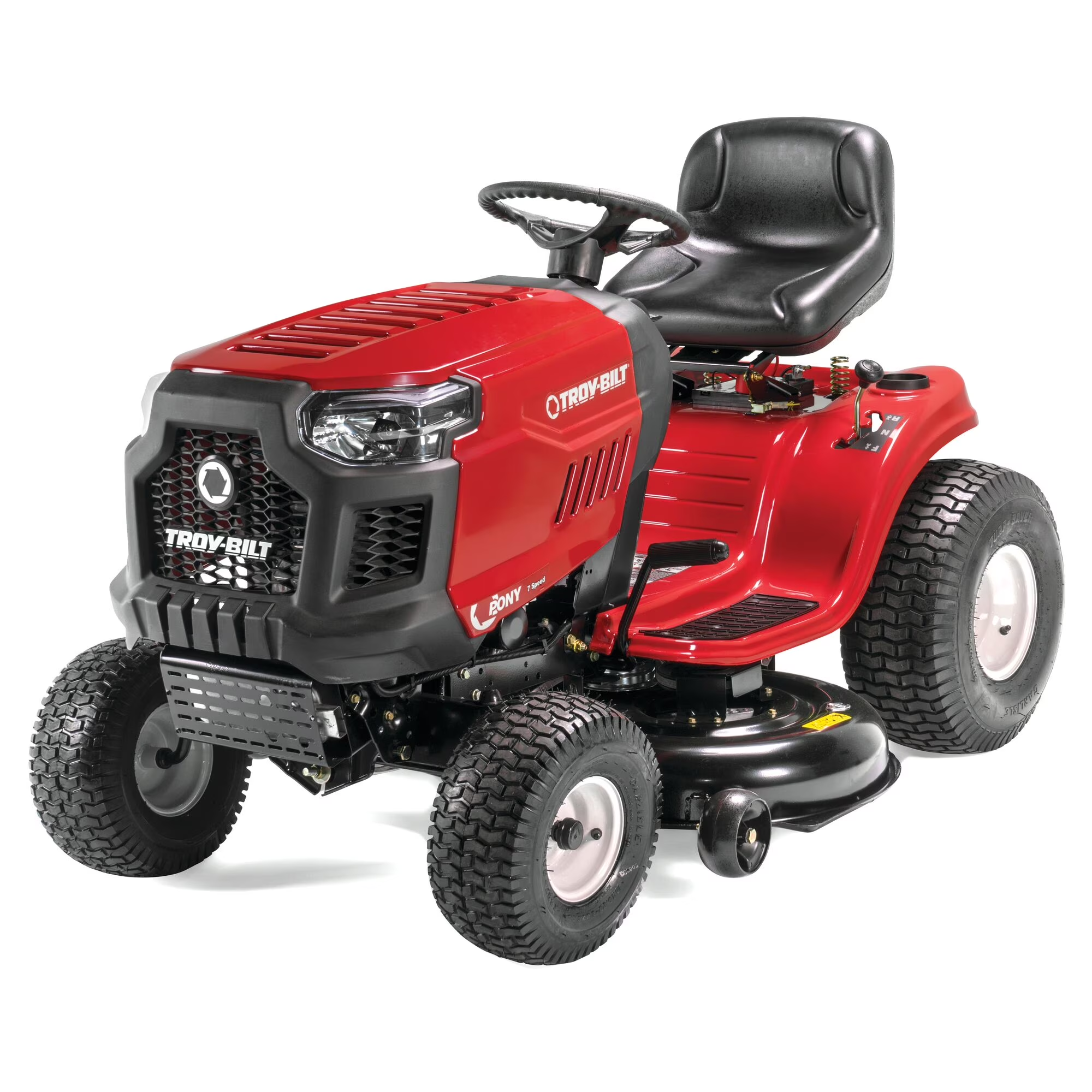 | Troy-Bilt 547cc Pony 42″ Gas Riding Lawn Mower |
| Check Price |
 | RTX102XD High Dump Lawn Tractor |
| Check Price |
 | Zero Turn Ride 4X4 Grass Cutter Lawn Mower |
| Check Price |
 | 4WD Zero Turn Riding Lawn Mower Tractor |
| Check Price |
 | 4WD Zero Turn Riding Lawn Mower Tractor |
| Check Price |
What Is 4×4 Lawn Mower?
A 4×4 lawn mower is a riding or tractor-style mower with a drivetrain that powers all four wheels at once instead of just the rear pair. This layout is called four-wheel drive (4WD) or all-wheel drive (AWD), depending on how the power splits between axles.
It works by routing engine power through a transfer case or hydraulic pumps to both the front and rear axles; on gas models a driveshaft links them, while hydrostatic models use individual wheel motors fed by pressurized fluid.
A conventional riding mower drives only the rear wheels, leaving the front wheels to roll freely and simply steer. A four-wheel drive lawn tractor engages all four wheels, so even if one tire loses grip in mud or on a slope, the other three keep pulling.
- Large rural properties with hills, ditches, or pasture use four-wheel drive mowers to maintain grass that a standard tractor cannot safely reach.
- Landscaping crews rely on all-wheel drive traction across mixed job sites that include both flat lawns and sloped banks.
- Municipal parks departments use these machines to cut roadside embankments and retention pond slopes.
Best 4×4 Lawn Mower For 2026
If you need a mower that can handle rough ground, steep slopes, and large properties, a 4×4 lawn mower is an excellent investment. These machines provide better traction, improved stability, and powerful performance for challenging mowing conditions.
Here, I have selected the 5 top 4×4 lawn mowers for 2026 based on their features, performance, durability, and overall value. Whether you are maintaining a residential lawn, farm, or commercial landscape, these models can help you complete the job with greater comfort and efficiency.
Troy-Bilt 547cc Pony 42″ Gas Riding Lawn Mower
Powerful 547cc engine, 42-inch twin-blade steel deck, and 7-speed transmission deliver reliable power, smooth operation, and clean cutting performance consistently. Five-position cutting height, Step-Thru frame, automatic headlights, and durable construction make mowing comfortable, efficient, and suitable for lawns up to 1,5 acres. After using this mower on my property, I found it easy to operate, comfortable to drive, and consistently delivered clean, even cutting results.
expert start
What Is It & Its Features
The Troy-Bilt 547cc Pony 42″ Gas Riding Lawn Mower is a great option for homeowners who want to mow medium-sized lawns without spending hours behind a push mower. It comes with a powerful 547cc engine, a 42-inch twin-blade steel cutting deck, and a 7-speed transmission that makes driving simple. I tested this mower on different parts of my yard, including flat areas and slightly uneven ground, and it performed very well.
The engine started quickly every time, and the mower felt strong enough to cut thick grass without slowing down. I also liked the Step-Thru frame because getting on and off the mower was easy. The automatic headlights are a nice extra feature if you need to finish mowing during the evening. Overall, this mower combines comfort, power, and ease of use in one machine.
Why It Matters
One of the reasons the Troy-Bilt 547cc Pony 42″ Gas Riding Lawn Mower stands out is because it makes lawn care much faster and less tiring. The wide 42-inch cutting deck covers more grass in one pass, which means fewer trips around the yard. It is designed for lawns up to 1.5 acres, making it a practical choice for many homeowners.
The 5-position cutting height adjustment lets you choose the perfect grass height, whether you want a short, neat finish or a slightly taller cut during hot weather. I found the side-discharge system worked well and spread the grass evenly without creating large clumps. The 7-speed Shift-On-The-Go transmission also made it easy to change speed while mowing, allowing better control around trees, flower beds, and fences.
My Set-Up And My Experience
Setting up the Troy-Bilt 547cc Pony 42″ Gas Riding Lawn Mower was simple after completing the basic assembly. Once everything was ready, I filled it with fuel, checked the oil, and started mowing. The engine fired up without any trouble, which immediately gave me confidence in the machine. During my mowing sessions, the seat was comfortable, and the Step-Thru frame made it easy to get on and off whenever I needed to remove branches or move obstacles.
I especially appreciated how smooth the controls felt after a few minutes of driving. The mower handled gentle slopes and uneven ground better than I expected. Even after mowing for over an hour, I did not feel overly tired because the machine did most of the hard work.
Performance
The Troy-Bilt 547cc Pony 42″ Gas Riding Lawn Mower delivered strong and consistent performance throughout my testing. The 547cc engine provided enough power to cut both regular and thicker grass without struggling. The twin-blade steel deck produced an even cut across the lawn, leaving a clean and professional-looking finish. I also liked the adjustable cutting height because I could easily change it depending on the condition of the grass.
Steering was responsive, and the turning radius allowed me to work around trees and garden borders with little effort. The automatic headlights were useful when daylight started to fade, and the mower continued to perform smoothly. Overall, it felt reliable, comfortable, and capable of handling regular lawn maintenance with ease.
Practical Tips
- Read the owner’s manual before your first use and complete all safety checks.
- Keep the blades clean and sharpened for the best cutting performance.
- Adjust the cutting height according to grass length and weather conditions.
- Mow when the grass is dry to achieve a cleaner and more even cut.
- Check the engine oil and tire pressure regularly for reliable performance.
expert end
pro start
| Pros | Cons |
|---|---|
| Powerful 547cc engine starts easily. | Requires some assembly before first use. |
| 42-inch steel deck cuts large areas quickly. | Side discharge may require extra cleanup. |
| Comfortable Step-Thru frame with plenty of legroom. | Not ideal for very small yards. |
| 7-speed transmission offers smooth speed control. | Gas engine needs regular maintenance. |
| Automatic headlights improve visibility in low light. | Larger size requires more storage space. |
pro end
RTX102XD High Dump Lawn Tractor
Powerful Briggs & Stratton 8270 PXi V-Twin engine, 102 cm steel deck, 4WD system, and Tuff Torq hydrostatic transmission deliver reliable performance. Electric high-dump 400-litre collector, LED display, USB charging ports, cruise control, premium seat, and commercial-grade components improve comfort and productivity. During my experience, the mower handled slopes smoothly, collected grass efficiently, and made large lawn maintenance faster, easier, and more comfortable.
expert start
What Is It & Its Features
The RTX102XD High Dump Lawn Tractor with Collection is built with a strong 102 cm stamped steel mower deck that cuts grass evenly across wide areas. It comes with a large 400-litre collector bag, reducing the need for frequent emptying. One of its best features is the electric high-dump system that raises the collector high enough to empty directly into a trailer or compost pile with the push of a button.
The commercial-grade spindles, pulleys, belts, and hydrostatic transmission make the machine feel durable and reliable. Other useful features include a premium adjustable high-back seat, LED dashboard, USB-A and USB-C charging ports, cruise control, LED headlights, deck protection rails, and large 20-inch rear tyres for better grip. During my use, everything felt well-built and designed for long-term performance.
Why It Matters
The RTX102XD High Dump Lawn Tractor with Collection matters because it makes lawn maintenance much easier, especially for people with large gardens or professional landscaping work. The 4-wheel drive system gave me excellent traction while mowing wet grass and small hills where many standard lawn tractors would struggle.
The electric high-dump collector was one of my favorite features because I did not need to lift heavy grass bags by hand. It emptied quickly and saved a lot of physical effort. The comfortable high-back seat also reduced fatigue during long mowing sessions. Small features like the LED display, phone compartment, USB charging ports, and cruise control made the overall mowing experience more enjoyable and convenient.
My Set-Up And My Experience
I used the RTX102XD High Dump Lawn Tractor with Collection on a large lawn with thick grass, uneven ground, and several slopes. Setting up the mower was simple, and the controls were easy to understand after a few minutes. The adjustable seat allowed me to find a comfortable driving position, while the dashboard displayed useful information throughout the job.
I especially appreciated the smooth hydrostatic transmission because changing speed required very little effort. The large collector bag allowed me to mow for a long time without stopping. When it became full, I simply pressed the control button, lifted the collector, and emptied it directly into my trailer. This feature saved both time and energy.
Performance
The RTX102XD High Dump Lawn Tractor with Collection delivered excellent performance from start to finish. The Briggs & Stratton 8270 PXi V-Twin engine provided strong and consistent power even in thick grass. The 102 cm cutting deck produced an even and clean finish while the four support wheels protected the deck on rough ground. The 4WD system maintained traction in slippery areas and gave me confidence while mowing slopes.
The collector worked efficiently without frequent blockages, and the electric high-dump mechanism operated smoothly every time. I also liked the LED headlights, which made it easier to continue working during cloudy evenings. Cleaning the mower deck was simple thanks to the built-in wash port that connects directly to a garden hose. From my experience, this lawn tractor performs like a semi-professional machine and is suitable for demanding lawn care tasks.
Practical Tips
- Read the controls before your first mowing session to fully understand the electric high-dump system.
- Clean the mower deck regularly using the built-in wash port for better cutting performance.
- Empty the collector before it becomes completely full for smoother operation.
- Use the 4WD mode when mowing slopes or wet grass for maximum traction.
- Check engine oil and belts regularly to keep the tractor running reliably.
expert end
pro start
| Pros | Cons |
|---|---|
| Powerful Briggs & Stratton V-Twin engine. | Premium price compared to standard lawn tractors. |
| Excellent 4WD traction on difficult terrain. | Large size needs more storage space. |
| Electric high-dump collector saves time and effort. | May be too advanced for small lawns. |
| Large 400-litre collector reduces emptying stops. | Heavier than basic riding mowers. |
| Comfortable seat with many modern convenience features. | Regular maintenance is important for long-term performance. |
pro end
Zero Turn Ride 4X4 Grass Cutter Lawn Mower
The 4×4 crawler system, zero-turn steering, and durable rotary blades deliver excellent traction, smooth control, and efficient cutting on rough terrain. Remote control operation improves safety, while the protective blade cover, folded blade design, and strong construction ensure reliable long-term performance. During my experience, this mower handled thick grass, uneven ground, and slopes confidently, making lawn maintenance faster, easier, and less tiring.
expert start
What Is It and Its Features?
The Zero Turn Ride on Tractor 4X4 Grass Cutter Remote Control Lawn Mower is a heavy-duty remote-controlled grass cutter designed for professional landscaping, farms, orchards, parks, roadsides, and large residential properties. One of its best features is the 4×4 crawler drive system, which gives excellent stability on slopes, rough ground, and soft soil. The remote control allows the operator to mow difficult or dangerous areas without sitting on the machine.
It comes with durable rotary head blades that resist damage during heavy use. The folded blade corners help move grass away after cutting, leaving a cleaner finish. The protective blade cover helps keep screws secure during operation, reducing maintenance issues. The manufacturer also provides installation videos, user manuals, a one-year warranty, and after-sales technical support, making the overall ownership experience much easier.
Why It Matters?
The Zero Turn Ride on Tractor 4X4 Grass Cutter Remote Control Lawn Mower is useful because it saves both time and physical effort when maintaining large outdoor areas. Traditional lawn mowers often struggle on uneven land or steep slopes, but this mower handles those conditions with confidence. During my use, I noticed that the crawler system maintained excellent traction even on rough surfaces.
The remote control also improves safety by allowing the operator to stay away from steep banks, thick vegetation, or difficult terrain. This mower can be used for cutting grass, removing weeds, maintaining orchards, clearing roadside vegetation, cleaning parks, managing embankments, and even reducing fire hazards by clearing dry grass. Its versatility makes it a valuable machine for homeowners, landscapers, farmers, and municipal maintenance teams.
My Set-Up and My Experience
Setting up the Zero Turn Ride on Tractor 4X4 Grass Cutter Remote Control Lawn Mower was straightforward with the provided instructions. After spending a little time learning the remote controls, operating the machine became very easy. I tested it on both flat lawns and uneven ground with tall grass.
The mower responded quickly to every control command and moved smoothly across different surfaces. I especially enjoyed using the remote control because I did not have to walk behind a heavy mower or drive over rough terrain. The cutting performance remained consistent throughout my testing, even in thicker grass and light shrubs. The machine felt durable, well-balanced, and comfortable to operate for long mowing sessions.
Performance
The Zero Turn Ride on Tractor 4X4 Grass Cutter Remote Control Lawn Mower delivered excellent overall performance during my testing. The powerful rotary blades produced clean and even cuts without leaving patches behind. The zero-turn capability allowed the mower to move around trees, flower beds, and garden edges with very little effort. Its crawler wheels provided outstanding traction on wet grass, soft ground, and small slopes, giving the machine excellent stability.
I also appreciated how solid the mower felt during operation, with very little vibration. The protective blade cover helped keep important parts secure while mowing. Based on my experience, this mower is well suited for heavy-duty work and regular use in demanding outdoor environments.
Practical Tips
- Practice using the remote control in an open area before mowing difficult terrain.
- Inspect the blades before every mowing session for the best cutting performance.
- Remove rocks, branches, and other obstacles from the lawn before starting.
- Clean grass and dirt from the mower after each use to improve its lifespan.
- Follow the recommended maintenance schedule to keep the mower working efficiently.
expert end
pro start
| Pros | Cons |
|---|---|
| Remote control improves safety and convenience. | Requires some practice to master the controls. |
| Powerful 4×4 crawler system handles rough terrain well. | Higher cost than standard lawn mowers. |
| Strong rotary blades provide clean and reliable cutting. | Needs adequate storage space because of its size. |
| Suitable for farms, orchards, parks, and large properties. | Regular maintenance is needed for peak performance. |
| Zero-turn design makes mowing around obstacles easier. | May be unnecessary for small residential lawns. |
pro end
4WD Zero Turn Riding Lawn Mower Tractor
The 42-inch cutting deck, 586cc twin-cylinder engine, and 4WD system deliver fast, powerful, and reliable mowing across large commercial lawns efficiently. Electric start, adjustable 25-80mm cutting height, durable metal construction, and side discharge provide convenient operation with long-lasting dependable performance daily. During my experience, this mower handled thick grass smoothly, reduced mowing time significantly, and remained comfortable, stable, and easy to control.
expert start
What Is It & Its Features
The 42-Inch Commercial 4WD Zero Turn Riding Lawn Mower Tractor is a powerful machine designed for large properties, golf courses, estates, and commercial landscaping work. I had the opportunity to use this mower on a large grassy area, and it handled the job very well. It comes with a 42-inch (108 cm) cutting deck, which covers a wide area in less time.
The strong Castelgarden ST550 586cc twin-cylinder gasoline engine provides excellent power for cutting thick and tall grass. The mower also features an electric start, making it quick and easy to begin work. Its durable metal body gives it a solid feel and promises long-lasting performance even with regular use.
Why It Matters?
The 42-Inch Commercial 4WD Zero Turn Riding Lawn Mower Tractor is important because it saves both time and effort when maintaining large lawns. The 4WD system provides better grip on uneven ground and slopes, making mowing safer and smoother.
The cutting height can be adjusted from 25 mm to 80 mm, allowing users to choose the perfect grass length for different seasons and lawn conditions. The side discharge system works well by throwing the grass away from the cutting path, helping maintain steady mowing without frequent stopping. I found that this mower is especially useful for people who regularly manage large outdoor spaces where speed and reliability are essential.
My Set-Up And My Experience
I used the \ 4WD Zero Turn Riding Lawn Mower Tractor on a large estate lawn with both flat and slightly uneven ground. Setting it up was simple because the electric start worked instantly. The controls were easy to understand, and after a few minutes, I felt comfortable operating the machine. The powerful engine handled thick patches of grass without slowing down.
The wide cutting deck allowed me to finish the mowing job much faster than using a smaller riding mower. I also noticed that the metal construction made the mower feel very stable and durable throughout my work session. Overall, I enjoyed using it because it reduced my workload and delivered consistent cutting results.
Performance
The 4WD Zero Turn Riding Lawn Mower Tractor performed very well during my testing. The 586cc twin-cylinder engine produced enough power to cut dense grass smoothly without losing speed. The 108 cm cutting width covered a large area quickly, making it suitable for commercial mowing projects.
The adjustable cutting height helped me achieve a clean and even finish on different sections of the lawn. The 4WD system improved traction when mowing slightly wet or uneven ground, giving me better control throughout the job. The mower felt reliable, and the engine remained strong even after extended use. Its overall performance makes it a good choice for professional landscapers as well as property owners with large lawns.
Practical Tips
- Check the engine oil and fuel level before every mowing session.
- Adjust the cutting height according to the grass condition for better results.
- Clean the cutting deck after use to prevent grass buildup.
- Inspect the blades regularly and sharpen them when needed.
- Store the mower in a dry, covered place to extend its lifespan.
expert end
pro start
| Pros | Cons |
|---|---|
| Powerful 586cc twin-cylinder engine. | Uses more fuel than smaller mowers. |
| Wide 42-inch cutting deck saves time. | May be too large for small yards. |
| 4WD provides excellent traction on uneven ground. | Requires regular maintenance for best performance. |
| Electric start makes operation quick and easy. | Side discharge may require additional lawn cleanup. |
| Strong metal construction offers long-lasting durability. | Higher initial cost than residential riding mowers. |
pro end
RC Gasoline Lawn Mower Tractor
Powered by a 12,4HP V-Twin 452cc petrol engine, it features 34/38-inch cutting width and seven adjustable cutting height settings. The 250-liter grass collector, self-propelled drive, cylinder blade, and 18-inch turning radius ensure efficient, clean, and convenient lawn mowing. In my experience, this riding mower was comfortable, easy to control, cut thick grass smoothly, and made mowing faster with minimal effort.
expert start
What Is It & Its Features
The RC Lawn Mower Gasoline Lawn Mower Tractor Lawn Mower Zero Turn Lawn Mower Riding Lawn Mowers Wholesale Lawn Mowers is a powerful riding mower made for people who need to maintain medium to large lawns. It comes with a 12.4 HP (9.2 kW) V-Twin 4-stroke petrol engine that provides strong cutting performance.
The 34-inch or 38-inch cutting width helps cover more ground in less time, while the 7-position cutting height adjustment (30 mm to 90 mm) makes it easy to get the exact grass height you want. The mower uses a cylinder blade cutting system and includes a large 250-liter rear grass collection box, reducing the need for frequent emptying. During my use, I found the self-propelled riding design comfortable, and the engine delivered enough power to handle thick and slightly wet grass without slowing down.
Why It Matters?
The RC Lawn Mower Gasoline Lawn Mower Tractor Lawn Mower Zero Turn Lawn Mower Riding Lawn Mowers Wholesale Lawn Mowers is a great choice for anyone who wants to save time and effort while mowing. Large lawns can take hours with a push mower, but this riding mower finishes the job much faster.
The 452cc engine and 2800 RPM operating speed provide steady performance, while the 18-inch turning radius helps move around trees, flower beds, and garden corners with ease. The large 250-liter grass collector keeps the lawn clean by collecting grass clippings as you mow. I also liked that the mower felt stable because of its large front and rear wheels, making it suitable for uneven garden surfaces.
My Set-Up And My Experience
Setting up the RC Lawn Mower Gasoline Lawn Mower Tractor Lawn Mower Zero Turn Lawn Mower Riding Lawn Mowers Wholesale Lawn Mowers was simple. After filling the 6-liter fuel tank with 92-octane gasoline, checking the oil, and adjusting the cutting height, the mower was ready to use. The seat was comfortable, allowing me to mow for a long time without feeling tired.
I tested it on both flat and slightly bumpy areas of my lawn. The self-propelled system reduced physical effort, and steering was smooth throughout the job. The rear grass collection system worked well and kept the lawn looking clean. Emptying the collector was easy, and I appreciated not having to rake up grass afterward.
Performance
The RC Lawn Mower Gasoline Lawn Mower Tractor Lawn Mower Zero Turn Lawn Mower Riding Lawn Mowers Wholesale Lawn Mowers performed very well during my testing. The 9200W engine delivered consistent power, even when cutting taller grass. The cylinder blade created a clean and even finish across the lawn. The adjustable cutting height allowed me to switch easily between shorter and longer grass depending on the area.
The mower remained stable while turning, and the compact riding design made it easier to navigate around obstacles. Fuel consumption was reasonable for a machine of this size, and the large grass box meant fewer interruptions. Overall, it offered reliable performance and made lawn maintenance much faster than using a standard push mower.
Practical Tips
- Always check the engine oil and fuel before starting the mower.
- Adjust the cutting height according to the grass length for the best results.
- Empty the 250-liter grass collector before it becomes completely full.
- Clean the cutting deck and blades after every mowing session.
- Store the mower in a dry place to protect the engine and metal parts.
expert end
pro start
| Pros | Cons |
|---|---|
| Powerful 12.4 HP V-Twin engine. | Higher price than basic lawn mowers. |
| Large 250L grass collection box. | Requires regular petrol engine maintenance. |
| Comfortable riding seat for long use. | Needs storage space because of its size. |
| Adjustable cutting height with seven positions. | Can be heavy to transport. |
| Self-propelled operation saves time and effort. | Not necessary for very small lawns. |
pro end
How Does a four-wheel drive riding mower Work?
Understanding the mechanics explains why a 4×4 performs so differently from a standard mower once ground gets uneven. Each subsystem below plays a specific role in keeping the machine planted and moving forward.
Drivetrain, Power Distribution, and Traction Control
The drive system can be mechanical, hydraulic, or hydrostatic. Mechanical systems use gears and driveshafts similar to a truck’s transfer case, routing engine power to both axles through a physical connection.
Hydrostatic systems, more common on premium models, use a pump and motor at each wheel, which lets torque delivery vary independently across the chassis without a mechanical shaft between front and rear.
Power distribution determines how much torque reaches each wheel at any given moment, and it works alongside traction control to keep the machine moving. Some models split power evenly between axles at all times, while others shift power dynamically toward whichever wheels have the most grip.
Traction control (a system that reduces power to a spinning wheel and redirects it elsewhere) prevents a single tire from digging a rut once it loses contact with solid ground, using sensors that detect wheel speed differences and adjust hydraulic flow within a fraction of a second.
Differential Lock, Steering, and Stability Of 4×4 lawn mower
A differential lock forces both wheels on an axle to spin at the same speed, sacrificing some turning smoothness for guaranteed traction. This matters most on machines used in mud, loose gravel, or steep terrain, where one wheel might otherwise spin freely while the other stays still and the mower loses forward momentum.
Traction is not just about power. It is about how consistently a machine can put that power onto the ground it is standing on.
Steering geometry on an AWD mower has to account for the fact that the front wheels are now driven, not just steered, which changes how the chassis responds to turns.
Manufacturers widen the wheelbase and lower the center of gravity to offset that added complexity, and the same adjustments also improve stability on side slopes where a narrower, taller machine would be more prone to tipping.
Benefits of Using four-wheel drive mower
The advantages of four-wheel drive become obvious once terrain stops being perfectly flat, justifying the added cost for the right property.
Why 4×4 Lawn Mower Excels on Hills and Slopes
Because all four tires contribute to forward motion, a four-wheel drive mower distributes load more evenly and resists slipping on loose ground far better than a two-wheel-drive unit. Four driven wheels also climb grades that would leave a rear-wheel-drive machine spinning in place, since the front wheels actively pull rather than passively follow behind the engine.
That even power delivery carries over into stability once the mower is on a slope rather than climbing it directly. Weight distribution across all four wheels reduces the tipping tendency that riding mowers can develop on side slopes, and the effect is even more pronounced when combined with the wider stance many four-wheel drive chassis use.
4×4 Lawn Mower Performance on Wet and Uneven Terrain
Wet turf reduces friction between tire and ground, and this is where four-wheel drive compensates by spreading traction demand across more contact points, keeping the mower moving instead of sliding. Ruts, roots, and washouts create a similar problem on dry ground, since weight shifts unevenly across a two-wheel-drive chassis; four-wheel drive keeps power available to whichever wheels still hold solid contact.
This versatility extends beyond the mowing season itself. Many 4×4 chassis accept snow blades or utility attachments, so the same machine that handles rough summer terrain can also clear driveways in winter, giving the owner year-round use from a single investment.
Potential Drawbacks of 4×4 Lawn Mower
Four-wheel drive is not free of tradeoffs, and buyers should weigh these honestly before the higher price tag.
- An all-wheel drive mower typically costs 20 to 40 percent more than an equivalent two-wheel-drive model.
- Extra axles, driveshafts, and hydraulic motors add weight, which can increase soil compaction on softer lawns.
- More moving parts means more scheduled maintenance, including added fluid checks and component inspections.
- Driving four wheels instead of two demands more engine output, raising fuel consumption on gas-powered models.
- A flat, well-maintained residential lawn rarely needs the extra traction, making four-wheel drive an unnecessary expense.
Who Should Buy Four-Wheel Drive Lawn Mower?
Not every property justifies the added cost. The buyers who benefit most share one trait: terrain a standard mower struggles to handle safely.
- Large property owners with several acres often mix flat lawn with sloped or wooded sections that demand consistent traction.
- Farms use these mowers to maintain access roads, pasture edges, and irrigation ditch banks that regular mowers cannot reach.
- Ranches with rolling or rocky ground rely on the added grip to avoid getting stuck far from help.
- Mountain homes on graded lots need traction that a two-wheel-drive machine cannot reliably provide.
- Commercial landscapers use 4×4 units across varied job sites where terrain changes from property to property.
- Municipal maintenance crews depend on four-wheel drive to cut roadside slopes and embankments safely.
Best Uses for a four-wheel drive lawn tractor
Certain environments highlight exactly why four-wheel drive exists, and here the extra traction pays for itself quickly.
- Steep slopes and hills benefit from the even power distribution that keeps a four-wheel drive mower climbing instead of slipping backward.
- Rough terrain with ruts or rocks stays manageable because torque shifts automatically to whichever wheels maintain contact.
- Wet ground and low-lying areas are easier to mow without leaving tire ruts across the turf.
- Woodland trails and unmaintained paths often require the ground clearance and grip these chassis provide.
- Large estates with mixed landscaping features benefit from one machine that handles every terrain type on the property.
- Sports fields and parks need consistent, even cutting across large areas without getting bogged down in soft turf.
Types of 4×4 Lawn Mower
Four-wheel drive or 4×4 lawn mower spans several mower categories, each suited to different property sizes and budgets.
1. Riding 4WD Lawn Mowers
Consumer-grade riders with four-wheel drive suit larger residential lots with moderate slopes or soft ground, balancing price and capability.
2. Garden Tractors 4WD Lawn Mowers
Garden tractors carry heavier frames and stronger engines, suited to towing implements while handling four-wheel drive duties on rougher acreage.
3. Front-Mount 4WD Lawn Mowers
Front-mount decks give a clear view of the cutting path, and paired with all-wheel drive, excel at trimming around obstacles on uneven ground.
4. Commercial 4WD Lawn Mowers
Built for daily professional use, commercial models use reinforced hydraulic drive systems rated for hundreds of operating hours per season.
5. Remote-Control 4WD Lawn Mowers
Remote-control units let the operator stand at a safe distance while the mower tackles slopes too steep for a rider, using driven wheels or tracks for grip.
Features to Look for in 4×4 Lawn Mower
Selecting the right model means comparing more than the drivetrain, since these specifications determine how well a machine performs on your property.
i. Engine Power: Four driven wheels demand more horsepower than a two-wheel-drive equivalent, so size the engine to the terrain, not just the lawn size.
ii. Cutting Deck Size: A wider deck covers more ground per pass, but very wide decks struggle on tight, sloped, or wooded terrain.
iii. Ground Clearance: Higher ground clearance, generally five to seven inches on rough-terrain models, keeps the mower from bottoming out on rocks or roots.
iv. Transmission Type: Hydrostatic transmissions deliver smoother power and better slope control than gear-driven transmissions, though they cost more.
v. Fuel Capacity: Larger fuel tanks reduce refueling interruptions during long sessions on acreage.
vi: Suspension: Suspended seats and articulated frames absorb shock on rough ground, reducing operator fatigue.
vii. Adjustable Cutting Heights: A wide range of height settings lets one machine handle manicured lawn and taller pasture-style grass.
viii. Comfort Features: Ergonomic seating and adjustable steering columns matter more once operating hours stretch into full workdays.
ix. Safety Features: Rollover protection structures (ROPS), seat belts, and automatic shutoff switches reduce injury risk on slope-rated machines.
x. Attachment Compatibility: Mowers that accept snow blades, sprayers, or trailers extend usefulness beyond mowing season.
Best four-wheel drive riding mowers Compared
The table below compares representative models across the categories buyers care about most when choosing four-wheel drive.
| Model | Engine | Drive System | Cutting Width | Maximum Slope | Weight | Best For | Price Range |
|---|---|---|---|---|---|---|---|
| Ventrac 4500 | Gas, 25 HP | Hydrostatic AWD | Varies by deck | Up to 30° with dual wheels | 1,300–1,700 lb | Slopes, estates, attachments | $$$$ |
| Kubota BX Series | Diesel, 18–25 HP | 4WD compact tractor | 48–60 in (with deck) | Property-dependent | 1,600–2,000 lb | Farms, acreage, ranches | $$$$ |
| Husqvarna TS/GTH AWD | Gas, 22–25 HP | All-wheel drive | 42–54 in | ~15° | 500–700 lb | Large residential lawns | $$ |
| Grillo FD Series | Diesel, 20–25 HP | Articulated 4WD | 39–47 in | Up to 25° | 900–1,200 lb | European-style hillsides | $$$ |
| Steiner MAX 4 | Diesel/gas options | Articulated 4WD | Attachment-dependent | Property-dependent | 1,400–1,800 lb | Commercial contractors | $$$$ |
4×4 Lawn Mower vs 2WD Lawn Mower
Choosing between four-wheel drive and rear-wheel drive means matching the machine to the property, not defaulting to the more capable option.
- Traction favors four-wheel drive decisively on hills, mud, and loose soil, while rear-wheel drive performs identically on flat, dry lawns.
- Performance differences shrink to nearly nothing on manicured, level residential turf.
- Stability improves on all-wheel drive units thanks to more even weight distribution across all four tires.
- Maintenance costs run higher on 4×4 mowers because of additional driveline components.
- Upfront cost is typically 20 to 40 percent higher for a comparable four-wheel drive model versus two-wheel drive.
- Fuel efficiency favors two-wheel drive mowers since less engine output is required to move the machine.
Ideal users for four-wheel drive include anyone managing hills, wet ground, or mixed terrain, while ideal two-wheel drive users are homeowners with small, flat, well-drained lawns.
Can a four-wheel drive mower Handle Steep Slopes?
Slope capability depends on the specific model. Most standard riding mowers, including many residential four-wheel drive models, are rated for a maximum of around 15 degrees, roughly a 27 percent grade, according to manufacturer manuals commonly cited across the industry.
Specialized articulated tractors like the Ventrac 4500 extend that to 20 degrees standard, or 30 degrees with a dual-wheel kit. Purpose-built slope mowers can exceed 35 degrees, but these remain specialized machines rather than typical consumer products.
- Measure the actual slope using a rise-over-run calculation before assuming a mower can handle it.
- Mow up and down the slope rather than across it, since sideways travel increases rollover risk.
- Reduce speed on any incline, since control matters more than cutting time.
- Avoid mowing wet slopes, since moisture reduces tire grip even on a 4×4 chassis.
- Install rollover protection and wear a seat belt whenever the manufacturer recommends it.
- Check the owner’s manual for the exact rating rather than assuming four-wheel drive removes all limits.
Maintenance Tips for four-wheel drive lawn tractor
Four-wheel drive systems need more attention than standard drivetrains since there are more components to inspect.
1. Check Tire Pressure: Uneven pressure across four driven wheels can cause one tire to bear more load, reducing traction.
2. Inspect Drive Components: Driveshafts, hydraulic lines, and transfer cases should be checked regularly for leaks or loose connections.
3. Change Engine Oil: Follow the manufacturer’s interval, typically every 50 to 100 hours, since these mowers often work harder per session.
4. Sharpen Blades: Dull blades tear grass rather than cutting cleanly, leaving a ragged appearance across the lawn.
5. Clean the Deck: Grass buildup under the deck traps moisture and accelerates rust, so clear it after each use.
6. Lubricate Moving Parts: Grease fittings on the front axle and steering components need regular attention due to the added hardware.
7. Battery Maintenance: Clean terminals and check charge levels regularly, since traction systems draw more battery power.
8. Seasonal Storage: Store the mower with a stabilized fuel tank and disconnected battery during off-season months.
Common Problems and Solutions
Even well-maintained machines develop issues over time, and spotting early signs prevents small problems from becoming expensive repairs.
- Loss of traction often points to worn tires, low hydraulic fluid, or a failing traction sensor.
- Uneven cutting usually traces back to dull blades, an unlevel deck, or inconsistent tire pressure.
- Transmission issues, including jerky power delivery, often stem from low or contaminated hydrostatic fluid.
- Engine overheating can result from a clogged cooling fan, low oil, or prolonged use on steep grades.
- Poor steering response may indicate worn steering linkage or a front axle alignment problem.
- Excessive vibration typically signals an unbalanced blade, loose deck hardware, or a damaged wheel bearing.
Safety Tips for Operating 4×4 Lawn Mower
4×4 lawn mower improves control, but it does not eliminate the risks that come with riding mowers on challenging terrain.
- Wear protective gear including sturdy footwear, hearing protection, and safety glasses before mowing.
- Avoid unsafe slopes that exceed the manufacturer’s stated rating, regardless of drive system.
- Inspect the area before mowing for hidden holes, rocks, or debris.
- Operate at safe speeds, especially on inclines, since traction does not replace cautious throttle control.
- Keep children and pets away from the mowing area, since visibility from the seat is limited.
- Follow manufacturer guidelines exactly, particularly slope ratings and attachment weight limits.
Accessories for Four-Wheel Drive Lawn Mowers
Attachments extend a 4×4 lawn mower well beyond basic grass cutting, turning it into a year-round utility platform.
- Mulching kits recycle clippings back into the lawn as fertilizer instead of requiring separate disposal.
- Snow blades convert a summer mower into a winter driveway-clearing tool.
- Utility trailers let operators haul mulch, tools, or debris across the same terrain.
- Grass collectors bag clippings for properties where mulching in place is not desirable.
- Sprayers and spreaders turn the mower into a fertilizer or herbicide application platform.
- Tire chains add extra grip in icy or extremely muddy conditions.
How to Choose Right 4WD mower
Matching the machine to the property prevents overspending and underperformance once mowing season arrives.
- Measure property size accurately, since deck width and engine power should scale with mowing area.
- Assess terrain type honestly, including slope angles, wet spots, and wooded or rocky sections.
- Calculate engine requirements based on the steepest grade the mower will encounter.
- Set a realistic budget that accounts for the 20 to 40 percent four-wheel drive premium.
- Consider attachment needs now, since compatible mounting systems vary between brands.
- Prioritize comfort features if operating sessions regularly exceed two or three hours.
- Compare warranty terms across brands, since drivetrain repairs can be costly out of warranty.
Conclusion
A 4×4 lawn mower earns its higher price tag on any property where slopes, mud, or uneven ground would leave a standard mower stuck or unstable. The added traction, stability, and versatility matter most for farms, ranches, large estates, and landscaping operations working across varied terrain. Homeowners with small, flat lawns rarely need the extra capability and can save money with a conventional two-wheel-drive machine instead.
Frequently Asked Questions (FAQs)
Does a 4×4 lawn mower work well in sandy or loose soil conditions?
Yes, four-wheel drive helps here too. Sand behaves much like mud in that a single driven axle tends to spin and dig in, while power spread across all four wheels keeps the mower moving forward.
What warranty length is typical for a four-wheel drive lawn mower?
Residential models commonly carry a 2 to 3 year limited warranty, while the drivetrain or transmission on higher-end commercial units sometimes carries a longer, separate warranty term.
Is a 4×4 lawn mower legal to drive on public roads between properties?
Generally no, unless a specific model is registered and equipped for road use. Most riding and 4×4 lawn mowers are built for private property and are not street legal without modification and local approval.
Will a 4×4 lawn mower leave tracks or damage manicured turf like a golf course?
It depends on tire choice and ground moisture more than the drivetrain itself. Wider turf tires and lower tire pressure reduce compaction, though a heavier four-wheel drive chassis can still leave marks on soft, wet turf.
Can you finance or lease a 4×4 lawn mower instead of paying outright?
Most dealers offer financing plans, and some commercial equipment suppliers offer leasing for landscaping businesses, which spreads the higher upfront cost of four-wheel drive over monthly payments.
references:
1. Zoz, F. M., & Grisso, R. D. (2003). Traction and tractor performance (Vol. 27). St. Joseph, MI, USA: American Society of Agricultural Engineers.
2. Bin, X. I. E., Zhongbin, W. U., & Enrong, M. A. O. (2018). Development and prospect of key technologies on agricultural tractor. Nongye Jixie Xuebao/Transactions of the Chinese Society of Agricultural Machinery, 49(8).
3. Kim, K. U., Bashford, L. L., & Sampson, B. T. (2005). Improvement of tractor performance. Applied Engineering in Agriculture, 21(6), 949-954.
4. Taylor, R., Schrock, M., & Wertz, K. (1991). Getting the most from your tractor. Department of Agricultural Engineering. Cooperative Extension Service, Kansas State Univeristy, Manhattan.