5 Best Solar Lawn Mower in 2026: How It Works
- The global solar-powered lawn mower market was valued at USD 32.4 billion in 2023 and is projected to reach USD 56.1 billion by 2030, growing at a CAGR of 6.3% (Verified Market Reports, 2024).
- A solar lawn mower captures sunlight through photovoltaic panels, converts it into electrical energy, and uses that stored power to drive cutting motors without any fuel, cord, or carbon output.
- Combined with robotic automation and AI navigation, these machines are redefining what efficient, eco-conscious lawn care looks like.


The top solar lawn mower sits at the intersection of renewable energy and precision automation. Unlike conventional gas mowers that consume fossil fuels and generate harmful emissions, a solar mower converts photons into usable electrical current through photovoltaic (PV) cells embedded in onboard or docking-station panels.
An Overview Of Solar Lawn Mower for 2026
| Product | Title | Features | Explore |
|---|---|---|---|
 | MOVA LiDAX Ultra 3000 AWD Robot Lawn Mower |
| Check Price |
 | LawnMaster OcuMow Wire Free Robot Lawn Mower |
| Check Price |
 | ANTHBOT M9 Robot Lawn Mower |
| Check Price |
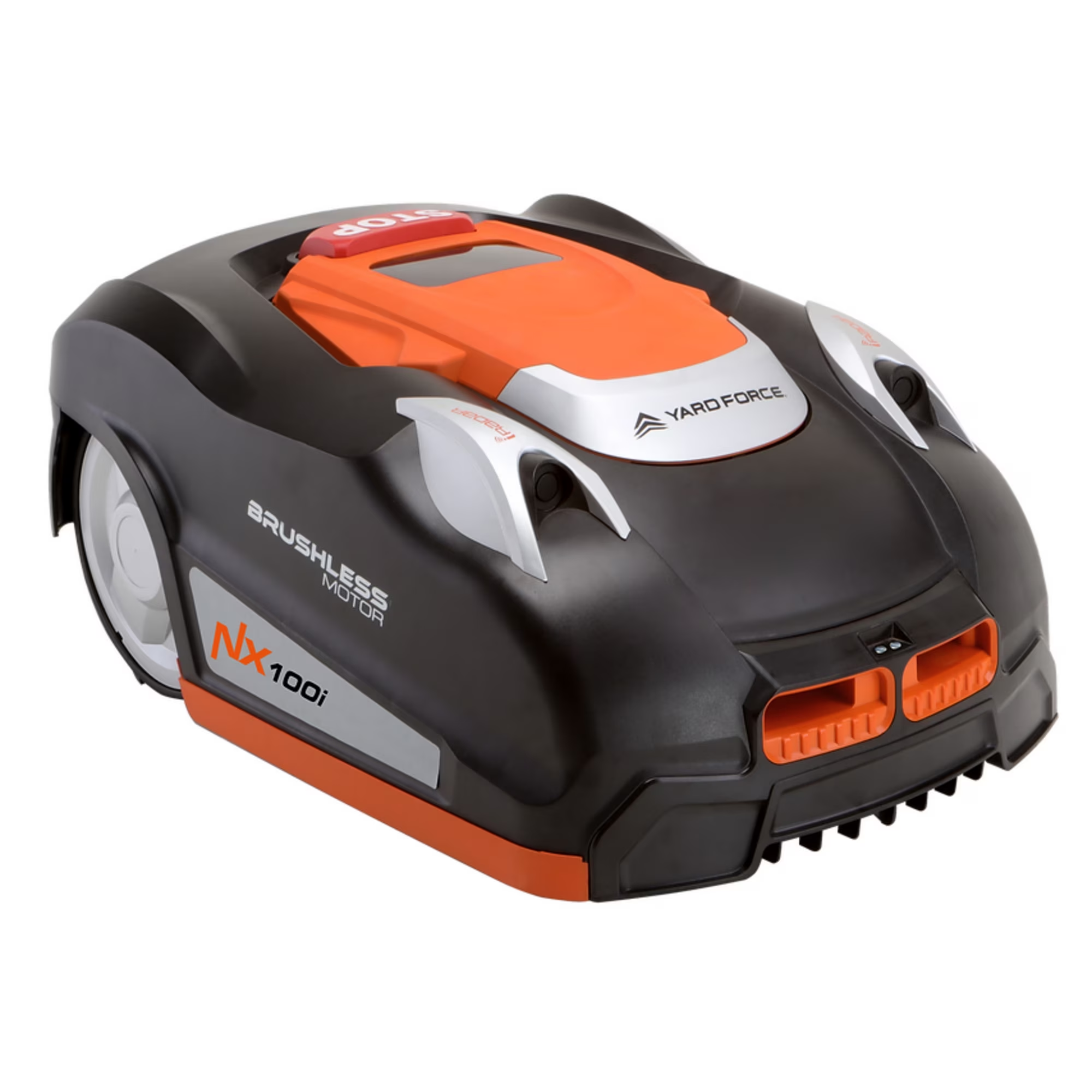 | Yard Force Robotic Lawnmower |
| Check Price |
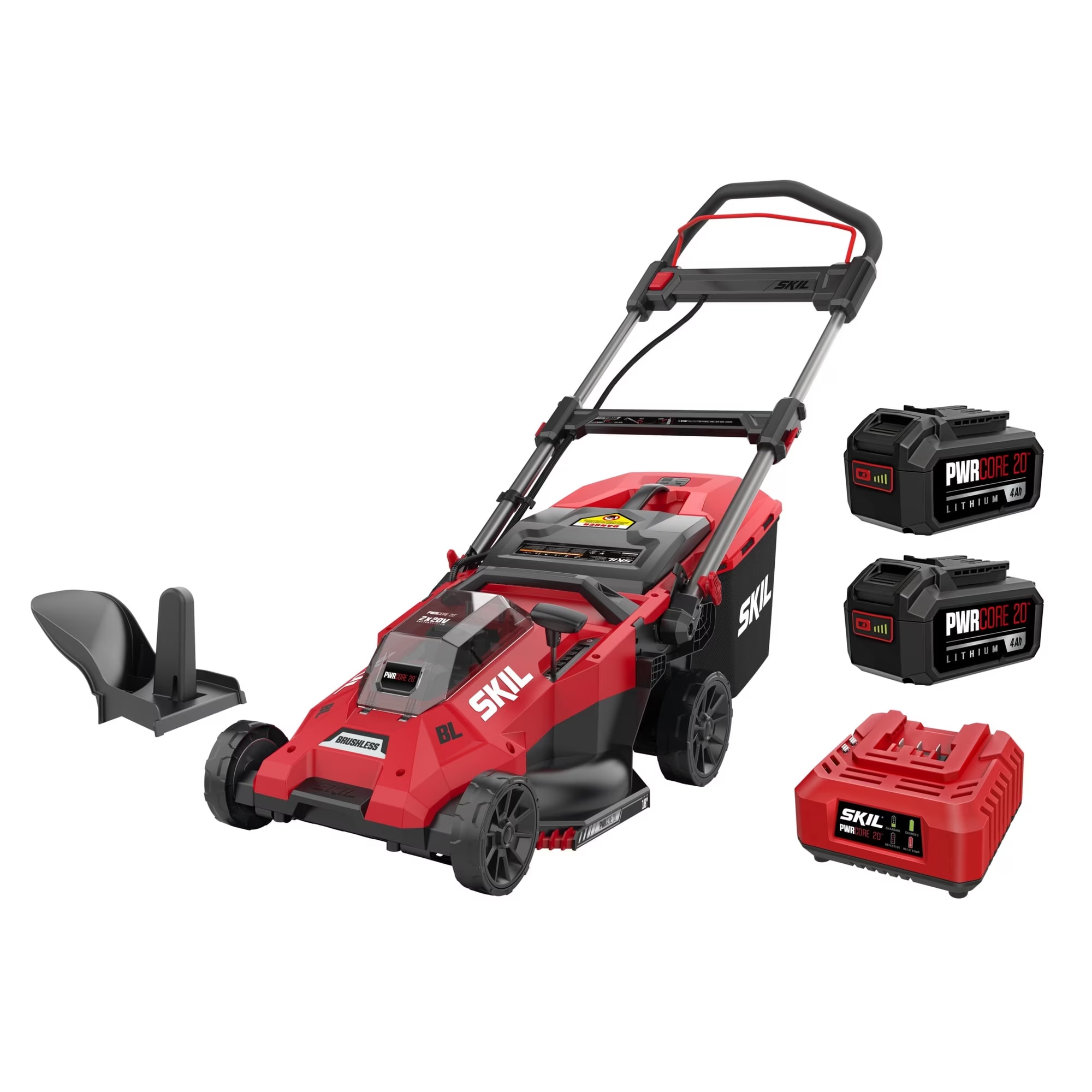 | SKIL PWR CORE 20V 18-Inch Cordless Lawn Mower |
| Check Price |
That current charges a lithium-ion or lithium iron phosphate (LiFePO4) battery pack, which then drives a brushless DC motor connected to the cutting blade assembly. The result is a self-sustaining cutting cycle that requires no external power grid connection under ideal sunlight conditions. Understanding this system at a component level is essential before selecting the right model for any property type, terrain, or budget.
What Is Solar Lawn Mower & How It Works
A solar lawn mower is a grass-cutting machine that uses solar energy as its primary or supplementary power source. The term covers a broad category of equipment, ranging from simple walk-behind mowers fitted with a rooftop solar panel to fully autonomous robotic units that charge themselves at solar docking stations and navigate an entire lawn without human input.
How Solar Lawn Mowers Work
Solar mowers generate electricity through photovoltaic panels made of silicon cells. When sunlight strikes the cell surface, electrons become energized and flow as direct current (DC). A charge controller regulates this flow to prevent battery overloading.
The stored DC power then feeds an inverter or motor driver that runs the electric cutting motor. In robotic models, additional microprocessors manage navigation, obstacle detection, and scheduling tasks in parallel with the energy system.
Components of Solar-Powered Mowing System
Each solar mowing setup relies on several integrated components working in coordination. Here are the core parts found in most commercial and residential models:
1. Photovoltaic (PV) panel: Converts sunlight into DC electricity. Research published in the International Journal of Innovative Research in Electrical, Electronics, Instrumentation and Control Engineering (July 2025) used a 100W PV panel paired with a 12V, 40Ah battery in a prototype solar mower, achieving a field efficiency of 85%.
2. Battery pack: Stores solar-generated energy for use during low-light periods or during operation when the panel alone cannot supply sufficient power. LiFePO4 chemistry is increasingly preferred for its longer cycle life compared to standard lithium-ion.
3. Charge controller: Prevents overcharging and deep discharge, extending battery lifespan significantly over multiple seasons.
4. Brushless DC motor: Drives the cutting blades at variable speeds. Brushless motors require less maintenance and last considerably longer than brushed alternatives.
5. Control unit or microprocessor: Manages mowing patterns, navigation, safety responses, and scheduled operation in robotic models.
Difference Between Traditional and Solar-Powered Mowers
Traditional gas mowers burn petrol to run an internal combustion engine. That engine emits carbon dioxide, nitrogen oxides, and volatile organic compounds at the point of use. According to a study cited by Gardening Know How, a gas mower produces approximately 6.2 kilograms of CO2 per acre compared to just 0.45 kilograms for an electric equivalent.
A solar grass cutter using renewable energy at the charging stage reduces that figure even further. Maintenance differences are equally significant: gas mowers require oil changes, air filter replacements, spark plug servicing, and carburetor cleaning, while solar mowers need only periodic blade checks and panel cleaning.
Best Solar Lawn Mower For 2026
The solar mowing category is not monolithic. Four distinct products serve different property sizes, budgets, and automation preferences. Choosing correctly between them determines long-term satisfaction and cost recovery.
MOVA LiDAX Ultra 3000 AWD Robot Lawn Mower
The MOVA LiDAX Ultra 3000 AWD uses 360° LiDAR, AI vision, and wire-free mapping for accurate autonomous navigation. Four-wheel drive, 15,8-inch cutting width, adjustable height, and obstacle detection deliver reliable mowing across challenging terrain conditions. In my experience, setup was simple, performance was excellent, and it maintained my lawn with minimal effort.
expert start
What Is It and Its Features?
The MOVA LiDAX Ultra 3000 AWD is a fully automatic robotic lawn mower designed to mow large lawns without the need for boundary wires or an RTK base station. It uses 360° 3D LiDAR and AI dual-vision technology to create accurate maps of the yard and navigate safely around obstacles.
The mower is powered by four high-torque motors, allowing it to climb slopes up to 80% and handle rough terrain with ease. It features a 15.8-inch cutting width, adjustable cutting height from 1.2 to 3.9 inches, dual cutting discs with multiple sharp blades, smart app control, anti-theft protection with 4G connectivity, automatic charging, and support for multiple mowing zones through dual maps.
Why It Matters?
The MOVA LiDAX Ultra 3000 AWD matters because it saves a huge amount of time and physical effort while keeping the lawn looking neat and healthy. Many homeowners struggle with mowing large, uneven, or sloped lawns, especially older users or busy families. This mower removes that burden by working automatically and consistently.
It acts as part of my eco-friendly garden setup, where I also use solar energy in my home system. While this mower is not directly solar-powered, it works perfectly in a setup where the charging station can be connected to solar electricity. This makes it a great option for people who want modern lawn care with low environmental impact.
My Set-Up and My Experience
Setting up the MOVA LiDAX Ultra 3000 AWD was much easier than I expected. After placing the charging station and powering on the mower, I used the app to guide the initial mapping process. The mower quickly created an accurate map of my lawn without requiring any boundary wires. I have a lawn with uneven ground, several trees, slopes, and a few challenging sections.
The mower handled all of these areas surprisingly well. I created separate mowing zones through the app and scheduled mowing times throughout the week. Once everything was configured, the mower worked independently with very little input from me. The quiet operation was another pleasant surprise because it allowed me to relax outdoors while it worked.
Performance
The performance of the MOVA LiDAX Ultra 3000 AWD exceeded my expectations. The AWD system provides excellent traction, allowing the mower to climb steep slopes and move across rough ground without getting stuck. Even when the grass was slightly wet and thicker than usual, the mower maintained steady cutting performance. The dual cutting discs and wide cutting width helped it cover large areas efficiently.
The obstacle avoidance system worked very well around pets, garden furniture, and other objects in the yard. Edge cutting was also impressive, leaving very little grass behind along borders. The mower automatically returned to its charging station when needed and resumed work afterward. Overall, the lawn looked consistently clean and professionally maintained.
Practical Tips
- Complete the lawn mapping carefully during the first setup.
- Create separate zones for complex lawns with different sections.
- Schedule regular mowing instead of waiting for grass to become too long.
- Keep the LiDAR sensor and cameras clean for the best navigation.
- Use the app to adjust cutting height based on seasonal grass growth.
- Check blades periodically to maintain cutting quality.
- Place the charging station in an open area for easier docking.
- Trim hard-to-reach spots under bushes occasionally for perfect results.
expert end
pro start
| Pros | Cons |
|---|---|
| ✔️ Easy wire-free setup. | ❌ Higher initial cost than traditional mowers. |
| ✔️ Excellent AWD traction on slopes. | ❌ Requires smartphone app for full functionality. |
| ✔️ Accurate obstacle avoidance system. | ❌ Large unit may need storage space. |
| ✔️ Quiet operation. | ❌ Edge trimming may still require minor touch-ups. |
| ✔️ Smart and user-friendly mobile app. | ❌ Learning all app features takes some time. |
pro end
LawnMaster OcuMow Wire Free Robot Lawn Mower
LawnMaster OcuMow uses optical navigation, ultrasonic sensors, magnetic boundary strips, battery power, and automatic random mowing for small lawns. It features obstacle avoidance, slope handling up to 35%, quiet operation, drop-and-mow system, and easy no-app setup design. In my experience, it cut small lawn evenly, worked quietly, handled edges well, but sometimes missed spots due to random movement.
expert start
What is it and its features?
The LawnMaster OcuMow Perimeter Wire Free Robot Lawn Mower is a smart robot mower that operates on a drop-and-mow system. It does not need complicated installation. It uses a camera and optical navigation system to identify grass and avoid obstacles. It also has ultrasonic sensors for obstacle detection and a “no-go” magnetic strip system to create virtual boundaries.
This makes it safer and more controlled for small gardens. It can handle slopes up to 35%, which is helpful for uneven lawns. It also runs quietly, which is great for residential areas. The mower comes with a 24V battery, charger, extra blades, and magnetic strips for setup.
Why it matters?
The LawnMaster OcuMow Perimeter Wire Free Robot Lawn Mower is important because it reduces manual effort in lawn care. Many people struggle with time, physical effort, or mobility issues when mowing grass. This product helps by automating the process.
It is especially useful for small lawns where large or expensive robotic systems are not needed. Its wire-free setup also makes it easier for beginners who do not want complex installation work. Quiet operation and automatic navigation make it a convenient modern gardening tool.
My Set-Up And My Experience
Setting up the LawnMaster OcuMow Perimeter Wire Free Robot Lawn Mower was very simple. I only needed to charge the battery, place the magnetic strips around the boundary, and press the start button.
No app or Wi-Fi connection was required, which made it even easier. In my small yard, I noticed it started moving right away in random patterns and slowly covered the grass area. The setup process felt beginner-friendly and did not take much time or effort.
Performance
The LawnMaster OcuMow Perimeter Wire Free Robot Lawn Mower performs well on small lawns. It cuts grass slowly but evenly, and the results improve the longer it runs. The random movement pattern sometimes misses small patches, but over time it goes over the same areas again and improves the finish.
It handles obstacles like garden furniture and edges quite well using its sensors. The cutting quality is smooth, and the grass clippings are left on the lawn, which helps in natural fertilizing. Battery life is decent, but larger lawns may need multiple charges.
Practical Tips
- Keep grass trimmed short before using the mower
- Run the mower regularly for best even cutting
- Ensure magnetic strips are placed correctly for boundaries
- Clean blades and sensors after a few uses
- Fully charge the battery before each mowing session
expert end
pro start
| Pros | Cons |
|---|---|
| ✔️ Very easy setup without app or wires | ❌ Random mowing pattern can miss spots |
| ✔️ Quiet operation, suitable for residential use | ❌ Not ideal for large or complex lawns |
| ✔️ Good for small lawns up to 2000 sq ft | ❌ Battery needs recharging for full coverage |
| ✔️ Handles slopes and uneven ground well | ❌ Struggles with very tall or overgrown grass |
| ✔️ Lightweight and easy to carry | ❌ Limited edge cutting, may need trimming |
pro end
ANTHBOT M9 Robot Lawn Mower
ANTHBOT M9 features AI vision, RTK positioning, wire-free setup, multi-zone mapping, obstacle avoidance, slope handling, adjustable cutting height, automatic docking. Dual cameras, RTK precision, app control, OTA updates, 45% slope capability, 1000 obstacle detection, efficient battery, smart navigation system integration. My experience with ANTHBOT M9 showed easy mapping, reliable mowing, quiet operation, strong automation, and consistent lawn maintenance results overall.
expert start
What is it and its features?
The ANTHBOT M9 Robot Lawn Mower 1/4 Acre is a battery-powered robotic mower built for small to medium lawns, up to about 0.3 acre officially, though it can handle more in real use. It comes with a dual AI vision system, RTK satellite positioning, and adaptive cruise control for precise navigation. One of its biggest advantages is that it does not require a perimeter wire, which makes setup much easier compared to traditional robot mowers.
It can recognize over 1,000 obstacles using its cameras, helping it avoid trees, toys, and garden items safely. The mower supports multi-zone mapping through an app, allowing you to divide your lawn into different areas and manage them separately. It also handles slopes up to 45%, has adjustable cutting height (1.2–2.7 inches), and automatically returns to its charging dock when the battery is low.
Why it Matters?
The ANTHBOT M9 Robot Lawn Mower 1/4 Acre is important because it solves one of the most tiring home chores—regular lawn mowing. Many people either spend money on lawn services or struggle to maintain their grass consistently. This mower offers a smart alternative that saves both time and long-term cost. It also helps keep the lawn healthier because it cuts grass more frequently and evenly than manual mowing.
For people with busy schedules, large yards, or physical limitations, it becomes a very practical solution. The fact that it works quietly and autonomously also means you can run it without disturbing your routine or neighbors. Overall, it brings modern automation into everyday gardening in a useful way.
My Setup And My Experience
Setting up the ANTHBOT M9 Robot Lawn Mower 1/4 Acre was fairly simple, but not as instant as advertised. The unboxing and basic installation were easy, and the app guided most of the process. However, placing the charging dock and RTK station in the right position took extra time. In my case, it took around an hour to complete everything properly.
The auto-mapping feature was impressive because it quickly scanned my yard without needing manual driving. The app created a virtual map that I could adjust later. While some parts of the app felt a bit confusing at first, I eventually got used to it. Overall, setup was beginner-friendly, but real-world installation requires some patience for best results.
Performance
In daily use, the ANTHBOT M9 Robot Lawn Mower 1/4 Acre performs very well. It moves smoothly across the lawn and handles corners better than I expected. The cutting quality is consistent, leaving a clean and even finish most of the time. It occasionally misses very thin strips, but they are not noticeable unless closely inspected.
One of its strongest features is obstacle avoidance—it successfully detects and avoids most objects without getting stuck. The self-charging system works reliably, and it resumes mowing automatically after recharging. Battery optimization and route planning also help it cover the lawn efficiently. It is also very quiet, so it can run during the day without disturbance. Overall, performance is solid for regular home lawn maintenance.
Practical Tips
- Place the RTK station in an open area for stronger signal stability.
- Clean the blades regularly for better cutting performance.
- Start with smaller zones before expanding full yard mapping.
- Avoid using it on wet grass for best cutting results.
- Update the app and firmware regularly for improved navigation.
expert end
pro start
| Pros | Cons |
|---|---|
| ✔️ Fully wire-free setup with RTK and AI vision system | ❌ App interface feels inconsistent in some areas |
| ✔️ Quiet operation suitable for residential areas | ❌ Setup takes longer than advertised in real conditions |
| ✔️ Strong obstacle detection with smart navigation | ❌ No advanced customization like directional mowing control |
| ✔️ Automatic recharging and resume function works well | ❌ No-go zone placement can be slightly tricky |
| ✔️ Good cutting performance with even lawn finish | ❌ May struggle with very patchy or uneven terrain spots |
pro end
Yard Force Robotic Lawnmower
Yard Force NX100i robotic lawnmower covers up to one quarter acre using 28V battery, smart sensors, and automatic charging system. It features three blade mulching system, adjustable cutting height, rain sensor, and handles slopes up to twenty-two degrees efficiently well. My experience showed easy setup, automatic mowing, quiet operation, and reliable performance requiring minimal supervision for daily lawn care use.
expert start
What is it and its features?
The Yard Force NX100i 28-Volt Robotic Lawnmower is an automatic lawn mower that cuts grass without constant human control. It uses a 28V 2.9Ah lithium-ion battery that provides up to 90 minutes of mowing per charge. It is equipped with a mulch system using three sharp blades, which finely cuts grass and naturally fertilizes the lawn.
The cutting height can be adjusted between 1.3 inches to 3 inches depending on lawn preference. It also includes smart safety features like ultrasonic sensors, lift, tilt, obstacle detection, and a rain sensor that sends it back to the charging station during bad weather. It can even handle slopes up to 22 degrees, making it suitable for slightly uneven gardens. The package includes boundary wire, pegs, blades, battery, and a charging station for quick setup.
Why It Matters?
The Yard Force Robotic Lawnmower, NX100i 28-Volt matters because it changes how people manage lawn care, especially for busy homeowners. Instead of spending hours pushing a mower, this device works automatically in the background while you focus on other tasks. The smart sensors and automatic charging system reduce manual effort and increase safety, especially for families with children or pets.
It also helps maintain a consistently neat lawn because it cuts grass regularly in small amounts instead of long, tiring mowing sessions. For small to medium-sized gardens, it brings real convenience and saves both time and physical effort, which is why it feels like a practical upgrade from traditional lawnmowers.
My Set-Up And My Experience
Setting up the Yard Force Robotic Lawnmower, NX100i 28-Volt was easier than I expected, although installing the boundary wire took a little time and patience. Once the area was defined, the mower started working smoothly. I liked how compact and lightweight it felt when placing it in the garden.
After turning it on, it immediately started mapping and cutting within the boundary. My experience using it daily was very positive because I didn’t have to supervise it constantly. It quietly moved around the lawn and returned to the charging station on its own when needed. It felt almost like having a small helper managing the yard without any stress.
Performance
The performance of the Yard Force Robotic Lawnmower, NX100i 28-Volt is impressive for its category. It handles regular grass cutting efficiently and maintains a clean and even lawn surface. The mulch system works well, leaving no messy grass piles behind. I also noticed that it handles slopes up to 22 degrees without struggling, which is useful for slightly uneven gardens.
The battery lasts around 90 minutes, which is enough for small to medium lawns, and the automatic return to charging station works perfectly. The safety sensors respond quickly to obstacles, making it reliable and safe to use around outdoor objects. Overall, it delivers consistent performance with minimal supervision.
Practical Tips
- Always install boundary wire carefully for accurate mowing area
- Keep blades clean for better cutting performance
- Schedule mowing during dry weather for best results
- Check charging station placement for easy docking
- Remove small garden objects before starting mowing
expert end
pro start
| Pros | Cons |
|---|---|
| ✔️ Fully automatic mowing saves time and effort | ❌ Boundary wire installation takes time initially |
| ✔️ Smart sensors improve safety and navigation | ❌ Not ideal for very large lawns |
| ✔️ Mulch system naturally fertilizes lawn | ❌ Battery runtime may feel limited for bigger areas |
| ✔️ Handles slopes up to 22 degrees easily | ❌ Can struggle with very thick or overgrown grass |
| ✔️ Returns to charging station automatically | ❌ Requires occasional maintenance and blade checks |
pro end
SKIL PWR CORE 20V 18-Inch Cordless Lawn Mower
SKIL PWR CORE 20V mower features brushless motor, dual 4,0Ah batteries, 18-inch deck, six height settings, and cordless convenience system. It delivers 40V performance, fast charging under 100 minutes, foldable storage design, push-button start, and universal battery compatibility across tools. My experience shows lightweight handling, easy operation, quiet cutting, but limited runtime in thick grass and slightly uneven terrain use.
expert start
What is it and its features?
The SKIL PWR CORE 20V 18-Inch Cordless Lawn Mower is a battery-powered push mower built with a brushless motor system that delivers strong cutting performance without gas or cords. It uses two 20V 4.0Ah lithium-ion batteries that combine to give powerful 40V-level performance. One of its most useful features is the 6-level single-lever height adjustment, which allows you to quickly change cutting height depending on grass condition.
The mower also includes a telescoping foldable handle for easy vertical storage, making it ideal for homes with limited garage space. The batteries are part of SKIL’s universal PWR CORE 20 system, meaning they can be used with other SKIL tools, adding long-term value.
Why It Matters?
The SKIL PWR CORE 20V 18-Inch Cordless Lawn Mower matters because it solves common problems of traditional lawn mowers like noise, fuel cost, and maintenance. In my experience, starting the mower is instant with the push-button system, and there is no struggle with pull cords or engine warm-up time.
This makes lawn maintenance much quicker and less tiring. The cordless design also gives freedom of movement without worrying about extension cables or petrol refills. For people living in small to medium houses, this mower offers a practical balance of power and convenience, especially when you want a clean cut without heavy effort.
My Setup And My Experience
Setting up the SKIL PWR CORE 20V 18-Inch Cordless Lawn Mower was straightforward and took only a few minutes. The handle unfolds easily, and the batteries charge fairly quickly with the dual charger. In my experience, the mower feels lightweight, which makes pushing it across the lawn less tiring even during longer sessions.
It handles flat grass areas very well and performs smoothly when the grass is dry. I also noticed that storage is very convenient because the handle folds down neatly, allowing it to stand vertically in a small corner. However, in slightly thicker or damp grass, I needed to slow down a bit for better cutting results.
Performance
The performance of the SKIL PWR CORE 20V 18-Inch Cordless Lawn Mower is quite impressive for its category. The brushless motor delivers consistent power, and the dual battery system helps maintain decent runtime for small to medium lawns. It cuts evenly on regular grass and feels stable during use.
However, in thicker grass or uneven terrain, the power can feel slightly reduced, and traction is not very strong on slopes. The battery life is generally enough for one full lawn session, but larger lawns may require recharging or a spare set of batteries. Overall, it performs best in controlled, flat garden spaces where efficiency and quiet operation are priorities.
Practical Tips
- Fully charge both batteries before starting for uninterrupted mowing
- Mow dry grass for smoother cutting and less blade clogging
- Use higher cutting settings for thick or overgrown lawns
- Clean blades after each use to maintain performance
- Store mower vertically to save space and protect components
expert end
pro start
| Pros | Cons |
|---|---|
| ✔️ Lightweight and easy to push on flat lawns | ❌ Battery may drain faster in thick or wet grass |
| ✔️ Quiet operation with no fuel or fumes | ❌ Not ideal for steep or uneven terrain |
| ✔️ Easy push-button start system | ❌ Grass collection can clog in damp conditions |
| ✔️ Quick folding design for compact storage | ❌ Traction can feel weak on slopes |
| ✔️ Dual batteries provide decent runtime for small yards | ❌ May require recharge for larger lawns |
pro end
Benefits of Using Solar-Powered Lawn Mower
Switching to a solar lawn mower delivers measurable advantages across economics, environmental impact, and daily convenience. Each benefit compounds over the ownership period, making the total value proposition stronger the longer the machine operates.
1. Reduced Electricity and Fuel Costs
Gas mowers cost significantly more to operate annually than solar or electric alternatives. According to comparative cost data published by Mowing Magic (2025), a typical gas mower requires approximately USD 3,200 in fuel annually for equivalent mowing work that a solar electric mower performs for around USD 108 in grid electricity, or effectively zero when solar charging covers full demand.
2. Environmentally Friendly Lawn Maintenance
The U.S. EPA estimates that gas lawn mowers account for approximately 5% of the nation’s total air pollution. Running one gas mower for an hour generates pollution equal to driving an average car for 45 miles.
A mower that runs on sunlight does not just cut grass — it cuts fuel bills, carbon output, and the hours you spend maintaining equipment that fights against you every season.
A solar grass cutter with zero direct emissions eliminates this contribution entirely. Additionally, solar mowers recycle micro-clippings back into the turf as natural fertilizer, reducing the need for chemical lawn treatments.
3. Lower Noise Levels
Gas mowers generate between 90 and 100 decibels during operation, a noise level that hearing protection guidelines consider hazardous after sustained exposure. Solar-powered robotic mowers typically operate between 55 and 68 decibels, comparable to a quiet conversation.
The Segway Navimow i110N, for example, operates at 58 dB(A), allowing early morning or late evening mowing without disturbing neighbors or violating local noise ordinances.
4. Minimal Maintenance Requirements
Solar mowers eliminate the maintenance tasks that consume significant time and money with gas models. No oil changes, no carburetor cleaning, no spark plug replacements, no fuel stabilizer treatments during winter storage. Routine tasks reduce to blade inspection every four to eight weeks, panel surface cleaning, and battery terminal checks twice per season.
5. Increased Automation and Convenience
A fully automated solar powered robotic lawn mower works on its own schedule, charging itself and mowing in pre-mapped zones without any direct input once the initial setup is complete. Users control the system through smartphone apps and can adjust schedules, cutting heights, and stay-out zones remotely. This level of automation saves the average homeowner four to eight hours per month during the growing season.
Solar Powered Robotic Lawn Mowers
The solar power automated lawn mower segment represents the most technologically sophisticated product category in outdoor power equipment today. Understanding how these machines navigate, charge, schedule, and detect hazards is essential for evaluating which model fits a specific property.
1. Navigation and Mapping Technology
Modern solar robotic mowers use one of three navigation approaches. The first is traditional boundary wire systems, where a physical loop wire buried at the lawn perimeter creates an electromagnetic signal the mower follows. The second is RTK-GNSS navigation, which uses Real-Time Kinematic (RTK) satellite positioning to deliver centimeter-accurate location data without any physical wire.
Husqvarna EPOS technology, for example, achieves approximately 2 centimeter accuracy using RTK-GNSS signals combined with a fixed reference station or cloud network correction. The third approach uses vision-based AI with onboard cameras and LiDAR (Light Detection and Ranging) sensors to identify and map the mowing area in real time.
2. Automatic Charging and Docking Systems
When battery charge drops below a set threshold, the robotic mower pauses its mowing route, calculates the fastest return path to the charging station, and docks automatically. In solar hybrid models, the docking station’s solar panels replenish the battery during daylight hours.
The mower then resumes its scheduled mowing session once charge is sufficient. Some premium models calculate charge time against remaining mow area and optimize departure timing to finish the session in one uninterrupted block.
3. Smart Scheduling Features
Users set daily or weekly mowing windows through the companion app. The mower’s internal algorithms calculate how much area needs cutting based on growth rate sensors and historical data, adjusting session frequency and duration automatically. Some models integrate local weather APIs to postpone mowing during rain or high-wind conditions, protecting both the machine and the turf surface.
4. Mobile App Control and Connectivity
Every major solar robotic mower brand provides a dedicated smartphone application for remote management. Core functions include schedule editing, cutting height adjustment, live GPS tracking, stay-out zone creation, and maintenance alerts.
Advanced models connect to voice assistants such as Amazon Alexa or Google Assistant, enabling hands-free commands like starting or pausing a mowing session during a busy day.
e. Safety Sensors and Obstacle Detection
Safety systems in solar robotic mowers combine multiple sensor types. Collision sensors use physical contact triggers to detect unexpected obstacles and reverse direction immediately. Ultrasonic sensors measure the distance to objects in the mower’s path and adjust course before contact occurs.
Lift sensors detect if the mower is raised off the ground and instantly stop the blade. Camera-based models use AI vision to classify objects as pets, toys, or debris and navigate around them. In January 2025, John Deere introduced a commercial autonomous mower equipped with eight cameras providing 360-degree coverage specifically to enhance safety in professional landscaping applications.
Key Features to Consider Before Buying
Selecting the right solar powered lawn mower requires matching machine specifications to the actual conditions of the property. Six features carry the most weight in that decision.
1. Battery Capacity and Runtime
Battery capacity is measured in ampere-hours (Ah) or watt-hours (Wh). A larger capacity battery provides longer uninterrupted mowing sessions but also increases charging time. Most residential solar robotic mowers offer between 100 and 270 minutes of runtime per charge, sufficient for lawns up to 0.5 acres per session. Premium models like the Husqvarna Automower 450XH EPOS deliver a typical mow time of 200 minutes on a single charge.
2. Solar Charging Efficiency
Panel efficiency determines how quickly the battery recharges during daylight hours. Standard monocrystalline silicon panels used in residential solar mower docking stations convert roughly 18 to 22% of incoming solar energy into electricity.
The best solar mower for any property is the one matched precisely to its terrain, lawn size, local solar hours, and connectivity infrastructure — not the one with the most features listed on the box.
In regions with 4 to 6 peak sun hours per day, a properly sized panel can fully recharge a residential mower battery within three to five hours of direct sun exposure.
3. Lawn Size Compatibility
Manufacturers specify a maximum mowing area per charge or per day, measured in square meters or acres. Matching this rating to actual lawn size is critical. Operating a mower at or near its stated maximum area limit consistently leads to incomplete mowing sessions and accelerated battery wear. Choose a model rated at 20 to 30% above your actual lawn area to maintain a comfortable operational buffer.
4. Cutting Width and Height Adjustment
Cutting width determines how many passes the mower needs to cover the full lawn and directly affects total mowing time. Residential robotic models typically offer widths of 18 to 28 cm. Cutting height range should cover your specific grass species’ optimal growing height. Fescue and Bermuda grass perform best at different heights, and the mower’s adjustment range must accommodate your turf type.
5. Terrain and Slope Handling
Slope performance is specified as a percentage gradient. Entry-level models typically handle slopes up to 25%, while premium units manage up to 45% gradient. The Husqvarna Automower 550H EPOS, for example, handles slopes up to 45% (24 degrees) using large, coarse-tread wheels for traction. Evaluate actual slope angles on your property before purchasing, as underpowered mowers on steep terrain risk slipping and sustaining motor damage.
6. Weather Resistance
Most solar robotic mowers carry an IPX5 or IPX6 water resistance rating, meaning they handle rain and moisture exposure without damage to internal components. However, sustained heavy rain reduces solar panel output significantly. Models with rain sensors that automatically pause mowing and guide the unit back to its dock protect both the machine and the lawn surface from waterlogging damage during wet conditions.
7. Smart Home Integration
Premium solar mowers connect to smart home ecosystems through platforms such as Amazon Alexa, Google Assistant, or Apple HomeKit. Some integrate with IFTTT (If This Then That), a logic-based automation platform that allows users to create custom routines such as “if weather forecast shows rain, pause mowing schedule.” Integration depth varies by brand and model tier.
Solar Lawn Mower Performance by Yard Type
Performance varies noticeably across different property configurations. Matching mower capability to actual lawn conditions prevents underperformance and unnecessary spending on oversized equipment.
a. Small Residential Lawns
Lawns under 500 square meters are ideal for entry-level solar robotic models with smaller battery packs and narrower cutting widths. These units complete a full mowing cycle quickly and require only a modest solar panel at the docking station to maintain charge. Operating costs are minimal, and setup complexity is low.
b. Medium-Sized Properties
Properties from 500 to 2,500 square meters benefit from mid-range models with cutting widths of 22 to 28 cm and battery capacities providing 180 to 200 minutes of runtime. Hybrid solar-grid charging ensures the mower remains operational even during cloudy spells spanning multiple days.
c. Large Landscapes
Areas exceeding 2,500 square meters require high-capacity commercial-grade units or multiple residential mowers operating in designated zones. Commercial models like the Husqvarna Automower 580 EPOS cover up to 16,000 square meters and support fleet management through centralized digital dashboards.
e. Uneven or Sloped Terrain
Sloped lawns demand mowers with specialized wheel designs, higher motor torque, and specific slope ratings. All-wheel-drive (AWD) models distribute power across all wheels to prevent slipping. The Husqvarna Automower 535 AWD EPOS handles rough, hilly terrain specifically designed for golf course conditions where surface irregularity is significant.
f. Areas with Limited Sunlight
Heavily shaded properties reduce solar panel output substantially. In these situations, hybrid solar-grid models are the practical choice. The grid connection ensures the battery always reaches full charge regardless of sun availability, while any solar contribution reduces grid electricity consumption. Positioning the docking station in the sunniest available spot maximizes solar contribution even when the lawn itself sits in shade.
Solar Lawn Mower vs Other Lawn Mower Types
Choosing between mower technologies requires comparing real performance, cost, and environmental data rather than marketing claims. The following comparisons use specific, sourced figures to give an accurate picture.
Solar Lawn Mower vs Electric Lawn Mower
Both types use electric motors and produce zero direct emissions during operation. The key difference is the charging source. A corded electric mower draws power from the grid at all times, while a solar mower uses free solar energy for charging.
The electric lawn mower market was valued at USD 5.55 billion in 2025 and is growing at a CAGR of 12.95%, reflecting strong demand for emission-free alternatives. Solar mowers add an energy independence dimension that grid-dependent models cannot match.
Solar Lawn Mower vs Battery-Powered Lawn Mower
Battery mowers store energy in onboard packs recharged from the grid. Solar mowers add a renewable charging step that reduces or eliminates grid dependence. Battery prices have fallen sharply, with lithium iron phosphate cells averaging below USD 140 per kilowatt-hour in 2023, making both types more affordable. The difference lies in ongoing operating costs: a solar-charged system adds near-zero per-session energy cost once the docking station panel is installed.
Solar Lawn Mower vs Gas Lawn Mower
Gas mowers dominate traditional markets with a 53.6% market share by propulsion type as of 2025 (Grand View Research). However, the environmental and cost gap is stark. One hour of gas mower operation emits pollution equivalent to driving a car approximately 300 miles according to Tractor Supply Co. analysis citing EPA data. Annual fuel costs for gas models reach around USD 3,200 versus effectively USD 0 for fully solar-charged models. Gas mowers also require five to seven maintenance tasks per season that solar models eliminate entirely.
Solar Robotic Mower vs Traditional Push Mower
Push mowers demand physical effort, time, and consistent attention from the operator. A solar power automated lawn mower handles the same workload autonomously, freeing four to eight hours per month during growing season. The upfront investment is higher for robotic solar models, but the time recovery alone holds genuine economic value for busy property owners and commercial landscapers paying hourly labor rates.
Installation and Setup Guide
Setting up a solar powered robotic lawn mower correctly in the first session determines its long-term performance. A careful initial configuration avoids rework and maximizes efficiency from the first operating day.
Planning the Mowing Area
Begin by walking the full perimeter of the intended mowing zone and noting obstacles including garden beds, trees, water features, children’s equipment, and narrow passages. Sketch a rough map identifying any areas that should be designated as stay-out zones before configuration begins. Record the total area in square meters and verify it falls within the mower’s rated capacity.
Installing Boundary Systems
For wire-based systems, bury the boundary wire 5 to 10 centimeters below the turf surface around the full perimeter and around any internal obstacles. Ensure the wire loop connects back to the charging station without breaks. For EPOS or vision-based systems, use the companion app to drive or mark the virtual boundary during the initial mapping session. This process typically takes 20 to 40 minutes for a standard residential lawn.
Positioning Solar Lawn Mower Charging Stations
Place the docking station and its solar panel in the sunniest location accessible to the mower. For EPOS models requiring a reference station, position the antenna with a clear, 135-degree unobstructed view of the sky in all upper directions, mounted at least 2 meters high. Avoid locations directly beneath tree canopies or close to tall buildings that create shadow during peak sun hours.
Initial Configuration and Scheduling
- Download the manufacturer’s companion app and pair the mower via Wi-Fi or Bluetooth during the initial setup wizard.
- Set the mowing area boundary through the app using virtual mapping or confirm physical wire detection is working correctly.
- Define any stay-out zones around garden beds, play areas, or pools using the app’s zone editor.
- Set the preferred cutting height for your grass species using the app’s height adjustment tool or the manual collar on the mower body.
- Configure the mowing schedule with start times, frequency, and maximum daily runtime that suits your lawn’s growth rate and your household’s activity pattern.
- Run the first manual session while observing the mower’s behavior at boundaries and around obstacles to catch any calibration issues before leaving it to operate autonomously.
First-Time Operation Tips
Monitor the first two to three autonomous sessions closely. Check that the mower returns to the dock without difficulty, that boundary avoidance behaves correctly at all perimeter points, and that no obstacles were missed during zone setup. Clear any debris from the lawn such as sticks, stones, or children’s toys before each session until the mower’s obstacle detection has been proven reliable for your specific yard conditions.
Maintenance and Care for Solar Lawn Mower
Solar lawn mower require substantially less maintenance than gas models, but several routine tasks are necessary to maintain performance and extend equipment lifespan across multiple seasons.
Cleaning Solar Panels
Dust, pollen, bird droppings, and leaf debris reduce solar panel output by 15 to 25% under heavy soiling. Clean panel surfaces every two to four weeks during peak season using a soft cloth and plain water or a mild soap solution. Avoid abrasive materials that could scratch the glass or anti-reflective coating on the panel surface.
Battery Maintenance Best Practices
- Avoid deep discharge: Allowing the battery to drop below 10 to 15% charge repeatedly accelerates degradation. Most mowers return to charge automatically before this point, but manual override sessions should be monitored.
- Store at partial charge: If storing the mower for winter, charge the battery to approximately 50 to 60% before storage rather than leaving it fully charged or fully depleted.
- Maintain storage temperature: Store the battery and mower in a dry location between 5 and 25 degrees Celsius during off-season periods to minimize chemical degradation.
Blade Inspection and Replacement
Inspect cutting blades every four weeks during the mowing season. Replace blades showing visible chips, dullness, or uneven wear. Dull blades tear grass rather than cutting it cleanly, leaving ragged tips that turn brown and create entry points for fungal infection. Most robotic mower blade sets cost between USD 10 and USD 30 and can be replaced in under five minutes using the tools provided in the original packaging.
Seasonal Storage Recommendations
At the end of the mowing season, clean the mower’s undercarriage thoroughly to remove grass buildup, which can trap moisture and accelerate corrosion. Clean or blow out the air intake vents on the motor housing. Store the mower indoors or in a weatherproof enclosure. Disconnect the boundary wire terminal at the charging station for wire-based systems to prevent corrosion at the connection point during off-season months.
Troubleshooting Common Issues
The most frequent issues in robotic solar lawn mower involve insufficient charging due to panel shading, wire breaks in perimeter boundary systems, and mower units getting stuck on obstacles or transitions between surface types.
The companion app typically generates error codes that pinpoint the issue category. Consulting the manufacturer’s digital troubleshooting guide with the specific error code resolves the majority of problems without requiring a service visit.
Common Challenges and Limitations
Solar lawn mower deliver strong performance under the right conditions. Understanding their limitations helps set realistic expectations and avoid situations where the technology underperforms.
i. Performance During Cloudy Weather: Solar panel output drops to 10 to 25% of peak capacity under heavy cloud cover. During extended cloudy periods, hybrid models fall back on grid charging automatically, maintaining normal operation.
Fully solar-dependent solar lawn mower models may experience reduced mowing frequency during cloudy spells lasting several days. Sizing the battery bank to store two to three days of mowing energy requirement provides a meaningful buffer against this limitation.
ii. Battery Degradation Over Time: Lithium-ion and LiFePO4 batteries lose a portion of their capacity with each charge cycle. Most solar lawn mower batteries retain approximately 80% of original capacity after 500 to 1,000 charge cycles, which typically corresponds to three to five years of regular use depending on mowing frequency. Budget for battery replacement at this interval when calculating total ownership cost.
iii. Obstacles and Complex Landscapes: Narrow passages, steep slopes beyond the mower’s rated capacity, and dense ground-level obstacles such as tree roots or uneven paving transitions create navigation difficulties.
Entry-level solar lawn mower models with basic collision sensors handle these situations less gracefully than premium models with LiDAR or camera-based obstacle avoidance. Complex properties may require manual boundary customization and multiple stay-out zones to prevent repeated stuck situations.
iv. Initial Purchase Cost: Quality robotic solar robotic mower represent a higher upfront investment than conventional alternatives. Entry-level robotic models start around USD 800 to USD 1,500, while premium wire-free models with EPOS navigation range from USD 2,500 to USD 5,000.
Commercial-grade units for large properties cost significantly more. This initial cost barrier is the primary adoption hesitation among potential buyers, though long-term fuel and maintenance savings offset it over a three to five-year period.
v. Security and Theft Concerns: Robotic solar lawn mower left outdoors are attractive theft targets. Most models include GPS tracking that allows users to locate a stolen unit through the companion app. PIN code startup requirements and alarm systems that trigger when the mower is lifted without authorization provide additional deterrence. Some users install locking docking stations or bring units indoors overnight for added security.
Cost of Owning a Solar-Powered Lawn Mower
A realistic cost analysis requires looking beyond the purchase price to include operating savings and long-term return on investment. Solar lawn mower consistently perform better in multi-year financial comparisons than their upfront price suggests.
Upfront Equipment Costs
Entry-level hybrid robotic solar lawn mower suitable for lawns up to 0.25 acres cost approximately USD 800 to USD 1,500. Mid-range models covering 0.5 to 1 acre with RTK wire-free navigation cost USD 2,500 to USD 4,000. Commercial solar grass cutter systems for areas above 1 acre start at USD 5,000 and scale upward with unit capacity and feature set.
Operating Cost Savings
A fully charged solar lawn mower eliminates fuel costs entirely and reduces electricity bills by removing the mower from the grid energy budget. Based on published data comparing gas versus electric mowing costs, annual savings of USD 200 to USD 3,000 are achievable depending on property size and how much manual labor the robotic system replaces.
A deployment at Spokane’s 120-acre municipal golf course using battery-powered autonomous mowers achieved a notable 60% cost reduction over five years compared to traditional gas-powered mowing crews (Mordor Intelligence, Electric Lawn Mowers Market, 2026).
Long-Term Return on Investment
For residential users, a mid-range robotic solar lawn mower at USD 2,500 typically recovers its cost within four to six years through fuel savings, reduced maintenance, and labor replacement value. Commercial operations recover investment faster due to higher baseline fuel and labor costs. After payback, the mower continues generating savings for its remaining service life, which typically extends to eight to twelve years for quality models with battery replacements.
Factors That Affect Total Ownership Cost
- Solar resource quality: Properties with 5 or more peak sun hours per day maximize solar charging and minimize grid electricity consumption, reducing operating cost to near zero.
- Lawn complexity: Dense obstacles and complex boundaries increase the likelihood of mower intervention requirements, adding minor labor cost over time.
- Battery replacement cycle: Budget approximately USD 150 to USD 400 for a replacement battery pack every three to five years.
- Blade replacement frequency: Larger lawns and coarser grass types accelerate blade wear. Factor in USD 30 to USD 80 annually for blade sets depending on model and mowing volume.
Best Use Cases for Solar Lawn Mower
While solar lawn mower offers benefits across a wide range of situations, they deliver the strongest value in specific owner profiles and property types.
a. Eco-Conscious Homeowners
For homeowners actively reducing their household carbon footprint, a solar lawn mower such as grass cutter eliminates one of the most polluting regular outdoor activities without sacrificing lawn quality. Combined with a rooftop solar installation, the entire lawn care energy cycle becomes carbon-neutral or even carbon-negative depending on the regional electricity grid’s source mix.
b. Busy Property Owners
Professionals with limited time for weekend lawn maintenance gain the most immediate lifestyle benefit from robotic solar lawn mower. Setting a schedule once and trusting the machine to maintain the lawn autonomously for weeks or months represents a genuine quality-of-life improvement for time-constrained users.
c. Smart Home Enthusiasts
Users already invested in smart home ecosystems find that robotic solar lawn mower integrate naturally into their existing routines. Voice control, app-based scheduling, weather integration, and platform connectivity with Alexa, Google Home, or Apple HomeKit extend the smart home concept into outdoor maintenance seamlessly.
d. Commercial Landscape Applications
Golf courses, corporate campuses, municipal parks, and hospitality properties benefit from the consistent turf quality, labor reduction, and 24/7 operational capacity that commercial power automated solar lawn mower systems provide.
For off-grid landowners and eco-forward homeowners alike, solar mowing is not a compromise — it is the highest-functioning version of what lawn care can be when powered by the most abundant energy source available.
Multiple units deployed in different zones can be monitored and managed from a single fleet management dashboard, replacing multiple crew members across large multi-acre properties.
e. Off-Grid Properties
Rural or remote properties without reliable grid access benefit uniquely from fully solar-dependent mowing systems. A properly sized solar panel and battery combination provides completely autonomous lawn maintenance without requiring any infrastructure investment in grid connection or fuel delivery, making solar mowers the only practical automated mowing option in these settings.
Conclusion
The solar lawn mower is not a future product. It is a mature, commercially available technology performing at a high level across residential, commercial, and off-grid applications right now in 2026. The core value proposition is clear: zero fuel costs, near-zero emissions, minimal maintenance, and full automation in the most advanced models.
From small residential lawns covered by entry-level solar lawn mower such as robotic models to commercial golf courses managed by wire-free EPOS units, the solar grass cutter category has a well-matched product for every scale of need. The technology’s trajectory is equally encouraging. Battery costs are falling, panel efficiency is rising, and AI navigation is eliminating the last performance gaps that once kept solar mowing in the enthusiast category.
Frequently Asked Questions (FAQs)
Do Solar Lawn Mower Work on Cloudy Days?
Solar panels generate reduced output on cloudy days, typically 10 to 25% of peak capacity. Hybrid solar lawn mower switch automatically to grid charging in these conditions and continue operating normally. Fully solar models rely on stored battery energy during cloudy periods, which is why battery sizing should account for two to three days of mowing capacity as a buffer against sustained overcast weather.
Can a Solar Lawn Mower Fully Run on Solar Energy?
Under sufficient sunlight conditions, yes. A 100W solar panel delivering 4 to 6 peak sun hours per day generates enough energy to charge a 12V, 40Ah battery completely, which is the specification used in published research prototypes demonstrating 85% operational field efficiency without any grid support. In practice, this depends on geographic location, panel orientation, and seasonal sun availability.
How Long Do Solar Lawn Mower Batteries Last?
Most solar lawn mower batteries retain around 80% of original capacity after 500 to 1,000 full charge cycles, corresponding to approximately three to five years of regular mowing-season use. LiFePO4 batteries generally last longer than standard lithium-ion alternatives, with some manufacturers claiming up to 2,000 cycles before significant capacity decline. Proper storage at partial charge during off-season months extends battery lifespan measurably.
Is Robotic Solar Lawn Mower Worth the Cost?
For properties requiring regular mowing across multiple months per year, the financial case is sound across a four to six year ownership period when fuel, maintenance, and labor costs are included in the comparison. Environmental, noise, and time-savings benefits add value beyond the financial analysis. The declining cost trajectory of both solar panels and battery technology means the payback period will shorten further for mowers purchased in the next two to three years.
Can Solar Lawn Mower Handle Large Yards?
Commercial-grade solar lawn mower such as grass cutter units handle large properties effectively. The Husqvarna Automower 580 EPOS covers up to 16,000 square meters per unit. For very large estates, multiple units deployed in different zones and managed through a centralized fleet management system can cover areas of any size without requiring manual mowing at any point.
How Much Maintenance Is Required for Solar Lawn Mower?
Robotic solar lawn mower require significantly less maintenance than gas models. Core tasks include cleaning the solar panel surface every two to four weeks, inspecting and replacing blades every four to eight weeks depending on grass type and growth rate, cleaning the undercarriage after each mowing cycle, and performing a seasonal deep clean before winter storage. Total active maintenance time per year typically falls below three to five hours for a standard residential setup.
references:
1. Tahir, T., Khalid, A., Arshad, J., Haider, A., Rasheed, I., Rehman, A. U., & Hussen, S. (2022). Implementation of an IoT‐Based Solar‐Powered Smart Lawn Mower. Wireless Communications and Mobile Computing, 2022(1), 1971902.
2. Ibrahim, B., Brahmaiah, V. S., & Sharma, P. (2020). Design of smart autonomous remote monitored solar powered lawnmower robot. Materials Today: Proceedings, 28, 2338-2344.
3. Onuabuchi, E. M., Ekeopara, J. U., Sule, R., Ayanbisi, O., Akinwumi, S. A., Olawole, O. C., & Ogunwale, E. (2024, May). Development and Evaluation of Efficient Smart Solar Lawn Mower. In IOP Conference Series: Earth and Environmental Science (Vol. 1342, No. 1, p. 012045). IOP Publishing.
4. Akinyemi, A. O., & Damilare, A. S. (2020). Design and fabrication of a solar operated lawnmower. International Journal of Innovative Science and Research Technology, 5(10), 1161-1197.
5. Olajide, M. B., Adelakun, N. O., Kuponiyi, D., Adeyanju, A. A., Moyosore, N. O., Kusimo, T. I., & Olanrewaju, A. T. (2024). Solar-powered lawnmower design and development. Available at SSRN 5105025.
6. Soyoye, B. (2021). Development and performance evaluation of a solar powered lawn mower. Turkish Journal of Agricultural Engineering Research, 2(2), 348-362.
7. Reddy, A. R., Chaitanya, N. V., Abhishek, P., Suvarnamma, A., & SRMIST, K. (2018). Autonomous Solar Based Lawn Mower. International Journal of Pure and Applied Mathematics, 119(20), 13129-13134.
8. Hoda, R., Kashyap, B., Yadav, A., & Datta, P. (2024, November). Solar Power Based Automatic Lawn Mower. In 2024 International Conference on IoT, Communication and Automation Technology (ICICAT) (pp. 1438-1443). IEEE.
9. Shivbhakta, B., Humnabadkar, A., & Kokate, M. A. (2024). Recent Development in Solar-Powered GrassTrimmer and Lawn Care Technology. International Journal of Innovative Research in Electrical, Electronics, Instrumentation and Control Engineering, 12(4), 240-253.