5 Best Garden Steel Cart For 2026: Buying Tips & Guide
- Home garden cart sales reached USD 1,220 million in 2025, and Deep Market Insights projects a 9.5% CAGR through 2031.
- A garden steel cart earns its share by pairing a rigid frame and bed with the right wheels, a load rating that matches real work, and a protective finish that resists rust.
- Two-wheel, four-wheel, dump, and tow-behind designs each suit different terrain and loads, and steady care keeps any model rolling for years.
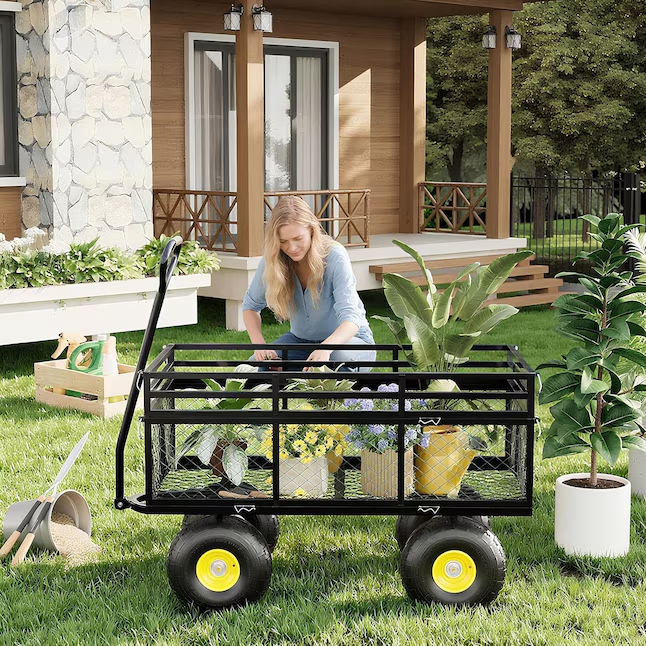

A garden steel cart provides a practical way to move soil, compost, mulch, stones, firewood, plants, and other materials around a garden or small farm. Its rigid steel construction makes it particularly useful when repeated hauling involves heavy or abrasive loads.
An Overview Of 5 Best Garden Steel Cart in 2026
| Product | Title | Features | Explore |
|---|---|---|---|
 | InBrave 34″ Extra Long Wagon Garden Steel Cart |
| Check Price |
 | VEVOR Heavy Duty Garden Steel Cart |
| Check Price |
 | VIVOHOME Mesh Garden Steel Cart |
| Check Price |
 | GarveeLife Heavy Duty Garden Steel Cart |
| Check Price |
 | FDW Heavy Duty Garden Steel Cart |
| Check Price |
The main advantage comes from the relationship between frame strength, bed construction, wheel design, and rated capacity. Choosing the right combination helps reduce physical effort while improving stability and service life during demanding garden and landscaping work.
What Is Garden Steel Cart? Definition and Design
A garden steel cart is essentially a mobile platform for hauling materials, built almost entirely of steel for strength. Unlike a wheelbarrow (which has a single wheel) or a plastic wheel cart, a steel cart has a full steel frame and either 2 or 4 wheels that support a rigid steel bed. The design ensures minimal flexing under load.
Most steel carts have a long rectangular deck (the bed) supported by crossbars and side rails, all made of heavy-gauge steel. The bed may be a solid sheet of steel or a mesh, depending on the model and purpose. Wheel axles are welded to or bolted onto the frame, and handles or tow hitches attach at the front.
a. Steel Frame: Usually made of thick steel tubing or channels, welded into a strong grid. Some carts use bolts for assembly, which makes replacement easier but can loosen over time. Welded frames provide maximum rigidity and a long service life under tough conditions.
b. Steel Bed: The cargo bed or box is also steel. It may be shallow (flatbed) or deep (like a dump cart). Side panels (around 6–8 inches high) often contain materials. Many designs have removable or drop-down sides so you can load bulky items.
c. Size and Capacity: Common bed sizes range from about 3–8 sq ft surface area. Volumes run roughly 4–12 cubic feet. Load capacities usually scale with size – smaller carts might handle ~300–500 lbs, while larger heavy-duty carts handle 800–1200+ lbs. (Manufacturers often rate capacity in pounds.)
d.Wheels – Two vs. Four: Garden steel carts come in two basic wheel configurations. A two-wheel cart has one axle with a wheel at each end and a hitch or handle at the front; it can pivot for dumping.
A four-wheel cart has two separate axles and stands level. Two-wheel models act like heavy-duty wheelbarrows: they are nimble and can tip forward to dump. Four-wheel carts are very stable (level when at rest) and can be pushed or towed without tipping.
5 Top Best Garden Steel Cart For 2026
The best garden steel cart for 2026 make it easier to move heavy gardening supplies, soil, mulch, plants, and yard waste. There are five top garden steel cart based on their durability, load capacity, wheel design, and practical features to help you choose the right option for your gardening needs.
InBrave 34″ Extra Long Steel Wagon Cart
The InBrave wagon features a lightweight alloy steel frame, 130L capacity, and a 360-pound load limit for everyday hauling. Its wide wheels, adjustable handle, removable waterproof cover, and collapsible design provide convenient transport and compact storage for outdoor activities. I find its lightweight construction, spacious interior, and folding design useful for organizing gardening supplies and simplifying routine outdoor tasks.
expert start
What Is It and Its Features?
The InBrave Extra Long Collapsible Wagon Cart is a multipurpose utility wagon designed for carrying items at home, in the garden, or outdoors. It measures 34 inches long and has a sturdy alloy steel frame covered with 600D Oxford fabric. The cart offers 130 liters of storage space and supports loads up to 360 pounds, according to the product specifications.
Its four wide wheels are designed to move across grass, gravel, sand, and other outdoor surfaces. The adjustable handle extends from 31.7 to 38 inches, while two mesh drink holders provide extra convenience. The removable waterproof cover helps with cleaning, and the folding structure makes the cart easier to store in a car trunk or small storage area.
Why It Matters?
The InBrave 34″ Extra Long Collapsible Wagon Cart can help reduce the effort needed to move gardening supplies from one place to another. Its long storage area is useful for carrying hand tools, seedling trays, plant pots, and lightweight bags of garden materials.
Its wide wheels and adjustable handle make moving supplies more convenient across different outdoor surfaces. The folding design also saves storage space, making this wagon useful for gardeners who have limited room in a shed, garage, or vehicle.
My Set-Up and My Experience
When preparing the InBrave 34″ Extra Long Collapsible Wagon Cart for garden work, I would first open the frame fully and check that the fabric bed and wheels are properly positioned. Its lightweight construction should make it easier to move between storage and the garden.
I would use it to organize hand tools, small pots, gloves, and other supplies. The adjustable handle offers flexibility, while the collapsible design is helpful when the cart needs to be stored after use.
Performance
The InBrave 34″ Extra Long Collapsible Wagon Cart is designed for everyday hauling rather than heavy-duty construction work. Its 130L capacity provides room for several gardening essentials, and its wide tires are intended to improve movement over grass and gravel. The steel frame supports the cart’s structure, while the Oxford fabric creates a flexible carrying area.
The handle’s automatic return feature can make handling more convenient. However, the cart should be loaded evenly, especially when carrying heavier items. Its performance on deep mud, steep slopes, and rough ground may vary depending on the load and surface conditions.
Practical Tips
- Open the frame completely and check the wheels before loading the cart.
- Distribute the weight evenly to improve balance and control.
- Use the cart for plant pots, hand tools, and lighter garden supplies.
- Clean the removable cover after carrying soil or wet gardening materials.
- Fold the cart after use and store it in a dry place.
expert end
pro start
| Pros | Cons |
|---|---|
| ✔️Lightweight 12.1 lbs design | ❌Fabric bed may not suit sharp items |
| ✔️360 lbs stated load capacity | ❌Not ideal for heavy-duty hauling |
| ✔️Collapsible for easy storage | ❌Requires unfolding before use |
| ✔️Wide wheels for outdoor surfaces | ❌May struggle in deep mud |
| ✔️Adjustable handle and removable cover | ❌Heavy loads can be difficult on slopes |
pro end
VEVOR Heavy Duty Steel Garden Cart
The VEVOR Heavy Duty Steel Garden Cart supports up to 900 lbs and features durable Q235 steel construction for demanding gardening tasks. Its removable sides, 3,45-cubic-foot bed, 10-inch pneumatic tires, and adjustable handle provide versatile hauling and convenient maneuverability. My setup focuses on checking the frame, wheels, and handle, while its two-in-one design offers flexibility for different gardening jobs.
expert start
What Is It and Its Features?
The VEVOR Heavy Duty Steel Garden Cart is a multipurpose wagon made from Q235 alloy steel. It supports a stated maximum load of 900 lbs and has a 3.45-cubic-foot load bed. Its removable sides allow it to switch between a fenced cart and a flatbed, making it useful for carrying different types of materials.
The powder-coated finish helps resist corrosion, while three support beams underneath provide additional strength. It also features 10-inch rubber tires, metal wheel hubs, and an adjustable T-shaped handle with a rubber grip for better handling.
Why It Matters?
The VEVOR Heavy Duty Steel Garden Cart can make demanding gardening jobs easier by allowing users to transport several tools or supplies in one trip. Its removable sides provide flexibility when carrying loose materials, pots, bags of soil, or longer items that need an open platform.
Another useful feature is its heavy-duty steel construction, which is designed for regular outdoor work. The rubber tires and adjustable handle support maneuverability across different surfaces. However, the cart’s actual performance depends on the terrain, load distribution, and proper maintenance.
My Set-Up and My Experience
When preparing the VEVOR Heavy Duty Steel Garden Cart for gardening tasks, I would first check that the wheels, handle, side panels, and frame are properly secured. Its two-in-one design is useful for planning different hauling jobs. Although its specifications suggest practical versatility, actual personal testing is needed to confirm its handling and durability.
Performance
The VEVOR Heavy Duty Steel Garden Cart offers several features intended to support demanding hauling tasks. Its steel frame and reinforced base are designed to carry heavy loads, while the 360-degree rotating wheels help with turning in tight spaces. The adjustable handle provides flexibility when moving around garden beds and pathways.
The pneumatic tires may offer better cushioning on uneven ground than solid wheels, but they require proper inflation and can puncture. Although the manufacturer states a 900-lb capacity, the cart should be used within its limits, with extra care on slopes, soft soil, and uneven surfaces.
Practical Tips
- Check that all bolts and wheel connections are secure before use.
- Distribute heavy materials evenly across the load bed.
- Remove the side panels when carrying long or bulky items.
- Maintain proper tire pressure for smoother movement.
- Clean and dry the steel frame after use to reduce rust risk.
expert end
pro start
| Pros | Cons |
|---|---|
| ✔️ High 900-lb load capacity | ❌ Large size requires more storage space |
| ✔️ Removable sides for versatile use | ❌ Pneumatic tires can puncture |
| ✔️ Durable Q235 steel construction | ❌ Heavy loads require more pulling effort |
| ✔️ 360-degree rotating wheels | ❌ Maneuvering can be difficult on uneven ground |
| ✔️ Adjustable handle with a rubber grip | ❌ Limited 3.45-cubic-foot bed space for bulky items |
pro end
VIVOHOME Mesh Steel Garden Cart
The VIVOHOME garden cart features an 880-pound capacity, 4,5-cubic-foot iron mesh bed, and sturdy construction for demanding gardening tasks. Its pneumatic tires, 180-degree rotating handle, and removable mesh sides improve maneuverability and accommodate bulky outdoor materials. I find its versatile design useful for moving soil, plant pots, tools, and gardening supplies around the yard with less effort.
expert start
What Is It and Its Features?
The VIVOHOME Heavy Duty Garden Cart is a four-wheel utility wagon made from durable iron with a red finish. It measures 38.19 inches long, 20.86 inches wide, and 9.84 inches high. Its 4.5-cubic-foot bed provides space for carrying gardening materials, while the mesh construction helps keep the cart relatively lightweight compared with a solid metal bed. The pneumatic tires absorb some shocks on uneven ground, and the handle rotates 180 degrees for easier steering. The removable mesh sides allow the cart to function as a flatbed when transporting larger or awkward items.
Why It Matters?
The VIVOHOME Heavy Duty Garden Cart matters because it can reduce the physical effort required to move heavy gardening supplies. Its four-wheel design offers a practical way to transport bags of soil, compost, pots, and tools around the yard. The large wheels can also help when moving across uneven garden paths.
Another useful feature is its removable sides, which provide flexibility for different jobs. The cart can carry contained loads with the sides attached or accommodate longer materials when they are removed. Its sturdy iron frame is suitable for regular outdoor tasks, but avoiding prolonged maximum loading and protecting the metal from moisture can help extend its working life.
My Set-Up And My Experience
When preparing the VIVOHOME Garden Cart for gardening work, I would first assemble the frame, check the wheel attachments, and inspect the mesh sides. The pneumatic tires should be inflated to the recommended pressure before use because they may arrive partially deflated. I would then use the cart to organize and move soil bags, plant pots, hand tools, and other supplies around the garden.
Performance
The VIVOHOME Heavy Duty 880 Lbs Garden Cart offers several practical features for demanding yard work. Its four-wheel design supports balanced movement, while the pneumatic tires help absorb impacts on rough surfaces. The rotating handle makes turning easier, particularly when navigating garden paths.
The removable sides add versatility for transporting bulky materials. However, the stated 880-pound capacity should not be treated as a recommended everyday load. Actual performance depends on the ground, load distribution, tire pressure, and assembly quality.
Practical Tips
- Check tire pressure before taking the cart into the garden.
- Distribute heavy materials evenly across the mesh bed.
- Remove the sides when carrying oversized or long objects.
- Avoid overloading the cart on slopes or uneven ground.
- Clean and dry the metal frame after wet gardening jobs.
expert end
pro start
| Pros | Cons |
|---|---|
| ✔️ High 880 lbs load capacity | ❌ Tires may require inflation upon arrival |
| ✔️ Durable iron mesh construction | ❌ Metal may rust if the finish wears off |
| ✔️ Removable sides for bulky items | ❌ Mesh bed may not hold fine soil securely |
| ✔️ Pneumatic tires absorb road shocks | ❌ Tires may puncture or lose air |
| ✔️ 180-degree rotating handle for easy steering | ❌ Heavy loads can be difficult to pull uphill |
pro end
GarveeLife Heavy Duty Steel Garden Cart
The GarveeLife Heavy Duty Steel Garden Cart supports 500 pounds and features a durable powder-coated steel frame for transporting gardening supplies. Its 10-inch wheels, adjustable handle, eight-inch-deep bed, and removable mesh sides provide versatile carrying options for different garden tasks. I find its three-in-one design practical for organizing garden supplies, moving bulky pots, and adapting the cart to different outdoor projects.
expert start
What Is It and Its Features?
The GarveeLife Heavy Duty Steel Garden Cart is a multipurpose garden wagon made from powder-coated steel. It measures 33.86 inches deep, 18.11 inches wide, and 42.52 inches high. Its eight-inch-deep steel bed provides space for carrying soil bags, gardening tools, plants, mulch, and other supplies.
The cart supports up to 500 pounds, according to the product specifications. It also features 10-inch wheels, an adjustable handle with rubber grips, and removable mesh sides. These features allow the cart to work as a traditional garden wagon or a flatbed carrier for larger items.
Why It Matters?
The GarveeLife Heavy Duty Steel Garden Cart can help reduce the effort needed to move heavy gardening supplies around the yard. Its 500-pound capacity and deep steel bed provide useful space for transporting soil, pots, mulch, and tools in fewer trips, saving time during larger gardening projects.
Another important feature is its three-in-one design, which allows the sides to be removed when carrying oversized items. The 10-inch wheels and adjustable handle are designed to improve movement and control on different garden paths, while the powder-coated steel frame offers added protection against rust.
My Set-Up and My Experience
When setting up the GarveeLife Heavy Duty Steel Garden Cart, I would first check that all the wheels, handle connections, and side panels are properly secured. I would then test it with a light load of gardening tools before moving heavier materials.
The adjustable handle looks useful for comfortable pulling, while the removable sides offer flexibility when transporting plant pots, soil bags, and longer garden supplies. Its black and orange finish also gives it a practical outdoor appearance. These are the features I would focus on when assessing its everyday usefulness.
Performance
The GarveeLife Heavy Duty Steel Garden Cart is designed to handle demanding gardening tasks, including moving soil, mulch, tools, and potted plants. Its steel bed provides a solid carrying surface, while the larger wheels are intended to help it move across uneven ground. The adjustable handle can make pulling more comfortable, particularly when moving supplies between garden beds.
Removing the mesh sides provides extra flexibility for larger loads. However, actual performance will depend on the ground conditions, weight distribution, and maintenance. I would avoid loading it beyond its rated capacity and would check wheel movement regularly to keep it working properly.
Practical Tips
- Check the load: Keep the total weight within the 500-pound rated capacity.
- Secure the sides: Make sure the mesh panels are firmly attached before loading.
- Distribute weight: Place heavy items low and evenly across the steel bed.
- Clean after use: Remove soil and moisture to help protect the frame.
- Store it properly: Keep the cart in a sheltered, dry area when possible.
expert end
pro start
| Pros | Cons |
|---|---|
| ✔️ Supports loads up to 500 lbs | ❌ Steel construction may be heavy to handle |
| ✔️ Powder-coated steel frame | ❌ Scratches may expose steel to rust |
| ✔️ Removable sides convert it into a flatbed | ❌ Side panels require proper installation |
| ✔️ 10-inch wheels suit many garden paths | ❌ Deep mud may affect wheel movement |
| ✔️ Adjustable handle with rubber grips | ❌ Heavy or uneven loads may be difficult to steer |
pro end
FDW Heavy Duty Garden Steel Cart
The FDW Garden Cart features a durable steel frame, plastic bed, pneumatic tires, and an advertised 500-pound capacity for heavy-duty gardening tasks. Its adjustable handle, secure latches, and removable sides provide flexible transportation for garden tools, compost, branches, and bulky landscaping materials. I find its versatile design useful for moving gardening supplies, while checking tire pressure, load balance, and assembly helps ensure safer operation.
expert start
What Is It and Its Features?
The FDW Heavy Duty Garden Cart is a four-wheel utility wagon designed for transporting heavy or bulky items across outdoor spaces. Its plastic bed is supported by a steel frame, while the pneumatic rubber tires help it move over different garden surfaces. The adjustable handle provides a comfortable grip and makes steering easier.
One useful feature is its removable sides, which allow the cart to become a flatbed for carrying longer objects, such as wooden boards and tree branches. The locking latches help keep the sides secure during transportation. The product information lists a maximum load capacity of 500 pounds, although some descriptions mention lower capacities.
Why It Matters?
The FDW Heavy Duty Garden Cart can make everyday gardening work more manageable by reducing the need to carry heavy supplies by hand. It can transport soil, mulch, plant pots, gardening tools, and harvested vegetables around the yard. Its four-wheel design also helps distribute the load during movement.
Another useful feature of the FDW Heavy Duty Garden Cart is its removable sides. This design offers more flexibility when moving oversized materials or clearing garden waste. The pneumatic tires are intended to handle different outdoor surfaces, while the padded handle helps provide a more comfortable grip during longer gardening sessions.
My Set-Up and My Experience
When preparing the FDW Heavy Duty Garden Cart for use, I would first assemble the steel frame, attach the wheels, and secure the plastic bed according to the instructions. I would check the latches, handle movement, and tire pressure before loading supplies. Keeping the fasteners slightly loose until the bed is fully assembled can also help with alignment, as the product instructions recommend.
For gardening tasks, I would use this cart to move tools, bags of compost, plant containers, and trimmed branches between different areas. The removable sides would be especially useful when transporting long materials. Although the cart is designed for heavy loads, I would begin with lighter items to check its balance and maneuverability on my own garden paths.
Performance
The FDW Heavy Duty Garden Cart offers a practical combination of a steel frame, plastic bed, and pneumatic tires. These features make it suitable for moving gardening materials across lawns, paths, and other reasonably firm outdoor surfaces. The adjustable handle can help with steering, while the removable sides allow the cart to accommodate different types of loads.
Its four-wheel construction is useful for transporting supplies without repeatedly lifting them by hand. However, performance will depend on the ground conditions, tire pressure, and weight distribution. I would avoid overloading the cart or using it on steep, slippery slopes, where a heavy load could become difficult to control.
Practical Tips
- Check the assembly: Tighten all fasteners after aligning the frame and bed.
- Inspect the tires: Maintain suitable tire pressure for smoother movement.
- Balance the load: Distribute heavy items evenly across the cart bed.
- Use removable sides: Take them off when transporting long branches or boards.
- Clean after use: Remove soil and moisture to help keep the cart in good condition.
expert end
pro start
| Pros | Cons |
|---|---|
| ✔️ Durable steel frame supports regular garden hauling. | ❌ Advertised weight capacity varies across descriptions. |
| ✔️ Pneumatic tires help navigate outdoor surfaces. | ❌ Inflatable tires require regular pressure checks. |
| ✔️ Removable sides carry bulky and long materials. | ❌ Removing and reinstalling sides takes extra time. |
| ✔️ Adjustable handle improves steering flexibility. | ❌ Heavy loads can be difficult to control on slopes. |
| ✔️ Plastic bed is suitable for common gardening supplies. | ❌ Plastic bed may crack under impacts or excessive loads. |
pro end
Key Features of Garden Steel Cart
The best cart is not necessarily the largest or heaviest model. Performance depends on how the frame, bed, wheels, handle, axle, and dumping system work together under the loads that the user actually handles.
A gardener moving bags of compost needs different characteristics from a landscaper transporting gravel. Understanding these components makes it easier to match the cart to the job rather than selecting one based only on advertised capacity.
1. Steel Frame Construction
The frame is the skeleton of the cart. It’s usually made from square or rectangular steel tubes and bars. This heavy-duty frame provides the strength and rigidity that sets steel carts apart. A good frame is free of weak joints and bends. Manufacturers typically use welded construction for the strongest joints.
Welds permanently fuse the steel pieces so there’s no slippage or loosening. Bolted frames allow disassembly or shipping flat, but at each joint they may flex slightly under high load. Over many uses, bolt threads can loosen or shear if improperly tightened.
a. Welded vs. Bolted: A welded frame is generally more rigid and won’t loosen over time. A bolted frame is easier to repair (you can replace a bent tube or strip in the field) but might require periodic retightening. For heavy-duty farm use, welded is preferred.
b. Gauge of Steel: Thicker steel means higher load capacity. For example, a 14-gauge steel panel is about 1.9 mm thick, whereas 18-gauge is ~1.2 mm – the 14-gauge is much tougher to dent or bend. Many utility carts use 14–16 gauge steel for the bed and frame for a balance of weight and durability.
c. Load Support: Heavy frames often include cross-members or reinforced corners. Check that the frame has no weak points under the bed; quality carts may have extra braces under high-load zones.
2. Steel Cart Bed
The cargo bed (or tub) holds the material. In steel carts, the bed is almost always steel – either a solid plate or a welded mesh. Some carts have flatbed designs (just a flat steel sheet with low edges), while others have deep sides (up to 8–12 inches) for containing loose loads. Deep beds are useful for moving mulch, soil, or bagged goods. Flatbeds are lower to load and carry oddly shaped items.
a. Bed Thickness: The floor of the bed is typically 14–18 gauge steel. Thicker floors better resist punctures from rocks or tools. If you plan to carry sharp stone or heavy concrete blocks, thicker is safer.
b. Containment: High side walls (often metal rails or solid panels) keep items from spilling. Many carts feature quick-release latches so you can remove a side or tip the entire bed for dumping. A well-designed bed has smooth edges and corners to prevent snagging bags or gloves.
c. Convertible Sides: Some carts have fold-down or removable sides that convert a high-walled cart into a larger flat platform, which adds versatility.
d. Load Holding: Check for tie-down points or brackets if you need to secure a load. Some pro carts include built-in tie loops or even bungee/strap slots.
3. Weight Capacity
Capacity is how much weight the cart can safely carry. Manufacturers usually specify a rated capacity, which is tested limit. For steel carts, capacities vary widely:
a. Light-Duty Steel Carts: About 300–600 lbs capacity. These often have smaller frames (4–6 cu ft) and are fine for gardeners or small farms moving soil, plants, or light materials.
b. Medium-Duty Steel Carts: Roughly 600–900 lbs capacity. These handle larger jobs like multiple bags of compost, lumber, or rocks for landscaping.
c. Heavy-Duty Steel Carts: 900–1500+ lbs capacity. Used on farms and ranches to move gravel, firewood, or heavy equipment. These have extra-reinforced frames and often come with dump mechanisms.
4. Wheels and Tires
Wheel design strongly affects rolling resistance and stability. Rolling resistance is the force required to keep a wheel moving against surface deformation, bearing friction, and other losses.
Large pneumatic tires generally perform better on grass, loose soil, and uneven ground because they spread contact pressure over a larger area.
Solid tires eliminate punctures but can transmit more vibration over rough surfaces. Wheels are critical for a steel cart’s performance on different ground. The main types are:
a. Pneumatic Tires: Air-filled rubber tires like bike tires. They provide an extremely smooth ride over rough terrain and reduce vibration, which makes pulling a heavy cart much easier. For example, pneumatically cushioned wheels absorb bumps on gravel paths. The trade-off is they require occasional inflation and can puncture if sharp objects are present.
b. Solid or Foam-Filled Tires: These have no air and are maintenance-free. They will never go flat and are puncture-proof. However, they provide a rougher ride and can dig into soft ground. They’re a good choice if you won’t be on soft mud or if you want zero maintenance.
c. Plastic or Poly Wheels: Some lightweight carts use hard plastic wheels. These are low-cost but offer poor shock absorption and traction. They’re rarely used on heavy-duty steel carts and wear out quickly if overloaded.
5. Handle and Towing Design
Steel carts can be pushed, pulled, or towed. The design of the handle or hitch affects how easily you can maneuver the cart. Common handle designs include:
a. Padded Handgrips: Many carts have rubber grips to reduce hand strain. The handle may be a simple bar or a U-shaped push bar. An ergonomic handle height (around waist level) prevents you from stooping or hunching. Adjustable handles are ideal to fit different users.
b. Pull vs. Push: Two-wheel carts are usually pulled (think wagon), with a single handle or bar; four-wheel carts may have a push handle (like a wheelbarrow) or a front-mounted hitch. Check if the cart’s design allows it to be used in both ways, depending on the task.
c. Tow-Behind Capability: Some heavy steel carts include a hitch or bracket so you can attach them to a riding lawn mower or tractor (often a 1¼-inch ball or pin hitch). This turns the cart into a small trailer.
For towing, the frame must align properly, and the tow bar should be robust. Always confirm the cart’s rated towing speed (typically slow) and capacity when used behind a vehicle.
6. Dumping Mechanism
Moving materials is easier if the cart can dump them out. Not all steel carts dump, but many do:
a. Fixed-Bed Carts: These do not tip. You unload by hand or remove a side. They’re simpler and often stronger (no moving parts), but bending to shovel heavy contents can be a challenge.
b. Dump Carts: These have pivoting beds. A latch or lever releases the bed so you can tilt it backward (or forward) to empty the load. High-end dump carts use a spring or assisted mechanism to make lifting heavy loads easier.
c. Quick-Release Sides: Even in non-dump carts, a removable front panel can simulate dumping – just pop the pin and slide the panel out, then tilt the cart to unload.
Types of Garden Steel Cart
Garden steel carts come in different designs to suit various gardening, landscaping, and farm tasks. From compact utility carts to heavy-duty models, each type offers different capacity, maneuverability, and load-handling capabilities. Steel carts come in several varieties, each suited to different tasks:
1. Two-Wheel Steel Garden Wheelbarrow
Also called a dual-wheel wheelbarrow. It has one axle with two wheels and a hinged front end. Two-wheel carts can pivot and tilt like a wheelbarrow but with added stability. They are narrower, which lets them fit through tighter gates.
However, turning radius is slightly larger than a single wheel. These carts are ideal when you need some dumping ability plus better balance for heavy loads. Common uses: hauling bagged mulch or small plants where occasional tipping is needed for unloading.
2. Four-Wheel Steel Garden Cart
Four-wheel carts look like wagons or boxes on wheels. With a wheel at each corner, they stand flat and require no support to stay level. This makes them very stable, even if overloaded. You simply push or tow them straight. They handle wide, flat loads well. However, they need a wide turning space (they can’t pivot around a central axle).
Four-wheel carts shine on smooth terrain and for long pulls; they can haul more without tipping. A key advantage is you don’t have to hold the cart to dump it – just lower or remove a side panel. These are great for moving heavy logs, big potted plants, or large quantities of soil at a steady pace.
3. Steel Dump Garden Cart
Dump carts can be either two-wheel or four-wheel, but the term usually refers to carts built specifically for dumping. They have reinforced frames and often a mechanism to help lift the bed. The bed is usually deeper and the wheels sturdier.
Best for: moving bulky, heavy loose materials like mulch piles, gravel, or yard debris, then unloading in one go. For large gardens or farm use, a dump cart saves hours of shoveling.
4. Heavy-Duty Steel Garden Cart
This label is often applied to carts with very thick steel and large capacities (1000+ lbs). They typically have extra-wide frames, heavy gauge bed, and very large pneumatic tires. These carts can move tons of material over time without buckling.
They are used on farms, homesteads, or construction. Features may include reinforced axles and commercial-grade dump systems. Choose a heavy-duty model if you routinely transport concrete blocks, large logs, or tractor loads of material.
5. Steel Utility Garden Cart
These are general-purpose carts for versatile use. They may be flatbed or have modest sides. Typical medium-capacity (500–900 lbs) utility carts fit this category. They’re not as beefy as “heavy-duty” but stronger than entry-level.
They’re often used by homeowners and landscapers alike. A flatbed open design allows stacking lawn supplies, plants, or tools. They may include accessories like a removable water can holder or side racks for garden tools.
6. Tow-Behind Steel Garden Cart
These carts come with a hitch designed for a tractor or riding mower. The frame includes a drawbar or ball coupling. They let you pull the cart behind equipment to cover large properties quickly. Tow-behind carts must have a very robust tongue and sometimes a pivoting hitch.
They also often have four wheels for stability at speed. Use cases include hauling hay bales or feed around a farm, or quickly collecting leaves with a blower. If you have a lawn tractor, a tow-behind steel cart can turn it into a mini utility trailer.
7. Foldable or Convertible Steel Cart
Storage can be a challenge with large carts. Some steel carts feature fold-down frames or removable axles for compact storage. These designs allow the cart to collapse to a fraction of its operating size.
They may use pins and latch mechanisms instead of welded joints to fold. Folding carts are less common and typically slightly less rigid, but they are very handy for garages, sheds, or vans where space is limited. Choose a foldable cart if you need heavy capacity but have tight storage space.
Garden Steel Wheelbarrow Weight Capacity
Manufacturers calculate capacity by testing a loaded cart until failure. However, real-world working capacity depends on the material type and cart condition. In practice, you should keep loads below the rated capacity. One way to estimate capacity need is by weight per volume of materials:
a. Soil and Compost: Garden soil or compost weighs roughly 75–90 lbs per cubic foot. So a 5 cu ft load can easily be ~400 lbs. If your cart is rated for 800 lbs, 5 cu ft is safe; 10 cu ft would approach capacity.
b. Mulch or Leaves: Often 20–30 lbs/cu ft when dry. You can load higher volumes since a 6 cu ft bed of mulch may be only 180 lbs, well under most carts’ limits.
c. Gravel and Stones: Very heavy (~100+ lbs/cu ft when wet). Fill such loads to no more than half the cart’s volume to avoid overload. Even dense compacted soil or rock can exceed 100 lbs/cu ft.
d. Firewood: Roughly 50–60 lbs per cubic foot (wood piles have air gaps). A 6 cu ft cart could hold ~300 lbs of split wood. Again, use less volume to keep weight manageable.
e. Bags of Fertilizer or Feed: Standard bags are usually 40–50 lbs each. A heavy-duty cart might carry 10–15 bags (500–700 lbs), whereas a small cart might only fit 3–5 bags safely.
What Can You Haul with Garden Steel Cart?
Many gardeners keep a steel cart on hand year-round for tasks from spring planting to winter cleanup. Garden steel carts are extremely versatile. You can move almost anything that fits in the bed, including:
- Soil and Garden Soil: Bulk garden soil, topsoil, or potting mix. Steel carts handle wet or dry soil equally and won’t sag under its weight.
- Compost and Manure: Heavy and often wet, compost is ideal for steel carts. A dump cart can tip it out easily.
- Mulch, Bark, and Straw: Plant debris like mulch, wood chips, or straw bales. They’re light per volume but bulky; steel beds won’t crack from the weight and contain the load well.
- Gravel and Stones: Crushed rock, gravel, or pavers. Steel frames and pneumatic tires manage these dense loads with less effort than a plastic cart.
- Firewood and Logs: Cut wood, branches, and tree trimmings. The flat steel bed supports irregular shapes, and high sides hold logs in place during transport.
- Bagged Materials: Shovelfuls of fertilizer, soil amendments, feed sacks, or cement bags. These heavy bags benefit from the cart’s high capacity.
- Plants and Pots: Large potted plants, nursery stock, or seedling flats. The flatbed or drop side lets you load and unload without tipping pots.
- Gardening Tools and Equipment: Wheelbarrowed tools, lawn mowers, tillers, or irrigation gear. Carts carry tools to work sites and can hold multiple items easily.
- Leaves and Yard Debris: Rakes full of leaves or grass clippings. A dump cart can empty debris piles into a bin or compost pile quickly.
- Landscaping Supplies: Pavers, bricks, sandbags, plants, or fencing materials for project sites. Steel carts handle construction-type loads well.
Garden Steel Cart for Different Gardening Jobs
Different gardening activities place different demands on a hauling cart. Vegetable production often involves repeated movement of compost, harvested crops, tools, irrigation materials, and soil amendments, making maneuverability particularly valuable. Different tasks call for different carts:
1. Vegetable Gardening: Vegetable growers use steel carts to haul compost, mulch, and irrigation supplies. A two-wheel steel cart makes it easy to tip in raised bed soil. The high capacity lets you move multiple bags of compost in one trip. After harvest, a cart carries crates of produce or large plants to market or storage with minimal lifting.
2. Flower Gardens: In flower beds, a lightweight steel utility cart handles mulch, planting mixes, or pots. The flat bed is ideal for transporting delicate flowering plants and soil while avoiding tipping them. On larger flower farms, a dump cart simplifies moving bulk compost or feed for pollinators. Overall, a garden steel cart keeps loads stable for careful work around ornamental plants.
3. Landscaping: Landscapers rely on heavy-duty steel carts for moving rock, sod, and tools across sites. A four-wheel dump cart can carry stacks of pavers or bags of soil and unload them exactly where needed. The steel frame holds up to scrapes from gravel and machinery. Tow-behind steel carts let crews pull materials around large yards using an ATV or mower, cutting labor significantly.
The best cart is the one that matches your heaviest regular job, not your rarest one.
4. Lawn Maintenance: For lawn care, carts move bags of seed or fertilizer and collect clippings. A steel cart can even hold a small mower or blower. Pneumatic tires prevent damage to lawns when pulling. If a slope is present, always run the cart in low gear or pull uphill to avoid runaway speed. In essence, the cart reduces trips between shed and lawn, saving time.
5. Composting: Compost producers use dump carts to turn and move compost piles. Steel carts withstand the acidic and humid environment. After filling, you simply dump the compost directly into beds or a spreader. Over time, this greatly reduces manual wheelbarrow trips when building soil. It also lets you transport finished compost in bulk back to fields or garden beds.
6. Tree and Shrub Maintenance: Pruning and tree work produce heavy, bulky clippings. Steel carts carry logs and brush that would overwhelm a wheelbarrow. A sturdy cart can also haul soil for tree planting or fertilizer for large shrubs. The long handles of some carts make it possible to manoeuvre between trees with tight spaces. If you need to hold water (for transplanting) alongside equipment, the flat steel bed can accommodate buckets or tanks securely.
7. Farm and Homestead Use: On small farms, steel carts haul feed, bedding, and harvested crops. For example, moving 100 lb bags of feed or dozens of eggs crates is much easier in one heavy trip. Many homesteaders attach steel carts to lawn tractors to gather firewood or trimmings from orchard pruning. Overall, the ruggedness of steel carts matches the heavy demands of farm life.
Garden Steel Wheelbarrow Performance on Different Terrains
Steel carts ride differently on grass, gravel, dirt, or mud. The right tires and wheels make a big difference:
- Flat Lawns and Smooth Surfaces: Almost any wheel works on flat grass or pavement. Wide pneumatic or foam tires won’t leave deep ruts. On turf, turning slowly avoids tearing the grass.
- Gravel and Rocky Paths: Pneumatic tires excel here. They absorb shocks and protect the frame. Ensure tires are at proper inflation. Large diameter wheels (12–16 inches) roll more easily over rocks and keep momentum up.
- Soft or Muddy Ground: Air-filled tires and wide treads distribute weight to prevent sinking. Avoid overloading on mud. If needed, use “turf wheels” (wide, low-pressure tires) to spread the load. Carts with narrower wheels will sink or track deeply in mud or snow.
- Uneven or Bumpy Terrain: As noted, big wheels (10–16″) help overcome bumps. Solid rubber wheels may ride rough here; avoid if possible. A suspension-type feature (some carts have spring-loaded hitches) can also reduce jolts.
- Slopes and Hills: All carts perform differently on slopes. Steel carts are quite stable on flat ground, but a high, heavy load can make uphill pulling harder. Go slowly and keep the load low and centered. On downhill stretches, use caution to avoid runaway momentum: you may need to park brake or chock wheels.
Garden Steel Cart vs Other Cart Materials
Steel competes with plastic, aluminum, and wood in garden hauling equipment. Each material has different mechanical and environmental properties, so the best choice depends on workload, corrosion exposure, handling requirements, and expected service life.
For occasional light gardening, a lighter material can be convenient. For repeated hauling of dense or abrasive materials, steel often provides a stronger structural platform and better resistance to impact.
1. Garden Steel Cart vs. Plastic Garden Cart: Plastic carts usually weigh less and resist corrosion naturally. Their lower mass makes them convenient for users who frequently move empty carts or handle lighter gardening materials.
Steel provides greater rigidity for demanding loads, although the material adds weight. Sharp rocks, heavy tools, and repeated impacts can also influence the long-term durability of a plastic bed.
2. Garden Steel Cart vs. Aluminum Cart: Aluminum provides a strong strength-to-weight advantage and naturally forms a protective oxide layer that limits further corrosion. It can therefore suit applications where low weight and corrosion resistance matter.
Steel generally offers greater stiffness at a lower material cost, although the final comparison depends on alloy, thickness, fabrication, and protective finish. For heavy agricultural use, structural design matters more than material name alone.
3. Steel Garden Cart vs. Wheelbarrow: A wheelbarrow places the operator between the handles and the load, while a cart transfers more of the load directly through its wheels. This difference changes balance, steering effort, and handling.
Wheelbarrows excel in tight spaces and uneven garden paths. Carts generally work better when users need to transport larger loads over longer distances or move bulky materials without repeatedly lifting the load.
Advantages of Garden Steel Cart
Steel construction provides several practical benefits when the cart matches the intended workload. Its rigidity supports demanding loads, while a properly designed frame distributes forces through the bed, axle, and wheels.
A well-protected steel cart can also provide many years of service. Its durability becomes particularly valuable for growers, landscapers, and homesteaders who use hauling equipment repeatedly rather than occasionally. The main advantages include:
- High structural strength for dense and abrasive materials.
- Good resistance to impact when the bed and frame are properly designed.
- Strong load-bearing performance for agricultural and landscaping work.
- Long service potential when corrosion and mechanical wear receive regular attention.
Disadvantages of Garden Steel Cart
Steel also introduces trade-offs that users should consider before purchasing. The same material that provides structural strength increases the cart’s empty weight, which can make frequent manual handling more demanding.
Corrosion represents another consideration. Bare carbon steel reacts with oxygen and moisture, producing iron oxides that gradually weaken exposed surfaces if the corrosion process continues unchecked.
Protective coatings reduce this risk, but damaged coatings require attention. Scratches, exposed weld areas, fastener interfaces, and water-trapping joints deserve particular inspection.
Steel Finish and Rust Protection
The finish applied to a steel cart directly affects its resistance to environmental exposure. Powder coating is a dry finishing process in which electrostatically charged powder adheres to the metal before curing into a protective polymer layer.
Painted steel provides another common protection system. Galvanized steel uses a zinc coating to protect the underlying steel, while stainless steel relies on chromium-rich corrosion resistance within the alloy itself.
For normal garden use, inspect the finish after impacts and abrasion. Once bare steel becomes exposed, cleaning, drying, and timely touch-up coating can prevent a small damaged area from becoming a larger corrosion problem.
How to Choose Right Garden Steel Cart: Buying Tips
Choosing the correct cart requires matching specifications to actual work conditions. A useful purchasing decision considers load density, terrain, path width, storage, operator strength, maintenance requirements, and the frequency of use.
Start with the heaviest material you regularly transport. Then evaluate the route that material must travel, because a cart designed for a smooth lawn can behave very differently on loose soil or a slope. A practical selection process is:
- Identify the heaviest regular load and estimate its mass.
- Select a rated capacity with appropriate operating margin.
- Match wheel size and tire construction to the terrain.
- Check bed dimensions against garden paths and storage areas.
- Inspect frame joints, axle supports, and handle construction.
- Decide whether dumping capability will save meaningful handling effort.
- Confirm replacement parts, warranty coverage, and corrosion protection.
Garden Steel Cart Maintenance
Proper maintenance keeps a garden steel cart strong, safe, and reliable through regular outdoor use. Simple care such as cleaning, checking the wheels, tightening hardware, and preventing rust can help extend the cart’s working life and keep it performing smoothly.
- Clean the Bed: After each use, remove soil, mulch, or debris from the steel bed. Use a hose or brush. Dry it off to prevent moisture buildup that causes rust.
- Inspect for Rust: Periodically check welds, joints, and edges for any rust spots. If you find surface rust, sand it off and apply a rust-resistant paint or primer to seal the steel.
- Touch Up Paint: Paint chips expose steel. Keep a can of matching spray paint or rust-proof primer handy to cover scratches or nicks in the finish.
- Lubricate Moving Parts: If your cart has a dump lever or pivot, apply a light oil or grease to hinge points. Also lubricate wheel bearings (if serviceable) to prevent squeak and wear.
- Check Wheel Bearings: Lift the cart and spin each wheel. If it wiggles on the axle or feels rough, tighten the axle nut or replace bearings as needed.
- Check Tire Pressure: For pneumatic tires, check and inflate to the recommended PSI (usually stamped on the tire). Low pressure makes pulling harder; over-inflation can cause blowouts.
- Tighten Bolts and Fasteners: Over time, vibrations can loosen hardware. Make sure all nuts and bolts (on the frame, wheels, and handle) are snug.
- Test the Dump Mechanism: Operate the latch and tilt the bed (when empty) to ensure smooth dumping action. Oil the mechanism if it’s stiff.
- Store Properly: When not in use for extended periods, store the cart in a dry sheltered spot. If indoors, prop it so tires and wheel bearings aren’t sitting in one position (this prevents flat spots).
Preventing Rust on Steel Garden Wheelbarrow
Preventing rust on a steel garden cart helps protect the metal from moisture, humidity, and outdoor exposure. With simple maintenance, proper storage, and occasional protective treatment, you can keep the cart strong, clean, and usable for many gardening seasons.
- Keep It Dry: Water is the enemy. After washing or rain, wipe down the cart. Avoid leaving wet soil in the bed.
- Avoid Sitting Soil: Don’t let manure or compost sit on the steel too long; the moisture and acids can corrode the metal. Remove organic debris after use.
- Repair Scratches Quickly: Even small scratches in the paint should be sanded and retouched with primer or paint. This seals the steel from air and moisture.
- Use Rust Inhibitors: For high humidity environments, apply a light oil (like WD-40) or automotive wax on exposed metal surfaces to add a temporary barrier.
- Store Under Cover: Protect the cart from rain and snow. Even a tarp-covered area or shed is better than leaving it outside.
- Inspect Joints: Pay extra attention to weld seams and joints – water often collects there. Touch up any corrosion immediately.
Loading Garden Steel Cart Safely
Loading a garden steel cart safely helps prevent tipping, overloading, and damage to both the cart and its wheels. A balanced load also makes the cart easier to pull or push, especially when moving heavy materials across uneven garden or farm surfaces.
- Distribute Weight Evenly: Spread the load uniformly. Place equal weight on both sides of the cart. An off-center load can tip the cart to one side.
- Keep Heavy Materials Low: Load heavy items (rocks, logs, bags) near the bottom of the bed, close to the wheels. Stack lighter material on top. This lowers the center of gravity and enhances stability.
- Don’t Overload: Never exceed the rated capacity. Check the cart’s limit (e.g. 600 lbs) and ensure the total load is below that. Overloading can cause frame damage or a tip-over.
- Secure Loose Loads: For loose materials like gravel or small debris, consider using a tarp or netting to prevent spills. Tie down any long items so they don’t slide out during movement.
- Be Careful on Slopes: When loading or unloading on a grade, position the cart so that the load won’t roll downhill. If towing downhill, proceed slowly and use a low gear if applicable. It may help to have a person hold the cart when dumping on a slope.
- Follow the Design: If the cart is meant to be pushed versus pulled (or vice versa), do not reverse that. A four-wheel cart may have a fixed push handle and not be safe to pull from the front.
Garden Steel Cart Safety Tips
Using a garden steel cart safely helps prevent injuries, protect the load, and extend the cart’s working life. A few simple precautions can make moving soil, tools, plants, and other heavy materials much easier and safer.
- Inspect Before Use: Check wheels and tires for damage, and ensure the frame is intact. Don’t use a cart with cracked welds or a broken axle.
- Check the Frame: Look for any bends or cracks in the steel frame. A compromised frame could fail under load.
- Avoid Excessive Loads: Never carry more weight than the cart is rated for. Excess weight not only risks damage but can cause sudden tipping.
- Caution on Slopes: Use low speed and keep the load low on slopes. If possible, divide loads on hilly terrain to reduce the risk of runaway carts or tipping.
- Keep Hands Clear: When dumping or adjusting sides, keep fingers away from hinges and latches. Steel pinch points can cause serious injury if the bed moves unexpectedly.
- Wear Protective Gear: Always wear sturdy shoes or boots and gloves when loading and moving heavy materials. Heavy loads can shift or slip.
- Follow Towing Guidelines: If attaching to a mower or tractor, do not exceed the cart’s recommended speed (usually walking pace or slower). Ensure the hitch is secure and that the cart is level when loaded to avoid swaying.
Using Garden Steel Cart for Heavy-Duty Work
A garden steel cart is built to handle demanding tasks that ordinary garden carts may struggle with. Its strong steel frame and durable construction make it useful for moving soil, compost, firewood, tools, stones, and other heavy materials around the garden or farm.
- Moving Rocks and Gravel: Steel carts can carry heavy stone or gravel easily. A dump cart can haul several wheelbarrow-loads of gravel in one trip and empty it at a site quickly.
- Transporting Firewood: A steel cart loaded with logs greatly reduces the effort of multiple trips. The robust frame handles the jagged edges of wood without damage.
- Carrying Fertilizer or Feed Bags: Bulk sacks can add up to hundreds of pounds. A heavy-duty cart lets you transport dozens of bags at once.
- Hauling Landscaping Materials: Bricks, blocks, or bags of cement – all heavy. A steel cart withstands the rough weight distribution of concrete blocks or pavers.
- Moving Compost and Soil: Mixing or redistributing large compost piles becomes manageable with a dump cart. You can flip hundreds of pounds of compost with minimal strain.
- Farm and Homestead Applications: Use it to move harvest harvest bins, small fencing pieces, or livestock feed. On a farm, steel carts often replace multiple wheelbarrows for efficiency.
- When Heavy-Duty Is Worth It: If you regularly handle loads above 800 lbs or want a tool to last many years under constant use, investing in a commercial-grade steel cart pays off.
Garden Steel Cart Buying Mistakes to Avoid
Choosing the right garden steel cart is about more than picking the strongest-looking model. Avoiding common buying mistakes can help you get a cart that matches your load requirements, garden terrain, storage space, and long-term use.
i. Capacity vs. Size: Don’t assume a physically large cart always holds more. Some big carts use thin steel and have lower capacity than smaller, well-built ones. Always check the weight rating instead of just volume.
ii. Ignoring Cart Weight: Remember that the cart itself can be heavy. If you need to move the empty cart frequently or by hand, test how manageable the empty weight is for you.
iii. Choosing Wrong Tires: Don’t overlook the importance of tire type. A steel cart with small or solid tires on rocky ground will be a struggle. Select pneumatic tires if you’ll tackle uneven or soft terrain.
iv. Skipping Rust Protection: Buying an uncoated or poorly finished steel cart will lead to corrosion. Ensure it is at least powder-coated or galvanized, especially if you live in a rainy or humid region.
v. Incorrect Wheel Configuration: Pick two wheels for better dumping and narrower spaces, or four wheels for stability. Buying a two-wheel cart expecting four-wheel stability (or vice versa) is a mistake.
vi. Handle and Height Mismatch: A handle that is too low or too high for you will be uncomfortable. Test the cart’s handle or check its height against your waist. Ergonomics matter during long use.
vii. Path and Gate Clearance: Don’t forget to measure the cart’s width and length. A heavy-duty cart may not fit between garden paths, gates, or sheds, making it unusable for your yard.
viii. Ignoring Parts and Service: Check if spare tires, axles, or replacement parts are available. A warranty that covers parts can save you from having to replace the entire cart if something breaks.
Garden Steel Cart Performance
A Garden Steel Cart should provide reliable performance when moving soil, compost, tools, plants, and other gardening materials around the yard. Its steel construction offers the strength needed for regular use, while the wheel and handle design affect how smoothly and comfortably it moves across different surfaces.
1. Stability Under Load: The cart should remain steady when fully loaded. Check that the wheels and frame support the weight without bending and that the bed doesn’t flex. A low center of gravity (deep bed, wide stance) helps stability.
2. Ease of Pulling or Pushing: With a heavy load, the cart should not require excessive force. Quality wheel bearings, low rolling-resistance tires, and a balanced wheel alignment make a big difference. A cart with bad bearings or misaligned wheels can be very hard to move.
3. Turning Radius: Especially for four-wheel carts, test how tight a turn it can make. A smaller turning radius makes it easier to navigate gardens. Some heavy carts can only pivot with a lot of space, so plan accordingly.
4. Performance on Uneven Ground: Try the cart on a typical surface (grass, gravel, dirt). Note how far you have to lift or pull. A good cart with pneumatic tires should roll over bumps and gaps with minimal jarring.
5. Wheel Durability: Inspect the wheels – do they look sturdy and well-attached? Cheap wheels can bend or crumble. Good cart tires should be thick, puncture-resistant (or foam-filled), and securely fastened.
6. Frame Rigidity and Weld Quality: Any flex in the frame or suspicious welds can spell trouble under real loads. Look for solid, clean welds and no cracked paint or rust along seams.
7. Bed Strength: The steel floor should not bow under a heavy load. Test by loading a reasonable weight and then prodding the bed – there should be minimal deflection.
8. Dumping Efficiency: For dump carts, the mechanism should operate smoothly. It shouldn’t require dangerous leverage to empty a full load, nor should it lock up after repeated uses. Check for a secure latch that holds the bed firmly when not dumping.
Conclusion
Steel construction makes garden carts extremely strong and long-lasting. They carry far heavier loads than plastic or wooden carts, so they’re best for anyone moving bulk materials like soil, rock, or large plants. Users who benefit most are home gardeners with extensive beds, landscapers, farmers, and homesteaders handling heavy tasks.
When choosing a steel cart, focus on the weight capacity needed, number and type of wheels, and frame quality. Ensure the cart’s dimensions fit your yard and its finish guards against rust. In the end, a properly chosen steel garden cart delivers stable support, high load capacity, and years of reliable service for demanding gardening and farming jobs.
Frequently Asked Questions (FAQs)
Are steel garden carts better than plastic carts?
For heavy-duty work, yes. Steel carts carry more weight (often **2–3 times** the capacity) and are more durable. Plastic carts are lighter and rust-proof, but they usually crack under very heavy loads and have lower capacity.
How much weight can a steel garden cart carry?
That depends on the model. Home-use steel carts often carry 500–800 lbs, while commercial units can handle 1000–1500 lbs. Always check the manufacturer’s rating. In practice, a medium steel cart (about 6 cu ft) safely carries roughly 600–800 lbs if loaded properly.
Are steel garden carts prone to rust?
They can rust if unprotected, but most are powder-coated or galvanized. Even so, any scratches should be painted over. In normal conditions, a coated steel cart resists rust well, but it’s wise to keep it dry and stored out of rain as much as possible.
What type of wheels are best for a steel garden cart?
Pneumatic (air-filled) tires are generally best. They roll smoothly over rough ground and reduce jarring. Foam-filled or solid tires work on smooth surfaces without the puncture risk, but they ride rough and can cut into soft soil. If you’ll use the cart on gravel or uneven terrain, choose large pneumatic tires for the best performance.
Can a steel garden cart be used on slopes?
Yes, but with caution. On inclines, keep the load low and go slowly. On steep downhill slopes, a cart can gain speed, so it’s safer to walk behind and use braking if possible. Avoid loading the cart to maximum on steep grades. In short, it’s usable on slopes but always follow safe loading and handling practices.
Can a steel garden cart carry rocks and gravel?
Absolutely. In fact, steel carts excel at this. The steel bed and strong frame can handle heavy stone. Use a dump cart if you need to unload gravel. Always keep the load spread evenly. As one guide notes, the four-wheel steel cart’s flat bed easily handles heavy loads without the wobble of a wheelbarrow..
Is a dump-style garden steel cart worth buying?
If you frequently move loose heavy materials (soil, compost, mulch), a dump cart can save huge amounts of work. It lets you unload by simply releasing the bed instead of shoveling. For heavy-duty gardening or landscaping, a dump cart is often worth the extra cost for the convenience and reduced manual labor.
references:
1. TARMIZI, M. N. B. A., JAAFFAR, A. H. H. B., & DEMPI, P. E. A. (2020). Smart Wheelbarrow.
2. Noor, H. M., Tukiran, A. S. M., Razali, A. S., Azwan, A. H. A. A., Janon, M. N., & Mohamad, M. A. H. (2024). The Modern Wheelbarrow. Multidisciplinary Applied Research and Innovation, 5(2), 147-153.
3. Sazaleigh, M. A. S., Ab Latif, N., & Ismail, A. M. M. (2023). Design and fabrication of garden storage tool cart.
4. Abernethy, L. (2019). Scheme Builds Edible Garden Carts in Unused Spaces to Bring Communities Together. Metro. co. uk.