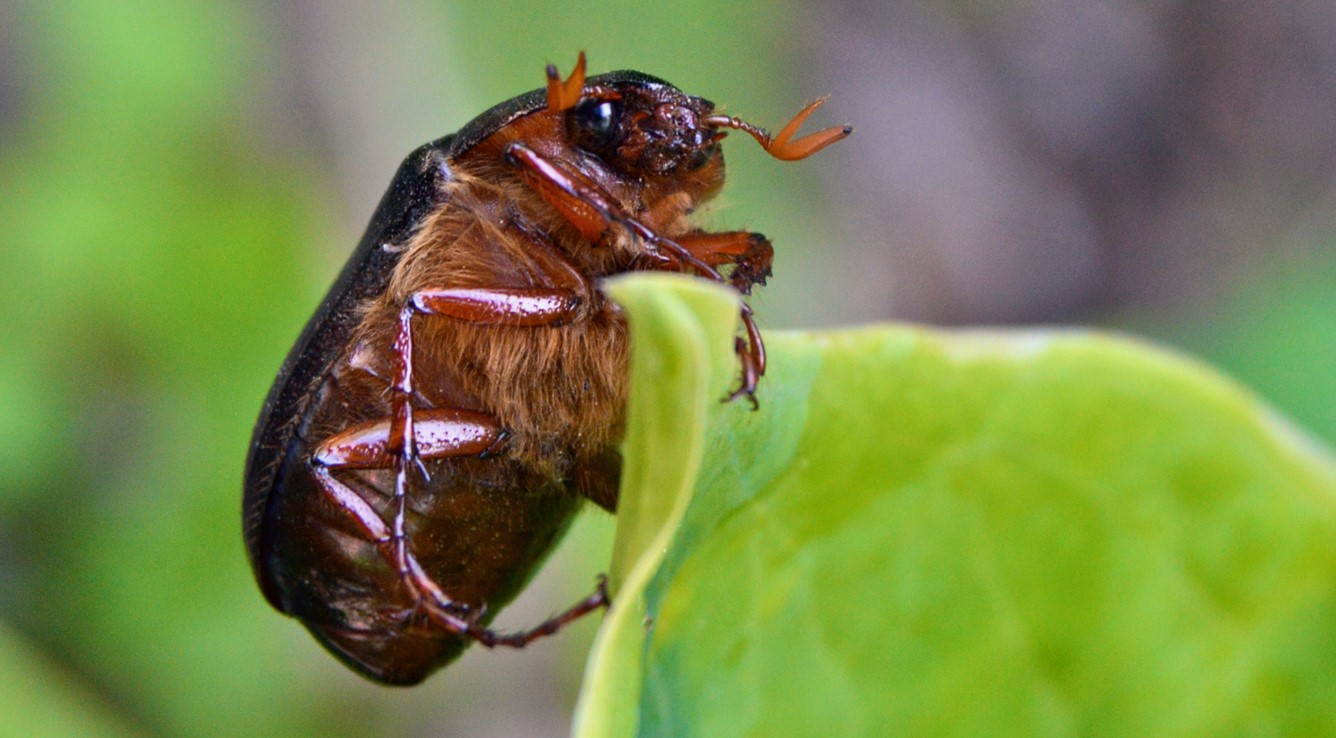
There are lots of things to look forward to about summer, but the arrival of warm weather pests isn’t one of them. June bugs get their name from the month you’ll typically begin seeing them in your yard (they’re also sometimes referred to as May bugs).
They fall under the scarab beetle category, and according to Orkin, adults are typically a half-inch to one inch long and are brown or red in color. Because they aren’t the most graceful flyers, you can often find them crashing into windows or screens.
Advertisement
While adult June bugs are certainly a nuisance, it’s the larvae that you really need to be concerned about when it comes to causing damage to your property. As The Spruce explains, larvae are worms that can live underground in different molt stages for 1-3 years, during which time they’ll chew plant roots, disrupt turf, and create dry patches in your lawn.
Because June bugs can lay 75 to 100 eggs by midsummer, as soon as you catch sight of these pests, you should act fast on coming up with an extermination plan. Luckily, in just a few simple steps, you can be well on your way to ridding yourself of June bugs and protecting your outdoor space.
A good first step when tackling a June bug infestation is to target adult insects in order to stop the reproduction cycle. According to Cedarcide, you can easily make your own traps by mixing one part molasses and one part hot water in an empty jar and then placing the jar near areas where these pests are known to hang out, like plants or outdoor lighting. Another method is to trap them by hand since they’re so clumsy they can easily be caught.
Apply Nematodes
Once the adult June bugs are taken care of, you can move on to eliminating the destructive larvae. Nematodes are an effective pest control method at this stage because they’re non-toxic, microscopic worms that feed on the larvae of various insects.
The Spruce explains that for June bugs, you’ll want to specifically use a species of nematode called Heterorhabditis bacteriophora. You can apply nematodes by mixing them with a garden sprayer and applying them to a wet lawn, followed by plenty of water to ensure the solution drains into the soil.
Apply Insecticides
Insecticides add another layer of offense against larvae, and there are several different kinds you can try. The Craftsman Blog recommends starting out with something non-toxic such as a neem oil-based insecticide since these are harmful to June bug larvae but safe for beneficial bugs like ladybugs, spiders, and earthworms. If that doesn’t do the trick, you may want to try a toxic insecticide, while being careful to avoid harm to other bugs and animals.
While getting rid of pests involves some hard work, you can lighten your load by allowing some of their natural predators to assist. Cedarcide explains that creatures such as birds, snakes, toads, and lizards can all assist in warding off these bugs, so a good strategy is to attract them to your yard. You can summon birds with feeders and baths, and reptiles with shallow pools of water and shady places to hide.
Maintain a Healthy Lawn
Lastly, to prevent June bugs from making a repeat appearance next summer, you’ll want to make sure your lawn isn’t offering a welcome place to stay. According to The Craftsman Blog, adult June bugs like to lay eggs in short grass, so avoid cutting your lawn too much and disrupting its roots.
You should also take care to water your lawn the correct amount, as too much or too little hydration can weaken your grass and leave it susceptible to June bugs and other pests.
The articles, reviews, news, and other content represent the opinions of the respective authors and do not necessarily reflect the views of Gardening Favors as a whole. We do not provide professional, legal, medical, or financial advice, and nothing on this site should be taken as a substitute for consultation with a qualified expert in those fields.
Ray Bressan has studied Horticulture & Landscape Architecture for many years, and knows how to use science to improve crops and protect the environment. He likes to experiment with different varieties and methods of gardening and shares his experience and advice on how to choose the right plants, take care of the soil, deal with pests, propagate new plants, design a beautiful garden, and be adept with various modern garden tools.
We use cookies to ensure that we give you the best experience on our website. If you continue to use this site we will assume that you are happy with it.