How Mulching Lawn Mowers Work and Their Benefits
- The global lawn mowers market reached USD 33.66 billion in 2024 and is projected to hit USD 48.60 billion by 2030 at a CAGR of 6.6%, with mulching technology sitting at the center of this growth surge (Grand View Research, 2024).
- A mulching lawn mower is no longer a luxury upgrade — it is a scientifically validated tool that returns up to 3–4% nitrogen, 0.5% phosphorus, and 2.5–3.5% potassium back into the soil with every single cut (Oregon State University Extension, 2024).
- As eco-regulations tighten and sustainable lawn care becomes the norm rather than the exception, the mulching lawn mower is set to become the defining tool of modern green-space management.

A mulching lawn mower is one of the most effective tools you can use to maintain a healthy, green, and self-sustaining lawn without spending extra money on fertilizers or wasting hours on cleanup. The concept is straightforward — instead of collecting grass clippings in a bag or discharging them to the side, the mower cuts them into tiny particles and feeds them directly back into the turf.
Overview Of Best Mulching Lawn Mover For 2026
| Product | Title | Features | Explore |
|---|---|---|---|
 | DOVAMAN 13Amp 16″ Mulching Lawn Mower |
| Check Price |
 | Grelawner 40V Mulching Cordless Lawn Mower |
| Check Price |
 | Litheli Cordless Mulching Lawn Mower |
| Check Price |
 | PowerSmart 22-Inch Mulching Gas Lawn |
| Check Price |
 | KOMASTY 40V Electric Mulching Lawn Mower |
| Check Price |
1. Introduction to Mulching Lawn Mowers
A mulching lawn mower is a rotary-blade machine specifically engineered to cut grass and then re-cut those clippings multiple times within an enclosed deck before depositing them back onto the lawn surface as fine organic material. Unlike a standard mower that either bags the cuttings or blows them sideways, a mulching mower keeps all the cut material inside the deck long enough to reduce it to small fragments — typically less than 1 inch in length — that fall between grass blades and decompose quickly.
The key difference between a mulching lawn mower and a regular lawn mower lies in two design elements: the blade shape and the deck structure. A conventional mower uses a flat or slightly curved blade inside an open or semi-open deck where air flow exits through a side discharge chute. A mulching mower uses a specially curved, serrated blade inside a sealed or semi-sealed dome-shaped deck that circulates air and grass repeatedly before releasing the finely chopped material downward.
Mulching mowers are gaining rapid adoption in modern gardening and lawn care for three practical reasons. First, they eliminate the need to bag, rake, or dispose of clippings — a significant time and cost saving. Second, they return measurable amounts of nutrients to the soil, functioning as a slow-release fertilizer system.
Third, as environmental regulations targeting single-use plastic bags and gasoline-powered emissions grow stricter across the U.S. and Europe, mulching mowers align with both waste-reduction goals and the transition toward lower-emission lawn care. California’s 2024 ban on new gasoline-powered small off-road engines, approved by the EPA in January 2025, has already accelerated demand for electric mulching mowers in that market (Mordor Intelligence, 2026).
Best Mulching Garden Mower for 2026
Mulching lawn mowers are a smart choice for keeping your lawn healthy while reducing yard waste. They cut grass into fine pieces and return it to the soil as natural fertilizer, improving growth and soil quality. In 2026, the best mulching lawn mowers come with stronger engines, better blade systems, and improved cutting efficiency. These features make lawn care easier, faster, and more eco-friendly for homeowners.
DOVAMAN 13Amp 16″ Mulching Lawn Mower
The DOVAMAN 13Amp 16″ Lawn Mower features a powerful 3500 RPM motor, 16-inch steel blade, and 5-level height adjustment system. It includes a 13,2-gallon grass bag, 98% clipping collection, 2-in-1 mulching system, and easy vertical fold storage design. In my experience, it is lightweight, easy to use, cuts evenly, and works best for regular small garden maintenance tasks.
expert start
What is it and its Features
The DOVAMAN 13Amp 16″ Lawn Mower is a corded electric lawn mower built for residential gardens where consistent power and easy handling matter more than heavy-duty performance. It runs on a 13 Amp motor that delivers up to 3500 RPM, which is strong enough for normal grass conditions and even slightly damp grass. The 16-inch cutting deck helps cover a good area in each pass, reducing mowing time.
One of its useful features is the single-lever 5-height adjustment system, which allows you to quickly change cutting height from around 1 inch to nearly 3 inches without adjusting each wheel separately. It also comes with a large 13.2-gallon grass bag that includes a fill indicator and claims up to 98% collection efficiency. The foldable handle system allows vertical storage, which is helpful for people with limited space. Overall, it combines simple design with practical features aimed at home users.
Why It Matters
The DOVAMAN 13Amp 16″ Lawn Mower matters because many homeowners need a reliable and budget-friendly solution for regular lawn care without dealing with fuel, oil, or heavy maintenance. In my experience, corded electric mowers like this reduce ongoing costs and remove the hassle of engine servicing. This model is especially useful for people with small yards who want consistent performance every time they mow.
The strong motor and steady cutting speed make it dependable for weekly use, while the lightweight design helps reduce physical strain. It also matters because it balances performance and simplicity—something many beginners or casual gardeners really need. Instead of focusing on complex features, it gives a straightforward mowing experience that gets the job done efficiently.
My Setup and My Experience
Setting up the DOVAMAN 13Amp 16″ Lawn Mower was fairly easy, even though the instructions were not very detailed. I assembled the handle in a short time, and the folding mechanism felt practical and secure. Once set up, the mower felt lightweight and easy to push across the lawn. During my first use, I noticed that it starts instantly with no delay, which is a big advantage compared to gas mowers.
The cord took a little time to manage properly, but after a few uses, it became routine. I tried both mulching and bagging options, and both worked well depending on grass length. The bag is large enough that I did not need to empty it frequently. Overall, my experience was smooth and beginner-friendly, especially for someone who wants a simple mowing tool without complications.
Performance
The performance of the DOVAMAN 13Amp 16″ Lawn Mower has been solid in regular lawn conditions. The 13 Amp motor provides steady cutting power, and I did not face major stalling issues when using it correctly. It performs best when grass is cut regularly rather than letting it grow too long. On medium-length grass, it gives a clean and even cut, and the 16-inch blade covers ground efficiently, reducing mowing time.
The wheels move smoothly on relatively even surfaces, though very rough ground can require a bit more effort. I also noticed that the airflow design helps the grass collection system work effectively, keeping the yard cleaner after mowing. However, it is important not to push it too hard on thick or overgrown grass, as it is designed mainly for regular maintenance rather than heavy clearing work.
Practical Tips
- Use the mower regularly to avoid overgrown grass and smoother cutting performance
- Adjust cutting height according to season for healthier and even lawn results
- Keep the blade area clean after each use for better airflow and efficiency
- Manage the cord carefully to avoid cutting interruptions or safety issues
- Empty the grass bag before it gets fully packed to maintain strong suction power
expert end
pro start
| Pros | Cons |
|---|---|
| ✔️ Lightweight design makes it easy to push even for beginners | ❌ Corded design can limit movement range in larger yards |
| ✔️ Strong 13 Amp motor handles regular lawn grass smoothly | ❌ Not ideal for very tall or thick overgrown grass |
| ✔️ Large 13.2-gallon bag reduces frequent emptying | ❌ Plastic/resin body feels less durable than metal models |
| ✔️ 5-level height adjustment is quick and simple to use | ❌ Cord management takes time to get used to |
| ✔️ Vertical fold storage saves a lot of garage space | ❌ Instructions are not very clear for first-time setup |
pro end
Grelawner 40V Mulching Cordless Lawn Mower
The 40V Cordless Lawn Mower by Grelawner features a brushless motor, 16-inch deck, five height settings, and smart power adjustment system. It includes 2-in-1 mulching and bagging, 4,0Ah battery, lightweight 25 lbs design, and foldable handle for easy compact storage. My experience shows it is easy to handle, smooth to operate, and highly convenient for small to medium residential lawns.
expert start
What is it and its Features
The 40V Cordless Lawn Mower, 16-Inch Brushless Electric Push Mower by Grelawner is a battery-operated push mower powered by a 40V brushless motor. It comes with a 16-inch cutting deck, which makes it suitable for residential lawns where tight spaces and simple movement matter. One of its main features is the intelligent power adjustment, which increases cutting strength in thick grass and reduces energy use in lighter areas. This helps improve efficiency and extends battery life during use.
It offers five cutting height settings ranging from 1.18 inches to 2.95 inches, allowing flexibility depending on lawn condition. The mower also supports both mulching and rear bag collection, giving users two options for grass disposal. With a 14.5-gallon grass bag and a lightweight body of around 25 lbs, it is easy to maneuver and store. The foldable handle design makes it practical for small storage spaces, and the included 4.0Ah battery provides up to 30 minutes of runtime, which is enough for routine home lawn maintenance.
Why It Matters
The 40V Cordless Lawn Mower, 16-Inch Brushless Electric Push Mower by Grelawner matters because it simplifies lawn care for everyday homeowners. Traditional gas mowers require fuel, oil changes, maintenance, and can be noisy and heavy. This mower removes all of those problems and replaces them with a clean, battery-powered system that starts instantly with a button. It is especially useful for people who want a low-maintenance solution without sacrificing cutting performance.
The lightweight design also matters because many users struggle with heavy machines, especially when turning or pushing on uneven ground. In addition, the ability to switch between mulching and bagging gives more control over lawn health and appearance. Overall, it brings convenience and efficiency to routine yard work, making lawn maintenance less tiring and more manageable for regular users.
My Set-Up And My Experience
Setting up the 40V Cordless Lawn Mower, 16-Inch Brushless Electric Push Mower by Grelawner was simple and did not take much time. Most parts were already partially assembled, and attaching the handle and grass bag was straightforward. The battery charged quickly, and once inserted, the mower was ready to use instantly without any pulling or priming. My first impression while using it was how light it felt compared to traditional mowers. It was easy to push and turn, even in tighter corners of the lawn.
I tested it on both slightly overgrown grass and regularly maintained patches. In both cases, it handled the job smoothly without struggling. The folding handle also made it easy to store after use, which is a big advantage for smaller storage spaces like sheds or garages. Overall, the setup experience was beginner-friendly, and using it felt natural even without prior experience with cordless mowers.
Performance
The performance of the 40V Cordless Lawn Mower, 16-Inch Brushless Electric Push Mower by Grelawner was impressive for its size and category. The brushless motor provides steady cutting power, and it automatically adjusts when the grass becomes thicker, which helps maintain consistent results. During use, it did not slow down or struggle even in slightly dense patches near edges and corners. The 16-inch cutting width is efficient for small to medium lawns, allowing decent coverage without feeling bulky.
Battery performance was good for routine mowing sessions, lasting around the expected time before needing a recharge. The mulching feature worked well by evenly spreading fine clippings back into the lawn, while the bagging option kept the yard clean when needed. Noise levels were much lower than gas mowers, making the experience more comfortable. Overall, the mower delivered reliable performance for regular residential lawn care without unnecessary complications.
Practical Tips
- Fully charge the battery before every mowing session for consistent power output
- Use higher cutting height for thick or wet grass to avoid strain on the motor
- Empty the grass bag before it becomes too heavy for smoother operation
- Clean the blade area after each use to maintain cutting efficiency
- Store the mower in a dry place after folding the handle to save space and protect parts
expert end
pro start
| Pros | Cons |
|---|---|
| ✔️ Very lightweight and easy to push and turn | ❌ Battery runtime may feel short for larger lawns |
| ✔️ Cordless design removes fuel and cable hassle | ❌ 16-inch deck requires more passes for wide areas |
| ✔️ Quiet operation compared to gas mowers | ❌ Not ideal for very thick or overgrown grass |
| ✔️ Easy height adjustment for different lawn conditions | ❌ Grass bag fills quickly in dense lawn conditions |
| ✔️ Foldable design makes storage simple and space-saving | ❌ Requires recharging time before next use |
pro end
Litheli Cordless Mulching Lawn Mower
Litheli 17 inch mower features dual 20V batteries, brushless motor, adjustable cutting heights, and supports both mulching and bagging functions. Lightweight cordless design with 17 inch deck, foldable handle, and efficient battery system ensures easy handling, storage, and quiet operation. My experience shows it is easy to use, good for small areas, handles regular grass well, but struggles in thick growth.
expert start
What is it and its features
The Litheli Cordless Lawn Mower 17 Inch, 2 x 20V 4.0Ah Battery Lawn Mowers with Brushless Motor, Bagging & Mulching, Charger Included is a push-style electric mower powered by two rechargeable 20V lithium batteries. It features a 17-inch cutting deck, which helps cover a decent area in fewer passes. The brushless motor improves efficiency, reduces noise, and increases battery life compared to older motor types.
It offers 6 adjustable cutting heights from about 0.98 to 2.95 inches, giving flexibility for different grass conditions. The mower supports both mulching and rear bagging with an 11-gallon grass bag. It is also lightweight at around 30 pounds, foldable for storage, and designed for easy handling. Overall, it is built for convenience, especially for users who prefer cordless gardening tools.
Why It Matters
The Litheli Cordless Lawn Mower 17 Inch, 2 x 20V 4.0Ah Battery Lawn Mowers with Brushless Motor, Bagging & Mulching, Charger Included matters because it solves a very common problem for homeowners: the hassle of traditional gas mowers. Many people struggle with fuel storage, engine maintenance, heavy weight, and loud noise. This mower removes most of those problems by offering a clean, battery-powered option.
It is especially useful for people who have separate lawn areas near the house, pool, or small dog zones, where carrying fuel-based equipment is inconvenient. The cordless design makes it flexible and portable, allowing users to keep it in a nearby shed for quick use. It also reduces noise and emissions, making it more comfortable for residential use and better for the environment.
My Set-Up And My Experience
Using the Litheli Cordless Lawn Mower 17 Inch, 2 x 20V 4.0Ah Battery Lawn Mowers with Brushless Motor, Bagging & Mulching, Charger Included was quite straightforward from the beginning. The mower came well packaged and protected, and assembly was simple with clear instructions. I set it up mainly for mowing small areas around the house, pool, and dog space, where using a large rider mower is not practical.
One important thing I learned early is that the mulching plug comes installed, so it must be removed if you want to use the bagging feature. Once I understood that, everything worked smoothly. The mower felt light and easy to push, even when carrying it down small steps. It was also easy to store because the handle folds down neatly, making it compact in the shed.
Performance
The Litheli Cordless Lawn Mower 17 Inch, 2 x 20V 4.0Ah Battery Lawn Mowers with Brushless Motor, Bagging & Mulching, Charger Included performed well in most normal mowing conditions. It handled short and medium grass easily and delivered consistent cutting power for around 40 minutes without noticeable power drop. It also managed uneven grass patches and light weeds, although it did slow down slightly in very thick or tall grass.
In such cases, lifting the handle helped clear the blades and restore performance. The bagging system works fine, but the grass bag is not very large, so it needs emptying during longer sessions. One concern from longer use reports is that battery performance may reduce over time, which is something to consider for long-term durability. Still, for regular maintenance mowing, the performance is solid and reliable.
Practical Tips
- Charge both batteries fully before each mowing session for best performance
- Remove mulching plug if you want proper bagging results
- Avoid cutting very tall grass in one pass; go in stages instead
- Clean the blade area after use to maintain smooth cutting
- Store batteries in a cool, dry place to improve battery life
expert end
pro start
| Pros | Cons |
|---|---|
| ✔️ Lightweight design makes it easy to push and carry | ❌ Struggles slightly with very thick or tall grass |
| ✔️ Cordless operation removes need for fuel and oil | ❌ Grass bag size is relatively small and needs frequent emptying |
| ✔️ Dual battery system gives longer working time | ❌ Battery performance may reduce over long-term use |
| ✔️ Quiet brushless motor with smooth cutting performance | ❌ Not ideal for very large lawns or heavy-duty cutting |
| ✔️ Easy storage with foldable handle design | ❌ Mulching plug confusion for first-time users can cause setup issues |
pro end
PowerSmart 22-Inch Mulching Gas Lawn Mower
PowerSmart 22-Inch Gas Lawn Mower, 150cc B&S Engine delivers strong cutting power with 22-inch deck, self-propelled 3-in-1 system efficiency performance. Six height adjustment levels, rear-wheel drive, ReadyStart engine, mulching bagging discharge options provide versatile mowing control for lawns usage flexibility. My experience with PowerSmart 22-Inch Gas Lawn Mower shows strong cutting, but self-propelled speed feels fast yet manageable manually overall.
expert start
What is it and its features
The PowerSmart 22-Inch Gas Lawn Mower, 150cc B&S Engine, Self-Propelled, 3-in-1 Mulching System is a gas-powered push mower designed to handle residential lawn maintenance efficiently. It is powered by a 150cc Briggs & Stratton EX625 engine with ReadyStart technology, which helps in easier starting without much effort. The mower has a 22-inch steel cutting deck that allows you to cover more ground in fewer passes.
It also includes a 3-in-1 cutting system, which gives you the option to mulch grass clippings, discharge them from the rear, or collect them in the bag. The rear-wheel self-propelled system helps move the mower forward, especially on uneven ground or slopes. Another important feature is the 6-position height adjustment lever, which lets you change cutting height between 1.5 inches and 3.9 inches depending on your lawn needs. The mower weighs around 72 pounds and includes a 1.4-bushel grass bag for collection.
Why It Matters?
The PowerSmart 22-Inch Gas Lawn Mower, 150cc B&S Engine, Self-Propelled, 3-in-1 Mulching System matters because it offers a balance between power, flexibility, and affordability for homeowners. Many people want a mower that can handle thick grass, uneven ground, and different cutting styles without needing multiple machines. This mower tries to solve that problem by combining mulching, bagging, and side discharge in one unit.
The self-propelled feature also reduces physical effort, which is helpful for larger lawns or users who prefer less pushing. In real use, this means you can finish your yard work faster and with less strain compared to basic push mowers. However, its performance can vary depending on terrain and speed control, which makes it more suitable for users who are comfortable adjusting to its pace.
My Set-Up And My Experience
Setting up the PowerSmart 22-Inch Gas Lawn Mower, 150cc B&S Engine, Self-Propelled, 3-in-1 Mulching System was fairly simple, but a few parts required attention. Attaching the handle and filling oil and fuel were straightforward steps, although pouring oil can feel a bit awkward due to the small opening. I had to be careful while using a funnel. The first start was smooth thanks to the ReadyStart feature, and the engine came to life without multiple pulls.
In my experience, the mower feels sturdy while handling, but the self-propelled system was a bit fast for my walking speed. At times, I had to adjust my pace quickly to keep up. Without engaging the self-propelled function, the mower was easy to push and control manually. Overall, setup was manageable, and initial use showed both convenience and a learning curve with speed control.
Performance
The performance of the PowerSmart 22-Inch Gas Lawn Mower, 150cc B&S Engine, Self-Propelled, 3-in-1 Mulching System is generally strong when it comes to cutting power. The 150cc engine handles regular grass and slightly thick patches without struggling. The 22-inch blade covers a wide area, which helps reduce mowing time. I noticed that the cut quality is fine and even, especially when using the mulching option.
However, the self-propelled speed can feel too fast for some users, making it harder to maintain steady control. On uneven surfaces, the rear-wheel drive helps improve traction, but on tight corners it feels less flexible. The grass bag works well but can sometimes cause light debris to fly if not attached properly. Overall, the mower performs well for medium to large lawns, but it requires getting used to its speed and handling style for the best results.
Practical Tips
- Start mowing without self-propelled first to get comfortable with speed control.
- Use mulching mode for healthier lawn and finer grass clippings.
- Clean grass bag regularly to avoid clogging and flying debris.
- Use a funnel with a long neck for easier oil filling.
- Adjust cutting height based on grass thickness for smoother results.
expert end
pro start
| Pros | Cons |
|---|---|
| ✔️ Strong 150cc engine gives reliable cutting power. | ❌ Self-propelled speed can feel too fast for some users. |
| ✔️ Wide 22-inch deck covers more ground quickly. | ❌ Oil filling design is a bit difficult and messy. |
| ✔️ 3-in-1 system offers mulching, bagging, and discharge options. | ❌ Grass bag may release light debris if not secured well. |
| ✔️ Self-propelled feature reduces effort on larger lawns. | ❌ Heavier build makes tight turning slightly harder. |
| ✔️ Six cutting heights give good flexibility for different grass types. | ❌ Learning curve required for smooth speed control and handling. |
pro end
KOMASTY 40V Electric Mulching Lawn Mower
KOMASTY 40V Electric Lawn Mower features 15-inch cutting deck, 3400RPM brushless motor, mulching, bagging, and 5-position height adjustment system. Includes dual 4,0Ah batteries with fast charging support, giving cordless freedom, strong power output, and efficient mowing performance for gardens. My experience shows it is lightweight, easy to use, cuts evenly, runs quietly, and makes lawn care simple and stress-free.
expert start
What is it and its features
The KOMASTY 40″ Electric Lawn Mower 15″ Cordless Battery Powered Mower is a battery-operated lawn mower made for small to medium gardens. It runs on two 4.0Ah batteries and includes dual chargers, which allow faster and more flexible charging. The brushless motor reaches up to 3400RPM, giving strong cutting power even on thick grass.
It also has a 5-position height adjustment system, allowing grass cutting from 1.37″ to 2.95″, so users can choose the perfect lawn height. The mower supports both mulching and bagging with a large 10.6-gallon grass bag. Safety is also considered with a dual-action start system, and assembly is easy with simple steps. The design is lightweight, durable, and made with a combination of strong materials like ABS plastic, iron, and rubber.
Why It Matters
The KOMASTY 40V Electric Lawn Mower 15″ Cordless Battery Powered Mower matters because it offers a simple and eco-friendly way to maintain your lawn without the noise, fuel, or maintenance of gas mowers. It gives freedom of movement with cordless operation, which is very helpful for small home gardens where extension cables become a problem.
The mulching feature is especially useful because it turns grass cuttings into natural fertilizer, improving soil health while reducing waste. The adjustable cutting height also makes it suitable for different seasons and grass types. In my experience, this mower saves both time and effort, making lawn care less stressful and more enjoyable.
My Set-Up And My Experience
Setting up the KOMASTY 40V Electric Lawn Mower 15″ Cordless Battery Powered Mower was very easy. The instructions were simple, and I was able to assemble it without needing extra help. The batteries came pre-charged enough to test the mower right away, and the dual charger system is very convenient. In my personal use,
I found it very lightweight and easy to push, even in tight corners of the yard. The handle feels comfortable, and switching between mulching and bagging was quick. I also liked that it starts instantly with a safety button and lever system, which feels secure and reliable.
Performance
The performance of the KOMASTY 40V Electric Lawn Mower 15″ Cordless Battery Powered Mower is impressive for its size. It cuts grass evenly and handles thick patches without slowing down much. The brushless motor gives consistent power, and I noticed clean results after each pass.
The battery runtime is around 30 minutes, which is enough for a small to medium lawn. The grass collection bag works well and does not spill easily. It is also much quieter than gas mowers, which makes the whole mowing experience more comfortable. Overall, it performs smoothly and delivers a neat, professional-looking lawn finish.
Practical Tips
- Keep both batteries fully charged before starting for uninterrupted mowing
- Use higher cutting settings for longer grass to avoid motor strain
- Clean the blade and grass bag after every use for better performance
- Switch to mulching mode for healthier lawn soil and less waste
- Store batteries indoors to increase their life and charging efficiency
expert end
pro start
| Pros | Cons |
|---|---|
| ✔️ Lightweight and easy to push during mowing | ❌ Battery runtime may feel short for large lawns |
| ✔️ Cordless design gives full movement freedom | ❌ Grass bag fills quickly in dense grass conditions |
| ✔️ Strong brushless motor handles thick grass well | ❌ Not ideal for very rough or uneven terrain |
| ✔️ Dual batteries and chargers included for convenience | ❌ Plastic body feels less heavy-duty than gas mowers |
| ✔️ Easy height adjustment for different lawn styles | ❌ Requires charging time between long mowing sessions |
pro end
How Mulching Process Works
The mulching process begins the moment the blade engages the grass. As the high-speed blade rotates typically at 2,800 to 3,200 RPM it cuts the grass stem on the first pass. However, unlike a discharge mower where that clipping exits immediately, the mulching deck’s curved interior walls and the aerodynamic design of the blade create a recirculating airflow pattern that lifts the cut piece back up into the blade’s path for a second and sometimes third cut.
1 Cutting and Re-Cutting Grass into Fine Pieces
The re-cutting cycle is the core mechanism of a mulching lawn mower. When a blade rotates inside a dome-shaped, closed deck, the centrifugal airflow lifts grass clippings upward toward the blade. The blade cuts them again, reducing their size from roughly 2–3 inches to under 1 inch. This continues for as long as the particle remains airborne inside the deck, which typically produces 2 to 4 cutting passes per clipping. The result is a fine, soft material that sifts easily between the standing grass blades and reaches the soil surface.
2 Role of Special Mulching Blades
Mulching blades, also called 3-in-1 blades or Gator blades, are the functional heart of the system. These blades have a distinct design compared to standard flat blades:
- Curved lift surface: The trailing edge curves sharply upward, creating a high-velocity upward airflow that suspends clippings in the cutting zone longer than a flat blade would.
- Serrated or wave-cut leading edges: Many mulching blade designs include small teeth or wave patterns along the cutting edge, which shred fibrous grass tissue more efficiently on repeat passes.
- Extended cutting surface: The blade surface area is larger than a standard blade, increasing the probability of contact with recirculating clippings.
The physics behind the mulching blade is essentially aerodynamic engineering. The blade acts as both a cutter and an impeller a fan-like component generating the airflow needed to keep material suspended without requiring a separate impeller fan. This dual function is why mulching blades are slightly heavier and require a more powerful motor or engine to spin effectively.
3 Process of Returning Grass Back to the Lawn
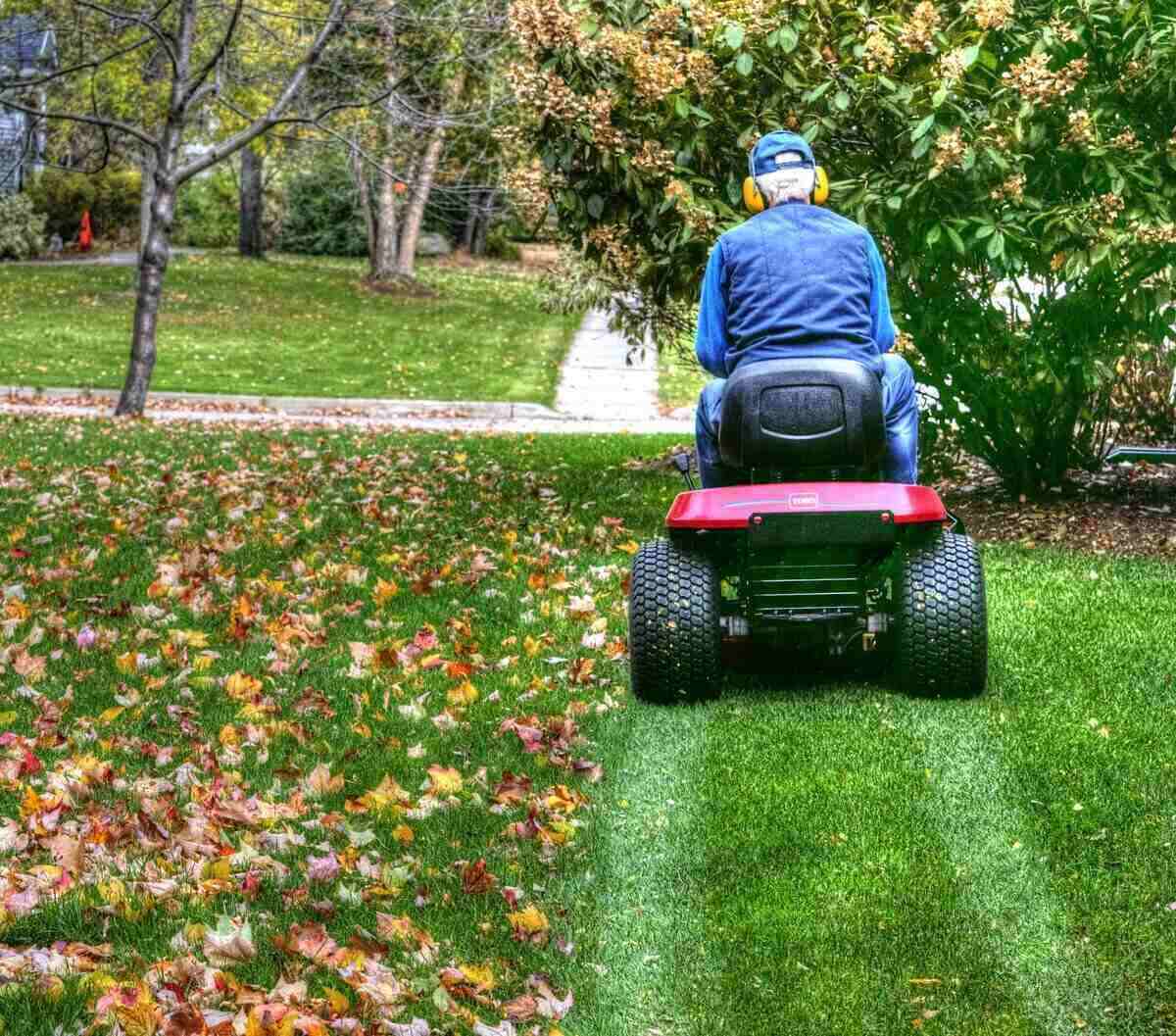
Once clippings are reduced to fine fragments, gravity pulls them through the open bottom of the deck and deposits them evenly across the cut lawn surface. Because the particles are small, they fall between the standing grass blades rather than sitting on top as visible clumps.
On contact with the moist soil environment, soil microbes primarily bacteria and fungi begin breaking down the cellulose and protein structures within hours of deposition. Under normal moisture conditions, grass clipping particles less than 1 cm in length decompose within 1 to 2 weeks, releasing their stored nutrients into the topsoil.
Key Features of Mulching Garden Mower
Not all mowers labeled as mulching machines perform equally. The effectiveness of a mulching lawn mower depends heavily on four design elements that work together as an integrated system.
i. Mulching Blade Design
As discussed above, the blade shape determines the quality of the re-cut. Better-quality mulching blades use high-carbon steel alloys for hardness and edge retention. A dull blade tears grass fibers instead of cutting them cleanly, leaving ragged ends that dry out quickly and produce coarser particles that decompose more slowly. This is why blade sharpness is one of the most critical maintenance parameters for a mulching mower.
ii. Deck Shape and Airflow System
The mower deck is the housing that surrounds the blade. For mulching to work effectively, the deck must be dome-shaped or dome-segmented designed to funnel airflow back down toward the blade after each cutting pass.
Decks with internal baffles (partition walls inside the deck that redirect airflow) enhance this recirculation significantly. Some premium mulching mowers use individual blade chambers one enclosed chamber per blade so that on a multi-blade deck, each cutting zone operates as a self-contained mulching system.

iii. Adjustable Cutting Height
Most quality mulching mowers offer 5 to 7 cutting height settings ranging from approximately 1 inch to 4 inches. The correct cutting height is important for mulching quality because a higher cut leaves more standing grass to shade the deposited clippings, which speeds decomposition by maintaining surface moisture. The standard recommendation for mulching is to cut at a height that removes no more than one-third of the grass blade length per session a rule known as the one-third rule in turfgrass management.
iv. Grass Recycling System
Higher-end mulching mowers include 3-in-1 systems that give the operator a choice between mulching mode, side-discharge mode, and bagging mode through a simple lever or plug adjustment.
This flexibility is practical because there are situations such as after a long period of rain when grass has grown rapidly where full mulching is not ideal and partial discharge or bagging is the better choice. A true mulching-only deck performs better in dedicated mulching mode than a 3-in-1 conversion because its geometry is optimized purely for recirculation.
Types of Mulching Lawn Mowers
Mulching technology is available across every major mower category. Each type has a specific use case and offers different trade-offs between power, convenience, cost, and environmental impact.
a. Push Mulching Lawn Mowers
Push mulching mowers are manually propelled the operator walks behind the machine and pushes it forward by physical effort. These mowers are the most affordable entry point into mulching technology, typically ranging from $200 to $500. They work well for small to medium lawns up to approximately 1/4 acre (roughly 10,000 square feet). Because they have no self-propulsion drivetrain, their engines or motors can direct more power to the blade, which is an advantage for mulching quality.
b. Self-Propelled Mulching Mowers
Self-propelled mulching mowers use a transmission system to drive the rear or front wheels, reducing the physical effort required from the operator. This makes them well-suited for lawns of 1/4 to 3/4 acres, sloped terrain, or use by operators who find pushing a full mower over large areas physically tiring. The drive system adds weight and cost, but the mulching deck and blade system are usually the same quality as their push-mower counterparts at a similar price tier.
c. Electric Mulching Lawn Mowers
Electric mulching mowers include both corded models which draw power from a wall outlet via extension cord and cordless battery-powered models. Battery-powered electric mulching mowers have grown dramatically in market share following advances in lithium-ion battery technology.
Lithium-ion pack prices fell below USD 100 per kilowatt-hour during 2024, effectively closing the total-cost-of-ownership gap with gasoline models within two years of purchase (Mordor Intelligence, 2026). Electric mulching mowers run quietly, produce zero direct emissions, and require less maintenance because they have no carburetor, spark plugs, or oil system.
d. Gas-Powered Mulching Mowers
Gas-powered mulching mowers use internal combustion engines — typically 140cc to 200cc single-cylinder four-stroke engines to drive the blade. They offer the highest sustained power output and are unaffected by battery runtime limitations, making them practical for large lawns exceeding 3/4 acre and for heavy-duty mulching of thick or damp grass.
Their disadvantages include higher maintenance requirements, fuel costs, emissions, and noise. As emissions regulations tighten globally, manufacturers are progressively electrifying their lineups, but gas-powered models still held the largest propulsion-type market share in 2024 (Grand View Research, 2024).
Benefits of Using Mower
The practical advantages of a mulching lawn mower extend well beyond simple convenience. They operate across four connected dimensions: soil nutrition, time efficiency, environmental impact, and lawn health.
a. Natural Lawn Fertilization
When grass clippings decompose on the lawn surface, they function as a slow-release fertilizer. The nitrogen in clippings is bound in organic form within protein structures in the grass tissue. As soil microbes break down that tissue, they release inorganic ammonium and nitrate ions exactly the forms that grass roots absorb.
Research published by Oregon State University Extension (2024) confirms that consistently returning clippings can allow turfgrass managers to cut fertilizer application rates by close to 50% while maintaining comparable turf quality. On clay soils specifically, researchers have produced acceptable-quality turf for up to 12 consecutive years without any supplemental fertilizer by relying solely on mulched clippings.
b. Saves Time and Reduces Waste Collection
Collecting grass clippings bagging them at the mower, carrying the bags across the lawn, disposing of them adds 20 to 40 minutes to a typical mowing session depending on lawn size. Mulching eliminates every step of that process.
A mulching lawn mower does not just maintain your lawn — it actively rebuilds its nutritional foundation with every mowing session, turning routine maintenance into continuous soil investment.
The operator simply mows, and the lawn is both cut and fertilized in a single pass. At a population level, this matters significantly: grass clippings comprise up to 20% of municipal solid waste by weight during summer months in many U.S. cities, a disposal burden that mulching eliminates at the source.
c. Improves Soil Moisture and Health
Fine grass clipping particles, once deposited on the soil surface, create a thin organic layer that slows surface evaporation. This acts as a micro-mulch effect the same principle as applying compost or straw mulch to a garden bed, but at a finer scale.
The microbial activity triggered by decomposing clippings also improves soil aggregate stability the ability of soil particles to clump together into a structure that holds air and water simultaneously, a key indicator of healthy, productive soil.
d. Eco-Friendly Gardening Solution
Mulching mowers reduce the demand for synthetic nitrogen fertilizers, which require energy-intensive manufacturing processes and contribute to nitrate leaching into groundwater when over-applied.
They eliminate the plastic bags used for clipping disposal. When paired with an electric mulching mower, the environmental benefit expands further no exhaust emissions during operation and a dramatically reduced carbon footprint over the machine’s lifetime. This alignment with sustainability goals is one of the primary drivers of the market growth projected across the industry through 2030 and beyond.
Mulching Lawn Mower vs Regular Lawn Mower
Choosing between a mulching lawn mower and a conventional model requires understanding the specific performance differences across three key areas.
i. Cutting Quality Difference
On a well-maintained lawn that is mowed regularly, a mulching mower delivers a cut that is visually indistinguishable from a bagging or side-discharge mower. The fine clippings are not visible to the naked eye at normal mowing height.
However, if the grass is allowed to grow excessively between cuts — more than one-third of the blade length — a mulching mower will struggle because the volume of clippings exceeds the deck’s ability to re-cut them efficiently. In that situation, a side-discharge mower handles the heavy material better.
Grass Disposal Method
- Regular mower: Clippings are either collected in a rear bag (adding weight, requiring stops to empty), discharged to the side (leaving visible rows that must be raked or re-mowed), or left in long uncut strips that mat and block sunlight to the turf underneath.
- Mulching mower: Clippings are re-cut inside the deck and deposited invisibly back into the lawn surface, requiring no bagging, no raking, and no additional cleanup steps.
- Practical outcome: Mulching saves one full post-mowing cleanup cycle per session, which translates to significant time savings over a full mowing season.
ii. Maintenance and Efficiency Comparison
The maintenance requirements for a mulching mower are slightly higher in one specific area: the blade must be sharpened more frequently. Because the blade is doing more cutting work per session — re-cutting clippings multiple times — it dulls faster than a single-pass discharge blade. A mulching blade typically requires sharpening every 20 to 25 hours of operation, compared to 25 to 30 hours for a standard blade. In all other maintenance categories — deck cleaning, engine or motor care, wheel and drive servicing — the two mower types are comparable.
How to Choose Best Mulching Mower
Selecting the right mulching lawn mower requires matching machine specifications to your specific lawn conditions, physical requirements, and budget.
a. Lawn Size Consideration: Lawn area is the primary sizing factor. General guidelines for matching mower type to lawn area:
- Under 1/4 acre (up to 10,000 sq ft): A push or cordless electric mulching mower is fully adequate and most cost-efficient.
- 1/4 to 1/2 acre: A self-propelled mulching mower — gas or battery-powered — handles this range comfortably without excessive operator fatigue.
- 1/2 to 3/4 acre: A self-propelled gas or high-capacity battery model, or a walk-behind with a wider cutting deck (21–22 inches), is appropriate.
- Over 3/4 acre: A riding mulching mower or zero-turn mower with mulching kit attachment becomes practical from a time-efficiency standpoint.
b. Power Source Selection
Electric mulching mowers (battery or corded) are ideal for residential use where noise restrictions apply, where environmental impact is a priority, or where lawns are small enough to complete on a single battery charge. Gas-powered mulching mowers offer longer run times and higher torque for thick or damp grass, making them better suited for larger properties and professional landscaping crews.
The cost-parity between battery-electric and gas models at the total-cost-of-ownership level, now effectively reached as of 2024 due to falling battery prices, means the choice is increasingly driven by preference rather than economics.
c. Blade Quality and Performance
When evaluating any mulching mower, ask specifically about the blade material and design. High-carbon steel blades with a hardened edge hold sharpness longer and deliver cleaner cuts. Factory-installed Gator blades or branded mulching blade systems from manufacturers like Honda, Toro, or Husqvarna have undergone aerodynamic optimization matched to their specific deck geometry — a combination that consistently outperforms aftermarket blade-and-deck pairings.
d. Budget and Durability Factors
Entry-level push mulching mowers start at around $200 to $250. Mid-range self-propelled models fall between $350 and $600. Premium battery-powered or high-torque gas self-propelled models range from $600 to $1,000. Riding mulching mowers begin around $1,500 and can exceed $3,000 for commercial-grade models.
Durability correlates closely with deck material: stamped steel decks are lightweight and inexpensive; fabricated (welded) steel decks are heavier but far more durable; high-density polyethylene (HDPE) decks resist rust completely and are ideal in wet climates. For long-term ownership, a slightly higher upfront investment in deck and blade quality typically results in lower total cost over a 7 to 10-year service life.
Best Practices for Effective Mulching
Even the best mulching lawn mower will produce poor results if used incorrectly. These four practices determine whether your mulching sessions succeed or create lawn problems.
1. Cutting Dry Grass for Better Results
Dry grass cuts cleanly and breaks into fine particles efficiently. Wet grass blades clump together, preventing the re-cutting cycle from working properly, and the wet clippings stick to the deck interior and each other, creating dense mats on the lawn surface that block sunlight and airflow.
Always allow the lawn to dry for at least 2 hours after rain or morning dew before operating a mulching mower. If scheduling forces mowing on damp grass, raise the cutting height one setting to reduce the volume of material the deck must process.
2. Regular Mowing Schedule
Consistent mowing frequency is the single most important factor in mulching success. When you mow every 5 to 7 days during the active growing season, you remove only a small amount of leaf material per session, and the resulting clippings are short and fine enough for the deck to re-cut effectively.
Allowing grass to grow for 10 to 14 days between cuts means removing 2 to 3 times the normal material per session — volumes that overwhelm any mulching deck’s recirculation capacity and result in clumps of uncut or partially cut material lying on the lawn surface.

3. Keeping Blades Sharp
A sharp blade is fundamental to mulching quality. A blade that has become dull tears grass rather than cutting it, producing frayed, irregular clipping fragments that are too large for efficient re-cutting and decompose slowly because their large surface area dries out quickly. Inspect blade sharpness every 20 hours of operation.
Sharpen using a file or bench grinder, maintaining the original bevel angle — typically 30 to 45 degrees. After sharpening, balance the blade on a balancing cone or nail before reinstalling to prevent vibration that damages the deck and engine bearings.
4. Avoiding Overgrown Grass
If you return from vacation or miss several mowing cycles to find significantly overgrown grass, do not attempt to mulch it in a single pass. Instead, set the deck to the highest cutting height and make a first pass that removes only the top portion of growth.
Then lower the deck one setting and mow again, disposing of clippings from the second pass by side-discharge or bagging. Once the lawn is back to a manageable height, resume the regular mulching schedule from the following session.
Maintenance Tips
A mulching mower that is well maintained will perform consistently, last longer, and produce better mulching results than one that is neglected. These four maintenance areas cover the essentials.
I. Cleaning Deck After Use
Grass residue accumulates on the underside of the deck after every mulching session. If left in place, this residue holds moisture against the metal surfaces, accelerating corrosion, and it partially blocks the airflow channels that make mulching work.
After each use, tilt the mower on its side (with the air filter facing upward to prevent oil migration) and use a scraper or stiff brush to remove accumulated material. Many modern mulching mowers include a deck-wash port — a hose attachment point that lets you flush the deck clean with water while the blade spins slowly. Use this feature after every 3 to 5 mowing sessions.
II. Blade Sharpening and Replacement
As noted earlier, mulching blades require sharpening every 20 to 25 hours of use. Full replacement is necessary when the blade has been sharpened to the point where the original cutting geometry is significantly altered typically after 3 to 5 sharpening cycles or when any crack, deep nick, or bend is visible.
A cracked or bent blade creates dangerous imbalance at operating speeds and must be replaced immediately. Always torque the blade bolt to the manufacturer’s specification (typically 30 to 60 foot-pounds depending on the model) after reinstallation.

III. Engine or Motor Care
For gas-powered mulching mowers, perform an oil change every 50 hours of operation or at the start of each mowing season, whichever comes first. Replace the air filter annually or more frequently in dusty conditions. Check and replace the spark plug every 100 hours or annually.
Store the mower at season’s end with a fuel stabilizer added to the tank, or drain the fuel completely to prevent carburetor varnish deposits from forming over winter. For electric models, follow the battery manufacturer’s charge cycle and storage temperature recommendations — lithium-ion batteries degrade faster when stored fully charged or in temperatures below freezing.
IV. Storage Guidelines
Proper off-season storage extends mower lifespan significantly. Clean and dry the entire mower, particularly the deck underside. Apply a light coat of spray lubricant to all exposed metal surfaces. Store in a dry, covered space away from moisture and temperature extremes.
Keep the mower elevated off a bare concrete floor if possible, as concrete wicks moisture and accelerates wheel and frame corrosion. For battery-powered models, store the battery separately at approximately 50% charge in a cool, dry location — the standard recommendation from major lithium-ion battery manufacturers for long-term storage between seasons.
Common Problems and Solutions
Even when a mulching mower is used correctly, certain problems arise from time to time. Knowing how to diagnose and resolve each one quickly prevents minor issues from becoming persistent lawn problems.
A. Clumping of Grass
Grass clumps on the lawn surface are the most common mulching problem. The cause is almost always one of three things: the grass was too wet, the grass was too long, or the blade was too dull. Check all three before assuming a mower fault. If clumps appear after mowing correctly, use a fan rake to disperse them — they will decompose once spread thinly. Do not leave dense clumps sitting on the lawn surface, as they block light and create dead patches within 3 to 5 days.
B. Uneven Mulching
Uneven mulching — where some areas of the lawn appear well-mulched and others have visible clipping debris — usually results from inconsistent mowing speed. Moving too quickly through the grass reduces the blade’s re-cutting time per square foot. Slow down your mowing pace by ap proximately 20% compared to standard discharge mowing. Overlapping each pass by 2 to 3 inches also ensures complete coverage and prevents thin strips of unmulched material.
C. Clogged Mower Deck
A clogged deck occurs when wet or long grass builds up inside the cutting chamber and blocks airflow, effectively turning off the recirculation system. The symptom is an abrupt drop in blade speed and a visible buildup of material discharging from under the deck sides. Stop the mower immediately, disconnect the spark plug wire (on gas models) or remove the battery (on electric models), and clear the deck with a scraper. Never reach under the deck without first fully disabling the blade power source.
D. Poor Cutting Performance
Consistently poor cuts — ragged grass tops, inconsistent height — indicate a blade that needs sharpening, a deck height set too low for the grass density, or a drive belt that has stretched or worn. Inspect the blade first, as it is the most common culprit.
If the blade is sharp and the cut is still uneven, check that all wheels are adjusted to the same height setting (one wheel set higher than the others is a surprisingly common cause of lopsided cutting) and that the deck is not warped or cracked from a previous impact with a hard object.
Are Mulching Lawn Mowers Worth It?
The value proposition of a mulching lawn mower is strong for most residential and semi-professional users, but it is worth examining honestly before committing to a purchase.
1. Ideal Users and Lawn Types
Mulching mowers deliver the best results on lawns that are mowed regularly, have a consistent grass species (rather than a mix of fast and slow-growing varieties), and are maintained on an even moisture schedule. Warm-season grasses like Bermuda, Zoysia, and St. Augustine mulch very effectively due to their fine blade structure and rapid decomposition rates.
The question is not whether a mulching lawn mower is worth the cost — the question is whether you can afford to spend more time, money, and water maintaining a lawn without one.
Cool-season grasses like Kentucky bluegrass, tall fescue, and perennial ryegrass also mulch well when mowed at the correct frequency. Lawns with significant bare patches, deep shade, or persistent compaction issues will benefit less from mulching, as the decomposition rate slows dramatically in those conditions.
2. Cost vs Benefits Analysis
A quality mulching mower costs roughly $50 to $150 more than a comparable standard mower at the same power tier. Against this upfront cost, consider the following annual savings:
- Fertilizer reduction: Returning clippings can reduce nitrogen fertilizer needs by up to 50%, saving $50 to $100 per year for an average residential lawn.
- Time savings: Eliminating bagging and disposal saves 20 to 40 minutes per mowing session — for 25 sessions per year, that is 8 to 17 hours returned annually.
- Disposal cost elimination: Where municipal green waste fees apply, eliminating clipping bags can save $30 to $60 per year.
3. Long-Term Advantages
Beyond the direct financial return, the long-term agronomic value of consistent mulching is significant. Lawns that receive continuous organic input through mulched clippings develop higher levels of soil organic matter over time, improving water infiltration, aeration, and microbial diversity.
These improvements make the lawn progressively more resilient to drought, heat stress, and disease pressure without any additional inputs. Research on turfgrass soil health (Nikolai et al., cited in Journal of Environmental Horticulture, 2024) confirms that soils under consistent mulching regimes show measurably higher organic matter content and carbon-to-nitrogen ratios that support sustained grass health over multi-year periods.
Conclusion
The mulching lawn mower stands out as one of the most practical, cost-effective, and environmentally responsible tools available for lawn care today. By re-cutting grass clippings into fine organic particles and returning them to the soil, a mulching mower eliminates clipping disposal, reduces fertilizer costs by up to 50%, improves soil moisture retention, and supports healthy microbial activity — all in a single mowing pass.
With the global lawn mower market projected to grow at a CAGR of 6.6% through 2030, and mulching capability shifting from a premium upgrade to a baseline expectation, there has never been a better time to invest in a quality mulching lawn mower. Follow those practices, and a well-chosen mulching lawn mower will improve your lawn visibly within one full growing season while reducing the time, cost, and environmental footprint of your entire lawn care routine.
Frequently Asked Questions (FAQs)
Can a mulching lawn mower be used on a lawn that has been recently seeded?
Avoid using a mulching mower on newly seeded grass until it has been mowed at least two to three times and the roots are firmly anchored. The blade’s recirculating airflow can pull young seedlings out before they establish. Once the new grass reaches 3.5 to 4 inches and holds firm at the base, begin mulching at the highest deck setting and lower gradually over the next few sessions.
Does mulching affect lawn colour or make it look yellow after mowing?
Yellowing after mulching is almost always caused by mowing during peak afternoon heat, not by the mulching process itself. Cut grass tips oxidise quickly in high temperatures and appear pale for 24 to 48 hours before recovering. Mowing in the early morning or late afternoon prevents this, and persistent yellowing beyond 72 hours points to a nitrogen deficiency in the soil rather than a mower issue.
Is it safe to use a mulching mower near flower beds and garden borders?
A mulching mower is safer near planted borders than a side-discharge mower because clippings are deposited downward rather than thrown sideways. Within 12 to 18 inches of a flower bed, slow your pace and orient the deck so its open underside faces the lawn rather than the planting, which directs any residual airflow away from border plants.
Can mulching mowers handle fallen leaves in autumn, or are they only for grass?
A mulching mower shreds dry autumn leaves into fine fragments that filter into the turf and decompose over winter, enriching soil organic matter exactly as grass clippings do. The leaves must be dry — wet leaves form dense, smothering mats the blade cannot process efficiently. For heavy deposits, two passes at right angles to each other ensure thorough shredding.
Does the speed at which I push or drive the mower affect mulching quality?
Yes, moving too quickly reduces the number of re-cutting passes each clipping receives inside the deck, producing coarser fragments that stay visible on the surface. The optimal mulching pace is roughly 20 to 30 percent slower than standard discharge mowing. On a self-propelled mower, simply selecting a lower drive speed setting achieves this consistently without conscious effort.
Can a mulching mower be used on slopes and uneven terrain?
Mulching mowers work on slopes up to approximately 15 degrees, beyond which oil lubrication can be compromised and clippings may exit unevenly from the lower deck side. A rear-wheel-drive self-propelled model gives better traction on inclines than a push mower, and mowing across the slope rather than up and down maintains stable footing and consistent deck contact.
How does a mulching mower perform in drought conditions when grass grows slowly?
Slow drought growth means less clipping volume per session, which the mulching deck handles easily. However, drought-stressed grass should be cut at the maximum deck height, as taller grass shades the soil, slows evaporation, and keeps the root zone cooler — benefits that are reinforced when the longer clippings are mulched back as a protective surface layer rather than removed.
Are mulching lawn mowers suitable for commercial or professional landscaping use?
Commercial mulching mowers — zero-turn riders with dedicated mulching decks and walk-behind models with heavy-gauge fabricated steel decks — are standard equipment for many professional landscapers, parks departments, and sports turf managers. Eliminating clipping disposal reduces both labour time and green-waste hauling costs, and the investment typically pays back within one to two full operating seasons.
references:
1. Miller, G. L., Pinnix, G. D., Bartley, P. C., McCauley, R. K., & Jackson, B. E. (2019). Evaluation of turfgrass clippings from mulching versus side discharge mower operation. Crop, Forage & Turfgrass Management, 5(1), 1-5.
2. Reza, M. S., Xie, J., Amano, R. S., & Hagen, P. A. (2003). Computational fluid dynamics and finite element analysis of a lawn mower mulching blade optimization. In Proceedings of the international conference on mechanical engineering 2003 (ICME2003), Dhaka, Bangladesh.